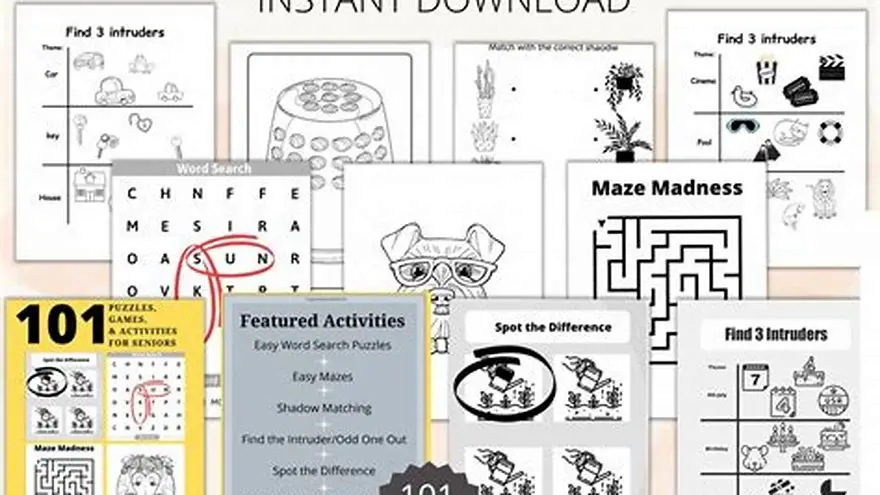
Which large-print puzzle books have the biggest fonts for seniors
The best large-print puzzle books use 20-point fonts or larger, dark ink on white paper, and generous spacing between clues and grids.
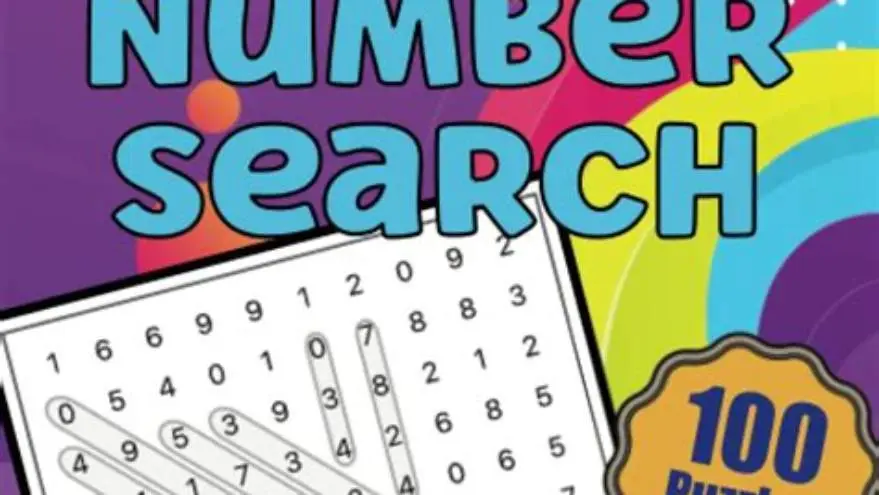
Look for puzzle books with 20-point fonts or larger for the puzzles themselves and 14-point minimum for clues. The best choices use black ink on white paper, not gray, with at least 0.25 inches of white space around each grid.
On this page (8 sections)
- The short version
- Minimum font sizes recommended for low vision
- Contrast and color considerations that make puzzles readable
- Types of puzzles easiest to read in large print
- Where to find puzzle books with genuinely large fonts
- How spiral binding and page layout reduce eye strain
- Testing a book before you buy in bulk
- Questions people still ask
Part of the guide: Free large-print puzzles and activities for seniors: printable options
Most large-print puzzle books still use fonts too small for seniors with macular degeneration or severe presbyopia to read comfortably.
| Minimum puzzle font | 20-point or larger |
|---|---|
| Minimum clue font | 14-point |
| Best contrast | Black on white |
| Grid spacing | 0.25 inches minimum |
| Easiest puzzle types | Word search, sudoku |
| Binding preference | Spiral or lay-flat |
The short version
- Choose books with 20-point fonts or larger for puzzle grids, 14-point minimum for clues
- Black ink on white paper gives the sharpest contrast for low vision
- Word searches and sudoku read more clearly in large print than dense crosswords
- Spiral binding lets the book lie flat and saves eye strain
- Test one book first before ordering multiple copies
Minimum font sizes recommended for low vision
The American Printing House for the Blind recommends 18-point fonts as the starting threshold for low vision, but that assumes good contrast and clean printing. For puzzle books, where letters sit inside grids and compete with lines, you need 20-point or larger. Anything smaller forces squinting, and squinting for twenty minutes turns a pleasant activity into work.
Clue text and instructions can drop to 14-point if the contrast is sharp. The puzzles themselves carry more weight. A word search with 16-point letters looks big on the cover but disappears once your eyes hit the grid. Measure the letters inside the puzzle, not the title.
Publishers often list a book as large print without stating the actual point size. Check the preview pages on Amazon or request a sample page before buying in bulk. One care home activity director I know orders a single copy first, tests it with three residents, then decides whether to stock it. That approach has saved her from boxes of unusable books.
Font size interacts with line weight. A 20-point font printed in a thin or light weight looks smaller than an 18-point font in a bold weight. The stroke thickness matters as much as the height. Look for fonts described as bold, heavy, or semi-bold. Avoid anything labeled light or condensed. If that sounds like your situation, read up on large print puzzles printable next.
Contrast and color considerations that make puzzles readable
Black ink on white paper gives the sharpest edge for low vision. Gray ink, cream paper, or colored grids all soften contrast and make letters harder to resolve. Some publishers use dark gray instead of black to reduce glare, but that trade-off usually costs more than it gains. True glare comes from glossy paper, not from ink darkness.
Matte or uncoated paper reflects less light than glossy stock. Glossy pages catch window light and overhead bulbs, creating bright spots that obscure letters. Most budget puzzle books use matte paper by default, which works in your favor. Premium books sometimes add gloss for durability, but durability does not matter if the page is unreadable.
Avoid puzzle books with colored grids or decorative borders around each puzzle. A purple or blue grid looks cheerful but reduces the contrast between the letters and their background. The eye has to work harder to separate the letter from the line it sits on. Plain black grids on white paper are not boring: they are easier to see.
Some publishers print puzzles in landscape orientation to fit larger grids. That forces readers to rotate the book or tilt their head. Stick to portrait layouts unless the font size gain is substantial, at least four points larger. Rotating a book every few minutes adds fatigue and breaks focus.
| Ink and paper | Readability | Common in puzzle books |
|---|---|---|
| Black on white | Highest | Yes, most budget books |
| Black on cream | Good if cream is pale | Yes, common |
| Dark gray on white | Acceptable, slightly softer | Yes, some publishers |
| Dark blue on white | Poor, low contrast | Rare |
| Black on glossy white | Poor due to glare | Occasional in premium books |
Types of puzzles easiest to read in large print
Word searches and sudoku translate to large print better than crosswords or cryptograms. Word searches use a simple grid with one letter per box. The letters are large, evenly spaced, and free of additional clues crowding the page. Sudoku grids are similarly clean, with a single number in each cell and no dense text.
Crosswords cram clues into margins, often in smaller fonts to fit the layout. Even when the grid itself is printed large, the clues remain at 10 or 12 points. Readers with low vision end up needing a magnifier for the clues while the grid sits clearly visible. That inconsistency disrupts the experience. If you choose crossword books, confirm that both the grid and the clue list use large fonts.
Mazes work well in large print if the paths are wide and the walls are thick. A maze with narrow passages printed at any size becomes a frustrating squint. Check the path width in the preview: paths should measure at least 0.2 inches across. Anything narrower is hard to follow without a finger or pencil tracking every turn.
Number fill-ins, logic puzzles, and cryptograms depend on reading long instructions or decoding keys. The instructions rarely get the large-print treatment, even when the puzzle grid does. Skip these formats unless you are willing to read the instructions aloud or retype them in a larger font yourself.
- Word search: clean grid, large letters, minimal clutter - easiest to read
- Sudoku: simple numbers, no dense text, works well at 20-point
- Crossword: check that clues are large, not just the grid
- Mazes: confirm path width is at least 0.2 inches
- Logic puzzles: instructions often stay small, hard to adapt
Where to find puzzle books with genuinely large fonts
Search Amazon for "large print puzzles" and filter the results by checking the preview pages. Look inside the book at the actual puzzle, not the cover or title page. Many books claim large print but use 14 or 16-point fonts once you reach the puzzles. Read the reviews for mentions of font size: other buyers often measure and report the truth.
Bookstores that specialize in low-vision products stock puzzle books with verified large fonts. The American Printing House for the Blind and National Braille Press both sell activity books designed for seniors with low vision. Their catalogs list exact font sizes and contrast specs. Prices run higher than mass-market books, but you get predictable quality.
Some activity directors and family caregivers make their own puzzle books using tools that control the font size directly. We make BigPrint Puzzle Studio for that purpose: it lets you set the font to 20, 24, or 28 points and generates print-ready PDFs. You pick the puzzle type, the theme, and the layout. It costs $17 one-time and works for word searches, sudoku, mazes, and other common formats. It does not create crosswords with clue lists, and it will not make you a designer overnight, but it gives you full control over font size and spacing.
Public libraries sometimes carry large-print puzzle collections in their low-vision sections. Check with the reference desk or request an interlibrary loan if your branch does not stock them. Library copies let you test a book before buying multiple copies for a care home or family.
How spiral binding and page layout reduce eye strain
Spiral binding lets the book lie flat on a table without a hand holding it open. Perfect binding and saddle-stitch books curl closed, forcing readers to press the pages down or weigh the corners. That constant adjustment shifts the viewing angle and tires the eyes. Spiral-bound books stay open at the same angle, page after page.
Page margins matter as much as font size. A puzzle that bleeds to the edge of the page gets cut off by shadows from the binding or by the curve of the page near the spine. Look for books with at least 0.5 inches of margin on all sides. The puzzle should float in the center of the page, not crowd the edges.
One puzzle per page is easier to navigate than two or three small puzzles crammed together. Multiple puzzles per page save paper but force the reader to ignore distractions and track which puzzle they are working on. Seniors with memory loss or attention difficulties find that layout frustrating. Stick to one puzzle per page when possible.
Thick paper stock prevents bleed-through from the reverse side. Thin paper shows the grid or letters from the back of the page, creating visual noise. Budget puzzle books often use lighter stock to cut costs. Hold a page up to the light in the preview or in the store: if you can see the next puzzle clearly through the paper, the stock is too thin.
Testing a book before you buy in bulk
Order one copy and test it with the person who will use it. Font size, contrast, and layout preferences vary by individual. What reads clearly for one senior may still be too small for another. Sit with them while they try a puzzle and watch where they struggle. Do they squint at the clues? Do they lose their place in the grid? Do they give up after five minutes?
Time how long it takes to complete one puzzle. If it takes more than fifteen minutes for a simple word search, the font is probably too small or the contrast too low. A puzzle should feel like a gentle challenge, not a test of endurance. If the reader finishes quickly and asks for another, the book works.
Check for sharp printing. Blurry or broken letters happen when publishers use low-resolution files or cheap printing processes. Hold the page at normal reading distance and look at the edges of the letters. They should be crisp and solid. Fuzzy edges force the brain to guess at letter shapes, which adds cognitive load.
Ask the reader whether they would choose this book again. That one question tells you more than any measurement. If they hand it back after two puzzles and reach for something else, you have your answer.
- Order a single copy of the book you are considering.
- Sit with the reader and watch them work through one full puzzle.
- Ask whether the font is comfortable or whether they are squinting.
- Check how long it takes them to finish: under fifteen minutes for a word search is good.
- Inspect the print quality by looking closely at letter edges.
- Ask whether they would want more puzzles from this book.
Questions people still ask
Can I enlarge regular puzzle books on a photocopier to make them large print?
Photocopying at 150% or 200% enlarges the font but also thickens the grid lines and reduces contrast. The letters blur and the lines start to touch. It works as an emergency fix but not as a long-term solution. You are better off buying books designed for large print from the start.
Are audiobooks or digital puzzle apps better than large-print books for seniors with very low vision?
Audiobooks do not offer puzzles: they are a different activity. Digital puzzle apps let you zoom in, but many seniors find touchscreens frustrating or unfamiliar. Paper books work without charging, without passwords, and without accidental taps that close the app. For someone who enjoys paper and pen, large-print books remain the best choice.
Do large-print puzzle books cost more than regular puzzle books?
Yes, usually $2 to $5 more per book because they use more paper and fewer puzzles per page. Specialty low-vision publishers charge $15 to $25 per book. You pay for verified quality and larger fonts. Mass-market large-print books from Amazon cost $8 to $12, which is reasonable if you confirm the font size first.
What if the font is still too small even in a large-print book?
Try a handheld magnifier or a lighted magnifying lamp. Some seniors prefer a bar magnifier that sits on the page and magnifies one line at a time. If vision loss is severe enough that 24-point fonts remain unreadable, consult a low-vision specialist about assistive devices. At that point, tactile puzzles or audio activities may be more appropriate.
Can I return a puzzle book if the font turns out to be too small?
Amazon accepts returns within 30 days if the book is in resalable condition. Specialty low-vision retailers have varying return policies: check before you order. Some allow returns only if the book is unopened. If you are ordering for a care home, ask your supplier about sample copies or satisfaction guarantees.
Ready to try it? It lets you control the exact font size and spacing when regular large-print books are still too small or hard to find.
Make your own large-print puzzles