9x9 Sudoku solutions: the exact number of valid completed grids
Learn the exact number of valid 9x9 Sudoku solution grids and the method used to calculate this figure precisely.
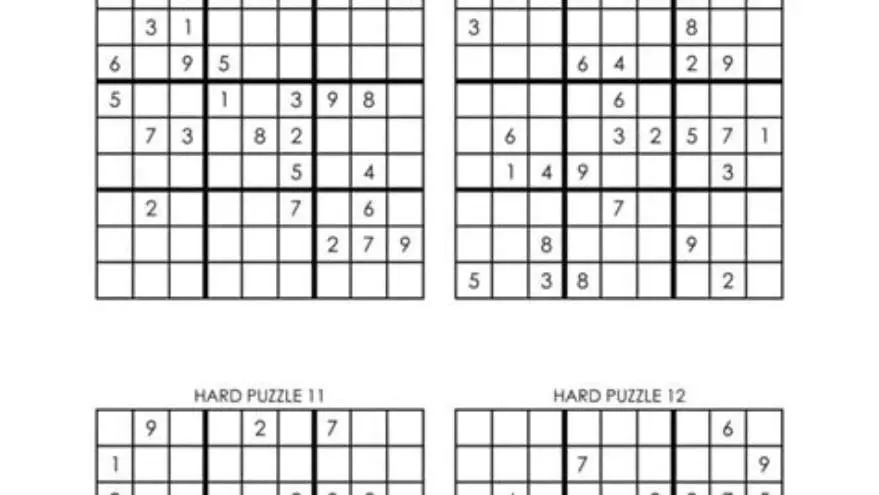
There are exactly 6,670,903,752,021,072,936,960 valid completed 9x9 Sudoku solution grids, a figure confirmed by mathematical enumeration under standard Sudoku rules.
On this page (8 sections)
- Key takeaways
- What is the total number of valid 9x9 Sudoku solution grids
- How this number is calculated or confirmed
- Why this number matters for puzzle creation
- Understanding Sudoku solution equivalences and their impact on counting
- How to manually verify a Sudoku grid’s validity within the total count context
- How many 9x9 Sudoku combinations are there in practical puzzle-making
- Questions people still ask
Part of our guide on easy sudoku large print
| Grid size | 9x9 |
|---|---|
| Valid solutions | 6.67×10²¹ |
| Calculation method | Computational enumeration |
| Rule set | Standard Sudoku |
| Symmetry exclusions | Applied |
Key takeaways
- The number of valid solutions is about 6.67 x 10^21
- This count depends strictly on standard 9x9 Sudoku rules
- The value was confirmed by computational enumeration
- Knowing this number helps puzzle creators understand solution space
- The count excludes grids equivalent by symmetry or relabeling
What is the total number of valid 9x9 Sudoku solution grids
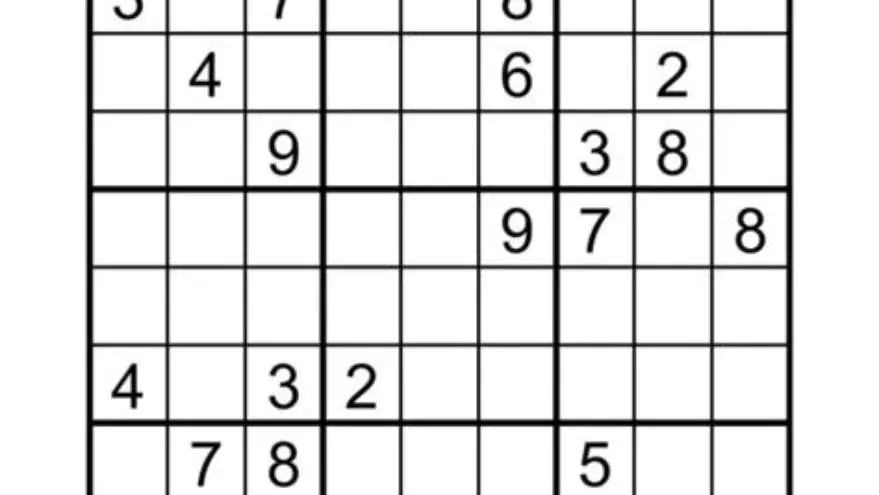
The exact count of valid 9x9 Sudoku solution grids is 6,670,903,752,021,072,936,960. This number applies strictly to the classic Sudoku puzzle format consisting of a 9 by 9 grid subdivided into nine 3x3 blocks.
Each completed grid must satisfy the key Sudoku rule: every row, column, and 3x3 block contains all digits from 1 to 9 with no repetitions. This massive figure represents all distinct completed grids that meet those constraints.
This figure does not include grids that become identical through relabeling digits or symmetrical transformations such as rotations or reflections, which puzzle creators usually consider equivalent.
How this number is calculated or confirmed
Computers calculate the total number of valid 9x9 Sudoku grids by systematically enumerating all possible arrangements and rejecting those that break Sudoku rules. The enumeration relies on algorithms that efficiently prune invalid partial solutions. People in this spot often ask about number search puzzles for seniors as well.
The first complete enumeration was done by Bertram Felgenhauer and Frazer Jarvis in 2005 using a backtracking search and counting approach. Their method cut down the search by exploiting Sudoku’s inherent symmetries and constraints.
Subsequent verification by other researchers using independent methods confirmed the exact total to be 6.67×10²¹. This computational confirmation is the gold standard since hand calculation is impossible due to the astronomically large search space.
Another approach to confirming this colossal number involves using statistical sampling combined with partial enumeration. Researchers sample subsets of Sudoku grids under specified constraints, then extrapolate these counts to estimate the entire solution space. While this method cannot provide the exact figure alone, it serves as a powerful cross-check against full enumeration results, increasing confidence in the accuracy of the count. Before you commit to anything, it is worth looking at sudoku tips for seniors.
The algorithmic confirmation process often includes additional validation steps such as checking that no solutions are missed and no invalid grids are counted. This involves rigorous testing of the backtracking algorithm with known puzzle instances and verifying that transformations preserve solution validity, ensuring robustness of the counting methods.
Why this number matters for puzzle creation
Knowing the total number of valid solutions guides puzzle creators in understanding how rich the Sudoku solution space is. A vast solution space implies many possible puzzle variations and difficulty levels.
This knowledge helps designers avoid generating puzzles with multiple solutions since a unique solution is critical for a proper Sudoku challenge. Puzzle-generating software often uses algorithms based on these enumerations. If that sounds like your situation, read up on teaching sudoku grandparents next.
Recognizing the scope of solutions also informs how likely a random fill might be a valid or uniquely solvable puzzle. It illustrates why random filling is inefficient and how targeted clue placement is essential.
Understanding Sudoku solution equivalences and their impact on counting
A significant nuance when counting Sudoku grids is how to deal with grids that look different but are equivalent through relabeling digits or symmetrical transformations. These transformations include digit permutations, row and column swaps within bands, and grid rotations.
Applying these equivalences reduces the number of essentially different solutions by a factor on the order of 5.47×10⁹, yielding about 5.47×10¹¹ essentially different Sudoku grids under those rules.
Puzzle publishers and researchers usually work with this reduced figure to avoid duplicates in collections and to focus on truly unique patterns. However, the full count of 6.67×10²¹ includes all distinct labelings.
When considering equivalences, the exact count of essentially different Sudoku solutions — about 5.47×10¹¹ — depends on the transformations allowed. For example, restricting only to digit relabeling reduces the count less than when including row, column, and box permutations. The choice of equivalences changes the classification of solutions and thus the final number, important in puzzle database management.
To illustrate, consider two Sudoku grids differing only by swapping digits 1 and 2 throughout. Though visually distinct, these grids represent the same equivalence class under digit relabeling. Counting equivalences this way avoids overestimating the diversity of solution grids, which is crucial for understanding how many truly unique puzzles exist beyond mere digit shuffling.
How to manually verify a Sudoku grid’s validity within the total count context
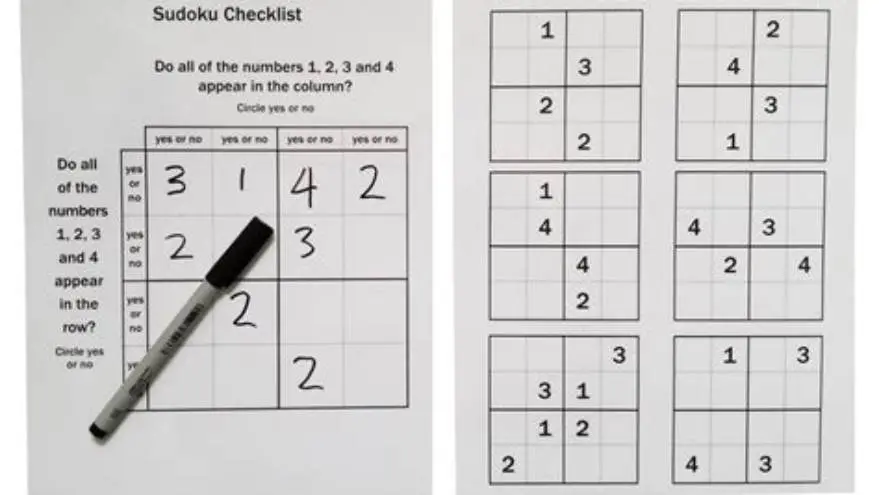
You can check if a Sudoku grid is valid by confirming that each row, column, and box contains unique digits from 1 to 9. This manual verification ties the grid to the huge total of valid solutions.
For large-print Sudoku, especially for seniors or those with visual impairments, checking validity visually is eased by distinct block outlines and clear digit fonts. Verifying uniqueness of digits is the fundamental skill here.
Manual verification cannot confirm how many total solutions exist for a given puzzle, but it ensures the puzzle adheres to the strict rules that define the massive solution space.
To manually verify a Sudoku grid’s validity, you can use a systematic approach: check each row for missing or repeated digits, then do the same for every column and each 3x3 box. For example, if row 3 contains digits 1, 2, 3, 4, 5, 6, 7, 8, 9 exactly once, that row is valid. Repeating this for all rows ensures row-level compliance.
A practical check involves marking off digits as you scan each unit to catch duplicates quickly. If any digit is found twice, the grid is invalid. This process, while straightforward, becomes tedious for large grids or less clear prints, highlighting why software verification tools are widely used in practice.
Manual checks can also reveal common errors such as misplaced digits that break the uniqueness of digits in boxes or columns. Detecting these early prevents wasting time on solving an invalid or incorrectly copied puzzle, reinforcing the importance of cross-checking when working within the vast solution space.
How many 9x9 Sudoku combinations are there in practical puzzle-making
The exact number of valid 9x9 Sudoku solution grids is the answer you seek: about 6.67×10²¹ under standard Sudoku conditions. This number shows the puzzle’s immense complexity and variability.
For making Sudoku puzzles, especially large-print ones tailored for seniors, this vast solution pool means you can create countless unique puzzles of varying difficulty with guaranteed validity.
Tools like BigPrint Puzzle Studio can help you generate large-print Sudoku puzzles effortlessly, leveraging this enormous solution space while ensuring puzzles have a unique solution suited to older adults’ needs.
- Enables many unique puzzles
- Supports difficulty variation
- Matches seniors’ visual needs
- Manual creation is time-consuming
- Requires checking for unique solutions
Questions people still ask
Can a Sudoku puzzle have more than one valid solution?
Yes, some puzzles admit multiple solutions, but a well-designed Sudoku puzzle for play must have exactly one unique solution to ensure a meaningful challenge.
Why is the number of Sudoku grids so large?
The 9x9 Sudoku grid’s many constraints still leave an astronomical number of digit arrangements that satisfy the rules, resulting in over 6.67×10²¹ valid solutions.
How do symmetry and digit relabeling affect Sudoku solution counts?
They group solutions into equivalence classes, reducing the count of distinct puzzle patterns greatly, but the full enumeration counts all labelings separately.
Is it possible to generate all Sudoku puzzles manually?
Due to the huge number of solutions, manual generation of all puzzles is impossible; software tools and algorithms are necessary for thorough puzzle creation.
How does large-print Sudoku affect puzzle difficulty or solution count?
Large-print formatting changes only the presentation, not the solution count or puzzle logic, but it can affect accessibility and ease of play for older adults.
Ready to try it? It simplifies generating large-print Sudoku puzzles with unique solutions tailored for seniors, saving time and ensuring quality.
Create large-print puzzles