Large-print number puzzles for seniors: free printable easy challenges
Find free printable large-print number puzzles tailored for seniors, easy to read and fun to solve at home or care centers.
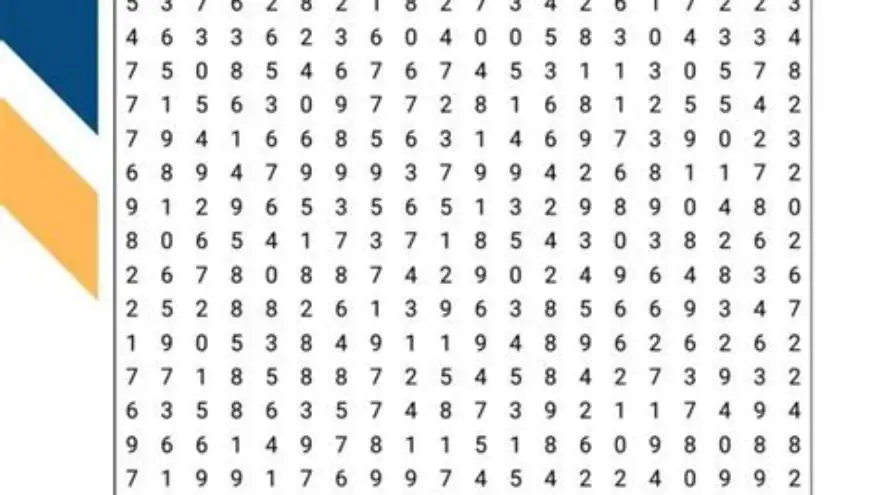
You can find free printable large-print number search puzzles designed for seniors on specialized puzzle websites and community resources. These puzzles use font sizes of at least 18-20 pt, ensuring ease of reading and enjoyment without straining the eyes.
On this page (8 sections)
- Key takeaways
- Where to find free printable number puzzles for seniors
- How large print improves puzzle usability
- Examples of easy number puzzles suitable for seniors
- Tips for printing and using these puzzles at home or care centers
- Number search puzzles for seniors: how to enjoy without squinting
- Creating custom large-print number puzzles easily with tools
- Questions people still ask
Part of our guide on easy sudoku large print
| Font size | 16-24 pt |
|---|---|
| Puzzle types | number search, sudoku, easy math |
| Print format | PDF, printable |
| Puzzle difficulty | easy to moderate |
| Paper size | letter or A4 |
| Common print color | black on white |
| Puzzle source | free online |
Key takeaways
- Large-print puzzles use font sizes 16-24 pt for readability.
- Free printable number puzzles for seniors are available online on niche sites.
- Simple number searches and sudoku variants suit different cognitive levels.
- Printing on quality paper improves puzzle usability for seniors.
- Tools like BigPrint Puzzle Studio help create custom large-print puzzles easily.
Where to find free printable number puzzles for seniors
Free printable number puzzles for seniors are commonly found on websites dedicated to senior activities and large-print resources. Look for puzzles specifically tagged as 'large print' or 'easy' to ensure they match seniors’ needs. Public libraries and senior centers often share free downloads as well.
Some puzzle sites specialize in accessible formats with font sizes from 16 to 24 points, which is critical for older eyes. These sites offer number searches, sudoku, and easy math puzzles in downloadable PDF form, ready to print on standard letter or A4 paper.
Avoid sites offering puzzles with very small print or complex layouts that cause frustration. Instead, target sources that provide simple, uncluttered layouts with clear numbering and large grids. You can also find free puzzles in newsletters or activity packets targeted at caregivers and activity directors.
In addition to online and community sources, some organizations focused on aging and vision impairment publish newsletters or bulletins that occasionally include large-print puzzles, including number searches. Subscribing to such resources can provide a regular supply of fresh puzzles without additional cost. Also, some newspapers offer large-print puzzle supplements weekly, which can be another source if accessible. People in this spot often ask about clear tips to simplify sudoku as well.
When selecting puzzles online, check user reviews or community forums for feedback on print size and difficulty level. Some sites offer adjustable font size options before downloading, allowing you to customize puzzles exactly to your needs. This flexibility is especially useful if seniors have varying degrees of visual acuity or cognitive ability within the same group.
How large print improves puzzle usability
Large print between 16 and 24 points reduces eye strain for many seniors with presbyopia or early macular changes. Bigger numbers and clearer grids let players find digits without constant refocusing, which often shortens sessions when print is small. If you notice a player leaning forward or squinting, increasing font size is a simple, effective first step that usually restores comfortable play for the same puzzle layout.
High-contrast schemes such as black numbers on white paper improve legibility across a variety of common age-related vision changes. Simple layouts with extra spacing between rows cut the visual clutter that can confuse players with mild cognitive impairment. Clearer type and plain grids reduce mistakes caused by misreading adjacent digits and help sustain attention, so sessions become longer and less frustrating for participants. People in this spot often ask about beginner tips for killer sudoku as well.
Larger print also helps staff and caregivers when supervising group activities; numbers remain visible from a short distance, so helpers can spot mistakes and give guidance without moving close. For players with tremors or limited dexterity, clearly visible puzzle elements make marking answers easier and reduce motor errors. To check whether a size works for your group, try the same puzzle printed at 12 and 20 points under your room lighting and compare the number of mistakes each produces—this direct test tells you what font size actually lowers errors for your setting.
Color choices affect readability: black on white or dark blue on cream gives the highest contrast and least fatigue for typical age-related lens yellowing. Red or green text can be harder to perceive for many older eyes. Where color is used, test samples under the lighting that will be used during play; what looks bright in a catalogue may be washed-out under a fluorescent fixture, so real-world checks are essential.
Examples of easy number puzzles suitable for seniors
Number search puzzles focus on finding sequences or specific numbers hidden in a grid. These puzzles should have grids with 8x8 or fewer cells, and sequences no longer than 5 digits for easier recognition. If that sounds like your situation, read up on easy sudoku lessons for seniors next.
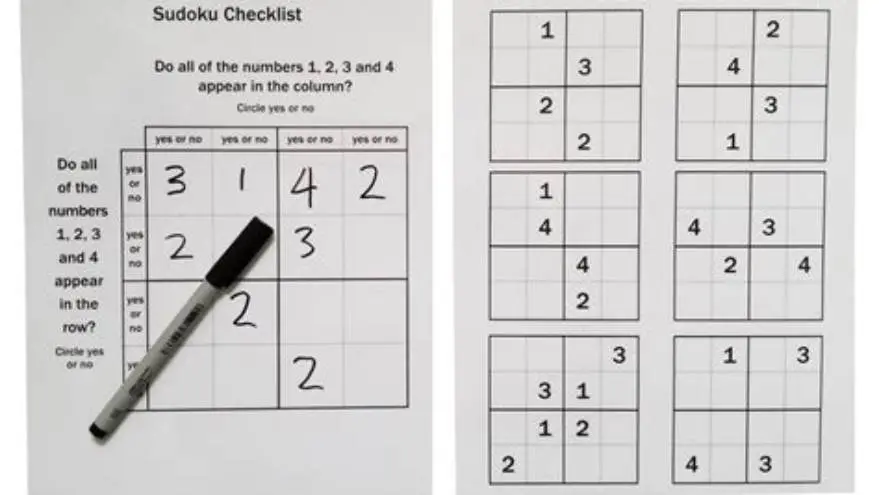
Simplified sudoku variants with 4x4 or 6x6 grids reduce complexity but keep cognitive engagement. The fewer cells reduce visual clutter and make it easier to track rows and columns.
Easy math puzzles with addition or subtraction problems using small numbers (under 20) encourage mental exercise without overwhelming. Combining these with large print improves accessibility.
Below is a table comparing some common easy number puzzles for seniors: There is more on number of 9x9 sudoku combinations in a separate guide.
One easy number search example is hiding the number sequences 123, 456, and 789 within an 8x8 grid. These short sequences are straightforward for seniors to spot without feeling overwhelmed. Another example is a mini sudoku puzzle with a 4x4 grid where each row, column, and quadrant must contain numbers 1 through 4, which is simpler than the standard 9x9 version but still offers cognitive challenge.
A worked example: a 4x4 sudoku starts with some cells filled, like 1 in the top-left corner and 4 in the bottom-right. The player completes the puzzle by filling missing numbers using logic. This size reduces the total numbers to track, making it less visually cluttered and easier to manage for seniors.
| Puzzle Type | Grid Size | Typical Difficulty | Print Size Recommendation |
|---|---|---|---|
| Number Search | 6x6 to 8x8 | Easy | 16-24 pt |
| Sudoku Variant | 4x4 to 6x6 | Easy to Moderate | 18-22 pt |
| Simple Math Puzzle | Small grids with 5-10 problems | Easy | 18-24 pt |
Tips for printing and using these puzzles at home or care centers
Print on thick, matte white paper to reduce glare and provide a stable writing surface; this makes pencil marks clearer and prevents bleed-through when double-sided sheets are used. Standard letter or A4 sizes handle easily and fit storage folders, while slightly larger paper can be helpful for players who prefer more space. If pages will be handled often, choose a heavier stock near 120 gsm to resist curling and wear.
Use a laser printer or a high-quality inkjet set to its best print mode so numbers remain sharp at larger sizes. Avoid faint or blurry copies that defeat the purpose of large print; if your office printer struggles, consider outsourcing a short run to a print shop. Set the printer to 100% scaling and confirm margins won’t auto-shrink the page, since automatic scaling often reduces font size and undermines legibility.
Laminating sheets or using clear sleeves lets you reuse puzzles with dry-erase markers, which saves paper and supports group play. For group sessions, place sheets on clipboards or sturdy cardboard backings so pages stay flat while participants work. Provide large, soft-grip pencils or felt-tip pens to reduce hand fatigue and improve mark visibility; these tools help players with arthritis or weak grip complete puzzles more comfortably.
Consider lighting and simple assistive aids. Bright, indirect lighting reduces shadows and keeps paper glare low; adjustable desk lamps let each player set the light they need. Where vision limits are more severe, offer magnifying sheets or stands and test them under your actual room lighting to ensure they help. Remove the wordy packaging and confirm puzzle font size and print clarity before handing out to make the session run smoothly.
Number search puzzles for seniors: how to enjoy without squinting
Number search puzzles designed for seniors use large, clear fonts—usually 18 to 24 points—and simple grids. Finding sequences of 3-5 digits hidden horizontally, vertically, or diagonally keeps the challenge manageable and fun.
Make sure the puzzle includes an answer key printed in large type to help seniors check their work without strain. The puzzles should avoid dense grids or overlapping sequences, which cause confusion.
Engage seniors by selecting themes or number groups relevant to their interests or everyday life, such as dates, ages, or favorite numbers. This connection encourages persistence and satisfaction.
To create or find these puzzles easily, you can use online tools that allow you to generate large-print puzzles customized to your needs.
For seniors new to number search puzzles, starting with grids as small as 6x6 and sequences of 3 digits can build confidence before progressing to larger grids or longer sequences. This gradual increase in difficulty avoids discouragement and keeps the activity enjoyable.
If a senior is struggling to find numbers, encourage them to scan rows or columns systematically, perhaps using a finger or a pointer to track as they go. This method reduces the chance of missing sequences and helps maintain focus.
A practical check to ensure the puzzle is senior-friendly is to time the puzzle completion with a test group of similar age and vision levels. Puzzle completion times of 10 to 20 minutes for easy puzzles tend to be ideal, allowing engagement without fatigue or frustration.
Creating custom large-print number puzzles easily with tools
BigPrint Puzzle Studio is an online tool that lets you build large-print puzzle books tailored for seniors quickly. It offers font sizes from 16 to 24 points and various puzzle types including number searches and sudoku.
This tool is ideal for activity directors, family caregivers, or sellers wanting to create clear, printable puzzles without complex design software. You select themes and word or number lists, then generate ready-to-print PDFs with answer keys included.
While free online puzzle sites let you print puzzles instantly, BigPrint Puzzle Studio gives control over print size, puzzle complexity, and layout, saving time if you need multiple puzzles or want to compile a book.
If you prefer manual methods, some free spreadsheet templates online can be adapted to make simple number search grids with large font sizes, but this takes more time and patience.
- custom font sizes 16-24 pt
- easy puzzle book creation
- includes answer keys
- controls puzzle complexity
- requires purchase
- not a medical solution
- learning curve for beginners
Questions people still ask
What font size is best for seniors doing number puzzles?
A font size between 16 and 24 points works best for seniors, balancing readability without taking excessive page space.
Are there free sources for large-print number puzzles?
Yes, many websites and senior activity groups offer free printable puzzles with large fonts, often in PDF format suitable for printing.
How can I help a senior who struggles with small print puzzles?
Switch to puzzles with larger font sizes, print them on quality paper, and consider laminating sheets for reuse with markers to reduce frustration.
Can I create my own large-print number puzzles at home?
Yes. Free spreadsheet templates can be adapted, or you can use specialized software like BigPrint Puzzle Studio for easier and more professional results.
What type of number puzzles are easiest for seniors?
Simple number searches with small grids and short sequences, and smaller sudoku variants like 4x4 or 6x6, are generally easier and less overwhelming.