This or that questions for seniors: 60 easy prompts to read aloud
A this-or-that question for seniors works when both options are named out loud, the prompt asks nothing about memory, and there's no wrong answer. That structure keeps the exchange light and succeeds whether the person has cognitive loss or not.
On this page (8 sections)
- Quick recap
- What makes a this-or-that prompt answerable for someone with memory loss
- Easy warm-up pairings (tea or coffee) versus ones that invite a story (beach or mountains)
- How many to ask in one sitting and how to stop before it turns into a test
- Funny and silly pairings that get a laugh rather than an answer
- Large-print, cut-out prompt cards for care home and senior center use
- This-or-that versus would-you-rather, trivia and reminiscing questions
- Still wondering?
Part of our guide on large print activities for seniors free printable
Key figures
- Prompt count
- 60 read-aloud questions
- Card size to print
- A6, about 4 x 6 in
- Per sitting
- 5 to 8 prompts
- Reading time
- 10 to 15 minutes
- Print cost
- About 20 cents per page
- Options per prompt
- Exactly 2, never 3
Quick recap
- Two named options, no recall required: tea or coffee, window or aisle, cat or dog.
- Three tiers by effort: warm-up (no thought), story (invites a memory), and silly (gets a laugh, not an answer).
- Ask 5 to 8 in one sitting. Stop the moment answers shrink to one word.
- Print the cards large, laminate, and reuse. A pack of 10 costs only a sheet or two of paper.
- This is not trivia (no right answer) and not would-you-rather (no trade-off to weigh).
What makes a this-or-that prompt answerable for someone with memory loss

The rule is simple. Every prompt offers two named options, both within reach or easy to picture. A person with memory loss can't retrieve a name, a year or a favourite from 1974 on demand. But they can decide between tea and coffee right now, and that answer is real.
Skip open-ended starters: what's your favourite meal, where did you grow up, tell me about your first job. Those aren't hard questions. They're recall tests disguised as conversation, and they land as pressure.
A good prompt stays in the present tense. Window or aisle. Cat or dog. Bath or shower. The person picks one, and the exchange is finished. If a memory surfaces, they'll volunteer it, which is a very different thing from being asked to produce one.
One trap worth naming: three options. Two feels like a choice. Three feels like a quiz, and a quiz has a wrong answer. Stay at two, always, even when the third option is genuinely funny. There is more on december crafts for seniors in a separate guide.
- Present tense only: tan or grey, tea or coffee, walk or sit.
- Two options, both familiar to this person specifically.
- No right answer, so no failure is possible.
- Same prompt tomorrow is fine. Repetition is comfort, not a fault.
Easy warm-up pairings (tea or coffee) versus ones that invite a story (beach or mountains)
Sort prompts by how much thought they ask for, not by theme. Three tiers cover almost every mood. Tier one is warm-up: two things already in the room, answerable in a breath. Tier two is story: still just two options, but the choice usually pulls a memory behind it. Tier three is silly: absurd enough to get a laugh, where the laugh is the point.
Warm-ups open a session because they cost nothing. Tea or coffee. Socks or slippers. Radio or quiet. Ask three or four of these before anything else. They teach the person the shape of the game: pick one, no wrong answer, next question.
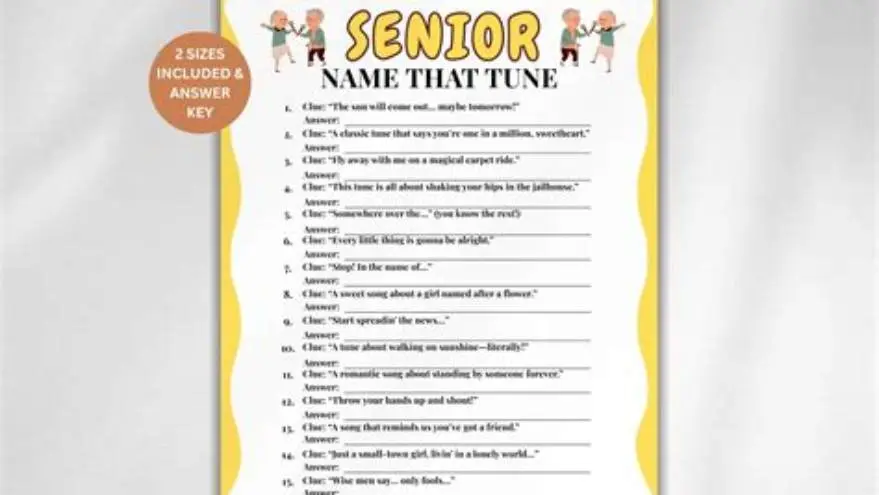
Story prompts sit in the middle. Beach or mountains. Summer or winter. Dogs or cats. These stay answerable because you're still offering two named things. But they often turn into a sentence or two about a holiday or a childhood pet, and that's the good part. There is more on senior-friendly name that tune game in a separate guide.
Silly prompts go last, once the room is relaxed. A person who's warmed up will play along with something daft that would have landed as a test five minutes earlier.
| Tier | Example | Effort to answer | What you get back |
|---|---|---|---|
| Warm-up | Tea or coffee? | Almost none | A word, then a smile |
| Story | Beach or mountains? | A little | A memory or two |
| Silly | Pirate or robot? | Low, if the mood is right | A laugh, not an answer |
How many to ask in one sitting and how to stop before it turns into a test
Five to eight prompts is the sweet spot for one sitting. That's roughly 10 to 15 minutes at a comfortable read-aloud pace. Longer than that and the exercise turns into an interview, which is exactly what you're trying to avoid.
Watch the answers, not the clock. When replies shrink from 'oh, tea, definitely' to a flat one word, you're done. That's the signal. Say something like 'that's a good one', put the cards down, and leave it. You can always come back in an hour. We cover brain games for memory and vision in its own article.
Start a session with a greeting that names the activity. 'Can I ask you a couple of silly questions?' sets the frame, and it gives the person permission to say no, which they should be allowed to do freely.
Never correct or push. If someone answers 'both' or 'neither', accept it, because that's an answer too. If they go quiet, offer a drink or switch to something else entirely. The goal is pleasant company, not data.
- Set the frame: 'a couple of silly questions'.
- Start with three warm-up prompts.
- Add two or three story prompts if the mood is up.
- End on a silly one and note the laugh.
- Stop at 8 prompts, or the moment answers go flat.
Funny and silly pairings that get a laugh rather than an answer
Silly prompts work because the answer doesn't matter. A person who can't remember what they ate this morning can still pick pirate over robot, and pick it with a grin. The aim shifts from answering to playing, and that's easier for everyone in the room. It helps to understand activities for seniors at home before going further.
Keep the absurdity gentle. Giant hat or tiny shoes. Hide-and-seek or snowball fight. Dance in the rain or nap with a cat. Nothing mean, nothing that pokes at ageing or memory, and nothing that turns the person into the joke.
The best silly prompts are quick to picture. If you have to explain the setup, it's not silly, it's confusing. Two named things, a bit daft, and out. Same rhythm as the warm-ups, different tone.
Silly prompts also travel well. They're the easiest to read from a printed card at a care home table, because they don't require the person to know anything about the reader, the day or themselves.
- Giant hat or tiny shoes.
- Robot or pirate.
- Dance in the rain or nap with a cat.
- Talk to animals or fly a kite.
Large-print, cut-out prompt cards for care home and senior center use
A reusable card set beats a list you read from a screen. Print at A6, roughly 4 x 6 inches, with one prompt per card at 24-point type or larger. Cut, laminate if you can, and you've got a set that lasts months and costs a couple of sheets of paper.
Colour-code by tier. Green for warm-up, yellow for story, red for silly. Then anyone can pick a card without reading it first, and a new volunteer can run a group with five minutes of training.
For groups of six or more, deal a card to each person and go round the table. That gives everyone the same low-pressure turn, and it stops one voice from taking the whole session. Keep each turn to about 30 seconds.
We make the Gentle Minds Activity Kit, a printable large-print set with three levels and 48 conversation cards. It's one way to skip the layout work if you'd rather not build the file yourself, and it stays on the printable-kit side of things rather than promising any medical benefit.
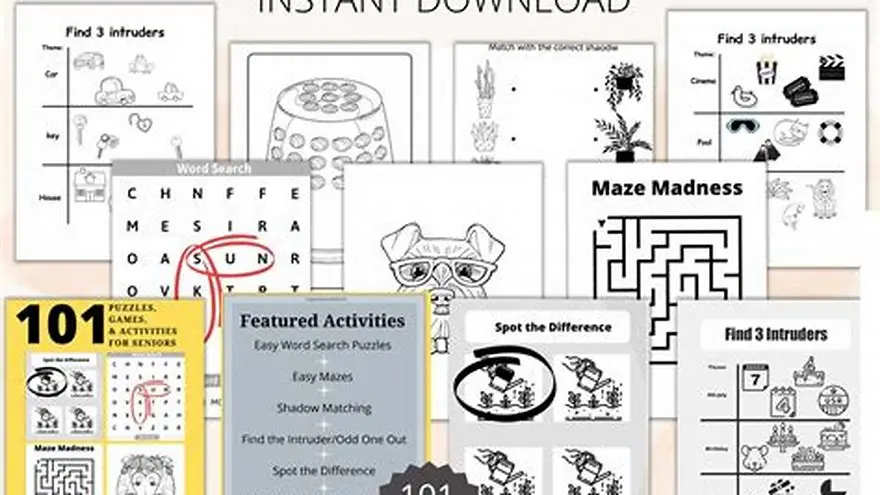
The free route is perfectly good too. Any word processor will set 24-point text in a two-column table, print, and cut. Our own large-print word search maker follows the same idea for puzzles if you want a printable to pair with the cards.
| Approach | Time to first session | Typical cost | Best for |
|---|---|---|---|
| DIY word processor file | 30 to 45 minutes | Paper and ink only | One household, one pair of hands |
| Gentle Minds Activity Kit | Print and go | One-time, from about $19 | Care homes, groups, repeat use |
- Print once, reuse for months
- Colour code by tier at a glance
- Works for one person or a group of six
- Trimming and laminating is fiddly
- Card stock and pouches add cost
- Stored cards can drift out of order
This-or-that versus would-you-rather, trivia and reminiscing questions
These four formats lookalike on the page, but they ask for very different things. This-or-that asks for a preference between two familiar things, no memory and no reasoning required. Trivia asks for a fact, so it's a test. Reminiscing asks for a memory from years back. Would-you-rather asks you to weigh a trade-off, which is harder than it sounds.
Trivia suits a confident group with a host and scoring, which is a different evening from a quiet read-aloud session. Reminiscing prompts are lovely one-to-one, but they can stall a person with memory loss entirely. Would-you-rather works best with people who enjoy a friendly argument.
This-or-that sits underneath all three. It flips into a conversation if the person wants one, and ends cleanly if they don't. That's the whole point of it as a day-to-day activity.
If your group already enjoys trivia, our Big Print Trivia for Seniors is what we make for that format: 400 multiple-choice questions at 19-point print with a host kit. It suits a quiz, not a chat, so pick the format before the product.
| Format | What it asks for | Effort | Works for memory loss |
|---|---|---|---|
| This-or-that | A preference | Very low | Yes, at tier one |
| Would-you-rather | Weighing a trade-off | Medium | Sometimes, with support |
| Trivia | A fact | High | Rarely, unless familiar |
| Reminiscing | A memory | High | Not always |
This-or-that prompts beat trivia and reminiscing questions for a person with memory loss, provided every prompt keeps to two named options.
Still wondering?
How many prompts should I ask before it stops being fun?
Five to eight for one sitting, which is about 10 to 15 minutes. Watch for flat one-word replies. That's your cue to stop, not the clock.
Will the same prompts work tomorrow?
Yes, and repetition tends to help rather than hinder. Familiar prompts feel safe for a person with memory loss, so reuse the warm-up set freely and swap in new story or silly cards when you want variety.
Can I use these in a group of six or more?
Deal one card per person and go round the table. Keep each turn to about 30 seconds. Printed cards travel better than a screen here, because everyone can read their own.
What if the person answers 'both' or refuses to choose?
Take it as a complete answer. The point is pleasant company, not a decision. Offer one option out loud if it helps, then move to a different prompt or stop.
Do this-or-that questions work for someone with advanced memory loss?
The tier-one warm-ups often do, especially when both options are physically present. A prompt about tea and coffee works when a mug is on the table. Story prompts usually won't land, and that's expected.