How to Run a Sudoku Club for Seniors That Lasts
Pick one day, one time and one room, and keep them fixed. A sudoku club for seniors is a weekly hour in three parts: a warm-up, one main puzzle at each person's level, and time to talk. Puzzles bring people in. Company brings them back.
On this page (8 sections)
Part of our guide on planning a senior center game night
Key figures
- Meeting length
- About an hour, with a break
- Best rhythm
- Once a week, same slot
- Levels on the table
- Three, easy to hard
- Puzzles per page
- One
- Warm-up puzzle
- One everyone can finish
- First puzzle for newcomers
- The easy one
Quick recap
- Same day, same time, same room: a fixed slot is the club.
- Three levels on every table, so nobody waits and nobody struggles alone.
- One puzzle per page, checked at arm's length, and finished at each person's own pace.
- No timers and no scores; the slowest solver sets the pace.
- Small jobs for members keep the club running past the first month.
How to run a sudoku club for seniors
Same day, same time, same room. Habits form first, and the activity follows, so a fixed slot lets members plan their week around it. When the day moves to suit the calendar, the habit breaks and the room empties. Pick a weekday morning or a quiet afternoon, write it on the activity board, and hold it for a full season.
Give the hour a shape with three parts. Start with a warm-up puzzle that everyone can finish, then move to the main puzzle at each person's level. End with time to talk over tea. Rest in the middle matters more than the puzzles do, because tired eyes and stiff hands need a break. Members who leave smiling come back next week. It helps to understand making a word search book for senior centers before going further.
Four or five regulars is a club. Twelve is plenty, and two tables of six beat a hall of rows, because people talk across a table and go quiet in rows. Keep the first month small on purpose. Full rooms keep members coming back, while empty ones make them drift away. Start with the members you have, not the members you wish for.
Who comes, and how do you invite them?
Invite widely and expect a mixed table. Some members will be quick solvers who finish early and want a harder grid. Some will be new to sudoku and need the easy puzzle and a patient neighbour. Some will come for the company, solve a little, and talk a lot. All three belong, and the club works when each of them has a place at the table. We go through organizing a trivia night for seniors step by step elsewhere on the site.
Post a flyer where people already look: the lift, the lounge board, the dining room door. Put the day, the time and the room on it in big letters, and add one line about beginners being welcome. Ask the activity office to put it in the monthly newsletter. Then ask each of the first members to bring a neighbour, because a personal invitation beats a poster every time.
Seat a new member beside a steady one, not at a table of strangers. Hand them the easy puzzle and a soft pencil. Tell them the answers stay with the host, so there is no test and no fuss. Introduce them by first name to the table. That first visit decides whether they come back, and a cold one decides the same thing in the other direction.
What puzzles do you print for a mixed table?
Three levels on every table, so nobody waits and nobody struggles alone. Puzzles with more starting numbers are usually gentler, so start new solvers there and let them say when to move up. The middle level suits a regular solver, and the hard level is there for the member who wants a real fight. Let each person pick their own level, and never hand someone a harder puzzle than the one they chose. The other half of this decision is dementia-friendly puzzle club for seniors.
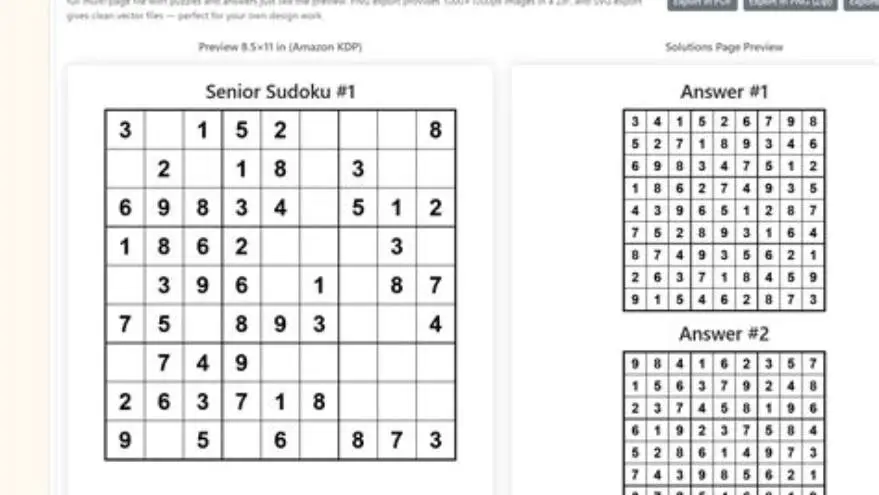
One puzzle per page, printed big enough to read at arm's length. Two puzzles on a page shrink the letters and crowd the grid, which is the opposite of what low vision needs. Hold a test page at arm's length before you print the set. Pick free pages that print one puzzle per sheet, with a separate answer page. Every digit should read clearly without leaning in. That is the size to print.
A bulk large-print puzzle generator can print a month of puzzles in one go, instead of hunting for a fresh set each week. It turns one set of levels into a booklet the host prints once and reuses. The limit is plain: a generator builds the books, and it does not run the club or teach the game. Free printable sudoku pages cover the same need for a small club, one puzzle at a time.
| Level | Feel | Who it suits | Host's job |
|---|---|---|---|
| Easy | Gentle | New solvers and tired days | Hand it out first |
| Middle | Steady | Regular solvers | Keep a spare ready |
| Hard | Testing | Confident solvers | Offer it, never push it |
How do you set up the room so everyone can see?
Light comes first, before puzzles or pencils. Seat people facing the window light, not against it, so the page is lit and nobody stares into glare. Extra light on each table helps on grey days. Face the table when you speak, so members who read lips can follow along. Walk the room once before members arrive and sit in each chair. If you cannot read the puzzle from that seat, move the lamp or move the chair. There is more on senior word search tournament in a separate guide.
Pencils beat pens for a club table. Soft pencils make a dark mark without pressing hard, which suits stiff hands, and an eraser lets a wrong digit vanish without a fuss. Put a big eraser and a spare pencil at each place before the meeting starts. Keep a few clipboards handy for members who solve on their lap, and a magnifier on the side table for anyone who wants one.
Some members like a quiet corner, and some like to talk through every row. Give them both. Leave one table for quiet solving and one table for chat, and let people move between them as they please. Talking through a puzzle is not disturbing the club. They are the club, and the quiet table is there for the days when they want it.
What does a club meeting actually look like?
Doors open a little before the hour, with puzzles already on the tables. Members drift in, find a seat, and start the warm-up without waiting for a formal start. The host greets each person by name and hands the new faces the easy puzzle. Starting on time and starting gently sets the tone for the whole hour. The other half of this decision is starting a group for seniors with dementia.
Keep the host's job small: keep time, hand out hints, and keep the mood light. When a member stalls, offer the next digit rather than the answer, and let them place it themselves. When a puzzle beats the whole table, read out the answer key together and move on. If a member becomes unwell, pause the puzzle and fetch help, and stay with them until help arrives. Nobody remembers a puzzle they could not finish. Everyone remembers how the room felt.
Talk is part of the meeting, not a distraction from it. Conversation owns the last part of the hour, and the puzzles give people something to talk about besides the weather. Members swap tips, compare answers, and ask for a harder puzzle next week. That chat is what turns a puzzle session into a club, and it is the part members miss most when a week is cancelled.
- Set out the puzzles, pencils and erasers before anyone arrives.
- Solve the warm-up together, with the host reading the first row aloud.
- Move to the main puzzle at each person's own level.
- Stop for a break and a cup of tea halfway through.
- Finish with the answers, a chat, and next week's date on the board.
How do you keep the club going past the first month?
Routines keep a club alive after the novelty fades. Hold the warm-up puzzle on the first week of each month, so members know what to expect when they sit down. Add one small ritual, like a themed puzzle when the seasons change, so members have something to look forward to. Rhythm carries a club through a thin week, because members know the next meeting is already set. Paper and printing, tea, and a box of soft pencils are the whole list, so the club costs little to run. Before you commit to anything, it is worth looking at ideas for senior game day at church.
Hand members small jobs and the club starts to run itself. One person picks next week's puzzles, another makes the tea, and a third welcomes new faces at the door. Jobs give people a reason to come on a week when the puzzles feel less inviting. Thank them by name, and rotate the jobs so nobody carries the club alone.
Watch the numbers without panicking over them. Thin weeks after a holiday are normal, and a full room in winter is a good sign. If numbers slide for a month, ask members what changed before you change anything. Often the fix is small: a different time, a brighter room, or one new invitation each month. Clubs rarely fail over puzzles. They fail when nobody asks why people stopped coming.
A weekly hour, three levels on the table and no timers is the club worth running.
Still wondering?
How often should a sudoku club meet?
Weekly suits most clubs, because a week is short enough to remember and long enough to miss. Monthly meetings fade between sessions, and members forget the day. Fortnightly works for a small group that already meets for other things.
What if nobody in the group has played sudoku before?
Begin with the easy puzzle and the host reading the first row aloud. End the first session with a finished puzzle, not a lesson. Anyone who finishes early can try the middle puzzle while the host helps the rest.
How many people make a good club?
Around half a dozen regulars make a lively table, and a dozen is plenty for one room. Four is enough to start, and a club that starts small grows more surely than one that starts crowded.
Do we need to buy puzzle books for the club?
Not at first. Free printable pages cover the first month, and the host can print a fresh set each week. Books make sense later, when the club has steady numbers and the host is tired of printing.
What if someone finds the puzzles too hard?
Offer them the easy puzzle and a seat beside a steady member. If the first puzzle is too hard, the club ends for that person. The easy grid is the most important page in the set. When the easy puzzle is still hard, solve it together, one row at a time.
Ready to try it? It builds large-print sudoku booklets with several levels in one book, so the host prints a month of club puzzles in one go.
Make club puzzle books