How to Start a Puzzle Club for Seniors With Dementia
To start a puzzle club for seniors with dementia, keep the group small and puzzles easy to win. Pick a quiet room and a small group you already know, then begin with a short session and adjust based on observed fatigue and engagement.
On this page (8 sections)
- Quick recap
- How to Start a Puzzle Club for Seniors With Dementia in Four Weeks
- What Print Size and Puzzle Type Should You Choose?
- How Do You Run Mixed Levels in One Room?
- What Do You Do When Someone Gets Stuck?
- How Long Should a Puzzle Club Meeting Last?
- How Do You Keep Members Coming Back Each Week?
- Still wondering?
Part of our guide on large print flashcards for seniors with dementia
Key figures
- Group size
- Small group you know
- Session length
- Short, tested locally
- First word search
- Large type, few words
- First jigsaw size
- Very large pieces to test
- Meeting rhythm
- Same day each week
Quick recap
- A small group lets every player get help.
- Use large, high-contrast type with few short words per grid.
- Drop the scoring and pair each player with a helper.
- Stop while energy is still high, and keep the same weekly slot.
How to Start a Puzzle Club for Seniors With Dementia in Four Weeks

Learning how to start a puzzle club for seniors with dementia starts with one small test, not a big launch. Start with a very small group you already know for a single trial session. For many venues that means two to five participants. Choose a quiet room with good light and a table big enough for shared puzzles. Bring two easy word searches and one simple jigsaw, then watch how long people stay bright and where they stall before the first puzzle ends. That first hour tells you more than any plan on paper. Small beats grand.
Pick a regular day and time before you invite anyone else. A fixed slot lets families plan lifts and lets care staff fit the club into their week. Mid-morning often works well, after breakfast and before lunch, when energy runs higher. Hold the first four meetings short and simple. That steady start builds trust faster than a grand opening with too many new faces at once.
Keep the welcome simple and warm by greeting each person by name at the door and walking them to a seat with a smile. Hand them a puzzle already started, so no one faces a blank page. Sit beside new players for the first ten minutes and point to the first word together. Such small kindnesses set the tone for the whole club. People return to places where they felt at ease. Names matter most.
Ask the family or carer first before a new player joins, and keep emergency contact details handy at every meeting. Follow the venue's own rules for medical emergencies, and ask their doctor about any health question that comes up. Guard personal details and share them only with helpers who need them. Care first, puzzles second. We cover seniors word search in memory care in its own article.
- Gather a very small group for one trial session.
- Book a quiet room with good light and a big table.
- Pack two easy word searches and one simple jigsaw.
- Make sure each table has a helper nearby.
- Run a short session, then stop on time.
- Note what people liked and fix one thing next week.
| Week | Action |
|---|---|
| Week 1 | Run one trial session with a small group you know |
| Week 2 | Repeat the same slot and fix one thing from your notes |
| Week 3 | Add a theme week with familiar songs and words |
| Week 4 | Ask the group what felt right and settle the routine |
What Print Size and Puzzle Type Should You Choose?
Print size decides whether a puzzle feels kind or cruel. Use large, high-contrast type with few short words in each grid, and test grid sizes at your own table before you settle on one. Big grids pack in many words, shrink the type, and leave players tired before they finish, so start small and let success set the pace.
Grids are only half the choice, since jigsaws suit simpler play when the pieces feel big in the hand. Test a range of piece sizes, from very large to large to medium, and record which sizes players handle with ease. Bold colours and a full reference picture help players see where each piece belongs. Large pieces also suit hands that grip less firmly than they once did.
Paper matters as much as print size. Thick paper stops pens from bleeding through and survives hands that press hard. Matte paper cuts glare under bright room lights, which helps eyes that tire fast. Print one puzzle per page with wide margins so hands can rest on the sheet. Have a spare copy of each puzzle ready, since a torn page ends a game fast. These small choices keep the focus on fun, not on fighting the page. Thick paper lasts. We go through running a sudoku club step by step elsewhere on the site.
| Puzzle | Start size | Why it works |
|---|---|---|
| Word search | Large type, few short words | Easy to read at a glance |
| Word search | Large type, more short words | A gentle next step |
| Jigsaw | Very large pieces | Easy to hold and place |
| Jigsaw | Large pieces | A little more stretch |
| Jigsaw | Medium pieces | For players who want more |
How Do You Run Mixed Levels in One Room?
Rooms work best when every table has its own level. Set out separate tables by difficulty and let participants move if they wish, since choice helps reduce frustration and increase chances of finishing. No one should sit at a table where every puzzle beats them. Helpers at each table keep play moving and stop quiet frustration from building, so every table ends with each player finishing something.
Ready material saves helpers from a scramble before each meeting. Consider ready-made kits such as our Gentle Minds Activity Kit (if available), which include graded activities; otherwise prepare your own graded sheets. Ready sheets take over the weekly hunt for fresh material, which frees helpers to sit and play. One honest limit: no kit suits every player, so keep free sheets beside it for anyone who wants a different theme. This site's free word search maker prints large-print searches from your own words. You can also make themed sheets by hand with a thick pen.
Music from long ago often opens a room up. In many forms of dementia, remote or long-term memory is often better preserved than recent memory. Choose familiar songs and topics, and check with families or clinicians. Play one song between puzzles and let people hum, clap, or name the tune, then set the volume low so talk flows across the table. End with a short singalong that gives the meeting a warm close and a reason to return. Songs open rooms. The other half of this decision is memory book for elderly.
What Do You Do When Someone Gets Stuck?
Stuck moments need a calm reply, not a correction. Join the player at the table and point to the word list together, then read one clue aloud and let them find the first letter. Praise the effort out loud, even when the answer stays hidden. Kind words at the hard moment keep the player in the game. Never rush the answer or take the pen from their hand. Calm beats correction.
Watch for the small signs of tiredness, such as players who rub their eyes, sigh, or look away when they need a pause. Offer a drink, a short walk, or a switch to an easier puzzle. Fatigue builds fast in a busy room, and a five-minute break often brings a player back fresh. Sessions stay kind when helpers watch faces, not just finished grids. Pauses restore energy.
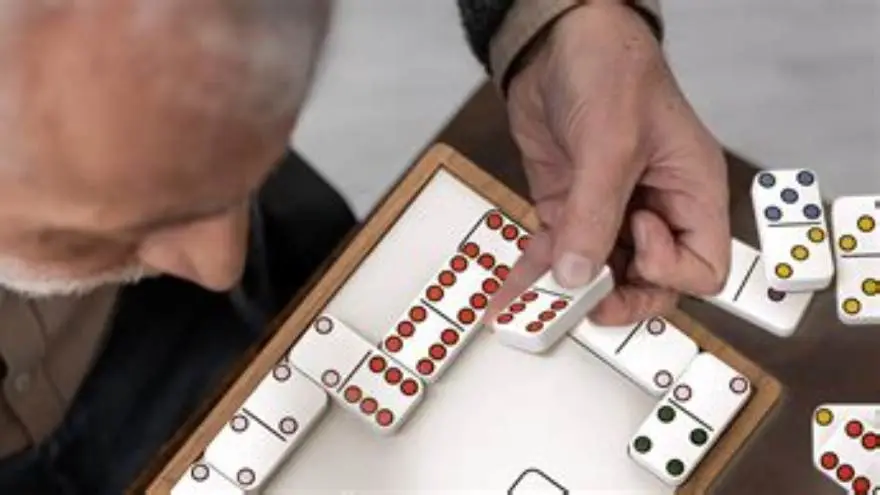
Offer a way out that saves face. Suggest a team round where two players share one puzzle and both get the win. Swap a hard grid for a familiar song quiz or a picture match. Keep easier activities ready for the final segment and test the timing at your own table. Ending on a win sends people home smiling and keen to come back. We cover seniors with dementia playing dominoes in its own article.
How Long Should a Puzzle Club Meeting Last?
A short session suits most groups as a starting point, with time for a welcome, two puzzles, and a chat without wearing people out. Longer meetings sound generous, yet tired players stop enjoying the game and may not return. Shorter meetings can feel rushed when helpers still settle new players. Begin with a short session and change the length based on how tired or bright players look, then ask the group what felt right. Less time works.
Tired players show it before they say it. Yawning, slow hands, and wandering eyes all point to a break. Build a pause into the middle of each meeting, with tea and a stretch. Ten minutes of rest in the middle often doubles the good play after it. Helpers should watch the clock as much as the puzzles, since energy fades fast.
Short meetings leave room for a strong finish. Spend the last five minutes on a group song or a shared win, such as the last word found together. End on time, even when the room feels lively, so families can plan lifts with trust. Clubs that end well earn their next week. People remember the ending more than the middle, so make it warm. Warm endings bring returns.
How Do You Keep Members Coming Back Each Week?
Routines hold a club together better than new ideas. Meet on the same day, at the same time, in the same room, so the habit forms fast. Greet people at the door and seat them with friends they know, since patterns lower worry for players who like to know what comes next. New ideas still matter, yet the routine is what brings people back. Same time, same room.
Themes from long ago give each week a fresh feel. Build each week around a theme, with old songs, familiar films, or foods people grew up with, and shape the word lists around it. Garden weeks, seaside weeks, or Christmas weeks each bring their own words and talk. Themes spark talk between players and give helpers easy clues to offer. Rotate the theme each week, yet keep the puzzles at the same easy level.
Invite families and care staff into the habit too. Share a simple note after each meeting with the puzzles played and the songs sung. Learn which themes their loved one enjoys and add those words next week. Word of mouth fills small clubs faster than any poster. Warm clubs grow slowly, and slow growth keeps the room calm and kind. Word of mouth works.
Notice how the club feels over a few weeks, not after one meeting. Track who returns, watch for smiles and steady focus, and listen to what families say about the week. If attendance holds and players stay bright, the mix is right. If numbers slip or faces droop, change one thing at a time and watch again. Little signs tell the truth.
Still wondering?
Can a puzzle club work for someone with late-stage dementia?
Yes, with the right setup. Use very large pieces, and let them sort or hold pieces rather than solve alone. Joy comes from joining in, not from finishing. Ask their doctor if you are unsure what suits them.
How many puzzles should I print for each meeting?
Start with two word searches and one jigsaw per table. Bring a spare of each, since torn pages and spills happen. Add more only when tables finish early twice in a row. Extra sheets left unused cost little and save a stalled session.
What if a member gets upset during a session?
Stay calm and move gently to a quiet corner. Hand them a drink, a familiar song, or a simple sorting task with large pieces. Do not argue about facts or push them back to the puzzle. Tell their family or care staff what happened so the next session can adapt.
Do I need special training to run a puzzle club?
Try a short trial first and learn from that one session. Patience, a calm voice, and large-print puzzles matter more than formal training. Local dementia groups often share free tips for helpers, so ask them before you start. Write notes on what works and build on it each week.
Ready to try it? It gives helpers ready large-print activities at gentle, easy, and steady levels, so mixed groups can play together from the first meeting.
See the activity kit