Large Print Books for Seniors with Dementia That Get Read
The best large print books for seniors with dementia use 16 pt type or larger, short stories and familiar themes. Picture books with one photo per page suit most readers. Pick the book for how the person reads today.
On this page (8 sections)
Part of our guide on christmas gift ideas for dementia patients
Key figures
- Print size to look for
- 16 pt or larger
- Print on most books
- Near 12 pt
- Story length that works
- Finishes in one sitting
- Simplest book text
- A few words per page
- Kit levels
- Gentle, Easy, Steady
Quick recap
- Look for 16 pt type and stories that finish in one sitting.
- Pick a familiar theme: stories from the person's younger years are the easiest way in.
- Read together for ten minutes, then stop while it still feels good.
- Test one book before you buy a shelf of them.
- Choose a book that looks like any other book, with no label on the cover.
Which large print books for seniors with dementia actually get read?
A book only helps if it gets opened twice. Many families buy a large print novel, watch it sit untouched, and blame the reader. Blame the book, not the reader. Standard large print editions change the type size and nothing else. A 300-page novel still asks the reader to hold a plot across weeks. That ask is too much for most people living with dementia.
Reading often gets harder after a dementia diagnosis. The barriers are plain: losing the thread of a story, print too small to read, and pages too hard to turn. Books that clear all three barriers get read. One that clears only the print barrier often does not.
Start from the person in front of you, not the reader they were five years ago. Can they still follow a chapter, or does a single page work better? Do they light up at photos of the seaside, or at poems they knew by heart? Those answers point to the book type. Use the rest of this page as a short checklist for a bookshop or a product page.
What makes a book easy to read with dementia?
Print size comes first, and the number to look for is 16 pt. Ordinary books run near 12 pt. Books made for people with dementia often use larger type and short paragraphs, but sizes vary by publisher, so check a page before buying. At that size a reader takes in a line without hunting for it. A cover that says large print does not always mean the type is large enough, so check a page before buying. The same checks help any older reader with low vision, even before memory changes begin. It helps to understand gentle cognitive engagement gifts before going further.
Short units matter as much as big type. Look for story collections where each tale finishes in a single sitting, with several stories to a book. The simplest picture books carry very large print and only a few words on each page. Both formats let a reader stop at a natural point and pick the book up again without losing the thread.
Familiar themes do the quiet work. Stories set in the 1940s, 1950s and 1960s give the reader ground they already know. So do songs from a person's youth and photos of seaside holidays. New information costs effort. Familiar ground lets the reader spend that effort on enjoying the page. Pick books that name their era or theme on the cover.
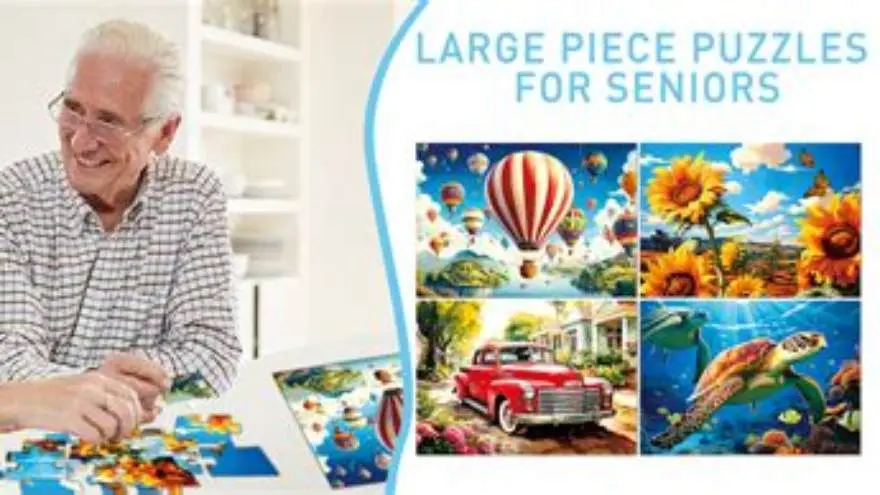
The same idea works past books. It holds printable pages at levels named Gentle, Easy and Steady, plus conversation cards that turn a page into a chat. It suits a family that wants fresh pages every week. Its limit is plain: it is printed pages, not a bound book. Try the idea free first with our Large Print Word Search Maker. It turns words the person knows into a large-print puzzle with an answer page. People in this spot often ask about puzzles for seniors large pieces as well.
How to check the print before you buy
Covers lie. A listing photo never shows the real size of the print, and a description can call almost anything large print. Check a few things before you pay, and you will rarely waste money on a book that never gets opened. To judge the size without a ruler, print one line at 16 pt from any word processor and hold it beside the book page. If the book letters match or beat your sample, the size is right.
E-readers give you a second way to check. A device such as a Kindle lets you change the size and look of the text. Set the text large, open a sample chapter, and watch how the person handles it. When the device works for them, one light object holds a whole library. When buttons and menus confuse them, a paper book stays the better buy.
Weight and binding decide whether the book leaves the shelf. Heavy hardbacks tire arms and wrists. Light paperbacks, and books that lie flat, open with one hand. Hardback suits some readers and paperback suits others. There is no single right answer here. Watch how the person holds the book you already own. Then buy the same weight and binding again. A ribbon marker turns a thick book into short, finishable chunks. For the detail, see our notes on what is a good gift for a person with dementia.
- Find the point size in the listing or on the publisher page. Choose 16 pt type or bigger, and skip any book that hides the number.
- Open the sample pages and count the words on one page. Short lines on a page suit most readers, while a dense block of text is a warning sign.
- Check the page count and the chapter length. One-page spreads and short chapters suit most readers.
- Hold the book at arm's length and read one page aloud. Stumble over a line and the reader will too.
- Ask the person to read one page in the shop or at home before you buy a second copy.
Five kinds of large print books worth buying
Books for readers with dementia fall into five rough kinds, each suiting a different reading level. Use the table above to match the kind to the person.
Story collections are the safest first buy. Readers can finish one story, close the book, and feel they have read something. Picture books for adults work later, when words thin out and photos carry the page. Neither kind beats the other. Keep one of each by the chair and let the person's mood choose.
Poetry and song books earn their place at reading aloud time. One poem fits on a page, so nobody loses the thread. Songs do more: the reader may join in on the chorus even when they cannot follow a story. Keep one where you sit together in the evening. There is more on large print gift options in a separate guide.
Puzzle books fill a different gap. A large-print word search or maze gives a quiet hour without asking the reader to follow a plot. Mind the grid size: some books print the word list large and the grid small. One puzzle per page, with the answer on the back, is the layout that works.
| Kind | Print and length | Best for | Watch out for |
|---|---|---|---|
| Short story collections | 16 pt, several tales per book | Early to middle stages | Plots that run across stories |
| Picture books for adults | Very large print, a few words per page | Middle to later stages | Books that look made for children |
| Poetry and song books | Large print, one poem per page | Reading aloud together | Small print in the notes |
| Reminiscence books | Large print, photos with short text | Talk about the past | Photos with no captions |
| Puzzle and activity books | Large print grids, one puzzle per page | A quiet hour alone | Tiny grids labelled large print |
How to read together when reading alone gets hard
Shared reading keeps books in a person's life after solo reading fades. When independent reading becomes hard, audiobooks or a family member reading aloud keep stories in reach. Sit beside the person so you both see the same page. Read slowly, and pause at each photo. Pauses matter more than the words.
Ask about the page, not about memory. 'Did you ever swim at a beach like this one?' opens a chat. 'Do you remember when we went here?' can feel like a test. If the person goes quiet, read on without pressing. Aim for a good ten minutes together, not a quiz with a score. There is more on gift ideas for grandma in assisted living in a separate guide.
Keep sessions short. Ten minutes together, then a cup of tea, leaves a better memory than an hour that ends in tiredness. Stop while the person still enjoys it. You can always read another page tomorrow.
Audiobooks fill the gaps between sessions. Many libraries lend them free, and some publishers offer audio editions. Play one chapter while you cook or drive. Ears may follow a story their eyes can no longer track. Most apps let you slow a narrator who reads too fast. A library card is the cheapest route, and staff can set up the loan for you.
What to avoid when you choose
The wrong book does more than gather dust. It can make a person feel they have failed at something they once loved. Three mistakes cause most of the damage, and all three are easy to avoid once you know them. The list below names them, and the fix for each one costs nothing.
Check the paper and the contrast too. Glossy pages throw back lamplight and tire the eyes. Cream or off-white paper with dark, clear print reads easier for many people. Hold a sample page under the lamp the person reads by. If the page glares, the book will fight them every evening.
Buy one book before you buy five. Someone who loves one short story collection may ignore a picture book, and the reverse is just as common. One book tests the format. Buy the second book in the format that worked. Money saved buys the next book the person actually wants. That second buy matters most, since you now know what the reader reaches for. A bookshop will often let you read a page before you pay, so use that chance.
- Children's books: simple words help, but babyish pictures and schoolbook covers feel insulting to an adult reader.
- Dense novels: a long plot, many characters and small print ask too much, even in a large print edition.
- The word dementia on the cover: several publishers leave it off the book on purpose, so the reader receives a normal book, not a label.
A short large-print story collection at 16 pt is the best first buy for most readers.
Still wondering?
Can a person with dementia still enjoy reading?
Yes, many people with dementia keep reading for pleasure. Shorter stories, anthologies and reading aloud help when longer writing gets hard. The book needs to fit the reader in front of you. Too-hard books get put down because the book asks too much, not because the person dislikes reading.
What print size counts as large print?
Look for 16 pt or larger. Ordinary books print near 12 pt, and some books labelled large print run only 14 pt. Find the point size in the listing before you buy.
Are picture books childish for an adult with dementia?
No, not when the book is made for adults. Photo books for adults use real photographs, grown-up themes and short text, and they suit readers who find long passages hard. Avoid books with cartoon animals and schoolbook covers. Photo books about the seaside or old cars read as normal books.
What if the person cannot read at all any more?
Reading together still works. Read a page aloud, pause at each photo, and talk about what you both see. Audiobooks from the library give the person stories without any print at all. Activity pages, such as the Gentle Minds Activity Kit, give a shared task when reading itself has faded.
Ready to try it? It gives fresh large-print pages at three levels when bought books run out or stop suiting the reader.
See the activity kit