6 no-prep New Year games for seniors in large print
Six New Year games for senior citizens come together with the free Large Print Word Search Maker and a printer. Each game includes rules, a setup list and a separate answer page.
On this page (8 sections)
- Quick recap
- New Year games for senior citizens: the six sheets
- How do you print the sheets for easier reading?
- What supplies and setup does each game need?
- How can the games accommodate mobility and memory needs?
- Where are the answer pages, and how do you check them?
- How can you use the set beyond New Year's Eve?
- Still wondering?
Part of our guide on thanksgiving activities for seniors
Key figures
- Number of games
- Six
- Print size
- US Letter or A4
- Prep needed
- Print the six sheets
- Group size
- One player to a full room
- Answer pages
- At the back, separate
Quick recap
- Hand out the word search first: it settles the room while late guests arrive.
- Start trivia after the word search, when the room is warm.
- Give the maze to the quietest player first.
- Two copies of the trivia sheet help: one to read aloud from, one for the table.
- A finished maze or crossword makes a fine keepsake for the fridge.
New Year games for senior citizens: the six sheets
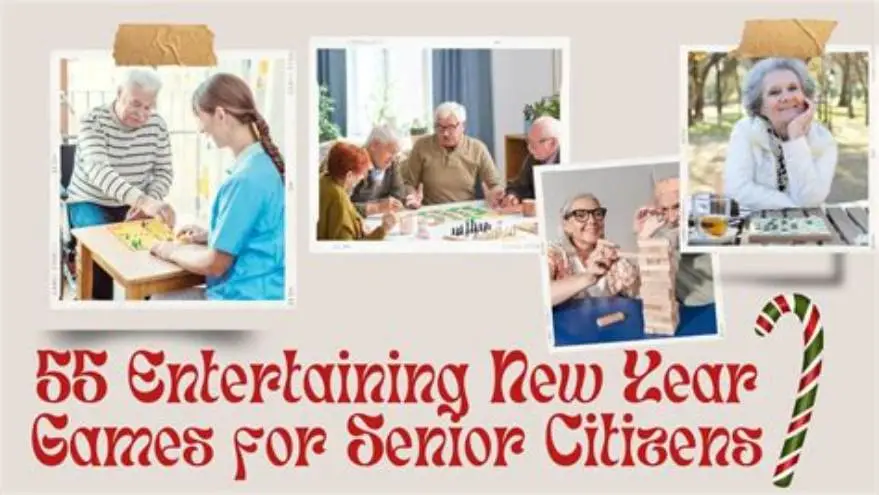
Most New Year pages hand you ideas and leave the work to you. Choosing the games, writing the questions and enlarging the type takes an evening of its own. This set names the six games and how to make each one, so the party starts with playing.
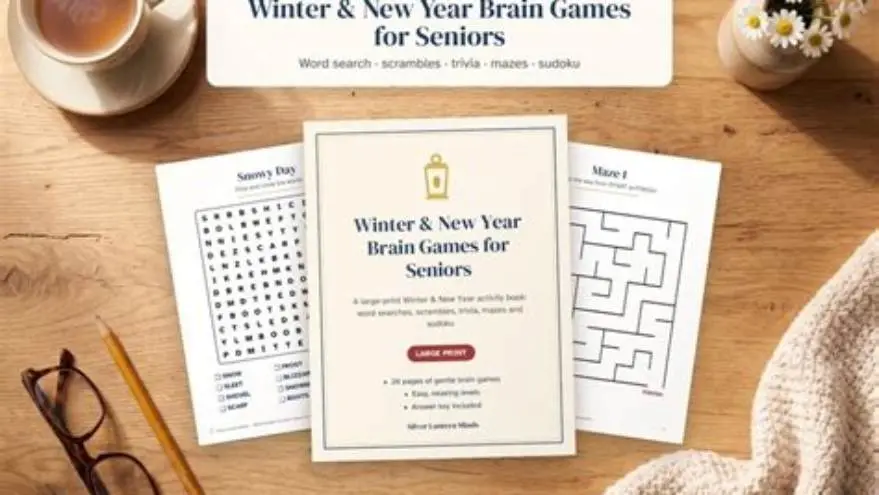
These six games fill the evening: a word search, a trivia round, a word scramble, a crossword, a finish-the-saying sheet and a maze. The Large Print Word Search Maker builds the word search, and the rest come together with a printer and a pencil.
Formats mix on purpose here. Some games suit a whole room, others suit a pair or one player. That mix fits December 31, when guests drift in and out at different times.
Below, the table shows the six games, how each one plays, and who it suits best. We go through activities matched to ability step by step elsewhere on the site.
Each game arrives on its own page. The set holds a word search full of New Year words, a trivia round with three-choice answers, and a word scramble of holiday vocabulary. It also holds a small crossword, a finish-the-saying sheet pairing first halves of familiar phrases with their endings, and a single large-print maze. Rules sit at the top of each sheet, so a helper can run the game without reading anything beforehand.
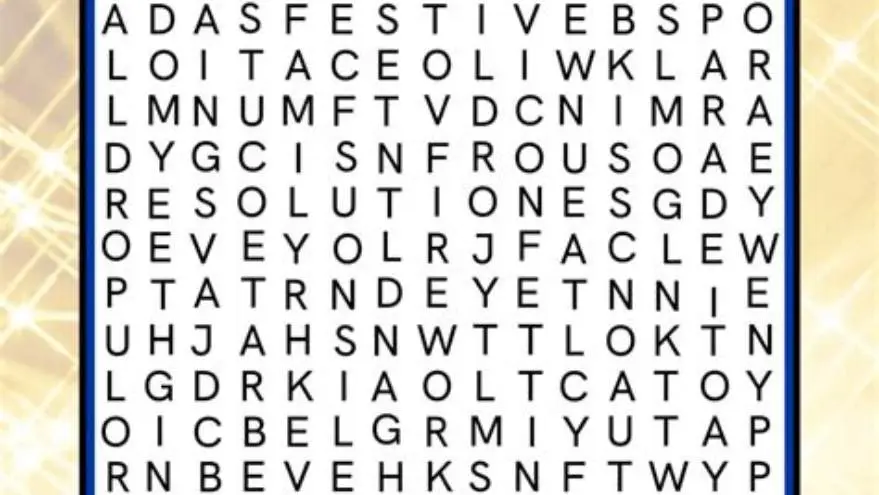
Samples help: a word search can hide MIDNIGHT, TOAST and FIREWORKS. One trivia question can ask which song crowds sing at midnight. The saying sheet starts with 'Out with the old...' and players supply the ending.
| Game | How it plays | Best with |
|---|---|---|
| New Year word search | Find hidden holiday words in a large grid | Groups or solo |
| Year-in-review trivia | Circle one answer per question | Whole room |
| Word scramble | Rearrange mixed-up holiday letters into words | Solo or pairs |
| New Year crossword | Fill the grid from the clues | Solo or pairs |
| Finish the saying | Match first halves to their endings | Any size group |
| Countdown maze | Follow wide paths with a finger | Solo |
How do you print the sheets for easier reading?
Print at 100% scale, not fit to page. Smaller scales shrink the type, and the sheets stop being large print. Check one page before you print the set. People in this spot often ask about large print new year word search as well.
Choose US Letter or A4 to match your paper. Try one page first and hold it at arm's length; if you have to lean in, the type is too small. Increase the printer scale only if the text feels too small.
Ordinary printer paper is fine. If hands shake or pages slide, a clipboard with a top clip keeps the sheet steady. Print a spare when several people share a table. Thick paper helps too: it resists sliding and takes an eraser.
When your group wants another round, you can make a word search from your own list. Use the Large Print Word Search Maker to turn names or months into a printable puzzle. It lets you set the word count; 10 to 20 works well on one large-print page. It creates word searches only, so it extends this set rather than replacing it. For the detail, see our notes on new years trivia for seniors.
Store the printed sheets flat in a folder, so next year's party starts with printing, not searching.
What supplies and setup does each game need?
Printed game sheets, a pencil for each player and a table are enough. Softer pencils need less pressure, which many older adults find easier. Try 2B if HB pencils require too much force.
Setup differs slightly by game. Hand out word searches and scrambles face down so faster readers do not start early. It helps to understand printable puzzles for older adults before going further.
For trivia, read each question aloud twice. Let people answer on paper, even if they do not want to speak. Put crossword and maze copies near each player.
Finish-the-saying suits a spoken round too. Hand it out, or call out each phrase's first half to the room. Spoken versions suit people who do not want to hold a pencil.
Bells or chimes mark the next trivia question, and give slower readers a moment to finish. Whiteboards or large notepads help in bigger rooms: write each question number and the room's answers where everyone can see them. None of this is required. At a kitchen table with two or three people, the sheets and pencils are all you need. It helps to understand dementia thanksgiving activities before going further.
Have everything ready before guests arrive, not during the gathering: walking away to fetch more sheets breaks the mood. Keep spare pencils in a cup on the table so nobody has to ask. Place finished sheets in a pile at one end, and players who finish early can start a spare sheet without waiting for the group.
- Game sheets, one per player plus spares
- Pencils with softer leads, if preferred
How can the games accommodate mobility and memory needs?
Trivia uses A, B and C choices, so players can circle answers instead of writing them. Clear spacing also makes the word search and maze easier to follow. Each format works at its own pace and can be played aloud, so eyesight or a slow start never stops anyone joining in.
Memory needs call for a flexible pace. Work in pairs, shorten the trivia round, or stop after a player finishes one section. It helps to understand fall activities for seniors in nursing homes before going further.
A long trivia round can become a short one without changing the activity. Finishing a short game feels better than leaving a long one half done.
Quiet visual work suits some players best. Mazes and word searches give them that, so hand those sheets over discreetly and let each person work at their own pace. That maze is the shortest activity in the set, and it suits a player who wants to finish something on their own.
Seating deserves a thought as well. Players with limited hand strength or arthritis often prefer a table edge rather than a lap. Chairs with arms help anyone who shifts position while working. Left-handed players should sit so their writing hand is not crowded by a neighbour. For anyone who finds gripping a pencil tiring, try a pencil grip or a wide-barrel pencil; the wider barrel needs less squeeze.
Vision varies too, even among players who read large print comfortably. Sit anyone with significant sight loss near the best light in the room. Lamps beat overhead lighting, and angling the sheet reduces glare. Helpers can read trivia questions or scramble words aloud, which turns any sheet into a listening game without changing the rules.
No game needs a winner. Each round ends when every question has an answer, every word is unscrambled, or the grid is full.
Where are the answer pages, and how do you check them?
Answer pages sit at the back, separate from the game sheets. Check them only when the group asks.
Word search answers show the completed grid. Trivia lists the correct letter, while the crossword, scramble and maze each show a finished version. Finished versions beat bare answer keys, because players can see where they went right.
In a group, ask for answers aloud instead of collecting sheets. Hearing another person's answer can prompt memories that the written page did not. Stories beat scores, and the room knows it.
Read the trivia question again, pause, then reveal the letter. Applaud near-misses. Questions that start stories have done more work than ones answered correctly. Let the room argue over an answer before you show the page; the debate is the game.
One-to-one play works differently. Let the player see the solution and offer a hint when needed. First letters can be enough to finish stubborn answers.
Hold the answer pages back while the games run. Solutions spotted early end the round for everyone at the table. Hand the answers over only when the group asks for them, and the games stay games.
How can you use the set beyond New Year's Eve?
Those six sheets fill one evening, but the same format works through January. Trivia rounds can change theme, and the saying sheet can become finish-the-proverb.
Scrambles can use any word list you type. Nothing in the format requires a holiday theme, so you can reuse the approach for later gatherings.
Our Gentle Minds Activity Kit adds more activities; it is made for enjoyment and company, not therapy.
That kit is an optional extra, not part of the set. Buy it only if your group wants more of the same kind of play.
Puzzle-making tools from the same publisher help sellers create printable puzzle products. They are relevant only if you want to make themed packs yourself.
Care homes, senior centers and family gatherings can each take a different slice of the set. Monday activity groups might use one sheet per week, stretching the set across six sessions. Trivia and saying sheets lead naturally into conversation about past New Years. Families visiting a relative in January can bring two printed sheets and a pencil, which fills a visit without any planning at all.
Birthday parties, Valentine's gatherings or an afternoon tea suit the trivia round too, simply by swapping the question list. Keep a folder of completed sheets so you can see which games each person enjoyed and which formats fell flat. Over a few months you will know whether your group prefers quiet pencil work, spoken rounds or a mix. Plan future gatherings around that instead of guessing.
For a New Year gathering with no planning time, a printed set of six games beats a list of ideas every time.
Still wondering?
Can the sheets be printed more than once?
Yes, on US Letter or A4, whenever the group wants another round. Sheets printed again later still play well, since most players will not remember every answer.
Do I need anything besides the printed pages?
Just a table and pencils, plus a timer if you want one. Games run without it, and nobody needs to watch the clock.
Can the games be shortened for a tired group?
Play three games instead of six, or stop a round halfway and call it done. Shorter rounds suit tired players, and a finished short game feels better than an unfinished long one.
How many games should we play in one evening?
Two or three fill an evening well, and the rest wait for January. A full set in one sitting tires the room, while a brief evening leaves everyone wanting another round.