Printable dementia activities for seniors: 5 simple worksheets to try today
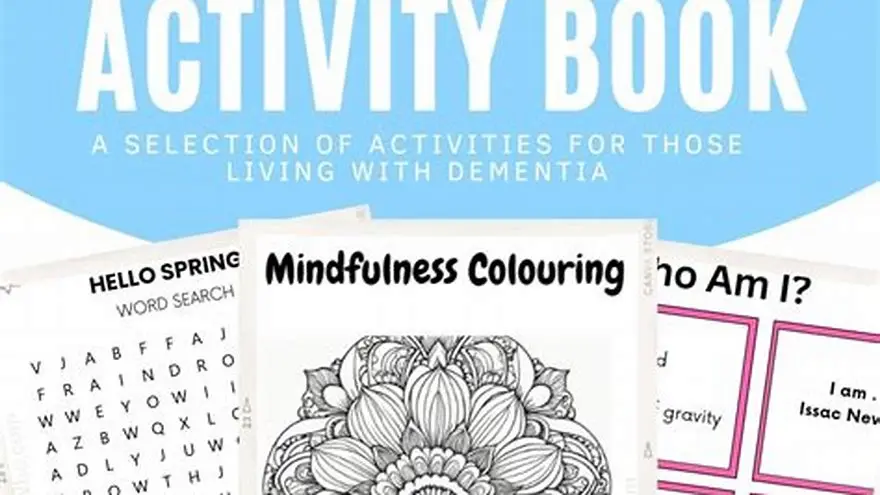
Five printable worksheets designed for different dementia stages, from conversation cards to simple sorting tasks.
Start with conversation cards for mild memory loss, picture sorting for moderate dementia, and single-step folding or matching for advanced stages. Each activity takes 10 to 30 minutes and prints on standard Letter or A4 paper.
On this page (8 sections)
- The short version
- Why most dementia activities miss the mark
- Conversation cards for mild memory loss
- Picture sorting and matching for moderate dementia
- Single-step tasks for advanced dementia
- Using animals and movement in dementia activities
- Choosing activities for care homes versus at home
- Questions people still ask
Part of our guide on features that aid memory and engagement
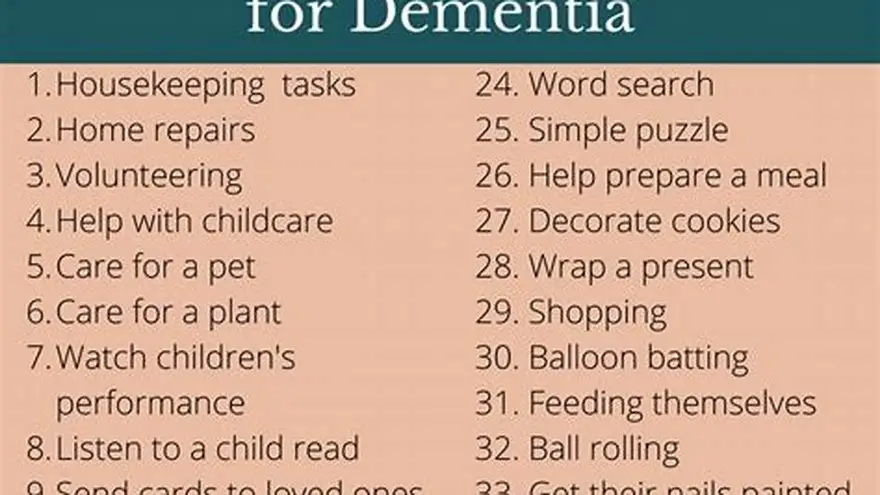
Most activity sheets for dementia are either too childish or too hard—these five match actual cognitive levels and print in minutes.
| Session length | 10 to 30 minutes |
|---|---|
| Best themes | Animals, food, family photos |
| Print size | 14pt text minimum, 18pt better |
| Stages covered | Mild, moderate, advanced |
| Supervision needed | Yes, for all levels |
The short version
- Match activities to current abilities: frustration comes from tasks that are one level too hard
- Picture-based worksheets work better than word-heavy ones once reading becomes effortful
- Repetition is fine; the same activity can bring satisfaction each time
- Keep sessions short: 10 to 20 minutes is often the sweet spot
- Animals, food and family themes trigger more engagement than abstract puzzles
Why most dementia activities miss the mark
The problem with most printable activities is they assume a single level of ability. A crossword that worked six months ago now causes visible distress. A picture book meant for toddlers feels insulting. You need activities that match where your loved one is right now, not where they were or where a generic 'senior' might be.
Dementia progresses through recognizable stages, and each one changes what feels rewarding. In mild memory loss, someone might enjoy conversation prompts or simple word games but struggle with multi-step instructions. By moderate dementia, reading becomes harder and pictures carry more meaning than text. In advanced stages, single-step tasks like folding or matching textures bring calm without demanding recall.
The activities below are sorted by cognitive demand. Start with the level that feels slightly easier than you think is needed. Success matters more than challenge. If the activity finishes in five minutes and brings a smile, that is a win. If it sits half-done and the person looks confused, drop down one level.
Caregivers at home often need activities that require minimal setup and can be repeated without losing their appeal. Activity directors in care homes need variety but also consistency: residents do better with familiar formats. Both groups benefit from worksheets that print clearly, use large text, and respect the person's adult identity. People in this spot often ask about printable dementia activities pdf as well.
Conversation cards for mild memory loss
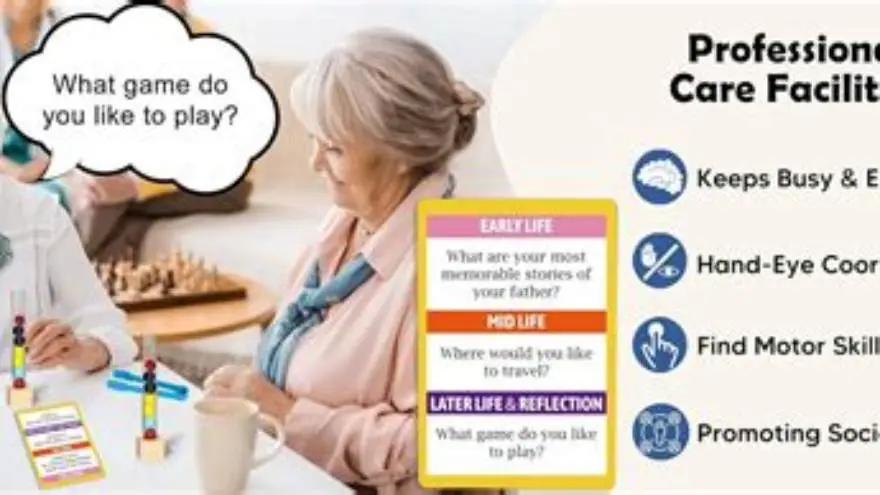
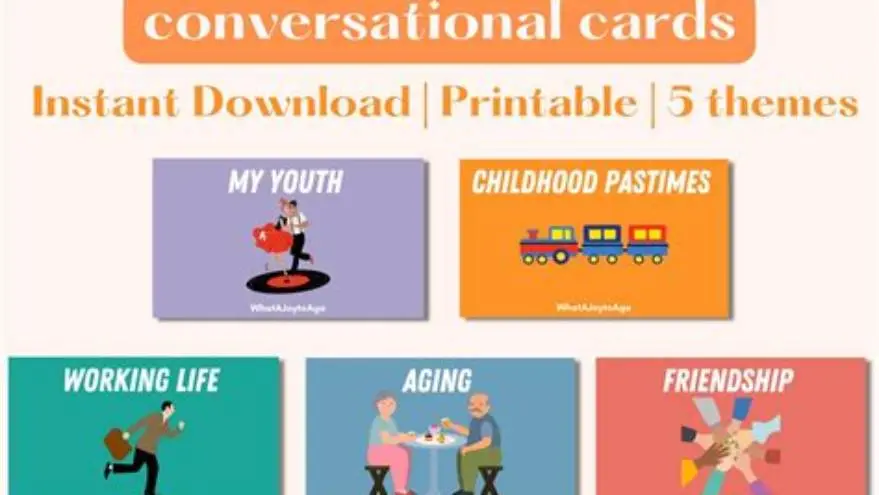
Conversation cards work well in the early stages when speech is intact but topics feel repetitive or stall. Each card carries a single prompt: 'What was your first job?' or 'Describe your favorite season.' The person reads the card aloud or you read it to them, then they respond. There are no wrong answers and no scoring.
Print a set of 12 to 20 cards on cardstock if you have it, or regular paper folded in half. Use 18pt type so the text is easy to see. Themes that work best are childhood memories, food preferences, holidays, pets, and favorite places. Avoid prompts that require recent recall or depend on current events: those often lead to dead ends.
A session lasts 15 to 30 minutes. You can reuse the same cards weekly; the prompts feel fresh each time because memory of the last session fades. Some families laminate a set and keep it in a basket by the chair. The real value is not the card but the conversation it starts and the chance to listen without correcting. We cover easy dementia activities for seniors in its own article.
For caregivers at home, conversation cards fill the awkward silences during a meal or a long afternoon. In care homes, they work well in small groups of two or three residents, with a staff member guiding the flow. The cards give structure without making anyone feel tested. We built a set of 48 conversation cards into the Gentle Minds Activity Kit, organized by theme with a guide for family carers who are new to this approach.
Picture sorting and matching for moderate dementia
When reading becomes effortful, switch to activities built around pictures instead of words. Picture sorting asks the person to group images by category: animals in one pile, tools in another, food in a third. Matching pairs of identical images or pairing an object with its use also works well. These tasks rely on recognition rather than recall, which stays stronger longer.
Print pictures at least two inches across so details are visible. Use high-contrast images with plain backgrounds: a red apple on white, not a bowl of mixed fruit. Avoid abstract art or cluttered scenes. The sorting itself takes 10 to 20 minutes, but some people enjoy looking at the pictures for much longer. That is fine. The goal is engagement, not completion. People in this spot often ask about clear games designed for dementia as well.
Laminating the pictures or gluing them to cardboard makes them easier to handle and means you can reuse them. Store sorted sets in labeled envelopes. Themes that work reliably are farm animals, kitchen items, flowers, and tools. Photos of family members, especially from decades past, often trigger recognition and smiles even when names are lost.
This activity works one-on-one or in small groups. In a care setting, residents often help each other without realizing it, pointing at a picture or sliding it toward the correct pile. At home, it is a calm activity for a visiting grandchild to do alongside their grandparent. Sorting feels purposeful, and repetition is fine: the task can be satisfying every time.
| Activity | Cognitive demand | Best stage | Session length |
|---|---|---|---|
| Conversation cards | Recall and speech | Mild | 15–30 min |
| Picture sorting | Recognition | Moderate | 10–20 min |
| Matching pairs | Visual matching | Moderate to advanced | 10–15 min |
| Texture matching | Sensory only | Advanced | 5–10 min |
Single-step tasks for advanced dementia
In advanced stages, activities need to be simple, sensory, and immediate. Multi-step tasks cause confusion. Instead, offer single-action activities: folding towels, matching fabric swatches by texture, stacking nesting cups, or wiping a table with a damp cloth. These are not worksheets in the traditional sense, but they are structured activities that bring calm and a sense of purpose. If that sounds like your situation, read up on dementia reminiscence conversation cards next.
Printable options at this stage include large, bold shapes to trace with a finger, high-contrast coloring pages with only two or three large sections, or matching a printed picture to a real object placed beside it. The activity might last only five minutes. That is enough. Repeat it later the same day if the person seems restless.
Touch matters more than vision here. Textured paper, fabric samples, or pages with raised stickers give something to look at. Some families print large photos of the person's old home, car, or pet and mount them on sturdy cardboard for handling. Looking at the photo and talking about it (even if the words do not come) offers connection.
These activities work best in quiet settings without background noise. At home, a clear table in good light is all you need. In care homes, staff often do these activities during one-on-one time rather than in groups, because each person's pace and attention span varies widely. The goal is not achievement but presence and reduced agitation.
Using animals and movement in dementia activities
Animals bring reliable engagement across all dementia stages. Photos of dogs, cats, horses, and birds trigger smiles and often spontaneous stories, even from people who rarely speak. Printable activities can include animal picture sorting, matching baby animals to adults, or conversation cards about childhood pets. Stuffed animals or robotic pets used alongside printed pictures add a tactile layer.
Movement-based activities work well for people who are restless or have trouble sitting still. Print large footprints and tape them to the floor in a path around the room. Walking the path becomes a purpose. Print simple balloon or ball toss score sheets and use a soft foam ball; the scoresheet gives the activity structure even if the numbers do not get filled in accurately.
Chair exercises guided by printed picture cards also work. Each card shows a single stretch or movement: arms up, touch toes, roll shoulders. A caregiver or activity director holds up the card and demonstrates. The person mirrors the movement. Sessions last 10 to 15 minutes. Physical activity helps with sleep and reduces afternoon agitation, but it must be gentle and voluntary: never forced.
In care homes, animal visits or movement breaks often pair well with printed activities as part of a weekly routine. At home, a walk around the block followed by a short sorting activity can anchor the late afternoon, the time when confusion and restlessness often peak. The combination of movement, purpose, and calm creates a rhythm the person can rely on.
- Animal themes: print cards with one animal per page, large and high-contrast, for sorting or conversation starters
- Movement paths: tape printed footprints or arrows to create a safe indoor walking route
- Chair exercises: use picture cards showing one stretch each, with simple line drawings
- Sensory add-ons: pair printed animal pictures with stuffed animals or textured fabric samples
Choosing activities for care homes versus at home
At home, you are usually working one-on-one with a family member, and activities can be informal and flexible. You can stop mid-task, repeat it daily, or switch to something else without explanation. Printable activities at home need to be simple to store, quick to set up, and repeatable without losing their appeal. Laminated cards, a small basket of printed pictures, and a folder of conversation prompts are enough.
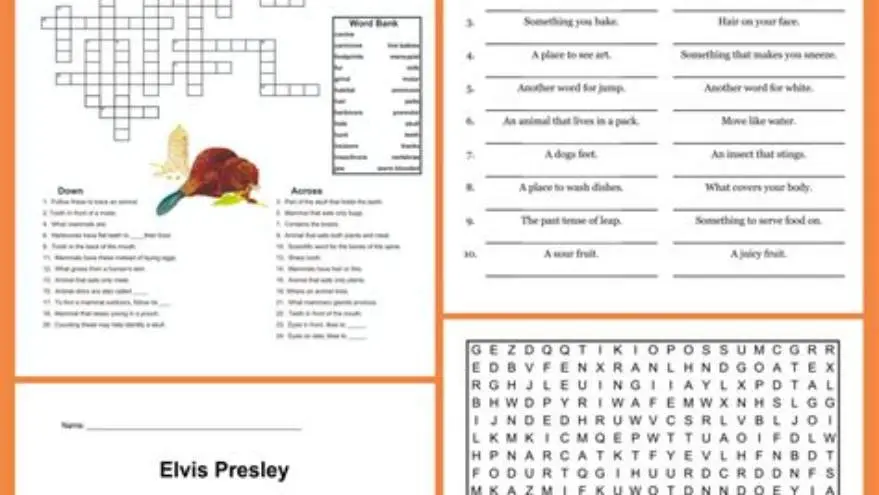
In care homes, activity directors manage groups and need materials that work for residents at different cognitive levels sitting in the same room. Printable activities must be easy to photocopy, clearly labeled by difficulty, and durable enough for repeated use. Group activities like picture bingo, simple word searches with large print, or shared sorting tasks let higher-functioning residents help those who need prompts.
Care settings also need activities that fit a schedule. A 20-minute small-group session before lunch needs a clear start and end. Materials must be gathered and put away quickly. At home, the same activity might stretch over an hour with breaks for tea, and that is fine. Neither approach is better; they solve different problems.
Both settings benefit from themed activity packs: a set of five animal activities, a set of holiday-themed worksheets, or a month of conversation cards. At home, these go in a drawer and get pulled out as needed. In care homes, they go in labeled folders so any staff member can grab the right one. We designed the Gentle Minds Activity Kit to work in both settings, with activities at three levels so families and professionals can match tasks to the person's current abilities without needing separate products.
| Factor | At home | In care homes |
|---|---|---|
| Group size | One-on-one | Small groups of 3–8 |
| Session length | Flexible, 10–60 min | Fixed, usually 20–30 min |
| Storage | Drawer or basket | Labeled folders or bins |
| Repetition | Daily is fine | Weekly rotation to avoid boredom |
| Difficulty range | One level | Multiple levels in the same session |
Questions people still ask
Can I reuse the same activity multiple times?
Yes. People with dementia often do not remember doing the activity before, and even if they do, the sense of familiarity can be comforting rather than boring. Reuse the same picture sorting set or conversation cards weekly. If someone says 'we did this already,' just smile and say 'let's do it again' without making it a big deal.
What if the person refuses to do the activity?
Do not push. Offer it at a different time of day or try a different activity. Refusal often means the task is too hard, the person is tired, or they do not understand what is being asked. Drop down to a simpler activity or switch to something sensory like looking at photos together.
How do I know which stage of dementia my loved one is in?
You do not need a formal assessment to pick an activity. Start with one that feels slightly easier than you think is needed. If the person completes it without frustration and seems engaged, you have the right level. If they look confused or upset, go simpler. Abilities can also vary day to day, so flexibility matters more than precision.
Are large-print word searches still appropriate for dementia?
In mild memory loss, yes, if the person enjoyed them before and can still read comfortably. Use simple word lists and large grids. Once reading becomes effortful or the person cannot explain what they are looking for, switch to picture-based activities instead. Word searches stop being fun when they become frustrating.
Can I use these activities with someone who has advanced Alzheimer's?
The single-step and sensory activities, yes. Conversation cards and sorting tasks, no. Advanced Alzheimer's requires activities with no memory demand and minimal instruction: tracing shapes, matching textures, or holding and looking at large photos. Keep sessions short and stop as soon as the person loses interest.
Ready to try it? It provides printable activities sorted into three difficulty levels with a caregiver guide, solving the exact problem of matching tasks to current abilities.
See the activity kit