Dementia activities for seniors: 7 printable, easy, and engaging options
Printable, easy dementia activities tailored for seniors, including at-home and care home options to keep minds calm and engaged.
Printable dementia activities for seniors should focus on gentle, large-print puzzles and simple games that match cognitive levels, avoid frustration, and foster calm engagement. The Gentle Minds Activity Kit offers 130+ pages with three difficulty levels, ideal for this purpose.
On this page (8 sections)
- The short version
- Printable dementia activities for seniors need clear, calm design
- Activities suitable for care homes require group and individual balance
- Physical and cognitive activity ideas must be gentle and achievable
- Free and simple worksheets are useful but limited by lack of tailoring
- Group and individual options make activities flexible for daily use
- Dementia activities for seniors with Gentle Minds Activity Kit
- Questions people still ask
Part of the guide: Printable word games for dementia patients: what makes them easy and engaging
Simple, printable dementia activities designed for calm success and tailored to seniors’ changing abilities keep engagement positive and frustration low.
| Printable pages | 130+ |
|---|---|
| Activity levels | 3 (Gentle, Easy, Steady) |
| Suitable for | Memory loss adults |
| Formats | US Letter & A4 |
| Conversation cards | 48 included |
| Suitable for | Home & care homes |
| Activity types | Puzzles, games, conversation |
The short version
- Choose activities with large print and clear instructions to aid seniors with vision or memory loss.
- Use activities that promote success, avoiding frustration by matching difficulty to ability.
- Printable kits with multiple levels save time and offer variety for caregivers and activity coordinators.
- Physical, cognitive, group, and solo activities should be balanced for best engagement.
- Simple, free worksheets can supplement paid kits but may lack tailored difficulty levels.
Printable dementia activities for seniors need clear, calm design
Seniors with dementia often struggle with standard puzzles due to small print and complex instructions. Use large-print puzzles and simple word games to reduce visual strain and cognitive overload. Printables designed specifically with dementia in mind usually have clear fonts above 18-point size and minimal clutter.
Simple activities should avoid requiring exact answers, as this can cause frustration or anxiety. Look for worksheets that encourage participation without pressure for correctness.
Free printable word searches, sudoku with fewer numbers, and mazes with wide paths can often be found online but usually lack differentiation by dementia stage. Some caregivers create their own by enlarging fonts in document editors, though this takes time and trial to get right.
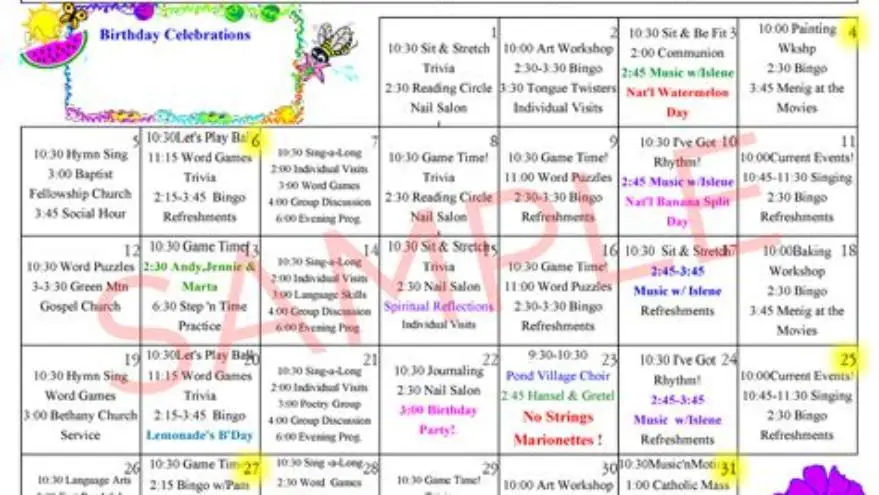
Fonts with high contrast between text and background further improve readability. Black text on a white or pale yellow background is easier on aged eyes than gray or pastel colors. Avoid busy patterns behind text to keep focus on the words. Before you commit to anything, it is worth looking at practical senior calendar.
Including simple images or icons next to instructions can guide seniors non-verbally and reduce confusion. For example, a small clock icon beside a time-related step helps convey meaning without extra words.
Test printouts on different paper types and sizes to find what seniors handle best. Thick, matte paper reduces glare, and printing on A4 or letter size rather than smaller pages prevents crumpling and frustration.
- Print size - use at least 18-point font for readability
- Layout - avoid crowded pages; plenty of white space
- Instructions - keep steps simple and clear
Activities suitable for care homes require group and individual balance
Care home residents benefit from both group activities encouraging social connection and individual tasks that respect varying energy and cognition levels. Group games like simple bingo or themed word searches foster camaraderie. Before you commit to anything, it is worth looking at dementia printable puzzles.
Still, individual puzzles permit quiet, focused engagement when group settings are overwhelming. Activity directors must stock diverse materials covering multiple ability levels and interests.
Printed kits that include conversation cards and caregiver guides help staff facilitate meaningful interactions and avoid pushing residents beyond their comfort zones.
Scheduling activities at consistent times helps residents anticipate and prepare mentally, improving participation. Some seniors respond well to a predictable routine that balances active group sessions with quiet individual moments. We cover dry erase laminated sheets durability in its own article.
Encourage caregivers to observe group dynamics and adjust games accordingly. For instance, if a bingo game becomes too competitive or stressful, shifting to a cooperative word search where everyone works together can maintain engagement.
In individual activities, allow seniors to choose the difficulty level themselves or with gentle guidance. This autonomy reduces resistance and builds confidence as they feel more in control of the activity pace and challenge.
- Group games - promote socialization and shared success
- Individual puzzles - allow for personalized pace
- Staff guides - support effective facilitation
Physical and cognitive activity ideas must be gentle and achievable
Physical activities for dementia seniors include simple chair exercises or hand movements like sorting large puzzle pieces or stringing beads, which enhance fine motor skills and circulation.
Cognitive tasks should tap into familiar skills without demanding memory recall beyond current capabilities. Matching games, naming objects in large-print cards, and simple crosswords with very common words work well.
Over-challenging activities cause frustration and withdrawal, so build in easy 'wins' and allow flexibility to skip tasks.
Physical exercises that incorporate rhythm and music can enhance engagement and mood. Simple hand clapping or tapping to familiar tunes stimulates both motor skills and memory associations, creating a multi-sensory experience.
Cognitive tasks that draw upon personal history or interests spark more meaningful engagement. For example, matching cards featuring common objects from a senior’s past profession or hobbies can trigger recognition and conversation.
Break longer activities into short segments with clear pauses. This prevents fatigue and allows seniors to reset focus. A typical session might include 10 minutes of gentle movement, followed by a 5-minute cognitive game, and finishing with a calming sensory activity.
- Physical - chair yoga, ball toss, or sorting activities
- Cognitive - matching games, simple crosswords, naming cards
- Avoid - complex instructions or tight time limits
Free and simple worksheets are useful but limited by lack of tailoring
Many websites offer free printable puzzles like crosswords, sudoku, and mazes. These are helpful for caregivers on a budget or for supplementing paid kits. However, they don't adjust difficulty for dementia stages or include caregiver guidance.
Modifying free printables by enlarging font or simplifying the puzzle can improve usability, but this requires trial and error to avoid over- or under-challenging the user.
Free worksheets often miss social and conversational elements that support emotional well-being.
Consider combining free resources with printed conversation starters or memory cues created by caregivers.
Some free printable puzzles can be improved by using software tools designed for accessibility, such as adjusting contrast or font styles to better suit visual impairments common in dementia.
Combining free puzzles with homemade elements like photo cards or personalized labels can create more engaging and relevant activities. For example, inserting family photos into a puzzle provides emotional connection along with mental stimulation.
Caregivers should monitor responses to free materials carefully; if a puzzle causes repeated frustration or disinterest, it should be replaced or adapted. Keeping a simple log of which activities worked helps refine future choices.
- Free puzzles - easy to access but often one-size-fits-all
- Modify by enlarging print and simplifying clues
- Supplement with homemade conversation cards
Group and individual options make activities flexible for daily use
Rotating between group and individual activities keeps engagement fresh and respects fluctuating energy levels in seniors with dementia.
Group options include large-print word bingo, themed word searches, or collaborative art projects with simple steps.
Individual options include steady-paced puzzles like those in the Gentle Minds Activity Kit, which offers three difficulty levels and conversation cards to sustain interest.
Providing choice empowers seniors and supports dignity, while caregivers stay responsive to mood and attention span.
- Group - fosters social interaction, builds community
- Individual - supports quiet focus, reduces overwhelm
- Tools with multiple levels - match abilities day-to-day
Dementia activities for seniors with Gentle Minds Activity Kit
The Gentle Minds Activity Kit is a printable collection designed specifically for adults living with memory loss. It includes over 130 pages of large-print puzzles, conversation cards, and daily planning pages at three difficulty levels: Gentle, Easy, and Steady.
This kit solves common problems caregivers face: finding activities that are not childish, avoid frustration, and promote calm engagement. The included caregiver guide helps facilitate use to get the most from the materials.
Unlike free printables, it bundles everything needed and can be printed repeatedly for different users. It is not for medical treatment but for meaningful, enjoyable activity time that respects abilities.
An alternative is to manually gather and modify free puzzles from the internet, increasing font sizes and simplifying instructions. This takes more time and lacks a structured program with guidance.
- 130+ pages of printable activities
- 3 difficulty levels to match cognitive stages
- 48 conversation cards for interaction
- Caregiver guide included
- Designed specifically for memory loss adults
- Large print and clear layout
- Includes caregiver support material
- Multiple difficulty levels in one kit
- Not a medical or therapeutic treatment
- Requires printer access and paper
- One-time purchase cost
Questions people still ask
How do I choose dementia activities that avoid frustration?
Pick activities with large, clear print and simple instructions. Prioritize those allowing mistakes without pressure. Matching the activity difficulty to the senior’s current cognitive level helps prevent frustration.
Are printable puzzles suitable for all dementia stages?
Printable puzzles can suit many stages if adjusted for difficulty. Very early stages can handle traditional puzzles with large print; advanced stages need simpler, more guided activities, or conversation-based tasks.
What if my loved one loses interest quickly in activities?
Switch between physical, cognitive, group, and individual activities to maintain variety. Keep sessions short and allow breaks. Observing preferences and moods helps select the most engaging tasks.
Can care homes benefit from printable activity kits?
Yes. Printable kits with multiple difficulty levels and conversation aids help staff manage diverse resident abilities and encourage social interaction. They reduce preparation time and add structure.
Is it better to use free activity printables or paid kits?
Free printables can work if adapted carefully, but paid kits designed for dementia often save time and provide better-suited, tested materials with guidance. Consider your time, budget, and the senior’s needs.
Ready to try it? It offers a ready-to-use, large-print, multi-level activity kit specifically designed for adults with memory loss, solving common challenges caregivers face.
View Gentle Minds kit