About Me for Dementia Care: clear personal details caregivers need daily
Create a dementia-friendly About Me page with clear personal and care details caregivers need daily to ease communication and care.
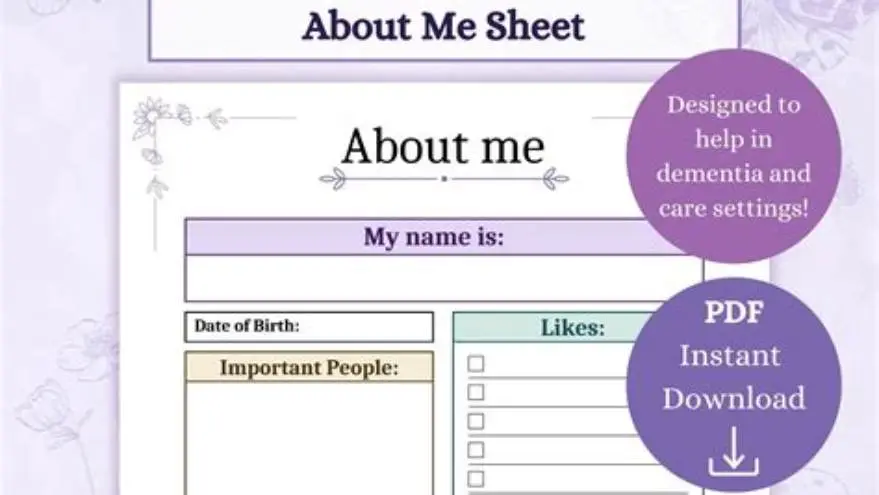
An About Me page for dementia care lists clear personal info, memory and communication preferences, care needs, and comforts to guide caregivers daily with kindness and clarity.
On this page (8 sections)
- The short version
- What key personal info to include for dementia care
- How to write about memory and communication preferences
- What care needs and comforts to highlight
- Examples of dementia-friendly phrasing for caregivers
- How to use About Me pages with dementia-friendly activities
- How to create and keep the About Me page up to date
- Questions people still ask
Part of our guide on activities for all dementia stages
A dementia care About Me page means fewer daily frustrations and better connection with clear, personal care details.
| Key info sections | 4 main areas |
|---|---|
| Memory detail length | 1-2 paragraphs |
| Care preferences | 3-5 key points |
| Printable activity pages | 130+ in kit |
| Activity levels | 3 levels |
The short version
- Include key personal info and memory details on the About Me page
- Note communication preferences clearly to reduce frustration
- Highlight care needs and comforts to improve daily support
- Use dementia-friendly wording that respects and engages
- Printable activity kits can support meaningful engagement
What key personal info to include for dementia care
Start with the basics: full name, preferred name, and date of birth. These details ground caregivers in who the person is at a glance.
Add family names and relationships to help caregivers connect the dots and involve the right people. Include contact preferences for emergencies and regular updates.
Note past occupations, hobbies, and favorite activities. This sparks conversation and reminds caregivers of the person's identity beyond dementia.
Keep personal info simple but meaningful. Avoid clutter; caregivers want quick access during busy shifts. This section sets the tone for the whole About Me page. For the detail, see our notes on coloring pages for dementia adults.
How to write about memory and communication preferences
Memory loss varies widely, so describe how dementia affects the person specifically. Use simple language like 'forgets recent events but remembers childhood' to guide caregivers.
Specify how the person prefers to receive information. Short sentences, one idea at a time, and non-verbal cues often help. Note any triggers to avoid, like complex questions or loud noises.
Mention whether the person responds better to visual prompts, gestures, or written notes. Highlight how they communicate best, whether verbally, with gestures, or using pictures. We go through easing frustration with clear puzzles step by step elsewhere on the site.
This section reduces frustration. Clear guidance helps caregivers approach conversations with patience and respect.
What care needs and comforts to highlight
List essential care needs clearly: mobility support, medication routines, meal preferences, and sleep patterns. These facts prevent uncomfortable or unsafe situations.
Note sensory comforts like favorite scents, music, or textures that soothe the person. Also mention dislikes or sensitivities, such as certain foods or fabrics. People in this spot often ask about activities for seniors with dementia as well.
Include emotional supports: familiar routines, meaningful objects, or short walks. These details help caregivers create calm environments that reduce anxiety.
Tailor the care section to daily life. Practical info here saves time and improves quality of care.
Examples of dementia-friendly phrasing for caregivers
Use positive, respectful language that emphasizes ability rather than loss. For example, say 'enjoys music and gentle exercise' instead of 'cannot walk unaided.'
Frame challenges with empathy: 'May get confused in noisy places' instead of 'cannot handle noise.' This shapes caregivers’ mindset.
Keep sentences short and concrete. Replace abstract concepts like 'memory changes' with specific examples like 'sometimes forgets names but smiles often.'
Avoid medical jargon. This page helps non-professional caregivers grasp nuances quickly and act accordingly.
How to use About Me pages with dementia-friendly activities
Pair the About Me page with suitable activities that reflect the person’s interests and abilities. Activities should bring calm and success, not frustration.
The Gentle Minds Activity Kit offers printable, large-print activities at three difficulty levels. It includes conversation cards to spark memories and connections tailored for adults with memory loss.
This kit saves time finding appropriate activities and helps caregivers maintain engagement that feels respectful and enjoyable. It does not replace medical care but supports daily well-being.
Using About Me details to choose activities maximizes success and reduces agitation.
- Activities match individual interests
- Multiple difficulty levels available
- Conversation cards promote connection
- Not a medical or therapeutic tool
- Requires printing and preparation
How to create and keep the About Me page up to date
Start by interviewing family members and the person if possible to gather details. Use a clear template focusing on the four key sections: personal info, memory and communication, care needs, and phrasing.
Keep the page accessible to all caregivers, whether family or professionals. Laminating or using a binder helps durability.
Review and update the page regularly: every 3 to 6 months or when care needs change. This ensures relevance as dementia progresses.
A living document like this keeps caregivers informed and reduces mistakes or frustration caused by outdated info.
- Gather info from family and care team
- Fill in clear, concise About Me template
- Share with all caregivers and keep accessible
- Review and revise regularly to stay current
Questions people still ask
What if the person with dementia can’t answer questions for the About Me page?
Rely on family members and previous records. Observe daily habits and preferences to fill gaps. The page evolves as more is learned.
How long should the About Me page be?
Keep it brief: one to two pages. Caregivers need quick, digestible info at a glance, especially during busy care routines.
Can I use the About Me page for all stages of dementia?
Yes, but update details as abilities and needs change. Early-stage info differs from late-stage but the format stays similar.
How can caregivers use communication preferences effectively?
By respecting the stated preferences, caregivers avoid frustration and improve connection. For example, using simple sentences or visual aids as noted.
Are there free tools to create an About Me page?
Templates from dementia organizations and care sites are available free online. Customize them to fit your loved one’s unique needs.
Ready to try it? It offers printable, dementia-friendly activities aligned with personal interests and abilities, supporting engagement and calm.
Try the activity kit