Printable dementia-friendly brain games with simple rules and large print
Look at printable brain games for dementia patients with large print and simple rules that promote calm, success, and engagement without frustration.
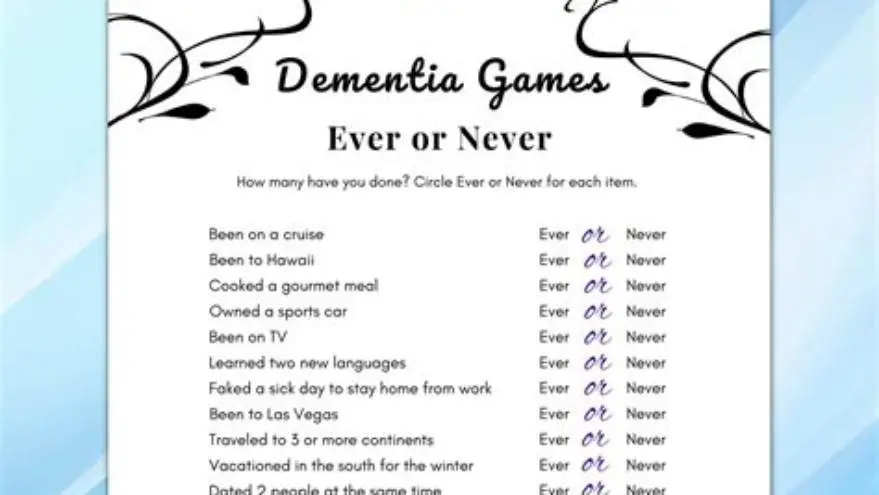
Printable brain games for dementia patients must have simple rules and large clear print to reduce frustration and promote calm engagement. Games with multiple difficulty levels and no wrong answers work best to support memory and cognition gently.
On this page (8 sections)
- The short version
- Which printable games work well for dementia patients
- What makes a brain game dementia-friendly
- How to use printable brain games to engage memory and cognition
- Printable dementia-friendly brain games with simple rules and large print
- Alternative ways to find or create printable brain games
- When printable brain games might not be enough
- Questions people still ask
Part of our guide on printable word games for dementia patients
Find dementia-friendly printable brain games with clear large print and simple rules that reduce frustration and support calm engagement.
| Print size | Large print |
|---|---|
| Difficulty levels | 3 graded levels |
| Activity pages | 130+ |
| Conversation cards | 48 cards |
| Printable format | PDF, US Letter & A4 |
The short version
- Choose printable games with large, clear print and simple rules.
- Dementia-friendly games avoid frustration by offering no wrong answers.
- Engagement improves when activities encourage conversation and success.
- Printable kits with graded difficulty support varying cognitive levels.
- Use games that promote calm, connection, and gentle stimulation.
Which printable games work well for dementia patients
Dementia patients respond best to printable games with large, clear fonts and simple instructions. These reduce confusion and eye strain. Puzzles like word searches, big-print crosswords, and easy mazes work well when scaled to cognitive ability.
Successful games avoid complex rules and allow multiple approaches, so players don’t feel failure. Activities designed with no wrong answers encourage participation and lower anxiety. Repetition and familiar themes help maintain interest and recall.
Games that include conversation prompts support social connection, which benefits mood and cognition. Offering a range of difficulty levels lets caregivers adjust to changing abilities and keeps players challenged without overwhelming them.
Games that incorporate familiar objects or places from the patient’s past can trigger recognition and comfort. For example, a printable matching game with images of common household items or local landmarks may spark memories. This personal connection increases the likelihood of engagement and reduces anxiety. People in this spot often ask about brain games for seniors printable as well.
Including visual cues alongside text supports those with declining reading skills. Pictures next to words or simple icons aid comprehension. For instance, a word search with pictures of fruits next to the word list helps players associate the words with images, making the task less abstract and more accessible.
Games that allow players to self-correct without penalty encourage persistence. For example, a simple maze that lets players trace paths with a pencil and erase mistakes reduces stress. This promotes repeated tries and builds confidence, which is especially important for those with fluctuating attention or memory.
- Print clarity: use at least 18-point font or larger
- Simple rules: one or two steps with examples
- No penalty for mistakes: promotes confidence and calm
- Multiple difficulty levels to match ability
- Conversation cards to stimulate engagement
What makes a brain game dementia-friendly
Dementia-friendly brain games combine simplicity, clarity, and calm engagement. Large print reduces visual stress. Clear, concise instructions prevent confusion. Games should feel achievable to avoid frustration. We go through features that make play enjoyable step by step elsewhere on the site.
Avoid timed activities or challenges that pressure speed or accuracy. Gentle pacing supports focus and success. Visual contrast matters: black text on white or off-white backgrounds typically works best.
Involving senses beyond sight, like touch or sound, can enhance engagement if printable games include physical components or are paired with caregiver interaction. Providing answers or hints helps caregivers assist without discouraging players.
Games with repetitive structures help reinforce learning and reduce confusion. For example, word searches that repeat similar layouts let players focus on the task instead of figuring out new rules each time. This consistency builds comfort and familiarity. We go through word games for dementia early step by step elsewhere on the site.
Games should avoid cluttered pages or too many competing elements. White space around text and images helps visual focus. For example, spacing out crossword clues and answers with wide margins prevents overwhelming the player.
Including options for caregiver involvement improves the experience. Caregivers can read instructions aloud or guide players through steps. Printables that suggest caregiver roles in prompts or answers enhance interaction and support.
How to use printable brain games to engage memory and cognition
Start by selecting activities with difficulty suited to the player’s current abilities. Begin with easier games to build confidence, and advance as comfort increases. Use the games at consistent times daily for routine and expectation.
Encourage players to verbalize thoughts or memories linked to puzzles, using conversation cards or prompts. This turns the activity into a shared experience rather than a test.
Keep sessions short (usually 15 to 30 minutes) to avoid fatigue. Offer breaks and praise effort rather than completion. Be flexible; if frustration arises, switch to a simpler game or non-verbal activity.
Try pairing printable games with verbal storytelling or reminiscence. For example, after completing a word search about animals, ask the player to share a favorite pet story. This deepens engagement beyond the game itself.
Use printables as tools for routine. Playing the same game at the same time daily helps build anticipation and comfort. For example, a morning crossword followed by a snack can become a soothing ritual.
If a player struggles with reading, point to words and say them slowly while playing. This multisensory approach reinforces recognition and keeps the activity interactive rather than passive.
- Pick a game matching ability level.
- Explain rules clearly and simply.
- Use conversation prompts during play.
- Keep session brief, watch for fatigue.
- Praise effort and switch if frustrated.
Printable dementia-friendly brain games with simple rules and large print
The Gentle Minds Activity Kit fits well here. It offers over 130 printable pages with activities in three difficulty levels: Gentle, Easy, and Steady. Each activity has simple rules and large, clear print designed for adults living with memory loss.
The kit includes 48 conversation cards that encourage sharing memories and discussions, fostering connection during activities. It also provides a caregiver guide to help facilitate use and tailor the experience.
Because it is printable, you can reuse materials for multiple sessions or different users. It avoids childish or overly simplistic designs, respecting adult dignity. The kit is a practical way to ensure engaging, dementia-friendly games without endless searching.
Alternative ways to find or create printable brain games
If you prefer free or DIY options, you can find many large-print word searches, sudoku, and crossword puzzles online. Adjust font size in print settings to make them dementia-friendly. Avoid overly complex puzzles or very small print.
Creating your own simple puzzles with familiar themes can work well. Use word lists relevant to the person’s life or interests. Handwriting large letters or printing large fonts on blank grids also helps.
For those who want to design and publish their own materials, tools like BigPrint Puzzle Studio let you create large-print puzzles with custom themes. However, these require time and effort to learn and use effectively.
| Feature | Gentle Minds Activity Kit | Free/D.I.Y. Games | BigPrint Puzzle Studio |
|---|---|---|---|
| Print size | Large and optimized | Variable, adjustable | Large and customizable |
| Difficulty levels | 3 graded levels | User selects or customizes | Customizable |
| Ease of use | Ready-to-print kit | Varies, manual setup | Requires learning tool |
| Conversation aids | Included cards | Usually not included | Needs manual addition |
| Cost | One-time purchase | Free | One-time purchase |
When printable brain games might not be enough
Some dementia patients may outgrow printable activities as their cognitive function declines. They might need more hands-on sensory activities or personalized support.
If frustration or withdrawal occurs despite careful game selection, it could signal a need to shift focus to music therapy, art, or physical activities.
Printable games support engagement but don’t replace medical care or professional cognitive therapy. Knowing when to seek additional support is crucial for overall well-being.
Questions people still ask
Can printable brain games improve memory in dementia patients?
Printable brain games provide gentle stimulation and support engagement but do not improve memory or cure dementia. They help maintain connection and reduce frustration.
How often should dementia patients do printable brain games?
Short daily sessions of 15-30 minutes work best to keep engagement without fatigue. Consistency helps create routine and enjoyment.
Are there printable brain games suitable for late-stage dementia?
Late-stage dementia may require very simple activities with minimal rules and sensory focus rather than traditional puzzles. Printable games should be adapted carefully.
Can caregivers modify printable games for dementia patients?
Yes, caregivers can simplify puzzles, enlarge print, or reduce options to match the player’s abilities and keep activities enjoyable.
Where can I find large-print printable brain games for dementia?
Sources include dementia activity kits like Gentle Minds, online free printables adjusted for large print, and puzzle creation tools for custom activities.