Hangman for seniors: printable word and phrase lists by theme
Good hangman words for seniors are familiar, 4 to 8 letters long, and drawn from themes they already know - 1950s music, kitchens, nature, hymns. Avoid rare vocabulary like "onyx". Print a themed list in large type, cover it, and pick words as you play.
On this page (8 sections)
- Quick recap
- Why the classic hangman words frustrate older players
- The nostalgia list: words from the 1950s and 60s
- Everyday theme lists: food, nature, hymns and famous names
- Short easy words or longer phrases: which to use when
- A gentle version of hangman for players with dementia
- How to print it large and run the game on paper
- Still wondering?
Part of our guide on activities for seniors large print printable
Key figures
- Best word length
- 4 to 8 letters
- Dementia-friendly length
- 3 to 5 letters
- Recommended print size
- 16 pt or larger
- Letters to reveal first
- vowels, then T, S, N
- Good first themes
- food and 1950s nostalgia
- Minimum for a group
- one paper and pencil
Quick recap
- Skip rare classic hangman words like rhythm and onyx; familiarity beats difficulty
- Theme the words - nostalgia, food, hymns and names turn guessing into conversation
- For players with dementia, use 3 to 5 letter everyday words and guess together
- Print lists at 16 to 20 pt or larger and write blanks on plain paper, one letter per box
- A theme flops when it needs explaining; drop it and try a more everyday one
Why the classic hangman words frustrate older players
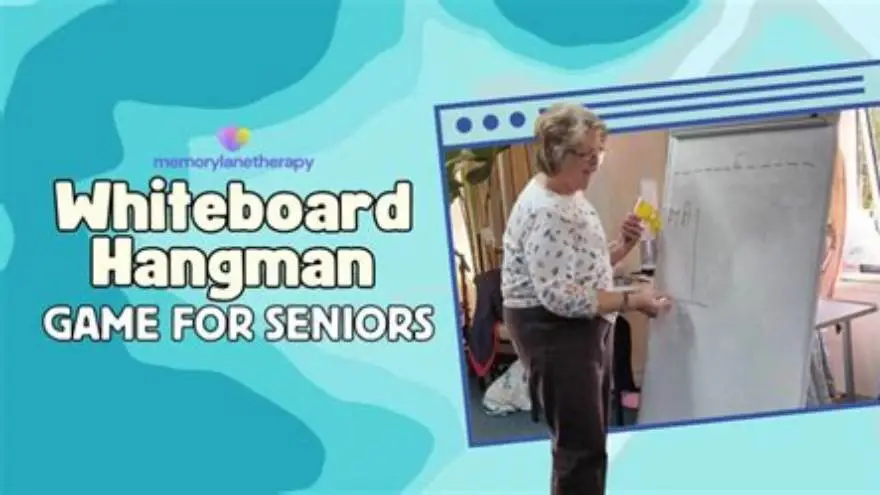
The words that make hangman "hard" in puzzle books - rhythm, onyx, gypsy, jazz - are hard for the wrong reason. They are rare in everyday speech, so a player who cannot recall them is not being out-thought, they are being asked to guess vocabulary they may never have used often. For an older player, especially one with some memory loss, that feels like a test rather than a game. The joy of hangman comes from the middle of the game, when half the letters are up and you can feel the word coming. Rare words deny players that moment.
A good senior-level word is one the player would say out loud without hesitation. Kitchen words, weather words, song titles, place names. Length matters less than familiarity: a confident 8-letter word like SANDWICH plays better than a stumped 4-letter one like IVY. Vowels should appear early so the structure shows. And the word should belong to a theme the player chose, because a theme turns each guess into a small conversation - "chowder, did you ever make it with salt pork?" - instead of silence between turns.
One practical rule from running the game: if a word would need explaining after it is revealed, it is the wrong word. Retire it. The list should never make anyone feel slow.
- Good: TEAPOT, GARDEN, DANCING, SUNDAY, HONEY - familiar, vowel-rich, sayable
- Poor: RHYTHM, ONYX, SYZYGY, FJORD - rare, vowel-light, show-off words
- Rule of thumb: the player should be able to use the word in a sentence
| Measure | Classic hard words | Senior-friendly words |
|---|---|---|
| Familiarity | Rarely used in speech | Used in daily life |
| Vowels | One or none | Two or more, early |
| Feeling at reveal | "I'd never have got that" | "Of course!" |
| Best length | 6-10 letters | 4-8 letters |
The nostalgia list: words from the 1950s and 60s
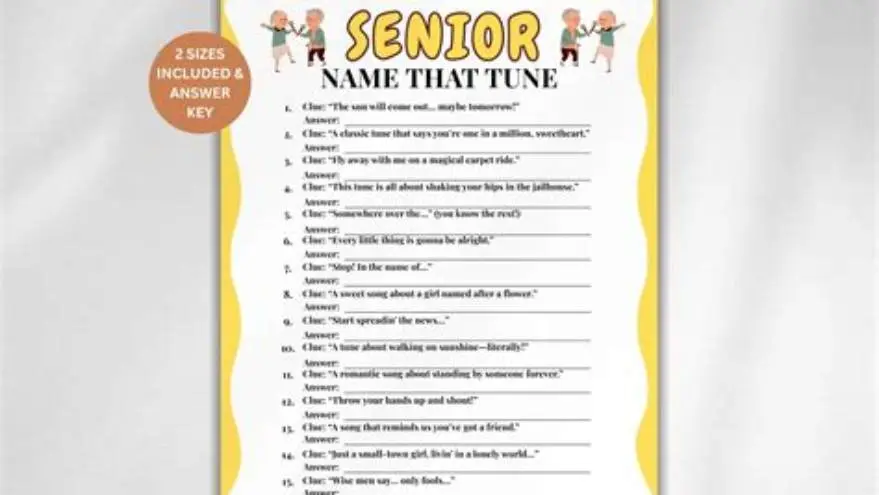
This is the theme that works most often, because it sits in long-term memory, which stays strong long after recent memory fades. Every word below is something a player who was young in the fifties or sixties has said, danced to or eaten. Print the list, fold the paper, and pick words without showing them. The other half of this decision is name that tune for seniors.
Start with JUKEBOX, DRIVE-IN, SODA FOUNTAIN and RECORD for places and things. Move on to names: ELVIS, BUDDY, RITCHIE for the singers, or LUCY and DESI if your player watched television. Dances are wonderful because they invite a story - STROLL, TWIST, JITTERBUG, CHA CHA. Cars work too: FINS, BELAIR, THUNDERBIRD, CONVERTIBLE.
The longer phrases - SODA FOUNTAIN, BLUE SUEDE SHOES - play best with confident players who enjoy a long grind. With a mixed group, keep the phrases for last, after two or three short wins have warmed the table up. Expect the game to pause often; that is not a failure of the theme, it is the point of it.
- Short: ELVIS, TWIST, SODA, DANCING, RECORD, CHROME, MILKSHAKE, PROM
- Medium: JUKEBOX, JITTERBUG, DRIVE-IN, CONVERTIBLE, MALT SHOP, HOPSCOTCH
- Phrases: BLUE SUEDE SHOES, SODA FOUNTAIN, SOCK HOP, ROUTE 66, SADDLE SHOES
- Sits in strong long-term memory
- Every word starts a conversation
- Works one-on-one or in a group
- Needs players born before about 1960
- Longer phrases can drag with beginners
Everyday theme lists: food, nature, hymns and famous names
Four more themes cover most tables. Each list below is written to the same standard: familiar, vowel-friendly, 4 to 8 letters unless marked as a phrase. People in this spot often ask about printable 25x25 word search large letters as well.
Food and kitchen is the safest first theme because everyone eats. Short words: BREAD, APPLE, BUTTER, CHEESE, ONION, TEAPOT, FRYING PAN. Medium: KETTLE, BISCUIT, GRAVY BOAT, SANDWICH, REFRIGERATOR (as a challenge). Nature follows closely: GARDEN, ROBIN, WILLOW, THUNDER, AUTUMN, BIRDHOUSE, DAFFODIL.
Hymns and songs suit players who grew up in church or around a piano. Use titles: AMAZING GRACE, HOW GREAT THOU ART, IN THE GARDEN, Danny Boy, You Are My Sunshine, Que Sera Sera. Half the fun is singing the line once it is solved. Famous names round it out: movie stars (GRACE, CARY, AUDREY), presidents (EISENHOWER as a long-game word), or local names - your town, the school, the lake everyone swam in.
| Theme | Sample words | Plays best with |
|---|---|---|
| Food and kitchen | BREAD, TEAPOT, FRYING PAN | Anyone; best first theme |
| Nature | ROBIN, AUTUMN, BIRDHOUSE | Gardeners, walkers |
| Hymns and songs | AMAZING GRACE, DANNY BOY | Church and music backgrounds |
| Famous names | ELVIS, AUDREY, local places | Confident guessers, groups |
Short easy words or longer phrases: which to use when
Short words are not easier hangman in a strict sense - a 3-letter word gives fewer chances to guess right. But for seniors, short familiar words are easier to enter and quicker to finish, which matters when stamina or attention runs out. The right question is not "how hard should this be?" but "how long can this player happily stay in the game?" There is more on senior-friendly this or that prompts in a separate guide.
Use 3 to 5 letter words (CUP, ROSE, MILK, SUNDAY is pushing it) for warm-ups, for players with memory loss, and for anyone who tires quickly. Use 6 to 8 letter words as the main course for confident players. Save phrases for group play, where teammates pool their guesses and nobody owns a wrong letter. Phrases like BLUE SUEDE SHOES or FRIED CHICKEN AND WAFFLES also suit a host who wants the game to last through a whole coffee hour.
A simple evening works as a ladder: two short words, two medium, one phrase. If the player is cruising, climb; if the second word was a slog, stay where you are. Nobody has ever complained that hangman was too easy - they complain when it stalls.
- Warm-up words: CUP, ROSE, MILK, HOME, BIRD, CAKE
- Main-course words: SANDWICH, THUNDER, BIRDHOUSE, MELODIES
- Group phrases: SODA FOUNTAIN, AMAZING GRACE, FRIED CHICKEN
- Short words build momentum fast
- Phrases stretch group play
- The ladder adapts to any player
- Very short words can still stump on unusual letters
- Phrases drag in one-on-one play
A gentle version of hangman for players with dementia
Hangman adapts well to memory loss because it has one clear rule and no board to learn. The adaptations are small but they change everything. First, shorten the word: 3 to 5 letters, everyday vocabulary - CUP, DOG, SING, ROSE, HOME. Second, reveal more to start: put one or two letters up before the first guess, so the shape is already half-seen. Third, drop the gallows drawing, or reduce it to six simple tally marks; for some players the hanging figure is upsetting, and the tally keeps the score without it. For the detail, see our notes on festive senior craft projects.
Guess together rather than taking turns. Say "what letter do you hear in c-u-p?" and let the player point or call. A wrong guess costs nothing - use a generous count of ten to twelve misses. When the word is solved, do not rush on: say it, use it in a sentence, maybe sing it if it was a song title. That beat of recognition is the whole game at this level.
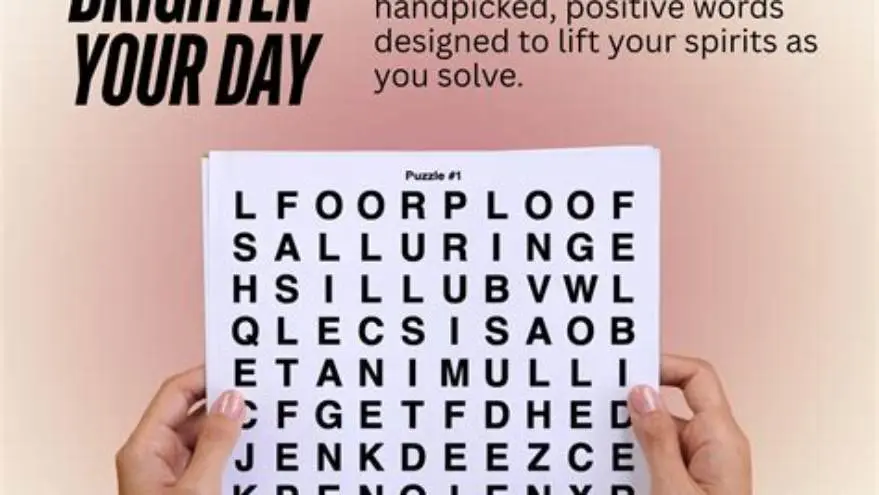
If you want ready-made material at these gentler levels, our own Gentle Minds Activity Kit is a printable large-print kit built for adults living with memory loss, with activities at three levels - Gentle, Easy and Steady - plus conversation cards and a caregiver guide. It does not contain hangman puzzles specifically, so you would still bring your own word list, but it fills an afternoon's worth of the same kind of familiar, no-wrong-answers activity. For a purely free route, a word search made from the same gentle list does similar work - our free Large Print Word Search Maker takes any word list and prints it big with an answer page.
- Use 3-5 letter everyday words: CUP, DOG, SING, HOME
- Reveal 1-2 letters before the first guess
- Allow 10-12 misses; guess together, not in turns
- Replace the gallows drawing with tally marks if it upsets
- One rule, nothing to learn
- Every solved word is a real win
- Turns easily into conversation
- Needs a prepared word list
- Attention spans vary day to day
How to print it large and run the game on paper
Hangman needs almost nothing, which is why it travels so well into care homes and kitchens. The setup below takes five minutes and covers one player or twelve. If that sounds like your situation, read up on cream paper for large print puzzles at home next.
Print the word lists at 16 to 20 point or larger, one theme per page, in a plain sans-serif font on white paper. Fold or cover the list so nobody sees the answers. For the game itself, write one blank per letter as a row of squares on unlined paper - boxes are far easier for aging eyes to count than dashes. Leave two fingers' width between rows. Give each player a black felt-tip or a soft B pencil; hard pencils and thin pens vanish on glare and poor contrast.
Running it: draw the blanks, agree the theme out loud, and reveal vowels early if the group is quiet - nothing thaws a table like the E appearing. In a group, let players call letters in rotation and pass if unsure; nobody is put on the spot. Keep the tally of misses small and visible. And when a theme stalls two words running, close the page and switch themes without comment. The lists are free to print and reuse as often as you like - that is what they are for.
- Print a themed list at 16-20 pt, one theme per page, and fold it closed
- Draw one square per letter on plain paper, rows well spaced
- Agree the theme aloud, then reveal vowels first if the table is quiet
- Take letter guesses in rotation; pass is always allowed
- Switch themes after two stalled words, without comment
Still wondering?
What are the best hangman words for seniors?
Familiar, everyday words of 4 to 8 letters with plenty of vowels: TEAPOT, GARDEN, SANDWICH, DANCING. Draw them from a theme the player knows, such as food, nature or 1950s music. Avoid rare puzzle-book words like rhythm or onyx, which frustrate rather than challenge.
Can someone with dementia play hangman?
Yes, with adjustments. Use 3 to 5 letter everyday words, reveal one or two letters before the first guess, allow generous misses, and guess together rather than in turns. Many families find it becomes a talking game as much as a word game.
How large should I print the word lists?
16 to 20 point or larger, in a plain sans-serif font on white paper. For the game itself, draw one square per blank so the number of letters is easy to count at a glance.
Why do classic hangman words not work for older players?
Words like rhythm, onyx and gypsy are rare in everyday speech, so guessing them tests vocabulary recall rather than letter logic. Familiar words keep the satisfying middle part of the game, where the word becomes guessable from its shape.
How do you run hangman for a group at a senior center?
Print one themed list, draw large blanks on paper or a whiteboard, and take letter guesses in rotation with the option to pass. Use phrases for longer sessions, since a group pools its guesses and a long word becomes a shared project.
What themes work best for hangman with older adults?
Nostalgia from the 1950s and 60s, food and kitchen words, nature, hymns and well-known songs, and famous names including local places. Test any new theme with three words; if nobody engages, move on to a more everyday one.