Jumbo print puzzle books for seniors: puzzle types and sizes
Jumbo print starts at 18-point type. Learn which puzzle types suit seniors best and how to choose books that work for low vision and memory changes.
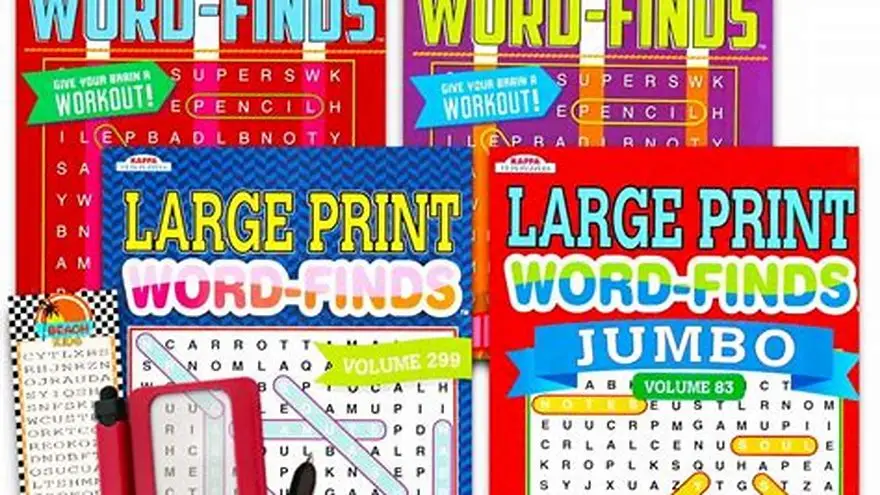
Jumbo print puzzle books for seniors use 18-point type or larger, typically with bold sans-serif fonts. Word searches, crosswords, sudoku, and large-print mazes are the most common types, selected for clear grids and generous spacing.
On this page (8 sections)
- The short version
- What print sizes qualify as jumbo for seniors
- Which puzzle types are easiest and most engaging for seniors in large print
- How to assess puzzle book usability for seniors' vision and cognitive needs
- Where to find or print free and paid large-print puzzle books
- Puzzle book features that match common vision and memory conditions
- How to print and bind your own large-print puzzle book at home
- Questions people still ask
Part of the guide: Free large-print puzzles and activities for seniors: printable options
Most large-print puzzle books still cram two puzzles per page and use 14-point type that's too small for seniors with low vision.
| Jumbo print size | 18-point minimum, 20-24 preferred |
|---|---|
| Easiest puzzle types | Word search, large-grid sudoku |
| Puzzles per page | One, with wide margins |
| Best paper weight | 60 lb or heavier |
| Ideal contrast ratio | Black ink on white or cream |
The short version
- Jumbo print means 18-point text minimum, with 20 to 24-point preferred for low vision
- Word searches and sudoku work best when grids have bold dividers and one puzzle per page
- Test usability by checking contrast, paper weight, and whether answers are separated from puzzles
- Free printable puzzles let you try different types before buying a full book
- Activity kits designed for memory loss offer better engagement than generic puzzle books
What print sizes qualify as jumbo for seniors
Jumbo print starts at 18-point type, but most seniors with low vision read more comfortably at 20 to 24 points. Regular large print sits at 14 to 16 points, which sounds big but still causes squinting under poor light or with macular degeneration. The difference shows up in how long someone can work a puzzle before their eyes tire.
Font choice matters as much as size. Sans-serif fonts like Arial or Verdana stay legible at any size because the letters don't have decorative tails. Serif fonts can blur together when printed at scale, especially if the book uses cheap paper or a home printer with low toner. Bold weight helps, but only if the publisher doesn't then shrink the grid to fit more puzzles per page.
Spacing between letters and lines decides whether a puzzle feels readable or cramped. Jumbo print books should give at least 1.5 line spacing and extra space between puzzle clues. When a word search grid runs right up against the word list, or sudoku numbers sit too close to the grid lines, even 24-point type won't save it. You'll know a book is truly jumbo when you can read a clue without your finger covering the one below it.
Publishers often print "large print" on the cover without specifying the actual point size. If the sample pages inside show two puzzles per page, it's not jumbo. One puzzle per page is the standard that works for seniors who wear reading glasses or use a magnifier. The page count goes up, but usability matters more than thickness. Before you commit to anything, it is worth looking at large print puzzle books for seniors with low vision.
Which puzzle types are easiest and most engaging for seniors in large print
Word searches top the list because they need no prior knowledge and the goal is obvious: circle the words. Seniors with memory changes can work them without frustration, and the large letters make scanning easier than in a standard-print book. The best word search books use bold grid lines and print words in a list beside the grid rather than cramming them into a narrow column at the bottom.
Large-grid sudoku comes next, especially the 4x4 and 6x6 versions that use bigger boxes and fewer numbers. Standard 9x9 sudoku can work if the grid is printed large enough that each cell holds a half-inch number. Avoid books that print the givens in one font and expect solvers to fill in a different size by hand: it creates visual confusion. Look for grids with thick dividers between boxes, not just faint lines.
Crosswords work well when the grid is generous and the clues are printed in a separate section, not squeezed beside the puzzle. Clue numbers should be large and bold. Cryptic or themed crosswords frustrate seniors who want a straightforward challenge, so pick books labeled "easy" or "quick" unless the person has always loved crosswords and asks for harder ones. The answers need to be in the back of the book, not on the same page upside-down. If that sounds like your situation, read up on large print activity books for adults next.
Large-print mazes, logic puzzles, and picture puzzles can engage seniors who find word-based puzzles repetitive. Mazes need wide paths and clear start-and-finish markers. Logic puzzles (like "who lives in which house") work if the clues are printed in 18-point type and organized as a numbered list. Picture puzzles (spot the difference, or count the objects) suit people in early-stage memory loss because they don't rely on reading.
Our Gentle Minds Activity Kit includes puzzles at three difficulty levels, conversation cards, and a caregiver guide. It's designed for adults living with memory loss and prints on demand, so you get fresh copies whenever needed. Not everyone with memory changes wants puzzles; some prefer the conversation prompts and word games included in the kit.
| Puzzle type | Ease for low vision | Ease for memory loss | Risk of frustration |
|---|---|---|---|
| Word search | High | High | Low |
| Large-grid sudoku (4x4, 6x6) | High | Medium | Low |
| Easy crossword | Medium | Medium | Medium |
| Standard sudoku (9x9) | Medium | Low | Medium |
| Logic puzzles | Medium | Low | High |
| Large-print mazes | High | High | Low |
How to assess puzzle book usability for seniors' vision and cognitive needs
Start by checking whether the book separates puzzles from answers. Answers printed on the same page, even upside-down, create confusion for someone with memory loss who might flip the book and see the solution by accident. The best books put all answers in a dedicated section at the back, with page numbers that match the puzzle pages. It helps to understand features that help with low vision before going further.
Paper weight and coating affect how well ink shows up and whether pages bleed through. Thin paper lets you see the puzzle on the reverse side, which turns a simple word search into a visual mess. Look for books printed on 60 lb paper or heavier, with a matte finish rather than glossy. Glossy paper reflects light and makes reading harder under a lamp. If you're printing puzzles at home, use mid-weight cardstock instead of standard copy paper.
Contrast matters more than color. Black ink on white or cream paper gives the sharpest contrast. Some publishers use gray ink or colored backgrounds to make the book look cheerful, but it reduces readability for anyone with cataracts or low vision. Blue ink on yellow paper might work for classroom activities, but seniors need high contrast. Test a page by photocopying it in black and white: if the text fades, the original contrast is too weak.
Binding type decides whether the book stays open on a table without someone holding it flat. Spiral binding or lay-flat binding works best because the pages don't curl back or snap shut. Perfect-bound books (glued spines like a paperback) often refuse to stay open, which forces the user to press down hard and creates glare from the curved page. Stapled booklets work if they're thin enough to fold completely flat. We cover large-print puzzles as gifts in its own article.
Clue layout and instructions make or break usability for people with memory changes. If the instructions for a puzzle run more than two lines, or if they assume the solver knows what "across" and "down" mean, frustration sets in. The clearest books use numbered steps, bold headings for each puzzle, and a brief example on the first page. Word search clues should list the words in a large, bulleted column, not in a dense paragraph.
- Contrast test: photocopy a page. If the text looks faded in the copy, the original won't work for low vision.
- Bleed-through check: hold a page up to light. If you see the reverse side clearly, the paper is too thin.
- Binding test: set the book open on a table and step back. If it closes on its own, it's not suitable for hands-free use.
- Clue clarity: read the instructions for one puzzle. If you have to reread them to understand, a senior with memory loss will struggle.
Where to find or print free and paid large-print puzzle books
Free printable puzzles let you test different types before committing to a book. Our site offers a free large-print word search maker that turns your own words into a PDF with an answer page, in Letter or A4 size. You choose the words, print as many copies as you need, and adjust the difficulty by picking shorter or longer word lists. It's the fastest way to see whether someone enjoys word searches without buying a book they might not use.
Public libraries stock large-print puzzle books in the same section as large-print novels. Selection varies, but most libraries carry at least one series of word searches and crosswords. You can borrow a book, try a few puzzles at home, and return it if the print size or puzzle type doesn't suit. Some libraries also print custom large-print materials on request, though you'll need to ask at the reference desk. People in this spot often ask about activities for elderly with low vision as well.
Paid puzzle books from major publishers (Dover, Kappa, Penny Press) appear in bookstores and online. Prices run $8 to $15 per book, depending on page count and binding. Read the reviews carefully: many books labeled "large print" still use 14 or 16-point type. Look for reviewer comments that mention the actual font size or show a photo of a sample page. If no one mentions the type size, it's probably not jumbo.
Print-on-demand puzzle books from independent creators on Amazon and Etsy often offer better customization. You'll find books organized by theme (animals, holidays, nostalgia) or difficulty level, and the sample pages usually show the actual print size. Prices range from $7 to $20, with thicker books costing more. The trade-off is that quality control varies: some sellers use templates that produce clean, well-spaced puzzles, while others cram too much onto a page.
If you want to make your own puzzle books for a care home or to sell, our BigPrint Puzzle Studio generates print-ready PDFs with eight puzzle types, 42 themes, and a cover maker. It's a one-time payment tool that runs on your computer, not a subscription. You control the font size, grid spacing, and page layout. It's designed for people who need unlimited books without monthly fees, though it won't guarantee sales if you publish on Amazon: that depends on your marketing.
Puzzle book features that match common vision and memory conditions
Macular degeneration creates a central blind spot, so puzzles with wide margins and generous spacing work better than dense grids. Someone with this condition often uses peripheral vision to scan a page, which means clues printed in the center of the page can disappear from view. Word searches with the word list printed along the left or right edge, rather than below the grid, reduce the need to shift focus.
Cataracts reduce contrast sensitivity and make it harder to distinguish grid lines from letters. Puzzles printed with bold, black grid lines and thick numbers stand out better than those with fine gray lines. If the book uses colored ink or shaded cells, the contrast drops and the puzzle becomes unreadable under normal lighting. High-contrast printing matters more than font size for someone with cataracts awaiting surgery.
Glaucoma narrows peripheral vision, so puzzles that fit entirely within a small central area work best. Standard word searches with a 15x15 grid may require too much scanning. Smaller 10x10 grids or crosswords with compact grids suit narrow vision better. Clues and answers should appear on the same page or on facing pages, not several pages apart, because flipping back and forth means losing the puzzle from view.
Early-stage memory loss affects problem-solving and sequencing more than recognition. Puzzles with clear start-and-finish markers, like mazes or connect-the-dots, work because the goal stays obvious throughout. Crosswords can frustrate because the solver forgets which clues they've already completed. Word searches remain engaging longer because each word is a separate, short task. Books that repeat the instructions on every page reduce confusion.
Mid-stage memory loss calls for simpler formats: large-picture puzzles, matching games, and themed word searches with familiar topics like animals or garden plants. At this stage, puzzles are less about challenge and more about spending time together. Conversation cards and memory-prompt activities often work better than traditional puzzles, which is why activity kits designed for memory loss include a mix of formats rather than only crosswords and sudoku.
How to print and bind your own large-print puzzle book at home
Printing at home gives you control over paper weight, page size, and puzzle selection. Use 28 lb or heavier paper (also called cardstock) rather than standard 20 lb copy paper, which shows bleed-through. Print single-sided so the reverse doesn't interfere with the puzzle. Set your printer to the highest quality mode to get crisp, dark letters. If the ink looks faint, replace the toner or ink cartridge before printing a full book.
Page layout matters: leave at least a one-inch margin on all sides, and print one puzzle per page. Center the puzzle on the page rather than aligning it to the top, which makes it easier to read when the book is lying flat on a table. If you're printing crosswords, put the clues on a separate page rather than trying to fit them beside the grid. Number the pages clearly in the top corner so the solver can find the matching answer page.
Binding options depend on how many pages you're printing. For a 10- to 20-page booklet, staple the left edge with two or three staples, or use a long-reach stapler if you have one. For thicker books, use a comb binding machine (available at office supply stores for around $30) or take the printed pages to a print shop and ask for spiral binding, which costs $3 to $5 per book. Avoid using binder clips or folders: they don't hold the pages flat.
Test your first printed book with one puzzle of each type before printing multiple copies. Sit at a table under normal lighting and try to solve a puzzle without leaning forward or squinting. If you need to adjust the font size or spacing, do it now before wasting paper. Print a second test version and ask the person who'll use the book to try one page. Their feedback will tell you whether the layout works.
Organize puzzles by type or difficulty rather than mixing them randomly. A book of only word searches suits someone who dislikes variety, while a mixed book works for people who want options. Add a table of contents on the first page if the book has more than 20 pages, with page numbers for each puzzle type. Print the answer key separately and clip it to the back cover with a note that says "Answers: don't peek!"
- Choose puzzles and save them as PDFs, one per page.
- Load 28 lb cardstock into your printer and set print quality to high.
- Print single-sided with one-inch margins and center alignment.
- Test one puzzle under normal lighting to check readability.
- Print the full set and bind with staples, comb binding, or spiral binding.
- Add a cover page with a title and print the answer key separately.
Questions people still ask
What's the difference between large print and jumbo print for seniors?
Large print typically means 14 to 16-point type, which helps people with mild vision loss. Jumbo print starts at 18 points and goes up to 24 points or more, designed for seniors with macular degeneration, cataracts, or other low-vision conditions. Jumbo print also uses bolder fonts and wider spacing.
Can I print my own large-print puzzles instead of buying a book?
Yes. Free puzzle generators and printable PDFs let you create word searches, sudoku, and crosswords at home. You control the font size, paper weight, and number of puzzles. Printing works well if you want to try different types before buying, or if the person only completes a few puzzles per week.
Do large-print puzzle books work for someone with dementia?
It depends on the stage. Early-stage memory loss often allows for simple puzzles like word searches and large-grid sudoku, especially when the person enjoyed them before. Mid- and late-stage dementia usually need simpler activities like picture matching or conversation prompts rather than traditional puzzles.
What font size should I use if I'm making puzzles at home?
Start with 20-point type for puzzle clues and 22 to 24-point for grids and numbers. Use a sans-serif font like Arial or Verdana in bold weight. Print a test page and check it under the lighting where the puzzles will be used: if you need to lean forward to read it, increase the size.
Where do I find large-print puzzle books in person?
Public libraries stock them in the large-print section, usually near large-print novels. Bookstores carry them in the games or activity section. Some pharmacies and grocery stores sell puzzle magazines in large print, though the type size is often smaller than true jumbo print. Always check a sample page before buying.