Large Print Puzzle Books in Bulk: Buy Smart or Make Your Own
Buy large print puzzle books in bulk only after you check three things. Check the print size, the puzzle count per book, and whether every book in the pack suits the people who will use it. Cheap packs of tiny-print books help nobody, and a seller can make a better set for less than a shop charges.
On this page (8 sections)
Part of our guide on designing for older adults
Key figures
- Common pack sizes
- 6, 9 or 12 books
- Puzzles claimed, 9-pack
- 750+ claimed
- Puzzles claimed, 12-pack
- 1000+ claimed
- KDP paperback range
- 24 to 828 pages
- Test print size
- 18 pt test page
- Puzzles per book, 9-pack
- About 83, claimed total
Quick recap
- Check the print size first: a stated point size beats the words large print.
- Spiral binding lies flat on the table; a glued spine fights the solver.
- Buy one book before the pack: pass it round the table and watch every reader manage it.
- Making your own wins when you need the same book again, or when you sell it.
Buying large print puzzle books in bulk: what to check first
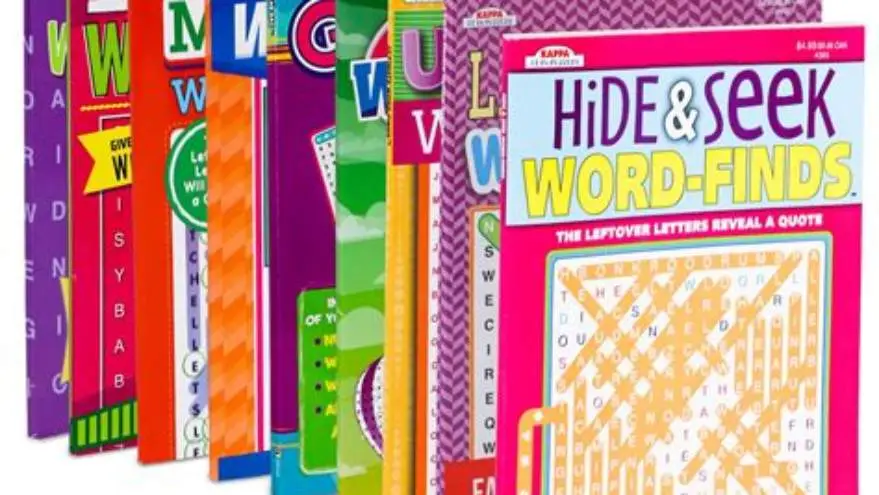
Bulk packs are bundles of puzzle books sold as one listing. Packs you see most often hold 6, 9 or 12 books, and the listing usually shouts the total puzzle count. One well-known puzzle publisher sells a 6-book bulk pack, and other listings offer a 9-pack claiming 750+ puzzles and a 12-pack claiming 1000+ puzzles. Those totals sound generous. Count the books before you count the puzzles. They mean little until you divide them by the number of books.
Check the print size before anything else. Some books call themselves large print and still use type that strains tired eyes. Look for a point size on the listing or in the look-inside pages. If the seller hides it, treat that as your answer.
Look at the puzzle mix next. Nine word search books give a group nine versions of the same afternoon. Mixed packs with crosswords, sudoku and word searches keep more people busy. Read the listing line by line. One puzzle type listed nine times is what you are buying.
Amazon is the easiest place to compare packs, but it is not the only source. Charity shops and discount stores carry puzzle books too, and a local bookshop can order a pack in for you. Check the same three things wherever you buy: print size, puzzle count, and whether the mix suits your group. It helps to understand make care home puzzle books before going further.
- Print size: a stated point size, not just the words large print.
- Puzzle count: the total divided by the books in the pack.
- Puzzle mix: more than one type, or a reason why not.
- Answers: a full answer key in every book, not just some.
Making your own large print puzzle books in bulk
Making your own books flips the maths. You pay once for the tool and the time, then every copy costs the same to print. Print-on-demand means no boxes in the garage and no minimum order. One copy serves the lounge, and ten more print when they wear out. Sellers can list a whole series without holding stock.
Whether you make one book or ten, the work stays the same. Pick a theme your readers care about, build the puzzles, set the print large, and export a print-ready PDF. Our own tool, BigPrint Puzzle Studio, builds the puzzles, the cover and the listing text in one place. It asks a one-time payment, not a monthly fee. Its honest limit is that it cannot sell the book for you. The listing still needs your words and your patience.
Word searches have a free route. Our free Large Print Word Search Maker turns your own word list into a large-print PDF with an answer page. It covers one puzzle type, so a mixed book still needs more tools or more time. Start with one finished book. When the first book reads well and the answers check out, the second takes half the time. We go through how to price a puzzle book on amazon step by step elsewhere on the site.
- Choose one theme and one reader: a decade, a place, a hobby.
- Set the trim size first: 8.5 by 11 inches suits large print best.
- Generate the puzzles, then solve every one yourself before export.
- Match the inside margin to the page count before you export.
- Order one proof copy, check every answer, then list it.
What a bulk pack really costs per puzzle
Ignore the price on the listing: it is not the price that matters. What matters is the cost of one finished puzzle in a book somebody actually completes. Divide the pack price by the total puzzle count and you have it. Pay twice as much for 1000+ puzzles instead of 500, and the cost per puzzle stays the same. The dearer pack only looks dearer.
Puzzle counts on listings are slippery. Some count every puzzle in every book. Others count words instead of puzzles, so a 5,000-word book sounds bigger than a 224-puzzle book. Read the number, then read what it counts. Listings that mix words and puzzles in one total are counting two different things. Twenty words in one grid still make one puzzle, not twenty.
Then check what the pack leaves out. No answer key means somebody has to solve every puzzle before the group can use it. Thin paper means ink shows through from the page behind. Any pack that needs a magnifier or a second purchase is no bargain at any price. Cheapest per puzzle means the pack your group finishes. For the detail, see our notes on number of puzzles in kdp book.
| Pack | Books | Puzzles listed | Check first |
|---|---|---|---|
| 6-book bulk pack, full size | 6 | Not stated | Print size on the listing |
| 9-pack, 8 by 10 | 9 | 750+ claimed | Same puzzle type in all nine books |
| 12-pack, 8 by 10 | 12 | 1000+ claimed | Puzzles per book, about 83 |
When buying in bulk is the wrong move
Bulk suits a group that solves together. It fails a single reader. Nine books of the same puzzle type tire anyone. One person working through nine near-identical word search books will stall on book three. For one reader, a single thick book of mixed puzzles works better. Savings per book mean nothing if eight books sit unread.
Mixed sight breaks the bulk maths for a group. Every book in a pack prints at the same size, and the smallest print in the pack sets the limit for the weakest eyes. Readers who cannot read the print cannot join in, and the pack has still cost the same. Buy one book first and pass it round the table. If every reader manages it, order the pack.
Watch the repeats too. Bulk packs from one publisher often recycle the same puzzles across books in the set. Two books with the same word lists are one book bought twice. Check the look-inside pages of two books from the same pack. If the first pages match, the rest probably do too. Twelve books with four repeated sets are eight books, not twelve. If that sounds like your situation, read up on create a crossword book next.
Print specs that keep large print readable
Large print is a size, not a feeling. The words on a cover are a claim, not a size. Start from 18 pt and print a sample page. Hold it at arm's length. If the letters read without effort, the size suits that reader. Squinting means go bigger before you order twelve copies.
Amazon KDP sets the frame for a printed book. Paperbacks must run between 24 and 828 pages, and the inside margin grows as the book gets thicker. Up to 150 pages the gutter needs 0.375 inches. That rises to 0.5 inches at 300 pages, 0.625 inches at 500, 0.75 inches at 700, and 0.875 inches past 700. With a thin gutter, a thick book swallows the inner edge of every puzzle. Set the margin before you generate the puzzles, not after.
What the paper does matters as much as the type. Paper too thin lets ink show through from the page behind, and a solver loses the grid. Cream paper cuts glare for many readers, while bright white suits a well-lit room. Order one proof copy and write on it with the pens your group actually uses. Survive the pen test and the book survives the lounge. Before you commit to anything, it is worth looking at can you make money with large print puzzle books.
Binding decides whether the book lies flat. Spiral binding lies flat on the table and stays open at the page you want. Most bulk packs are glued paperbacks, and a glued spine fights the solver. The book closes itself and the inner edge hides part of the grid. For a group solving at a table, a spiral book is worth the extra effort to find. Check the look-inside pages for a coil edge when the listing stays silent.
How many books does a group actually need?
Count heads before you count books. Eight people meeting weekly need eight books if everyone solves the same puzzle at once, and fewer if pairs share. The shelf counts differently. Keep enough books that the shelf never empties, and few enough that old puzzles leave before they go stale. Begin with one book per regular solver, then add a shelf copy or two.
Watch one session and count the puzzles your group finishes. Take six puzzles a session as a worked example: an 80-puzzle book then lasts about thirteen sessions. That pace turns a pack into a calendar: twelve books last a weekly group about three years at that rate. Your own pace beats any listing. Plan around that number, not the number on the listing. Time it once and the next order writes itself.
Keep a simple record. Note the date a book arrives, the date it empties, and which puzzles the group liked. Three months of notes tells you the real pace, and the next order becomes obvious. Shelves that empty too fast need a bigger pack. One that never empties needs a smaller pack. Numbers from your own shelf beat any listing.
Still wondering?
Is it cheaper to buy large print puzzle books in bulk or print your own?
Buying wins for a single order under a dozen books. Printing your own wins when you need the same book again and again, or when you sell the books. Print-on-demand has no minimum order, so a care home can print ten copies this month and ten more next month. Compare the pack price per puzzle with the print cost per copy before you choose.
How large should the print be in a large print puzzle book?
Test from 18 pt with the reader who has the weakest sight. If they read it without effort, the size works. Listings that hide the point size are a warning sign. Eyes that strain will leave the book unread, whatever it cost.
Do bulk puzzle packs repeat the same puzzles?
Some do. Publishers recycle word lists across books in a set, so two books can share puzzles. Open the look-inside pages of two books from the same pack before you order. Matching first pages mean repeats through the set. Repeats make a pack worth less than its puzzle count suggests.
Can I sell large print puzzle books I make myself?
Yes, through print-on-demand services such as Amazon KDP and as printable packs on Etsy. You need puzzles you made or have the right to sell, a print-ready PDF, and a cover sized to your page count. No tool can promise sales. Books that sell have clean large print, verified answers and a cover that says who they are for.
Ready to try it? It builds the puzzles, the cover and the listing text for a whole large-print book in one place, so a seller can make a series instead of one book at a time.
Build your puzzle book