How to Make a Crossword Puzzle Book for Amazon KDP
To make a crossword puzzle book, pick one theme and one reader. Build 50 or more crosswords with a matching answer key. Lay them out at 8.5 by 11 inches in large type. Then upload a print-ready PDF and a wrap-around cover to Amazon KDP. A finished book usually runs 100 to 120 pages.
On this page (8 sections)
- Quick recap
- How to Make a Crossword Puzzle Book, Step by Step
- Build crosswords readers can actually solve
- Choose a trim size and page count that fit large print
- Lay out the pages so nothing gets cut off
- Design a cover and listing buyers can read at a glance
- Upload to KDP and check the proof before you publish
- Still wondering?
Part of our guide on large print word search book kdp niche
Key figures
- Trim size
- 8.5 x 11 in for large print
- Clue type
- 16 pt minimum, aim for 18 pt
- Puzzles per book
- 50 or more, with answers
- KDP page range
- 24 to 828 pages
- Gutter to 150 pages
- 0.375 in minimum
- Review time
- Up to 72 hours
Quick recap
- Pick one theme and one reader before you build a single grid.
- Set clue type large enough to read at arm's length, and keep answer pages the same size.
- Use 8.5 by 11 inches, one puzzle per page, and a gutter that grows with page count.
- Order a proof copy and solve three puzzles in it before you publish.
How to Make a Crossword Puzzle Book, Step by Step
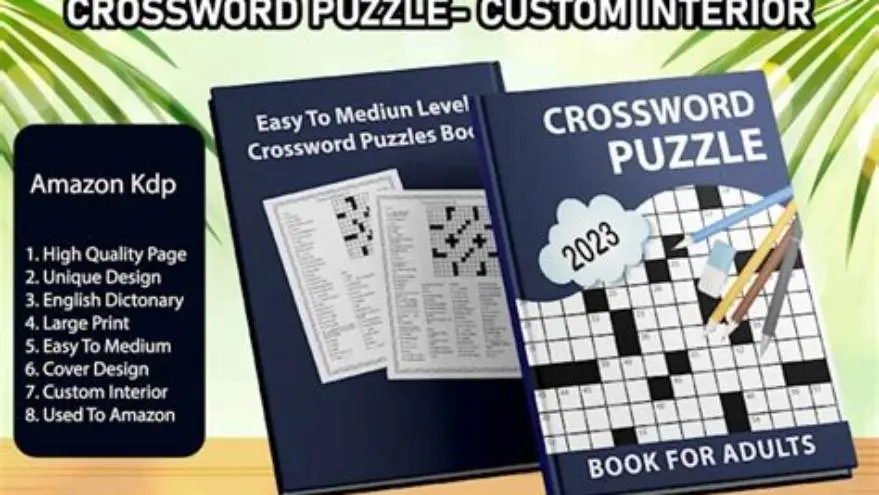
A crossword book starts with two choices, not with a grid. Pick one theme, such as gardens, the 1950s or British seaside towns. Then pick one reader, such as a keen solver or someone who wants gentle puzzles in big print. One clear theme sells better than a mixed bag, because buyers can tell in three seconds who it is for. Write the theme on a sticky note.
Next, decide how many puzzles the book will hold. Fifty puzzles is a sound target for a first book, with an answer page for each one. That count feels worth the price in a reader's hands, with room for a contents page and a short how-to page. Fewer than 30 puzzles looks thin next to other books on the same shelf.
Build the puzzles, lay out the pages, design the cover and upload the files. This guide walks through each step in order, with the sizes and settings that matter, so work with a printed test page beside you. Test every puzzle against it before you move on. A slow start here saves rework later.
- Choose one theme and one reader, and write both down.
- Collect word lists for 50 puzzles, with a clue for every answer.
- Build each grid and check that every answer fits and every clue matches.
- Lay out one puzzle per page at 8.5 by 11 inches, with the answers at the back.
- Design a wrap-around cover that reads clearly at thumbnail size.
- Upload the interior and cover PDFs to KDP, check the preview, and order a proof copy.
Build crosswords readers can actually solve
Every good crossword starts with its word list. For one puzzle, gather 10 to 20 answers that belong to the theme. Keep them short. Three to eight letters works best in a grid, because long answers make the grid hard to fill. Words with rare letters such as J, Q, X and Z lock the grid up. Mix short fillers such as SUN, TEA and ROSE with a few longer theme words. Write your own word lists, and do not lift clue sets from other books, then check each word for spelling before you build anything. We go through how many puzzles in a kdp puzzle book step by step elsewhere on the site.
Write clues that are fair and direct. Each clue should point at one answer, not three. Use words the reader knows. 'Red fruit that grows on trees (5)' leads to APPLE without a fight, while cryptic clues leave a casual solver stuck. Short clues and a friendly tone work best. Read every clue aloud after you write it. If it sounds like a riddle, rewrite it. Fair clues win.
BigPrint Puzzle Studio, our own tool, builds the grid and the answer page from a word list you supply. Drawing grids by hand takes hours, but clues stay yours to write, so you still read each one and check it against the answer. Free crossword generators on the web do the same job for one puzzle at a time. Solve each finished puzzle yourself before it goes in the book. Order the puzzles easy to hard, so new solvers gain confidence.
Choose a trim size and page count that fit large print
Trim size decides how big the grid can be. At 8.5 by 11 inches, a 15 by 15 grid leaves room for clues in type a reader can see. White space stays around it. At 6 by 9 inches, the same grid shrinks. Clues crowd the page. The 6 by 9 size suits a travel book, not a large-print one. Choose the trim before you build a single page. The other half of this decision is christmas puzzle book kdp.
Large print has a firm floor. KDP's own guidance puts large print at 16 points or larger. Many large-print guides suggest 18 points for the main text. Set the clues at 18 points and the grid numbers at a size you can read at arm's length. Answer pages must meet the same standard. Without readable answers, the reader cannot check their work.
Count it this way: fifty puzzles at one per page, plus fifty answer pages, comes to 100 pages. Add a title page, a contents page and a short how-to page. The total passes 100 pages. KDP paperbacks need at least 24 pages and run to a maximum of 828 pages in black ink on white paper. A 100-page book sits comfortably inside the limits. Add a few extra puzzles rather than blank filler pages if the book feels thin.
| Trim size | Best for | Grid room |
|---|---|---|
| 8.5 x 11 in | Large-print books | Roomy 15 x 15 grid and 18 pt clues |
| 6 x 9 in | Travel-size books | Tight grid, smaller clues |
| 7 x 10 in | A middle ground | Fair room, check clues at arm's length |
Lay out the pages so nothing gets cut off
Margins are where most first books fail. KDP sets a minimum inside margin, called the gutter, and it grows with the page count. The gutter is 0.375 inches up to 150 pages, then 0.5 inches up to 300 pages. Text that sits closer to the spine than that disappears into the binding. Set the gutter first, then the outside, top and bottom margins, and keep every word and grid line inside the safe area. We go through designing grids for easy printing step by step elsewhere on the site.
Keep the print rules in mind as you lay out the pages. KDP asks for lines at least 0.75 points thick and type no smaller than 7 points anywhere in the file. Large print should sit far above that floor, on white paper for the clearest print. Give each puzzle its own page, with the puzzle number and the theme at the top. Page numbers go in the same corner on every page.
Print one page at full size and test it with a pen. Solve the puzzle on paper. Write your answers in the grid. Check that the letters fit the cells and the clues stay clear of the fold. If a letter touches a grid line, the cells are too small or the type is too big, so change one of them. One printed page finds more faults than an hour of staring at a screen. Fix the template once. Build the rest of the book on that template. Print first.
Design a cover and listing buyers can read at a glance
Buyers see the cover as a thumbnail first, so it must read at the size of a postage stamp. Put the title in large, bold letters across the top. Put 'large print' plainly under it. Add one clear picture. Avoid small text, busy patterns and more than three colours. If the title cannot be read at two inches wide, the design needs more space and fewer words. Before you commit to anything, it is worth looking at print size requirements for mazes.
Your listing does the rest of the selling, so give the book a subtitle that names the theme and the puzzle count. Try '50 garden crosswords in large print with answers'. Fill all seven keyword boxes in KDP with phrases buyers type. Try 'large print crossword book' and 'crossword puzzles for adults', then tick the Large Print box so Amazon lists it that way. State the puzzle count, the trim size and the answer key in the description.
Price comes last, after the printing cost is known. KDP pays 60% of the list price minus printing costs for paperbacks priced at $9.99 or more, and less below that. Check the current royalty table on KDP before you set a price. Our own tool, BigPrint Puzzle Studio, also drafts listing text and a wrap-around cover sized from your page count. KDP's free cover template does the same job by hand, if you would rather measure it yourself.
Upload to KDP and check the proof before you publish
Upload starts in the KDP dashboard. Choose 'Create Paperback'. Enter the title, subtitle and author name exactly as they appear on the cover. Upload the interior PDF and the cover PDF as separate files. KDP checks both files and lists any faults, such as a margin fault or a missing font. Fix each fault in your source file and upload again. Do not patch the PDF by hand; with clean files, the upload takes a few minutes. We cover cost effective bookbinding in its own article.
Use the online previewer before you approve anything. Flip through the whole book on screen and look for grids that touch the edge and pages that sit too close to the spine. Order a proof copy next; you pay printing cost for a real printed book, then solve three puzzles in it with a pen. The printed proof finds faults a screen hides, such as grey grid lines that print too pale. Fix what you find and upload again. Then check again.
Once the proof reads well, pick a price, choose the markets, and publish. KDP says review can take up to 72 hours, sometimes longer. Once approved, the book lists for sale. Start small with the first book and learn from it, noting which theme sold and what the proof taught you. Book two goes faster, because it reuses the template, the margins and the cover size. A small shelf of books grows that way, one book at a time.
Still wondering?
How many puzzles should a crossword book have?
Aim for fifty puzzles in a first book, with an answer page for each one. That count gives the book a solid feel and room for a contents page. Fewer than 30 puzzles looks thin beside other books. More than 100 puzzles means a lot of clue writing, so save that for a second book.
Can I make a crossword puzzle book for free?
Yes. Free crossword generators on the web build grids from your word lists. A spreadsheet holds the clues while you write them. You can lay out the pages in a free word processor and upload the PDF to KDP, which charges nothing to publish. A paid tool saves time on layout and covers, but it is not needed for a first book.
What grid size works best for a large-print crossword?
A 15 by 15 grid is the usual size for a standard crossword. An 8.5 by 11 inch page holds it well with clues at 18 points. Smaller grids, such as 11 by 11, suit easy puzzles with short words. Bigger grids need a bigger page or smaller type, so check the printed page before you commit.
Do I need an ISBN for a crossword book on KDP?
KDP offers a free ISBN for paperbacks. Puzzle books are not classed as low-content books, so the free ISBN and expanded distribution are open to them. You can also use your own ISBN if you already own one. Either way, the ISBN goes on the copyright page and the back cover.
Ready to try it? It builds large-print grids, answer pages, covers and listing text from your word lists, which is the slow part of this book.
Build your crossword book