Large Print Word Search for Assisted Living That Works
A large print word search for assisted living needs 18-point letters or bigger, a 10-by-10 or 12-by-12 grid, and 12 to 14 familiar words. Words run across and down only. Print one copy per person, with the answer key on a separate page.
On this page (8 sections)
Part of our guide on download a printable word search
Key figures
- Large print starts at
- 18-point type
- Common recommendation
- 18 to 20 points
- Line spacing
- At least 1.5
- Easy grid
- 10 by 10, 12 words
- Large-print grid
- 12 by 12, 14 words
- Word directions, easy
- Across and down only
Quick recap
- Print at 18 points or bigger, and test one page before printing a stack.
- Keep the grid small and the words familiar, running across and down only.
- Pick words the whole room knows, and print the word list in the same large type.
- Run the same puzzle at two sizes when eyesight in the room varies.
Large print word search for assisted living: what actually works
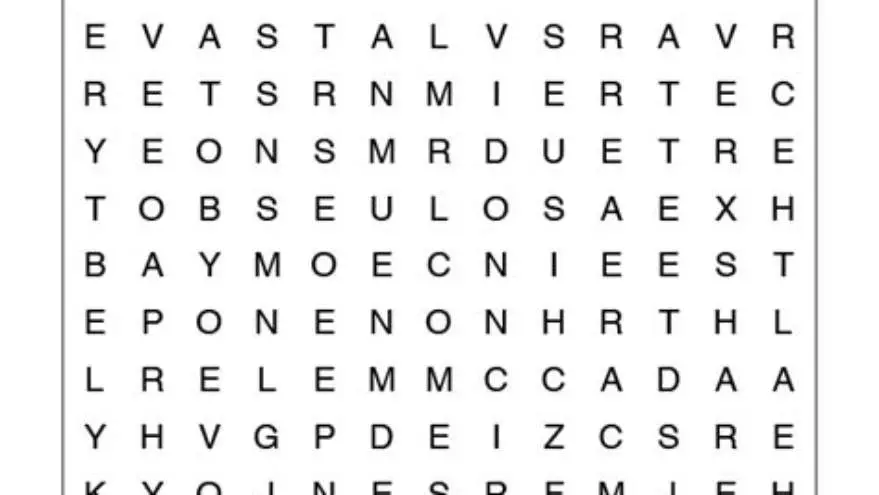
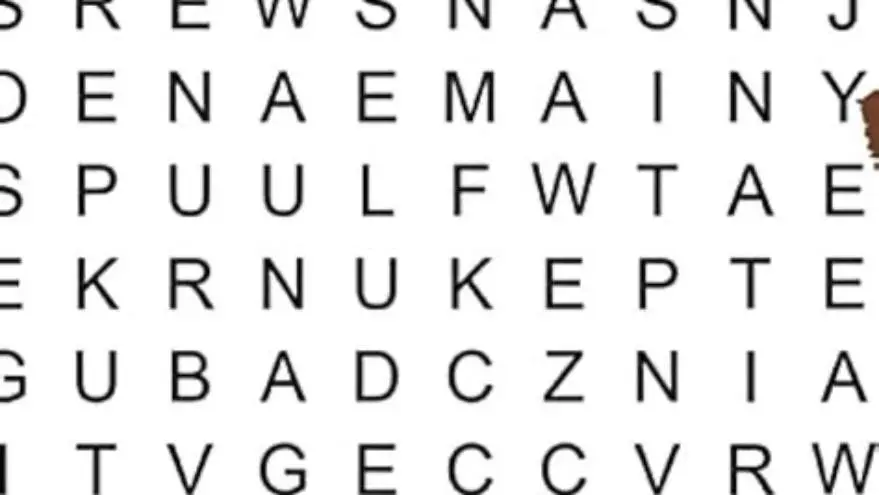
Three things must line up for a large print word search for assisted living to work. Letters must be big enough to read at arm's length. Size the grid to finish in one sitting. And the words must be ones everyone in the room knows. Get one of those wrong and the puzzle sits untouched. Get all three right and a quiet room fills with talk. Any word search is simple. Setup around it decides whether it gets solved.
Start with the reader, not the puzzle. Some residents read with glasses and good light. Others read with low vision and need every letter to stand clear. Build for one of them and the other ends up frustrated. No harder puzzle or easier one fixes it. It is a puzzle printed at a size the weakest eyes in the room can still read, with words the whole table can finish together.
This page walks through the choices in order. First the print size, because it decides everything else. Then the grid and the word count, because they set the difficulty. Then the themes, the weekly routine, and the fixes for puzzles that miss. Every number here comes from a published large-print guide or a free printable set you can check yourself. Nothing here needs a purchase.
How big should the letters be?
American Printing House for the Blind draws a clear line in its Guidelines for Print Document Design. Eighteen points or bigger counts as large print. Fourteen to 16 points is enlarged print, not large print. That line matters in a care home, because a sheet marked large print at 14 points still leaves some readers behind. Check the number before you print a stack. We cover large letter 25x25 printable word search in its own article.
Accessibility guides for low vision commonly recommend 18 to 20 points with generous line spacing. Line spacing of at least 1.5 keeps the rows apart so a finger or a pencil can track one line at a time. Plain sans-serif faces read cleanest at these sizes: Arial, Verdana or Tahoma. Black ink on plain white paper gives the strongest contrast. Skip patterned paper. It fights the letters for attention.
Our free Large Print Word Search Maker builds a word search at large print from your own words. You set the size once and print a clean sheet with an answer page. It suits a family member or an activity director who wants this week's theme in big type without laying out a grid by hand. Word searches are all the maker handles, so a crossword or a sudoku still needs another tool. Free printable sets from puzzle sites work too when the theme already exists.
Paper matters as much as type. Matte paper cuts glare, and printing on one side only keeps the grid from showing through. Heavier paper, 24-pound or 28-pound weight, sits flat and takes a pencil without tearing. Check the licence before copying pages from a bought puzzle book for a whole room.
What grid size and word count suit a group?
Difficulty starts with the grid, before a single word is found. A workable starting point is 12 words in a 10-by-10 grid; it fits on one page in big type. A confident group can try 18 words in a 15-by-15 grid. A 20-by-20 grid with 30 words overwhelms most groups, so save it for strong solvers only. Bigger grids look impressive and solve slowly. In a group, slow is the same as unfinished.
For an assisted living room, use 12 words in a 10-by-10 grid, running across and down. For a confident group, use 18 words in a 15-by-15 grid, adding diagonals. For strong solvers only, use 30 words in a 20-by-20 grid. For the weakest readers, use 14 words in a 12-by-12 grid, with letters near 26 points.
Give the whole room the easy version first. Strong solvers finish it in minutes and still enjoy the chat around it. Weak readers handed a 20-by-20 grid give up before the first word. Keep a harder sheet on hand for the two or three people who ask for it. One puzzle for everyone beats two puzzles that split the table. Before you commit to anything, it is worth looking at large print word search to play with grandchildren.
| Level | Grid | Words | Directions |
|---|---|---|---|
| Easy | 10 by 10 | 12 | Across and down |
| Medium | 15 by 15 | 18 | Across, down, diagonal |
| Large print | 12 by 12 | 14 | Across, down, diagonal |
Which themes suit an activity room?
Themes do more than fill a grid. They give the room something to talk about while hands are busy. Free printable sites group their senior word lists around gardens, classic television, family recipes, birds, and music from past decades. Those themes work because the room already knows every word in them. Nobody hunts for a word they do not recognise.
Build each list from the room, not from a dictionary. Ask the group for ten favourite foods, ten towns they have lived in, or ten songs they still hum. Those words land in the grid already familiar, and finding one starts a story. Lists built this way change every week, so the puzzle never repeats. Keep every word short and concrete. Long words hide badly in a small grid and tire a reader who spells them out letter by letter.
December grids can hold carols, candles, and winter foods. Spring grids can hold seeds, birds, and garden tools. An activity week built around one theme can run a fresh puzzle each day. The September week that celebrates assisted living works this way. Put the word list at the top of the page in the same large type as the grid. Nobody then has to remember what they are hunting.
Garden lists show what a finished list looks like. Twelve words, all short, all familiar: rose, tulip, seed, soil, water, sun, spade, bloom, herb, mint, basil, compost.
How do you run a weekly word search hour?
Routine beats planning for a weekly hour. Pick one day and one time, and keep them the same every week. Residents learn the rhythm and show up on their own. Set the tables before the hour starts, with a puzzle face down at each place and a pencil beside it. Thick pencils or felt-tip pens suit hands that grip loosely. Start on time, even with two people. Rooms fill once the habit forms.
Read the word list aloud together before anyone starts. That one minute does three jobs. Slow readers hear the words without having to ask. The theme wakes up for the whole table. The group gets a shared start. Then let the room solve at its own pace. Some finish fast and help a neighbour. Some take the whole hour for half the words. Both are fine. Treat the hour as social time with a puzzle in it, not a test.
Short hours and fresh puzzles keep the routine alive. One hour fits two easy puzzles or one medium one. Fast solvers get a second puzzle while others finish the first. Change the theme every week, and change the words even when the theme stays. Rooms tire of a puzzle they have seen before. Puzzles built from their own words feel like theirs.
- Hand out one puzzle per person, plus two spares, and keep the answer key on a separate page.
- Lay out thick pencils or felt-tip pens, and a spare pair of reading glasses if the home keeps them.
- Go through the word list aloud, slowly, and point to each word as you read it.
- Let the room solve together, and pair a fast solver with a neighbour who wants help.
- Stop with ten minutes left, and read the answers aloud so everyone finishes the hour complete.
- Ask the group for next week's theme before they leave, and write the words down on the spot.
What if a puzzle is too hard or too easy?
Hard puzzles show themselves fast. Pencils stop, heads lift, and the room goes quiet in the wrong way. Fix it simply: hand out the easier version, or read the first three words aloud and point to their first letters. Never take the pencil and finish a word for someone. Found words belong to the person who found them, and a given word feels like a favour.
Easy puzzles show themselves too. It ends in five minutes, and the fast solvers look around for more. Keep a second, harder sheet ready for them, or ask them to find the words backwards. Ask for the leftover letters to spell a hidden message, and the same grid becomes a second puzzle without printing anything new.
Watch the room, not the clock. When half the table is done and half is still hunting, the puzzle is right. When nobody is done, it is too hard. When everyone is done in minutes, it is too easy. Adjust one thing at a time: the print size, the grid, or the word count. Change all three at once and you will not know which one helped. Next puzzles get better once you know which change did the work.
A large print word search earns its place in an activity room when the letters hit 18 points and the grid stays small.
Still wondering?
What font size counts as large print for a word search?
Eighteen points is the line the American Printing House for the Blind draws. Low-vision guides commonly suggest 18 to 20 points with generous line spacing. Aim for 18 points at least, and test one page before printing a stack.
What grid size suits an assisted living room?
Ten by ten suits most rooms. That size fits on one page in big type without crowding. Twelve by twelve works too when the letters stay large. Bigger grids need smaller letters, and smaller letters shut out some readers. Small grids and big letters suit the whole room.
Can one puzzle suit a room where eyesight varies?
Yes, if you print it at two sizes. Hand the whole room the easy version in 18-point type, and a larger version for anyone who asks for bigger letters. Words stay the same, so the room still solves together. Never hand one person a different puzzle in front of everyone.
Where can I find free large-print word searches for a care home?
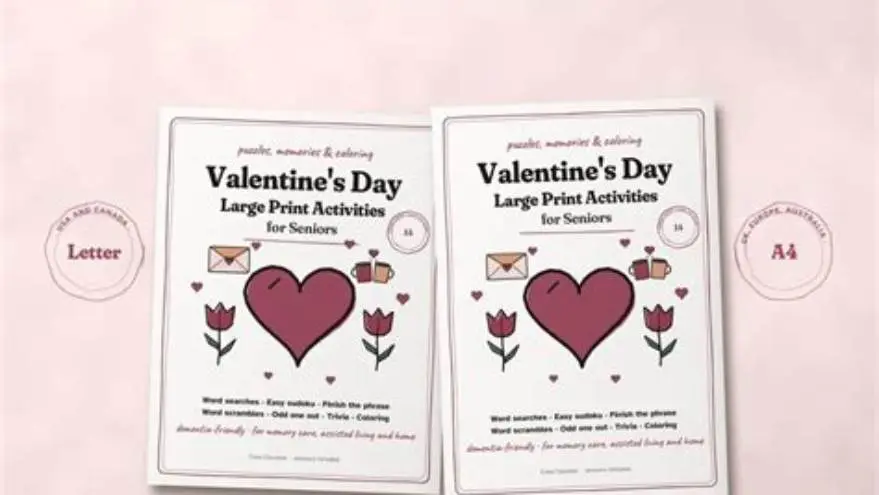
Printable puzzle sites publish large-print sets with answer keys, usually as PDFs in Letter and A4. Pick one with letters of 18 points or more and a grid of 12 by 12 or smaller. Our free Large Print Word Search Maker builds one from your own words when the theme you need is not already out there.
Ready to try it? It turns your own words into a large-print word search PDF with an answer page, in the size this room needs.
Make your word search free