Low-content book ideas for seniors: large-print puzzles
Large-print puzzles and simple activity books older adults actually want to solve, with design tips that make them accessible and worth buying.
Word search, sudoku, crosswords, and simple activity journals work best as low-content books for seniors when printed at 16-point or larger and laid out with wide margins. Success depends on clarity, not complexity.
On this page (8 sections)
- The short version
- Examples of low-content books suited for seniors
- How to design large-print puzzles and activities
- Tips for keeping content accessible and engaging for older adults
- Themes and formats that actually sell
- Where low-content books for seniors sell best
- Common mistakes that kill sales
- Questions people still ask
Part of our guide on kdp large print word search
The senior puzzle book market rewards clarity and familiarity over novelty, and most self-published books fail by printing too small or cramming two puzzles per page.
| Minimum readable type | 16-point for body text |
|---|---|
| Best puzzle types | Word search, sudoku, crosswords |
| Layout standard | One puzzle per page |
| Margin minimum | 0.75 inches all sides |
| Theme advantage | Themed books outsell generic |
| Price range | $6-12 retail on Amazon |
The short version
- Word search and sudoku in 16-point type outsell smaller formats for the senior market
- Simple activity journals with prompts beat blank journals because they remove the barrier of starting
- One puzzle per page with answers in the back prevents bleed-through frustration
- Themed books (gardening, travel, nostalgia) attract more buyers than generic puzzle collections
- Test print at actual size before publishing to catch readability problems early
Examples of low-content books suited for seniors
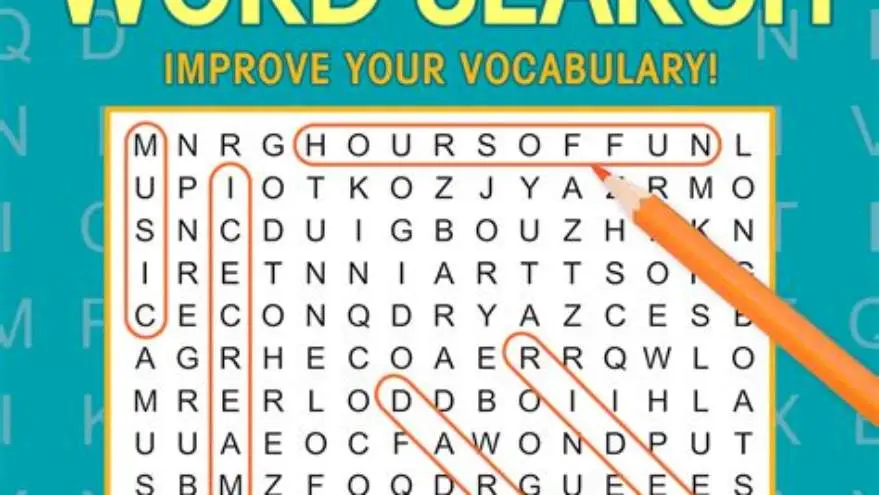
Large-print word search books consistently outsell other puzzle types in the senior market because the format is instantly familiar and the difficulty is visible at a glance. You control challenge by grid size and word count, not by obscure rules. A 12×12 grid with 10 to 12 words suits most older solvers. Anything smaller than 10×10 feels trivial. Anything larger than 15×15 becomes hard to scan when vision is limited.
Sudoku works when you stick to 4×4 and 6×6 grids for beginners and reserve 9×9 for solvers who already know the game. Print the grid large enough that each cell takes a fingertip. Include a few solved examples up front so a buyer who has never tried sudoku can see how it works. Number puzzles intimidate fewer people than you expect, but only if the page does not look cramped.
Simple crosswords sell, but only when clues are direct and grids are open. A 9×9 or 11×11 grid with clear, everyday clues and large squares beats a dense 15×15 grid with cryptic clues. Most seniors want a comfortable solve, not a challenge that takes an hour. Skip British-style cryptic crosswords unless you are targeting a niche that already loves them.
Activity journals with prompts outsell blank journals because they remove the friction of starting. A page that says 'Three things I enjoyed this week' or 'A place I would visit again' gets used. A blank page intimidates. Print lines at least 0.4 inches apart and leave wide margins for a pen that shakes slightly. Add a few simple drawing prompts or memory pages with labeled boxes to vary the pace. For the detail, see our notes on puzzle book maker software kdp.
- Word search: 12×12 grids, 10-12 words per puzzle, themes like gardening or classic movies
- Sudoku: 4×4 for beginners, 6×6 for intermediate, 9×9 for confident solvers, with example solutions
- Crosswords: 9×9 or 11×11 grids, straightforward clues, open layouts with few black squares
- Activity journals: prompted entries, 0.4-inch line spacing, memory pages with fill-in boxes
- Dot-to-dot: large numbered dots, nostalgic or nature themes, under 100 dots per page
- Coloring pages: bold outlines, familiar subjects like flowers or birds, minimal fine detail
How to design large-print puzzles and activities
Start with 16-point type as your baseline for puzzle grids and clues. Go larger if the format allows it. A 14-point font looks fine on screen but disappears on paper under poor light. Use a simple sans-serif like Arial or Verdana for grids and a clean serif like Georgia for body text. Avoid decorative fonts, thin weights, and anything with tight letter spacing.
One puzzle per page is the rule, not a suggestion. Printing two puzzles per page to save paper creates bleed-through problems and forces the solver to ignore half the page while working the other half. It looks cheap and it frustrates buyers. Leave the back of each puzzle page blank or print the answer there. Buyers will pay the same price for a book that respects their experience.
We built BigPrint Puzzle Studio to handle the formatting work that trips up most self-publishers. It generates large-print word search, sudoku, crossword, and maze PDFs at the sizes seniors actually need, with one puzzle per page and answers automatically placed in the back. You pick a theme, adjust the difficulty, and get a print-ready PDF in a few minutes. It also makes the wrap-around cover and writes your Amazon listing text. The tool does not pick themes for you or guarantee sales, but it removes the layout grind. $17 one-time, no subscription. There is more on what does bigprint puzzle studio do in a separate guide.
Set margins at 0.75 inches minimum on all sides, and go wider if you are printing a bound book where the gutter eats space. A puzzle that runs to the edge of the page is hard to hold and impossible to solve comfortably in a chair. White space is not wasted space. It makes the page easier to navigate and reduces eye strain.
Use high contrast for everything. Black text on white paper, or very dark gray on cream. Never print gray text on a gray background. Avoid watermarks, background patterns, or faint grid lines. What looks subtle on your monitor looks invisible to someone with aging vision. Test contrast by printing a page and viewing it under dim light or through a pair of drugstore reading glasses.
Tips for keeping content accessible and engaging for older adults
Familiarity beats novelty in this market. Older adults want puzzles they recognize and understand without reading instructions. Word search, sudoku, and crosswords sell because buyers already know how they work. A new puzzle type, no matter how clever, creates a barrier. If you introduce something unfamiliar, put a worked example on the first page and keep the instructions to three sentences. We cover is it worth making puzzle books for kdp in its own article.
Themed books outsell generic collections by a wide margin. A book of word searches about classic movies, travel destinations, or 1960s nostalgia attracts buyers who want that theme. A book called 'Large Print Word Search Volume 3' competes with a thousand identical titles. Themes give you keywords, a clear cover image, and a reason for someone to pick your book instead of the one next to it. Choose themes with enough vocabulary to fill 80 to 100 puzzles without repeating words.
Start easy and build gradually if your book has a range of difficulty. Put the simplest puzzles in the first third so a buyer who opens the book feels capable. A book that starts hard gets returned or shelved. Include difficulty labels like 'Gentle', 'Moderate', and 'Challenging' if you are mixing levels, or separate them into different sections. Most buyers stay in the easy or moderate range and never touch the hard puzzles, so weight your book toward the lower end.
Print answer keys in the back, not immediately after each puzzle. Solvers want to check their work when they finish, not have the answer staring at them from the facing page. Use a clear heading for each answer so they can find the right one quickly. Answers in small type are fine because the solver is not working from them, just confirming. It helps to understand optimizing puzzle interior for KDP print before going further.
| Puzzle type | Easy | Moderate | Challenging |
|---|---|---|---|
| Word search | 10×10, 8-10 words | 12×12, 10-12 words | 15×15, 12-15 words |
| Sudoku | 4×4 grid | 6×6 grid | 9×9 grid |
| Crossword | 7×7, simple clues | 9×9, mixed clues | 11×11, harder clues |
| Maze | Simple path, few branches | Moderate branches | Complex path, many dead ends |
Themes and formats that actually sell
Nostalgia themes perform well because they connect with the buyer's memory. Think 1950s and 1960s culture, classic TV shows, old radio programs, vintage cars, or big band music. These themes trigger recognition and make the puzzle feel personal. A word search about gardening is fine. A word search about 'Victory Gardens and Heirloom Vegetables' is better because it speaks to a specific memory.
Seasonal and holiday books sell in predictable cycles. A Christmas word search book starts moving in October and dies in January. A summer travel puzzle book sells from May through August. Time your publishing so the book appears on Amazon at least six weeks before the season starts. You are competing with hundreds of seasonal books, so your theme and cover need to stand out in the search results. Large print is your differentiator here, so put that phrase in the title and make the cover show it.
Hobbies and interests create loyal buyers. Word searches about birdwatching, classic recipes, quilting, or national parks attract people who already care about the topic. These books often get bought as gifts, which increases your reach. The vocabulary must be accurate. If you are making a birdwatching puzzle book and you misspell bird names or include species that don't exist, you lose credibility and get bad reviews.
Activity books with variety sell better than single-format books if you execute them well. A book that mixes word search, sudoku, crosswords, and a few coloring pages keeps the solver engaged longer. The risk is that a buyer who only likes word search will skip your book because half of it is not for them. Test both approaches. Start with a single format, and add variety once you see what your audience responds to.
- Nostalgia: 1950s-60s culture, classic TV, vintage cars, old-time radio, big band era
- Seasonal: Christmas, summer travel, fall harvest, spring gardening, patriotic holidays
- Hobbies: Birdwatching, quilting, classic recipes, national parks, fishing, trains
- Inspirational: Bible verses, uplifting quotes, gratitude prompts, poetry, hymns
- Geography: State capitals, world landmarks, famous cities, mountains, rivers
Where low-content books for seniors sell best
Amazon KDP is the largest market and the easiest to enter. You upload a PDF, set a price, and the book appears in search results within 48 hours. Print-on-demand means no upfront cost and no inventory risk. The downside is competition. Thousands of large-print puzzle books already exist, so your title, cover, and keywords determine whether anyone sees your book. Price your book between $6 and $12 depending on page count. Books under $6 look cheap. Books over $12 rarely sell unless the theme is very specific.
Etsy works for printable activity packs and smaller PDF products. Buyers on Etsy expect instant downloads and a more personal feel than Amazon. You can sell a 20-page themed word search pack for $3 to $5, or a full printable book for $8 to $12. Etsy buyers often purchase for a specific person or occasion, so tailor your listings to gift-givers and caregivers. Describe what the pack includes, who it suits, and how to print it. Etsy takes a smaller cut than Amazon but requires more active marketing.
Direct sales through your own site or to senior centers and care homes work if you can handle fulfillment or offer PDF downloads. Some activity directors prefer to buy directly from creators because they can ask for custom themes or page counts. This route takes more effort but gives you full control and better margins. You will need to handle invoicing, delivery, and customer questions yourself.
Amazon advertising can work for low-content books if you are careful with spend. Target keywords like 'large print word search' or 'senior activity book' and set a low daily budget while you test. Most low-content books sell for under $10, so your ad cost per sale must stay under $2 to break even. If ads do not pay off in the first two weeks, turn them off and focus on organic rank through better titles and keywords.
Common mistakes that kill sales
Type too small is the number one mistake. You think 14-point looks fine, but under real-world lighting it does not. Buyers return books they cannot read, and Amazon buries books with high return rates. Print a test page at 100% scale and show it to someone in your target age range before you upload. If you skip this step, you are guessing.
Generic covers disappear in search results. A cover that says 'Word Search Book' in plain text over a white background does not compete with covers that show a large, clear puzzle sample and use bold colors. Your cover must communicate large print at thumbnail size. Show part of a puzzle grid at readable size, or use a photo of an older adult solving a puzzle. Avoid stock photos of hands holding books, which every other self-publisher uses.
No theme or a weak theme leaves you with no marketing angle. A book called 'Large Print Puzzles for Seniors' competes with a thousand identical books. A book called 'Large Print Garden Word Search' targets a specific buyer and uses better keywords. Theme gives you title keywords, cover imagery, and a clear reason to buy. Pick a theme with enough search volume that people are looking for it.
Poor keywords and titles mean Amazon does not show your book to the right buyers. Use seven keyword slots in your KDP listing and fill them with phrases people actually search: 'large print word search for seniors', 'easy crossword puzzles for adults', 'big print sudoku book'. Do not waste slots on single words like 'puzzles' or 'seniors'. Check Amazon's autocomplete to see what phrases get traffic. Your title should include the format, print size, and theme in the first 60 characters.
Questions people still ask
How many puzzles should a large-print puzzle book for seniors contain?
80 to 100 puzzles is the standard range for a book priced between $6 and $10. Fewer than 60 puzzles feels thin and gets complaints. More than 120 puzzles raises your print cost without increasing what buyers will pay. One puzzle per page means an 80-puzzle book is around 90 pages with front matter and answers.
Can I make money selling low-content books for seniors on Amazon KDP?
Yes, but income depends on your theme, keywords, cover, and how many books you publish. Most sellers earn $50 to $300 per month from a single book after the first few months, and scale up by publishing multiple themed books. A few sellers earn more, many earn less. Success requires testing, decent design, and patience while your book builds reviews and rank.
Do I need special software to create large-print puzzle books?
No, but it saves time. You can build puzzles manually in Word or Google Docs, but layout and formatting take hours per book. A tool like BigPrint Puzzle Studio generates print-ready PDFs in minutes and handles margins, fonts, and covers automatically. Free puzzle generators exist but rarely produce large-print layouts suitable for seniors.
What is the best puzzle type for someone with early memory loss?
Word search with familiar themes and simple dot-to-dot work best because the task is clear and the format is forgiving. Avoid sudoku or crosswords unless the person already enjoys them, since those require holding multiple pieces of information in mind. Our Gentle Minds Activity Kit has activities at three levels for adults with memory changes.
Should I publish low-content books in color or black and white?
Black and white unless the content requires color, like coloring pages. Color printing costs more and raises your book price by $2 to $4, which hurts sales. Most puzzle buyers expect black and white and will not pay extra for color. Use color only when it adds clear value, like in a coloring or activity book with illustrations.
How long does it take to make a low-content book for seniors?
With a tool, two to four hours from concept to uploaded PDF, including cover design and listing text. Manually, expect one to two days for layout, formatting, and proofing. The time sink is formatting, not content, which is why most successful low-content publishers use software or templates. Add another day for test printing and revisions before you go live.
Ready to try it? It generates large-print puzzle PDFs formatted for seniors in minutes, with covers and Amazon listings included.
Make your first puzzle book