Music Activities for Dementia That Bring Calm and Connection
It depends on the person, but the best music activities for dementia start with songs they already know, played low in a quiet room. Sing along, keep sessions short, and watch for a hum, a tap or a smile.
On this page (8 sections)
Part of our guide on dementia activity book for adults
Key figures
- Best first songs
- Teens and twenties favourites
- Lyrics print size
- 18 pt or larger
- First step
- One song, then watch their face
- When to stop
- At the first sign of distress
- Join in
- Sing along, no good voice needed
Quick recap
- Start with one familiar song, and add more only when the first one lands.
- Keep sessions short and stop while it is still fun.
- Sing along yourself: shared music works better than background music.
- Note which songs land and which ones upset, and keep the list.
Music activities for dementia that work at home
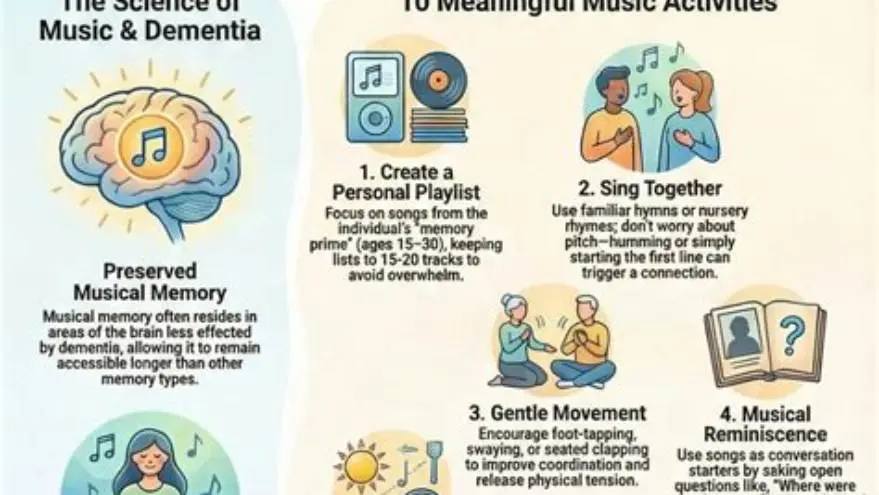
Start with songs they already know. Childhood hymns often get a hum. Their wedding dance tune can bring a tap or a smile when a question gets nothing. That is why a short session can open a visit that felt stuck.
Simple activities work best. Listening together counts. So does singing along, clapping to the beat or swaying in a chair. Someone who cannot follow a conversation can still join a chorus. Aim for a shared moment, not a performance. Turn the television off and let one sound fill the room.
Music is not a treatment. It will not slow dementia or bring memory back. What it can do is smaller and still worth having: a calmer afternoon, a smile, a few minutes of connection. Keep the promise modest. If a session leaves them brighter, repeat it tomorrow. Flat days call for different songs, not a verdict on music itself.
Short sessions work best. Around 20 minutes suits most people at home, since tiredness sets in after that. One song too many can undo three good ones. Feet tapping under the table say more than a polite nod. End on a favourite, while the mood is still warm. It helps to understand folding activities for dementia before going further.
Build a playlist from their life, not your taste
Songs tied to their life work best. Ask family what played at home when they were young. Find the wedding song, a school hymn, a tune from a first job. Songs tied to the person's younger years often stay longest, so start there and test one song at a time.
Build the list slowly. Play one song and watch for a hum or a tap. Keep the ones that land and drop the ones that pass without a flicker. Start with a handful and add more over weeks. Write down what worked, so the next carer can pick up where you left off.
No new kit is needed. An old radio tuned to a familiar station can work better than a smart speaker with menus to fight. Borrow CDs from the library or ask family to load songs onto a simple player. Avoid sources with adverts: a sudden loud break can confuse or startle. Set the volume at the level of normal speech. Sit close enough that they can see your face, and check hearing aids are in before you press play. We cover calming activities for dementia in its own article.
Pair music with the rest of the week. Enough to start: a notebook, a radio and a few songs they love are all you need. One short session a day beats a grand weekly event that never happens.
- Family stories: ask what played at weddings, holidays and Sunday services.
- Old records: check the shelf for worn sleeves and well-played favourites.
- The radio years: tunes the person heard daily usually land first.
- Faith and work: hymns, work songs and tunes from a trade or a club.
Singing together: the simplest session you can run
You do not need a good voice. Your listener is not judging the performance, only feeling the company. Sit close, make eye contact, and start with a hum rather than a full verse. Badly sung together, a familiar chorus beats a perfect recording played to a silent room. Singing turns listening into something shared, and shared is what makes the afternoon worth repeating.
Print the words big. Lyrics at 18 pt or larger let a person follow along without squinting. Song sheets in hand give shy singers something to hold. Save a favourite for last, and keep the session to a handful of songs. Short and warm beats long and tiring every time. When words slip away mid-verse, hum the tune and carry on. Nobody minds, and the rhythm keeps the moment going. People in this spot often ask about sorting games for dementia patients as well.
Add a little movement where it fits. Clap the beat, tap a foot, sway in a chair or shake a simple shaker to the rhythm. Wooden spoons from the kitchen or a shaker give restless hands a job. Slow dancing together counts too, even from a chair. Put a piano or harmonica within reach if they once played one, and let them find a tune. Play the first few notes and see who names the tune.
How do you know it worked? Look for relaxed shoulders, a tapping foot, eyes on you, or a hum that starts before the chorus. Some people show it later, with a calmer evening or a smile at bedtime. If they ask for a song you do not know, say you will find it for next time and write it down. Never fake the words: a wrong verse breaks the spell faster than silence.
- Pick a few songs they know well, with a favourite saved for last.
- Print the words at 18 pt and put a copy in each hand.
- Sit close and start with a hum.
- Sing the first chorus together, then pause and watch their face.
- Repeat a song they loved, or move on if one falls flat.
- Finish before tiredness sets in.
Match the music to the time of day
One song can soothe at dusk and stir at breakfast. Music works best when it fits the hour and the mood in the room. Bright tunes in the morning can set a livelier pace for washing and dressing. Slow songs in the late afternoon can settle the restlessness that often gathers as the light fades. Think of music as part of the daily rhythm, not a single event. We cover memory games for seniors with dementia in its own article.
Open the day gently. Soft familiar songs while the kettle boils give the morning a calm shape. Save the livelier tunes for mid-morning, when energy is usually higher and a little movement feels natural. After lunch, keep it easy: background songs while you sit together, no demand to join in. Company is the aim, not a concert.
As daylight fades, many people living with dementia grow restless or uneasy, and a quiet room can feel too empty. Slow hymns, lullabies or soft instrumentals can fill that gap without adding strain. Leave the lights warm, so the music is the only sound to follow. If one song unsettles them, stop and try a calmer one, or stop for the night.
| Time of day | Aim | What to play |
|---|---|---|
| Morning | Gentle start | Quiet favourites as the day begins |
| Mid-morning | Energy and movement | Upbeat favourites from their youth |
| Afternoon | Easy company | Low background songs, no pressure to join in |
| Late afternoon | Calm restlessness | Slow hymns or soft instrumentals |
| Bedtime | Wind down | Lullabies or quiet instrumentals |
When a song brings tears or upset
Not every song lands well. Tunes tied to a lost partner, a hard year or a place they cannot return to can bring tears in seconds. That reaction is not a failure of the session. It is a sign the music reached something real, and it needs a gentle response. Stop the song, sit with them, and let the feeling pass. Comfort comes first; the playlist can wait.
Do not push through. Turning the volume up or starting a cheerier song over the tears only adds noise to distress. Switch the music off, offer a hand or a cup of tea, and change the subject when they are ready. Today's painful song may be fine in a month, or it may never be, and both are fine.
Watch the body as well as the face. Clenched jaws, restless hands or a turned-away head can mean the music is too loud, too fast or simply too much. Lower the volume, slow the pace, or stop and sit quietly together. Hearing matters too: a hearing aid turned down or a dead battery can turn a favourite song into a muddle. Check the simple things before you blame the music.
Running a music session for a group
Group sessions need a little more planning than a sing-along at home, and they repay the effort. Seat people in a circle, small enough that everyone can hear the leader and no one sits at the edge. Print a large-print song sheet for each chair, so nobody has to share or squint.
Pick songs the whole room knows. Hymns, folk songs and old chart favourites usually beat a clever theme nobody recognises. Hand out a shaker or a tambourine per person. End with the same closing song each week, so the group learns when the session is over and leaves on a familiar note.
Outside groups can help too. Some dementia charities and local choirs run singing groups for people living with dementia and their carers. Local choirs or care home sing-alongs can give a carer a break and the singer a room full of voices. Ask at the library about what runs near you. Such a group gives the week a shape that a playlist alone cannot.
Set the bar low and the welcome warm. Groups that forgive a wrong note and a missed verse are ones people return to. Arrive early, set the chairs out, and greet each person by name. Small courtesies do more for a group than a polished set list. When the singing ends, stay for tea.
Still wondering?
How long should a music session last?
At home, a short session is plenty, and a good one ends before tiredness sets in. Groups often go a little longer because the room carries the singing. Wind down sooner if they look tired or restless. Better a short session that ends well than a long one that drags.
What if they do not respond to any song?
Try a different era, a hymn, or a song tied to a wedding or a holiday. Ask family what songs filled the house when they were young. No reaction is not a failure: some people listen quietly and show it later. Try again another day with fresh songs.
Is playing music at home the same as music therapy?
No. Music therapists are trained and work to set goals with the person and their care team. Playing familiar songs at home is everyday enjoyment, and it needs no training or kit. Distress, low mood or worrying behaviour are questions for their doctor, not reasons to add more music.
Can I use headphones?
Only if they like them. Many people find headphones strange or uncomfortable, and a small speaker keeps the music shared. Never use headphones on a walk near traffic, where they block the sounds that keep a person safe. A speaker in the room is the simpler choice.