Printable brain games for dementia: simple choices by stage
Choose printable brain games that match current abilities: simple word searches and picture matching for moderate dementia, easier crosswords and category sorting for mild stages. Avoid games with complicated rules or time pressure.
On this page (8 sections)
- Quick recap
- Criteria for choosing printable brain games for dementia patients
- Examples of easy-to-print games suitable for mild to moderate dementia
- Tips for adapting printable games to individual abilities
- What format and layout reduce confusion
- When to move between difficulty levels
- Alternatives to printed games when engagement drops
- Still wondering?
Part of our guide on features that aid memory and engagement
Key figures
- Minimum print size
- 18pt, ideally 20-24pt
- Mild stage games
- easy crosswords, category lists
- Moderate stage games
- word search, picture matching
- Session length
- 10-20 minutes, stop earlier if tired
- Key success factor
- familiar themes, single-step tasks
Quick recap
- Match game difficulty to what the person can do today, not what they managed last year
- One simple rule beats multiple steps: word search works, multi-step sudoku often doesn't
- Large print (18pt minimum) and high contrast prevent frustration before the game starts
- Familiar themes (garden flowers, old songs) trigger recognition faster than abstract puzzles
- Stop when interest fades, even if the page isn't finished
Criteria for choosing printable brain games for dementia patients
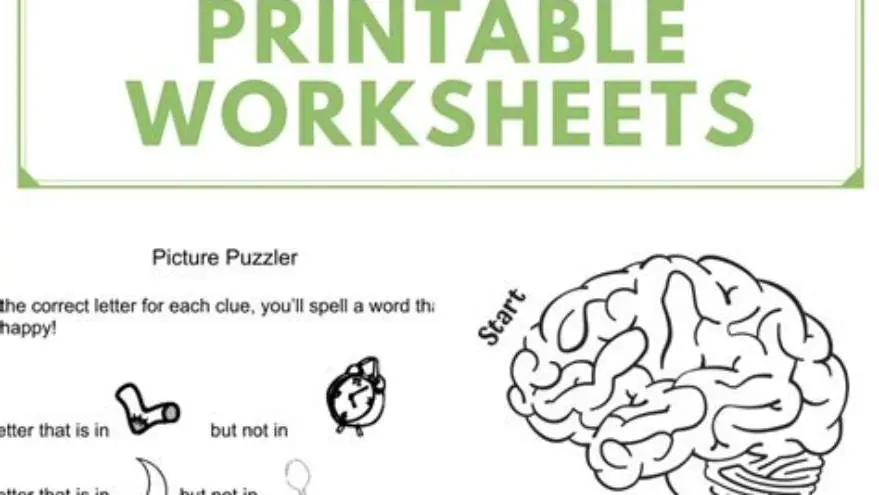
The game should require one action repeated, not a sequence the person has to remember. A word search asks you to find words, over and over. That's manageable. A crossword with intersecting clues and a grid to track mentally is harder. Sudoku with its rule about rows, columns and boxes working together is harder still. When short-term memory falters, multi-step games turn into puzzles about the instructions, not the content.
Print size matters before the content does. If the letters are 14pt or smaller, the person squints, loses their place and gives up before the cognitive part starts. 18pt minimum, and 20-24pt is better for moderate dementia or low vision. High contrast helps: black ink on white or cream paper, never grey text on grey. Glossy paper creates glare under indoor lighting.
Familiar themes work faster than abstract ones. A word search about garden flowers or 1960s song titles taps into long-term memory that often stays intact longer. Abstract puzzles or modern references (apps, new technology, current celebrities) don't trigger the same recognition. The person spends effort trying to understand the topic instead of enjoying the game.
Single-page completion matters for confidence. A game that finishes on one sheet gives a sense of achievement. Multi-page puzzles or books with continuous pagination can feel endless. The person forgets they started page one when they reach page three. One sheet, one win. Before you commit to anything, it is worth looking at dementia printable brain games.
Examples of easy-to-print games suitable for mild to moderate dementia
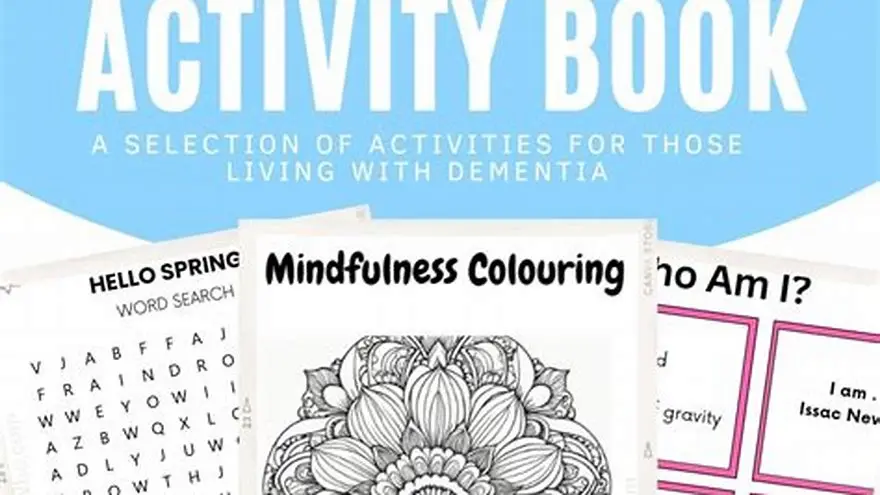
Word searches with 8-12 words work well into moderate dementia. Keep the grid small, 12x12 or smaller. Use words that run left-to-right or top-to-bottom only, no diagonals or backwards. Themes tied to a season or old hobby (baking terms, birds, car models from the 1950s) give the person something to talk about while they search. Print the word list in large type beside the grid, not below it where it's easy to lose.
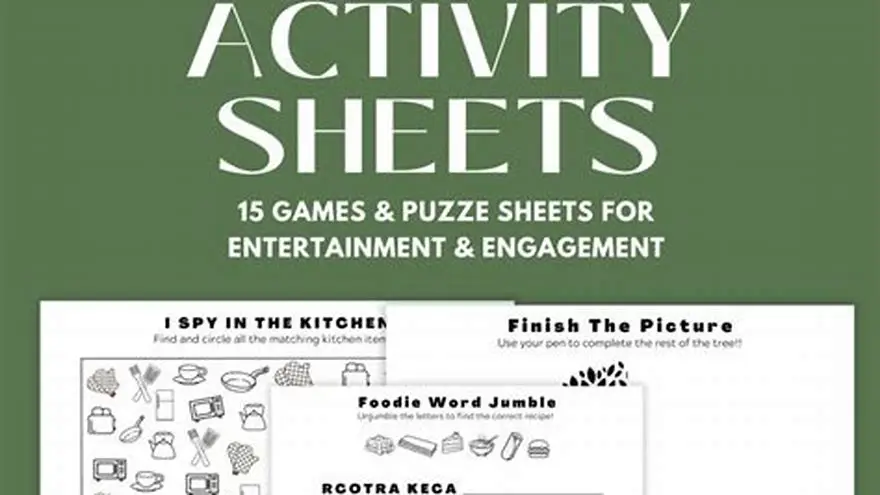
Picture matching and spot-the-difference suit moderate dementia when words become harder. Two pictures side-by-side with five clear differences marked in a separate answer key give a task with obvious progress. Avoid busy scenes: a kitchen table with six objects is clearer than a street scene with cars, people and buildings. High-contrast line drawings often work better than photographs.
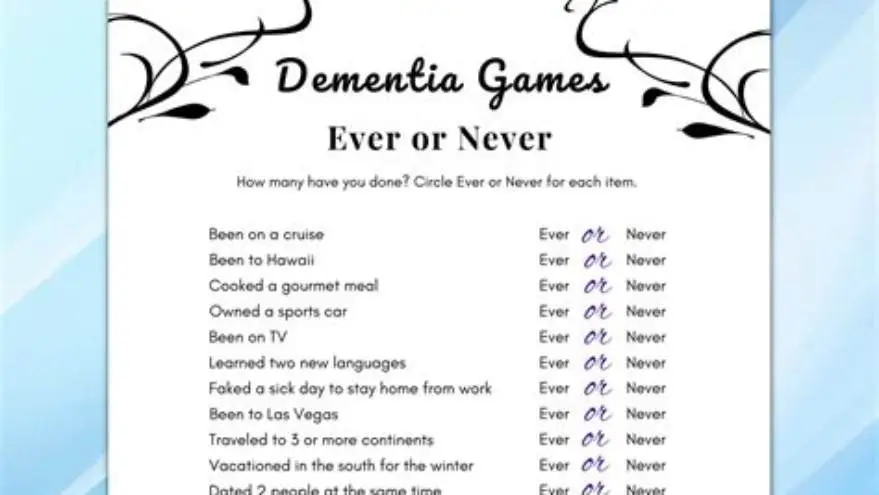
Simple category sorting suits mild dementia: a list of words to sort into two or three groups. "Which of these are fruits? Which are vegetables?" or "Which animals live on a farm?" The task is concrete, the answers feel certain, and there's no hidden trick. Print each word in a large, separate box so the person can tick or circle their choices without losing their place on the page. For the detail, see our notes on printable dementia activity pdfs.
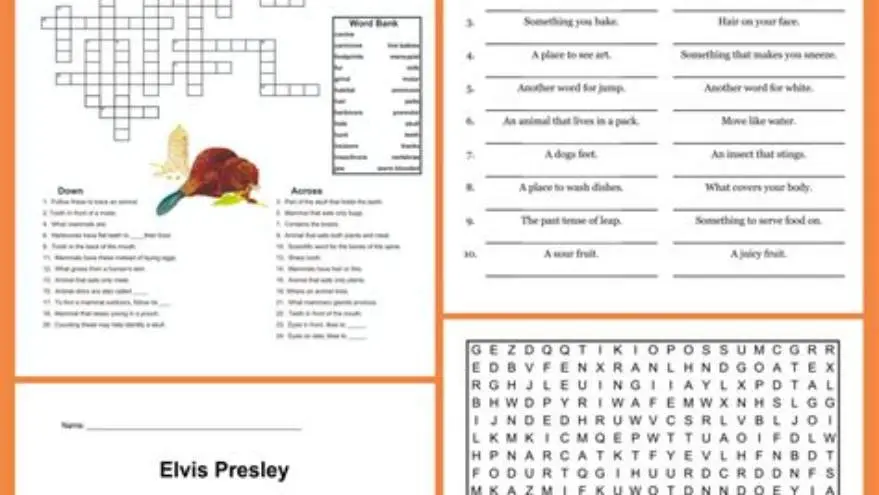
Large-print crosswords with short words work for mild dementia if the clues are direct. "Opposite of cold" for HOT, not "What you feel on a July day." Cryptic or punning clues add a layer of interpretation that can confuse. Keep the grid small, with 5-8 words maximum. A full-size crossword feels like work, a small one feels like a quick game.
Our Gentle Minds Activity Kit includes these game types across three difficulty levels, with a caregiver guide that explains which activities suit which stage. It's designed for adults with memory loss, so nothing feels childish. You print the pages you need, when you need them. It won't replace one-on-one time or conversation, but it does give you a structured activity when you're running low on ideas.
| Game type | Suitable stage | Key features | Avoid |
|---|---|---|---|
| Word search | Mild to moderate | 8-12 words, left-to-right only, familiar themes | Diagonals, backwards words, abstract topics |
| Picture matching | Moderate | 5 clear differences, simple scenes, high contrast | Busy backgrounds, subtle changes |
| Category sorting | Mild to moderate | Two or three groups, concrete answers | Abstract categories, long lists |
| Easy crossword | Mild | Direct clues, 5-8 words, small grid | Cryptic clues, full-size grids |
| Colour-by-number | Moderate to advanced | Large sections, 3-4 colours maximum | Tiny sections, complex palettes |
Tips for adapting printable games to individual abilities
Start with the easiest version and watch what happens. If the person finishes quickly and asks for another, you've pitched it right. If they stare at the page without starting, or start then stop after one or two attempts, the game is too hard for today. Drop down a level. What worked last month may not work this month, and that's the nature of progressive dementia, not a failure. We go through word games for dementia early step by step elsewhere on the site.
Simplify the rules on the page itself. Instead of printing the game as it came, add a one-line instruction at the top in bold: "Circle the flower names." or "Tick the animals you see on a farm." That external reminder reduces the load on working memory. If the original game has three steps, rewrite it as one step and remove the others.
Cut the page in half if the full sheet feels overwhelming. A word search with 12 words can become two smaller games with 6 words each. The person gets two wins instead of one, and the break between halves gives you a natural moment to stop if attention fades. Some people do better with a small, dense task than a large, sparse one.
Let the person choose the game from two or three printed options. Choice preserves autonomy, and people often know what they're in the mood for even if they can't articulate why. Lay out two pages and say "Which one would you like to try?" The act of choosing primes engagement. Forcing a specific game when the person isn't interested sets up frustration from the start. There is more on easy card games to print and play in a separate guide.
Adjust for vision and motor control, not just cognition. If the person's hand shakes, give them a thick marker instead of a pencil so they don't have to aim as carefully. If they lose their place on the page, print the puzzle with every other row shaded in pale grey to create visual lanes. If they can't grip a pen easily, switch to verbal games where you read the clues and they answer aloud. The brain game becomes the thinking, not the writing.
What format and layout reduce confusion
One game per page, with nothing else competing for attention. No decorative borders, no ads, no unrelated text. The heading says what the game is, the instructions sit directly below it, and the game fills the middle of the page. White space around the edges gives the eyes a place to rest and makes the active area obvious.
Use a sans-serif font for instructions and word lists: Inter, Arial, or Verdana. Serif fonts have fine details that blur at large sizes for people with vision changes. The game itself can use whatever font is clearest, but the supporting text should be as plain as possible. Line spacing of 1.5 to 2.0 prevents lines from crowding together. The other half of this decision is dementia patient sorting activities.
Number things only when sequence matters. A word search doesn't need numbers. A crossword does, but keep the numbers large enough to read without leaning in. Steps for a multi-part task should be numbered, in bold, with each step starting a new line. Bullets work for lists of equal items, numbers for sequences, nothing for single tasks.
Print on matte paper, not glossy. Glossy stock reflects light and creates hot spots that obscure letters. Standard 20lb printer paper works. Heavier cardstock can be easier to handle if the person's hands shake, but it's not necessary. Avoid textured or coloured paper that reduces contrast.
If you're printing multiple games, use a separator page with the date and a large title: "Tuesday games" or "Garden theme." That gives you a way to organize them in a binder and gives the person a moment to reset between activities. A stack of identical-looking pages becomes a blur.
When to move between difficulty levels
The person should finish most of the game, most of the time. If they're completing fewer than half the items, or stopping within the first minute repeatedly, the level is too hard. Drop down. If they finish in under five minutes and immediately ask for another, try the next level up. The sweet spot is a game that takes 10-20 minutes with steady engagement, not rapid completion or early quitting.
Behaviour tells you more than the page does. Someone who used to finish crosswords but now sets them aside after two clues isn't being lazy or stubborn. The cognitive load has outpaced their current ability. Someone who finishes a word search then runs a finger over it again, re-finding the words, is telling you that level is comfortable. Meet them there, don't push up just because it looks easy to you.
Some abilities plateau, some decline steadily, and some fluctuate day to day. You might print a moderate-level game on Monday and find it's too hard, then try the same game Thursday and the person finishes it happily. Fatigue, medication changes, time of day and mood all affect performance. Keep games from multiple levels printed and ready so you can adjust in the moment.
When a favourite game stops working, mourn it privately but move on publicly. The person may not remember they used to do cryptic crosswords, so there's no need to mention it or compare current ability to past performance. Offer the game that works now with the same calm energy you'd offer any activity. Grief about lost abilities is real for caregivers, but it shouldn't shape the interaction in the moment.
Alternatives to printed games when engagement drops
Conversation cards shift the activity from solving to remembering. Print a deck of prompts: "What was your first job?" "What did you do on summer holidays as a child?" The person doesn't have to produce a right answer, just talk. Long-term memory often outlasts the working memory needed for puzzles, so this can work well into moderate and advanced dementia. You're still engaging their brain, just through a different door.
Sorting tasks with real objects bring the brain game off the page: a bowl of buttons to sort by colour, a box of photographs to group by decade, a basket of fabric scraps to arrange by texture. The task is concrete, the progress is visible, and there's no reading required. Some people who've stopped engaging with printed games will happily sort objects for 20 minutes.
Simple colouring with large sections and just three or four colours works when reading has become difficult but fine motor control is still present. The task is repetitive and calming, with no wrong answers. Avoid intricate mandalas or tiny spaces. Large, bold line drawings of familiar objects (a flower, a teapot, a bird) give enough structure to feel like a task without requiring decision-making.
Music and rhythm activities engage cognitive processing without language. Clapping along to a familiar song, tapping a simple beat, or filling in the next word of a well-known lyric all activate memory and attention. You can print song lyrics in large type and read them together, letting the person fill in lines they remember. It's a brain game in everything but name.
Still wondering?
How do I know if a puzzle is too hard before I print it?
Look at the complexity of the instructions first. If you have to read the rules twice to understand them, the person with dementia will struggle. Check the print size: anything under 18pt is too small. Count the steps required: one action repeated is manageable, multiple different actions often aren't. Start with the simplest version and move up only if the person finishes easily.
Can I use the same puzzle more than once?
Yes, especially if several weeks or months have passed. The person may not remember the specific puzzle, but gauge their reaction: if they seem bored or frustrated immediately, they might recognise it even without conscious recall. Have a few different puzzles on the same theme ready so you can swap if needed.
What if the person refuses to try any printed games?
Don't force it. Some people never enjoyed puzzles, and dementia doesn't change that. Others may have tried and failed recently, and the printed page now triggers anxiety. Offer alternatives like sorting tasks, music, or conversation cards. The goal is engagement, not completion of a specific activity type.
Should I correct mistakes while the person is working?
Only if they ask for help. Correcting unsolicited can feel like criticism and shut down engagement. If they circle the wrong answer in a sorting game or miss a word in a search, let it go. The process and the calm focus matter more than a perfect finished page.
How long should a brain game session last?
Ten to twenty minutes is typical, but stop sooner if attention fades or frustration appears. Watch for signs: setting down the pen, sighing, looking away repeatedly, or asking unrelated questions. A short, successful session beats a long, strained one.
Ready to try it? It provides printable brain games at three difficulty levels designed specifically for adults with memory loss, with a caregiver guide to match activities to ability.
See the activity kit