Which printable dementia activity PDFs fit mild, moderate
Match activities to what the person can still do comfortably. Mild stage suits word searches and logic puzzles; moderate stage needs simpler pattern matching and sorting; severe stage calls for single-step sensory activities like coloring or picture matching.
On this page (8 sections)
- Quick recap
- How to identify dementia stage for activity selection
- Printable dementia activity PDFs for mild memory loss
- Activities suited to moderate cognitive decline
- PDFs that work in severe or late-stage dementia
- Tips for printing and preparing PDFs for dementia patients
- When to move between activity levels
- Still wondering?
Part of our guide on activity book for adults with dementia
Key figures
- Mild stage fit
- Word search, crossword, sudoku
- Moderate stage fit
- Picture matching, simple sorting
- Severe stage fit
- Coloring, texture cards, one-step tasks
- Print size
- 18pt minimum, 24pt better
- Paper choice
- Matte, not glossy
Quick recap
- Choose activities based on current abilities, not the diagnosis timeline
- Mild stage: multi-step puzzles with familiar themes work well
- Moderate stage: single-step matching and sorting prevent overwhelm
- Severe stage: sensory activities with no wrong answer bring calm
- Print on matte paper in the largest size that fits the page
How to identify dementia stage for activity selection
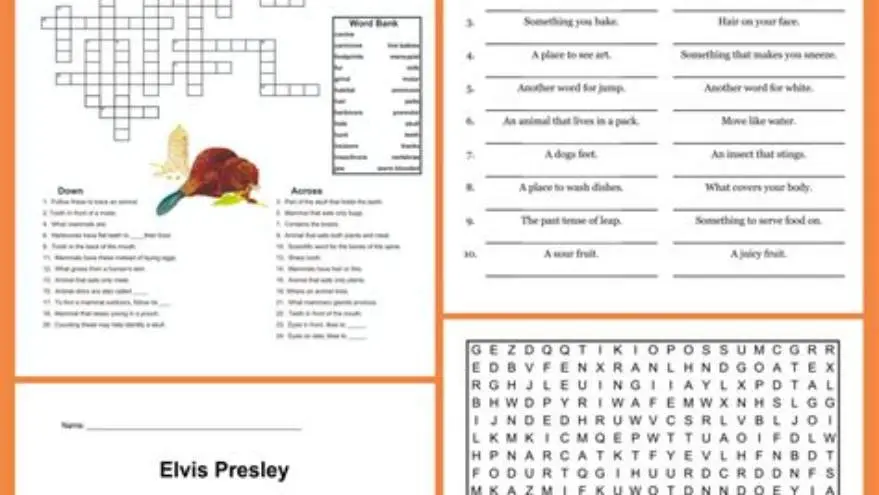
Forget the clinical stage for a moment. Watch what the person can do today without help. Can they follow a two-step instruction like "find the word, then circle it"? Do they still recognize common objects in a photo? Can they hold a pencil and stay inside the lines? Those observations tell you more than any diagnosis timeline.
The gap between diagnosis and daily function is wide. Someone diagnosed five years ago may still enjoy a crossword if language stayed strong. Another person diagnosed last year may struggle with multi-step tasks if executive function declined early. You are matching the activity to the brain's current wiring, not the calendar.
Test with a simple task first. Hand over a large-print word search with six words. If they complete it without frustration, that level fits. If they stare at it or give up within a minute, drop down. If they finish and ask for another, go up. That ten-minute test saves you from printing a stack of PDFs that sit unused.
Three broad ability groups cover most situations. Mild suits people who still read, follow instructions and catch their own mistakes. Moderate fits those who need single-step tasks and benefit from demo-ing first. Severe works when attention span is short and the goal is sensory comfort rather than problem-solving. Boundaries between them blur, and someone may move between levels depending on the time of day or their mood. People in this spot often ask about dementia activities printable pdf as well.
Printable dementia activity PDFs for mild memory loss
People at this stage still manage multi-step reasoning and recognize when an answer is wrong. They read independently, though slower than before, and get satisfaction from finishing something that required thought. The activities that work here are the ones you would call puzzles rather than busy-work.
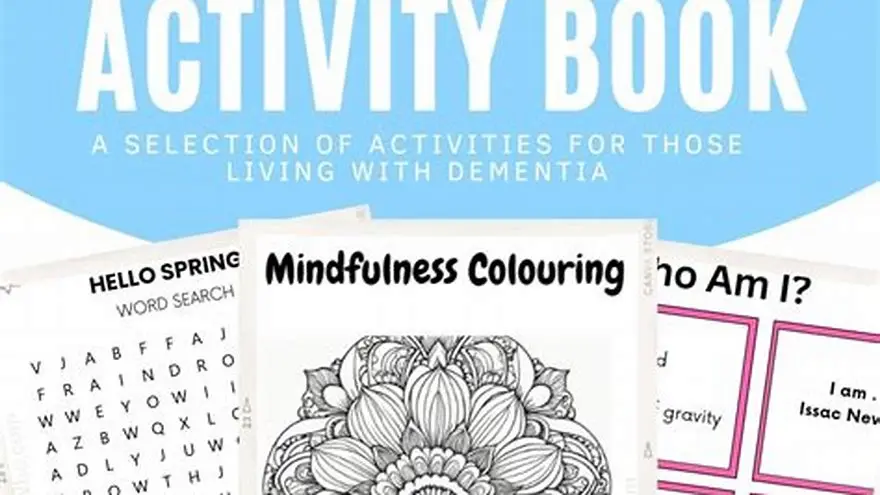
Word searches with ten to fifteen words suit this level when the grid is not packed tight. Themes from the past work better than modern topics: cities they visited, flowers from a garden, tools from a workshop. The words should run left-to-right and top-to-bottom only; diagonal and backward words add frustration without adding enjoyment.
Simple crosswords with four or five clues per direction give that aha moment without the despair of a blank grid. Clues need to be direct: "opposite of hot" rather than "not cold." Sudoku works if the person used numbers in their career - bookkeepers and engineers often keep that skill long after other reasoning fades. Start with a 4x4 grid, not the standard 9x9. If that sounds like your situation, read up on puzzles suited for dementia levels next.
Trivia cards about the 1950s and 1960s spark conversation more than silent solving. Print questions on one side, answers on the other: "Who sang 'Hound Dog'?" or "What year did the first man walk on the moon?" You are aiming for recall, not research, so the questions should feel easy to someone who lived through that decade.
At this stage, the Gentle Minds Activity Kit we make includes word puzzles, number grids and sorting tasks at the Gentle and Easy levels. It gives you 48 conversation cards and a caregiver guide that explains how to adjust difficulty on the fly. You get over 130 printable pages for $19, and because it's a PDF you own, you print each page as many times as needed. It does not include craft instructions or recipes: just cognitive activities and prompts.
Activities suited to moderate cognitive decline
Moderate decline means instructions need to be one step at a time, and demo-ing the task once makes the difference between participation and shutdown. Reading is slower and less reliable, so activities that rely on pictures or large single words work better than paragraphs. The goal shifts from solving to doing: repetition feels comforting rather than boring. There is more on activities for late stage dementia patients in a separate guide.
Picture matching is the backbone here. Print two copies of a sheet with six to eight photos: common animals, household objects, or flowers. Cut one copy into cards. The person matches each card to its twin on the uncut sheet. No wrong answer exists if you guide the first match, and the task has a clear completion point that brings satisfaction.
Sorting tasks work when categories are obvious. Print photos of fruit, vegetables and bread, then ask the person to group them. Or print color swatches and have them sort buttons or fabric scraps by shade. The sorting itself is the activity: what happens to the sorted piles afterward does not matter, so there is no failure state.
Large-print coloring pages with bold outlines and big areas give the hands something to do. Choose images that connect to identity: a person who fished would color a lake scene, a former teacher might color a schoolhouse. Stay away from mandalas and abstract patterns; recognizable objects tie the task to memory and make it feel meaningful rather than childish. The other half of this decision is conversation cards for cognitive stimulation.
Simple word-picture matching still works if the words are short and the pictures clear. Print "CAT" in 24-point letters beside three pictures: a cat, a dog, a bird. The person circles the match. Keep sets to four or five pairs per page. Going beyond that invites fatigue and the task loses its calm, focused feeling.
At this level, the Steady section of the Gentle Minds Activity Kit includes picture sorts, large-print matching and coloring sheets that respect adult identity. The kit's daily planning pages help you rotate activities through the week so nothing feels stale. It does not replace one-on-one time (you still sit together) but it hands you the structure so you are not inventing tasks from scratch each morning.
| Ability level | Reading skill | Best activity type | Completion time |
|---|---|---|---|
| Mild | Reads independently | Word search, crossword, sudoku | 15-30 minutes |
| Moderate | Recognizes single words | Picture matching, sorting | 10-15 minutes |
| Severe | Visual recognition only | Coloring, texture, one-step | 5-10 minutes |
PDFs that work in severe or late-stage dementia
Late stage strips away multi-step thinking and sustained attention. Activities here are sensory and immediate: touch, color, sound. Success is measured in moments of calm or a smile, not in a finished product. The activity is valid if it holds attention for three minutes without distress.
Coloring pages with very large areas and thick outlines let the person move a crayon without worrying about precision. Flowers, butterflies, simple faces. The goal is the motion and the color, not staying inside the lines. If hand control is unsteady, switch to large markers instead of colored pencils: the bold strokes look intentional rather than shaky.
Texture cards work when vision or motor skills have declined. Glue fabric swatches, sandpaper, cotton balls or corrugated cardboard onto stiff paper. The person touches each one, and you name the texture aloud: "rough," "soft," "bumpy." It is not a test. You are offering a sensory experience, and repetition across days is fine.
Single-step matching is the simplest cognitive task that still qualifies as an activity. Print two identical large photos of a face, a flower, or a pet. Place them side by side. Ask, "Are these the same?" The person looks and nods or says yes. That moment of recognition is the activity. Print a new pair the next day.
Music lyric sheets printed in very large type let you sing together even when reading has mostly gone. Choose songs from adolescence: those lyrics often survive when recent language does not. "You Are My Sunshine," "Amazing Grace," "Que Sera, Sera." You sing the line, the person joins on the words they remember. The printed sheet is a cue, not a script.
Tips for printing and preparing PDFs for dementia patients
Print size matters more than you think. Set your PDF to print at 100% scale, never "fit to page," or the text shrinks below the size the designer intended. If the PDF came with an 18-point font and your printer scales it down to fit margins, the person loses readability. Check the first print. If you squint, it is too small.
Matte paper beats glossy every time. Glare from a glossy sheet makes letters swim under indoor light, especially fluorescent or LED. Plain copy paper works fine: you do not need cardstock unless the activity involves cutting and repeated handling. Heavier paper frustrates arthritic hands that cannot flip the sheet easily.
Print one activity at a time, not a whole packet. A stack of ten pages feels like homework. One page feels manageable. When the person finishes, you hand over the next one. That pacing prevents overwhelm and gives you natural break points to stop if attention fades.
Cut away excess margin and instructions. If the PDF has a header that says "Dementia Activity Level 2," trim it off. The label does not help the person doing the activity, and it can feel infantilizing. Leave only the puzzle or picture and any essential cues like word lists.
Use a clipboard or a sheet of cardboard under the page to give it stability. A flimsy sheet sliding on a table adds a motor challenge that has nothing to do with cognition. Anchoring the page lets the person focus on the task, not on chasing the paper.
Prep materials before you sit down. Sharpen the pencil, open the marker, pour the tea. You want to start the activity within 30 seconds of suggesting it, while interest is high. Fumbling with supplies breaks the moment, and some people with dementia will walk away rather than wait.
- Lighting - Sit near a window or use a warm desk lamp; overhead light casts shadows on the page
- Contrast - Black ink on white or cream paper; avoid gray text or pastel backgrounds
- Binding - Do not staple a multi-page set; hand over one sheet at a time instead
- Storage - File finished activities in a binder with the person's name so you can revisit successes
When to move between activity levels
You move down a level when frustration arrives faster than satisfaction. If the person stops halfway through, pushes the page away, or says "I can't do this" more than once a week, the activity is too hard. Drop to the next simpler type immediately. Waiting a month while they struggle does not build resilience; it builds avoidance.
Time of day matters as much as disease stage. Someone might handle a word search at 10 a.m. and need a coloring page by 4 p.m. Print a few options at different levels and let the person's energy that hour decide. Dementia is not static within a single day, so your activity kit should not be static either.
Move up if the person finishes quickly and asks for more, or if they are doing the activity while chatting with you instead of needing full focus. Boredom looks like disengagement, and disengagement looks like decline. If someone is coasting, you are wasting an opportunity to keep their brain reaching just a little.
Some people plateau at a level that works and stay there for months. That is fine. The point is not to climb a ladder of difficulty: it is to match the activity to the person's comfort zone, then sit in that zone until it shifts. You will know it shifted when a previously easy task starts taking twice as long or ending unfinished.
Keep a simple log for a week: activity type, time started, whether they finished, and their mood after. Patterns show up fast. You might see that picture matching works Monday and Wednesday but fails on Friday, or that mornings suit puzzles and afternoons suit coloring. That log replaces guesswork with data, and you stop blaming yourself when an activity flops.
Still wondering?
Can I use the same printable PDF for someone who moves between mild and moderate stages?
Print from both levels and rotate based on how the person is doing that day. Dementia is not linear: someone may handle a harder task on Tuesday and need a simpler one by Thursday. Keep a folder with a few options ready so you are not printing in the moment when interest fades fast.
How do I know if a PDF is too childish for an adult with dementia?
Look at the images and themes. Cartoon animals, primary-color borders and baby-talk instructions feel condescending. Photos of real objects, classic patterns and plain language treat the person as an adult. If you would not hand it to a colleague, do not hand it to someone with memory loss.
Should I correct mistakes when someone is doing an activity?
At mild stage, gentle correction helps if the person is self-correcting too. At moderate and severe stages, skip it: pointing out errors kills engagement. The goal is calm participation, not a perfect score. If a color goes outside the lines or a match is wrong, let it stand.
What if the person refuses to try any printed activity?
Step back and watch what they do choose: folding laundry, looking at photos, touching objects. Match the activity to that natural behavior instead of pushing a worksheet. Some people never warm to printed tasks, and that is fine. The printed PDF is one tool, not the only one.
How many activities should I prepare for a week?
Start with three different types: one each at the levels just above, at, and below where you think they are. Print two or three copies of each. That gives you flexibility without flooding the person with choices. Restock when you are down to one copy of the type that is working.
Ready to try it? It gives you activities at three levels in one kit, so you match what works today without hunting through separate PDFs
See the activity levels