Printable dementia activities matched to stage
Match activities to three broad stages: early dementia needs standard puzzles with larger print; mid-stage needs simpler formats with fewer than 12 words or clear visual patterns; late-stage needs single-focus activities like sorting or matching three to six items.
On this page (8 sections)
- Quick recap
- How to identify dementia stages relevant to activity choice
- What printable activities suit early-stage dementia
- Printable activities that work for mid-stage dementia
- What suits late-stage dementia
- Signs that an activity is too hard or too easy
- How to adjust activities as dementia progresses
- Still wondering?
Part of our guide on dementia activity book for adults
Key figures
- Early stage
- Standard puzzles, large print
- Mid-stage threshold
- Under 12 words per activity
- Late-stage item count
- 3-6 items maximum
- Attention test
- 10-15 minutes sustained focus
- Print size minimum
- 18-point or larger
Quick recap
- Test attention span first: if they can work for 10-15 minutes, try standard puzzles in large print
- Mid-stage needs formats with under 12 words or clear visual grids, not dense text
- Late-stage activities work best with 3-6 items and single-step tasks like matching or sorting
- Switch to an easier format when you see repeated frustration, not just one bad day
- Conversation cards and reminiscence prompts work across all stages with the right support
How to identify dementia stages relevant to activity choice
You don't need a clinical diagnosis to match activities to ability. Watch for three practical markers: how long they stay focused, whether they need prompts to finish a task, and how much help they ask for. Someone who works through a crossword for 15 minutes without stopping is in a different place from someone who forgets the task after two clues.
Early-stage dementia shows up as occasional word-finding trouble and slower processing. They complete familiar puzzles but take longer. They might ask you to repeat instructions once, but then they work independently. Print size matters more than content at this point.
Mid-stage brings shorter attention spans and more need for structure. They start a task but lose track of what they're doing. You'll see them read the same line twice, or circle a word and forget to cross it off the list. Visual confusion increases: a dense word search looks like a wall of letters rather than a puzzle.
Late-stage means you're working together rather than leaving them to it. They need you to explain the goal each time, and they may not remember finishing the previous page. Single-step activities work. Multi-step ones don't. The shift from mid to late often happens when you realize you're doing most of the task while they hold the pencil. People in this spot often ask about matching activities to dementia stages as well.
What printable activities suit early-stage dementia
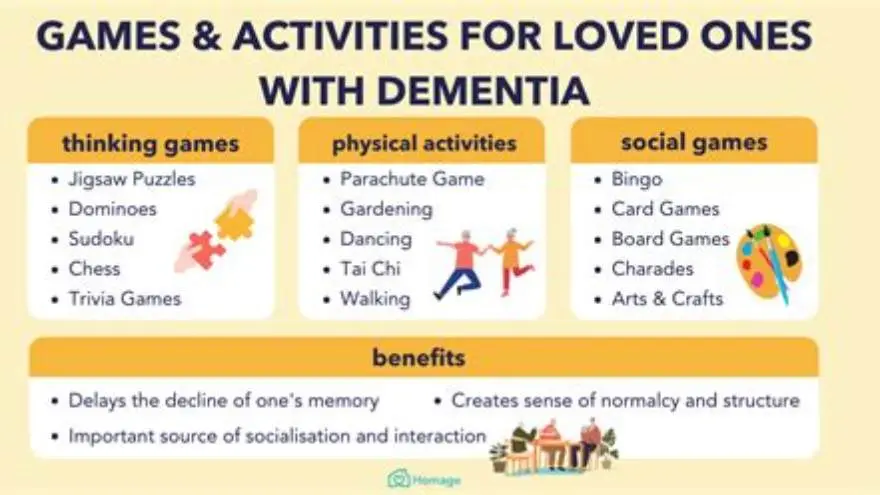
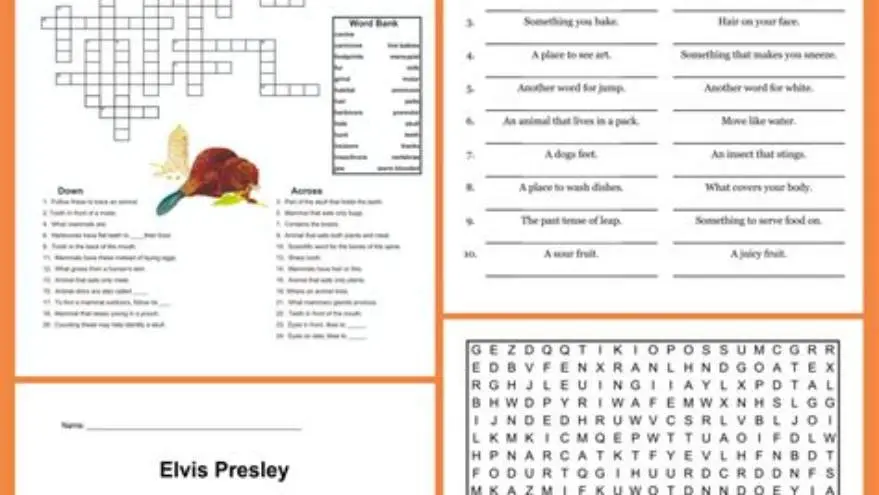
Early-stage means standard puzzles still work. Word searches, simple crosswords, sudoku, dot-to-dots and mazes are all fine as long as the print is 18-point or larger. The content doesn't need to change yet. The presentation does. Avoid grids smaller than half an inch per square. White paper with black ink gives the best contrast.
Pick themes they know well: animals, gardens, cities, foods, decades they lived through. Unfamiliar topics add cognitive load they don't need. A word search about vintage cars will suit someone who worked on engines. One about cryptocurrency won't.
Let them choose the difficulty. Some people in early-stage dementia enjoy the challenge of a 20-by-20 word search. Others find a 12-by-12 less frustrating. Offering both respects where they are today, not where a checklist says they should be. For the detail, see our notes on dementia activities printable pdf.
Conversation cards and reminiscence prompts work especially well at this stage because the answers come from long-term memory, which stays strong. Print questions like What was your first job? or Describe your childhood home on individual cards. They can read them independently and talk as long as they like. Our Gentle Minds Activity Kit includes 48 of these at three levels, with the early-stage set using open-ended prompts that invite longer stories.
Avoid timed activities and competitions. The pressure adds stress without adding enjoyment. Print one puzzle per page rather than cramming two onto a sheet. White space reduces visual clutter and makes it easier to see where one task ends.
Printable activities that work for mid-stage dementia
Mid-stage needs simpler formats. Word searches should have no more than 12 words in the list. Crosswords need to be small: a 7-by-7 grid with straightforward clues, nothing cryptic. Sudoku works better as a 4-by-4 grid using shapes or colors instead of numbers. The goal is to keep the activity achievable in one sitting. There is more on activities for early stage dementia at home in a separate guide.
Matching tasks work well now. Print two columns: pictures of objects on the left, their names on the right. Or print a set of six images and ask them to circle the two that are the same. Sorting activities (group these animals, these tools, these fruits) give a clear goal and a visible result.
Word games become harder to read at this stage, so switch to larger fonts and more space. A word scramble with five letters each and six words total is manageable. A page of twenty words is not. Trivia questions suit mid-stage if they're multiple-choice and the answers are from long-term memory: Who sang Blue Suede Shoes? with three names underneath.
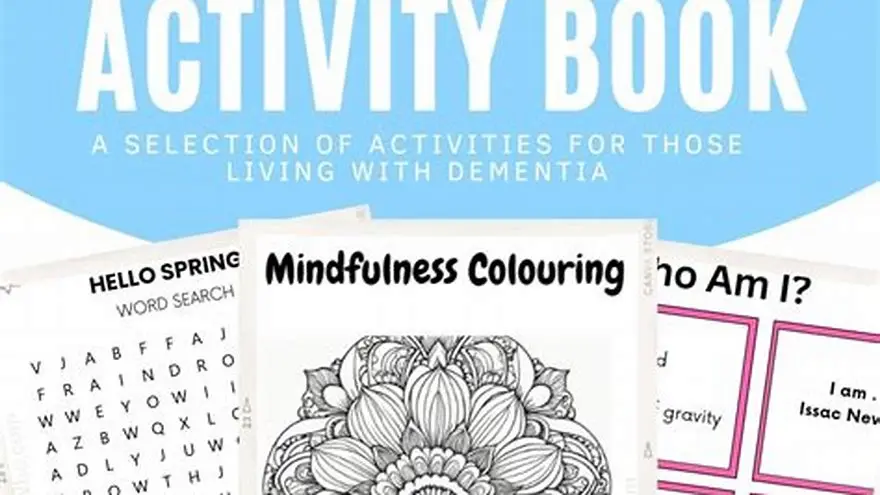
Coloring pages and simple dot-to-dots offer a success without language demands. Pick realistic images rather than abstract patterns: a vase of flowers, a classic car, a garden scene. Mandalas look appealing but the symmetry can confuse someone with spatial processing trouble. If that sounds like your situation, read up on achievable activities for caregivers next.
At mid-stage, you'll be sitting with them more often. That's not a failure. It's the stage. Print activities that let you work together: a two-person word search where you take turns finding words, or a memory prompt that you both answer. The Gentle Minds Activity Kit has a middle level designed for exactly this: activities you can do side by side, with a helper guide that explains how to support without taking over.
| Activity type | Early stage | Mid stage | Late stage |
|---|---|---|---|
| Word search | 20x20 grid, 15-20 words | 12x12 grid, under 12 words | Not recommended |
| Crossword | Standard, large print | 7x7 grid, simple clues | Not recommended |
| Matching tasks | Optional, 10-12 pairs | Good choice, 6-8 pairs | Best choice, 3-6 pairs |
| Conversation cards | Open-ended prompts | Shorter prompts, more structure | Single-focus prompts with picture cues |
What suits late-stage dementia
Late-stage printable activities are really tools for connection rather than puzzles to solve. The person needs you there, guiding each step. Print materials that give you something to look at together: large photographs from their era, single-line memory prompts with a picture, or sensory sorting tasks.
Keep the item count low: three to six items maximum. A page with three pictures and the instruction Which one is a bird? works. A page with twelve pictures does not. One clear question per page. One task per sheet. Visual simplicity matters more than content variety. Before you commit to anything, it is worth looking at activity sheets that last with dry erase.
Tactile and sensory activities often work better than printed puzzles at this stage, but printables can support them. Print large color swatches and ask them to point to their favorite. Print pictures of familiar objects (an iron, a telephone, a teapot) and let them tell you what each one does. You're listening more than testing.
Reminiscence photo cards work if the images are simple and from the right decade. A black-and-white photo of a 1950s kitchen may trigger a memory. An abstract illustration will not. Print one large image per page with a single prompt underneath: What did you cook? or Who sat here? You're not expecting a detailed answer. A word or a smile is enough.
Music lyric sheets with large, bold type and only the first verse work better than full song sheets. They may not read the words, but seeing them can cue memory. Print familiar hymns, folk songs, or hits from their teenage years. The Gentle Minds Activity Kit includes a late-stage section we call Gentle level: single-focus pages with large images, simple prompts, and no wrong answers.
Signs that an activity is too hard or too easy
Too hard shows up as repeated frustration: they start, stop, push the page away, or ask what to do more than twice. You'll see them stare at the page without marking anything, or circle random letters that aren't part of the solution. If this happens on two or three separate days, the format is beyond them right now.
Agitation is another sign. They might crumple the page, say I can't do this anymore, or refuse activities they used to enjoy. That's not stubbornness. It's the brain recognizing a task it can no longer parse. Drop down to the next simpler format and watch the tension ease.
Too easy is less obvious but still worth noticing. They finish in under two minutes and look bored. They don't seem engaged or proud of completing it. A puzzle that's too simple feels condescending, especially to someone in early-stage dementia who still has plenty of cognitive ability left.
The right fit looks like sustained attention for five to fifteen minutes, depending on the stage. They work without constant prompting. They might ask for help once or twice, but they're doing most of it themselves. When they finish, they look satisfied rather than exhausted or indifferent.
One bad day doesn't mean you need to change the activity level. We all have off days. But if the same activity fails three times in a row, it's time to adjust. Go easier, not harder. You can always move back up if things improve, but pushing too hard damages confidence and makes them less willing to try the next activity.
- Pushing the page away or refusing to start: the task looks overwhelming before they even try
- Asking what to do more than twice per page: the instructions or format are too complex
- Finishing in under two minutes with no real engagement: the activity is too simple and feels insulting
- Sustained focus for 5-15 minutes without constant prompting: the difficulty is matched well
- Visible satisfaction or pride when finished: they feel successful rather than frustrated or bored
How to adjust activities as dementia progresses
Print a range of difficulty levels and keep them in separate folders. When you notice the current level isn't working, you can pull from the next folder down without scrambling to find new materials. Label the folders by format rather than stage: 12-word searches, Matching activities, Single-picture prompts. That keeps it practical rather than clinical.
Start each session with the same warmup activity: something they can definitely do. A three-item matching task, a familiar song lyric, or a photo they've talked about before. Success at the start makes them more willing to try the new activity you're introducing.
Reduce the amount of content per page as the disease progresses. Early-stage can handle a full sheet of puzzles. Mid-stage needs half that. Late-stage needs one clear image or question. Use larger print, more white space, and simpler instructions each time you move down.
Keep a simple log: date, activity, and how it went. Not detailed notes. Just word search, good or crossword, too hard. After two weeks you'll see patterns that tell you when to adjust. You don't need a formal assessment. You need to notice what you're already seeing.
Don't throw out the harder activities. Keep them. Dementia progression isn't always linear, and some days are better than others. If they're having a strong day, offering a slightly harder puzzle shows you still see their abilities. Just don't push it if they decline.
When you're making the same adjustment repeatedly (moving to fewer words, larger print, simpler structure) it's a signal that the stage has shifted. Accept it. Adjusting activities isn't giving up. It's respecting where the person is now and giving them the best chance to succeed.
Still wondering?
Can someone with dementia do jigsaw puzzles if I print a photo and cut it up?
Yes, in early and sometimes mid-stage, but keep the piece count low. Print a large, high-contrast photo on cardstock and cut it into 6-12 pieces with straight edges. Curved jigsaw edges are harder to match when spatial skills decline. Landscapes and faces work better than abstract images.
Should I correct mistakes when they circle the wrong answer?
Not in the moment. If the goal is engagement rather than accuracy, let it go. If they ask whether they got it right, be honest but kind: That one's tricky. Want to try this one instead? Constant correction kills the willingness to try.
How do I know when to stop using printed activities altogether?
When the person no longer focuses on the page for more than a few seconds, or when every printed activity causes agitation. At that point, switch to purely sensory or social activities: music, hand massage, looking at photos together without any task attached.
Is it better to print in color or black and white?
Black ink on white paper gives the best contrast and works for most activities. Color is helpful for sorting tasks, matching games, and photo-based reminiscence, but avoid busy backgrounds or multiple colors per page. High contrast matters more than color variety.
Can I reuse the same activity a week later if they don't remember doing it?
Yes, especially in mid and late-stage. If the activity worked well and they don't recall completing it, print it again. Familiarity can actually make the second attempt easier. Just don't reuse it the same day or if they show any sign of recognizing it and feeling patronized.
Ready to try it? It gives you all three levels ready to print so you can adjust as dementia progresses without hunting for new materials each time.
Get all three levels ready