How to Sell Printable Puzzles on Your Website: Setup and Payment Steps
The technical steps to sell printable puzzles on your own site, from file delivery to payment setup and marketing that converts.
You need three pieces: a way to deliver PDFs after purchase, a payment processor like Stripe or PayPal, and product pages with previews. Most sellers use a WordPress plugin or Gumroad to handle checkout and automated delivery.
On this page (8 sections)
- The short version
- How to create printable puzzles for your site
- Payment and download setup for digital files
- Options to present puzzles on your site
- Marketing tips for direct sales on your own site
- Legal and customer service basics for selling printables
- Comparing your own site to marketplace platforms
- Questions people still ask
Part of our guide on large print word search book kdp niche
Selling on your own site keeps the full sale price, but you handle payment processing, file delivery, and every customer email yourself.
| Payment fees | 2.9% + 30¢ per sale, typical |
|---|---|
| File delivery | Automated via plugin or service |
| Download security | Expire links after 24-48 hours |
| Preview required | Yes, sample page or grid |
| Traffic source | Email and social, not just SEO |
The short version
- Use Stripe or PayPal for payment processing; both charge around 2.9% plus 30 cents per transaction
- Automate PDF delivery with a plugin or service so buyers get files immediately after checkout
- Show a sample page or preview on every product listing to prove quality before purchase
- Email your existing audience first; cold traffic needs proof through free samples or social content
- Secure your PDFs with unique download links that expire after 24 to 48 hours or a set number of downloads
How to create printable puzzles for your site
You can build puzzles manually in a word processor, use free online generators, or pick a paid tool that handles layout and formatting. Manual creation gives you control but takes hours per puzzle. Free generators work for single puzzles but rarely offer bulk export or consistent formatting across a book.
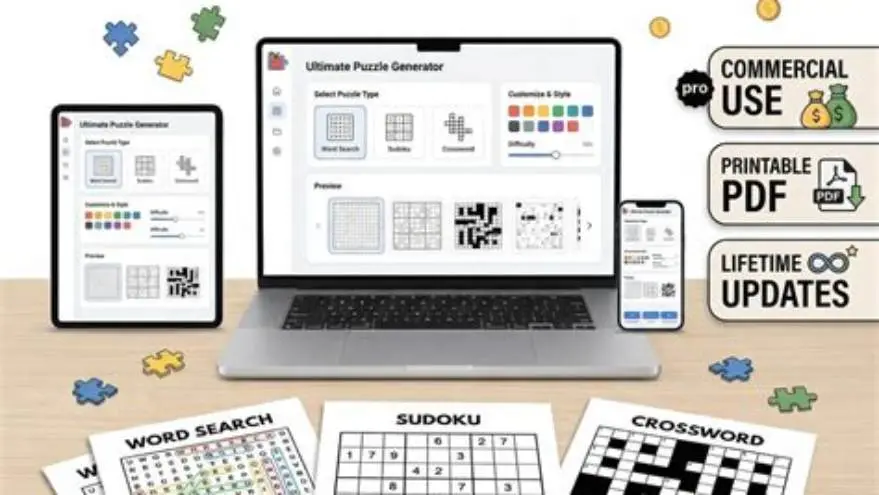
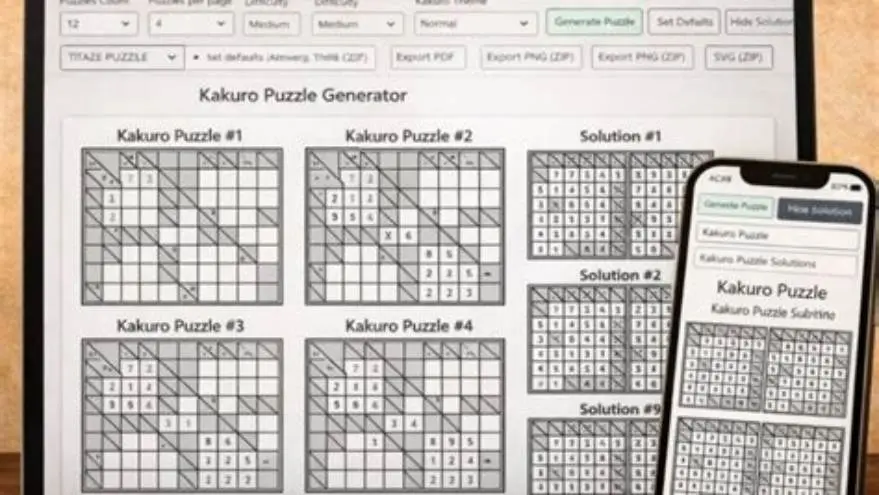
Paid puzzle software speeds up production when you're selling multiple puzzle packs or books. BigPrint Puzzle Studio, which we make, generates 8 puzzle types including word search, sudoku, and mazes in large print, with 42 ready themes and the option to add your own. It costs $17 one-time and outputs print-ready PDFs sized for seniors and low-vision users. It won't guarantee sales, but it cuts layout time from hours to minutes per book.
If you're selling only a few puzzles, stick with free tools like our Large Print Word Search Maker or public-domain generators. You'll spend more time formatting, but the cost is zero. For higher volume or themed collections, a dedicated tool pays for itself after a few sales.
Save your puzzles as PDFs at 300 dpi or higher. Buyers print these at home, so blurry text or tight margins ruin the experience. Test-print every file on your own printer before listing it. Check that the answer key matches the puzzle and that page numbers appear when you promised them. The other half of this decision is cover specs for kdp books.
Payment and download setup for digital files
Payment processors connect your site to buyers' credit cards or PayPal accounts. Stripe and PayPal are the two most common choices. Both charge around 2.9% plus 30 cents per transaction. Stripe integrates directly with most WordPress plugins and gives you a unified dashboard. PayPal works everywhere but splits reporting between PayPal and your site.
Automated delivery is non-negotiable. Buyers expect the PDF in their inbox within seconds. Manual email delivery works for five sales a month but breaks your schedule at fifty. WordPress users typically install a plugin like Easy Digital Downloads, WooCommerce with a digital products extension, or SendOwl. These handle checkout, payment confirmation, and file delivery without your involvement.
Each plugin has trade-offs. Easy Digital Downloads is lean and built only for digital products, so setup is fast. WooCommerce adds physical product features you won't use, which bloats the dashboard. SendOwl and Gumroad are hosted services that embed a buy button on your site but keep the checkout on their domain. That simplifies setup but means you don't own the customer data unless you export it manually. If that sounds like your situation, read up on how to sell printable puzzles on etsy next.
Secure your download links by setting an expiration time of 24 to 48 hours or limiting each link to three downloads. This stops buyers from sharing the link publicly. Most plugins and services include this feature. Test the full purchase flow yourself with a real payment to confirm the file arrives, the link works, and the expiration triggers correctly.
| Platform | Best for | Transaction fee | Owns customer data |
|---|---|---|---|
| Stripe + Easy Digital Downloads | WordPress sites selling only digital files | 2.9% + 30¢ | You do |
| PayPal + WooCommerce | Sellers who already use WooCommerce | 2.9% + 30¢ | You do |
| Gumroad | Quick setup without WordPress | 10% of sale | Gumroad does, export required |
| SendOwl | Embed checkout on any site | Fixed monthly fee or 5% | You do, with export |
Options to present puzzles on your site
Your product page needs a clear title, a description of what's inside, a sample page or preview image, the file specs, and the price. Buyers won't pay for a puzzle pack they can't see. Show one full puzzle page or a cropped grid that proves the print is large and the clues are readable.
List what the buyer gets in plain terms: number of puzzles, difficulty level, page count, print size, and whether an answer key is included. Vague promises like 'hours of fun' don't close sales. A line like '20 large-print word searches, 14-point font, answers on page 21' tells the buyer exactly what they're paying for. It helps to understand puzzle book makers no subscription before going further.
Group puzzles into themed packs rather than selling individual sheets. A pack priced at $3 to $7 feels like a purchase worth making, while a single puzzle at $1 looks like a questionable deal after payment fees. Themes like 'Spring Garden Word Searches' or 'Travel Sudoku' make the pack feel cohesive and easier to market.
Add a short FAQ under each product: What size paper does this print on? Can I print it multiple times? Is this suitable for someone with low vision? Answering these up front reduces support emails and removes the last objection before checkout. Include a preview PDF or sample page as a free download on the same page to let cautious buyers test your quality before committing.
Marketing tips for direct sales on your own site
Selling on your own site means you bring your own traffic. No built-in marketplace feeds you buyers the way Etsy or Amazon does. Start by emailing people who already know you: family members, friends, social media followers, or anyone who downloaded a free puzzle from your site. A warm audience converts at 5% to 15%, while cold traffic sits closer to 1% to 2%. It helps to understand how to self bind a large book cheaply before going further.
Build an email list before you launch. Add a signup form offering a free puzzle pack in exchange for an email address. Use a service like Mailchimp, ConvertKit, or Buttondown to manage subscribers and send announcements. When you release a new puzzle pack, email your list first. That burst of early sales gives you social proof and revenue before you spend on ads or posts.
Post sample puzzles on social platforms where your audience gathers. Facebook groups for seniors, caregiving, or homeschooling often welcome free printables if you're not spamming product links. Share a free puzzle image, and mention in the comments that more themed packs are on your site. Pinterest works well for printables; pin a preview image with a link to the product page.
Run a Google Ad or Facebook Ad only after you've tested organic reach. Paid traffic costs $0.50 to $2 per click depending on your keywords and audience, so a $5 puzzle pack needs a conversion rate above 3% to break even. Start with a $50 test budget, track which ad and landing page combination converts, then scale the winner. Most sellers waste ad money by sending cold traffic to a homepage instead of a specific product page with a preview and clear call-to-action.
- Email list: offer a free puzzle to collect addresses, then announce new packs to this group first
- Social proof: ask early buyers for a one-sentence testimonial or photo of the printed puzzle in use
- Pinterest: pin preview images of each puzzle pack with a direct link to the product page
- Collaborations: partner with senior care blogs or activity directors who will share your puzzles with their audience in exchange for a free pack or affiliate cut
Legal and customer service basics for selling printables
Add a terms of use page to your site that explains what buyers can and cannot do with your puzzles. Most sellers allow personal and small-group use but prohibit resale or redistribution. State this clearly: 'You may print these puzzles for yourself, your family, or your care facility. You may not resell, share, or distribute the files.' This won't stop every violation, but it gives you legal footing if someone resells your pack on Etsy.
Include a refund policy. Digital products are tricky because the buyer already has the file, but a no-questions-asked refund within 24 hours of purchase builds trust and defuses complaints. Most payment processors let you issue refunds directly from the dashboard. A refund costs you the payment processing fee, but it's cheaper than a chargeback or bad review.
Expect customer service questions about downloading, printing, and file compatibility. Set up a simple contact form or dedicate an email address for support. Common issues: the buyer can't find the download link, the PDF won't open on their phone, or the puzzle prints with cut-off edges. Write a one-page FAQ covering these problems and link to it from every product page and confirmation email.
Protect yourself with basic contracts if you hire a designer or buy puzzle content from someone else. Make sure you own the rights to sell and distribute everything in your pack. Using clipart or fonts with a personal-use-only license in a product you sell is a violation, and some rights-holders do send cease-and-desist letters. Stick with commercial-use assets or create everything yourself.
Comparing your own site to marketplace platforms
Your own site keeps 100% of the sale price minus payment processing fees, while Etsy takes 6.5% of the sale plus a listing fee and payment processing. Amazon KDP pays royalties but locks your content into their platform. Selling direct maximizes profit per sale but requires you to generate all the traffic.
Marketplaces offer built-in search traffic. A puzzle book on Amazon can appear in search results for 'large print word search' without any marketing effort from you. Your own site starts at zero visitors unless you drive them there. That trade-off matters most when you're starting out: marketplaces give you faster first sales, but your site gives you higher margins and full control once you have an audience.
You can run both. List puzzle books on Amazon KDP for broad reach, then sell exclusive or premium packs on your site for higher margins. Use your Amazon author profile and book descriptions to mention your site, so readers who like your style can find more. This approach spreads risk and lets you test what converts better for your audience.
Your site also owns the customer relationship. When someone buys on Etsy or Amazon, you don't get their email address unless they volunteer it. On your site, every buyer lands on your email list automatically if you set up the confirmation flow correctly. That list becomes your most valuable asset for launching new products or running promotions.
- Keep full sale price minus processing fees
- Own customer emails and data
- No platform rule changes or account suspensions
- Complete control over branding and product pages
- No built-in traffic or search visibility
- You handle all customer service and tech issues
- Payment setup and file delivery require configuration
- Refunds and disputes managed by you, not the platform
Questions people still ask
Do I need a business license to sell printable puzzles on my own website?
That depends on your location and how much you earn. Many jurisdictions require a business license or sales tax permit once you cross a revenue threshold, often around $500 to $1,000 per year. Check with your local county clerk or small business office. Starting without one is common for very small sales, but staying compliant as you grow avoids penalties.
How do I stop people from sharing my puzzle PDFs for free?
You can't stop it completely, but expiring download links and limiting downloads to two or three per purchase reduce casual sharing. Watermarking each PDF with the buyer's email is another deterrent, though it requires extra setup. Most sharing happens when a buyer posts the link publicly; expiring links break that chain.
What file format should I use for printable puzzles?
PDF is standard because it preserves formatting across devices and opens on nearly every computer, tablet, and phone. Save at 300 dpi or higher for clear printing. Avoid Word documents or JPEGs; buyers expect a PDF they can print immediately without adjusting margins or resolution.
Can I sell puzzles on my site if I don't have WordPress?
Yes. Services like Gumroad, SendOwl, and Payhip let you sell digital files from any website by embedding a buy button. You paste a code snippet into your site, and the service handles checkout and delivery. You lose some control and pay higher fees, but setup takes minutes instead of hours.
How much should I charge for a printable puzzle pack?
Most puzzle packs with 15 to 25 pages sell for $3 to $7. Smaller packs or single puzzles rarely justify the effort of checkout unless priced as part of a bundle. Larger themed books with 50+ pages can reach $10 to $15. Check similar listings on Etsy to see what your audience already pays.
Do I need to collect sales tax when selling printable puzzles?
Digital products are taxable in many U.S. states and countries, but rules vary widely. Some states exempt digital downloads, others tax them like physical goods. If you sell across state or country lines, you may need to register and remit tax in multiple jurisdictions. Consult a tax professional or use a service like TaxJar to handle compliance automatically.
Ready to try it? It generates print-ready puzzle PDFs in minutes, cutting layout time when you're building multiple packs to sell
Make puzzle packs faster