Sorting activities for dementia: how to pick and adapt by stage
Pick sorting activities that match the person's current abilities: mild dementia handles multi-step sorting like organizing mail or sorting cutlery by type, moderate suits color or size sorting with three or four categories, and severe works best with simple two-category tasks like grouping by a single color or texture.
On this page (9 sections)
- Quick recap
- What sorting activities suit mild, moderate and severe dementia
- Signs a sorting activity is too hard or too easy
- How to modify sorting tasks to keep patients engaged
- Examples of sorting games with step-by-step adaptation tips
- When to switch from sorting to matching
- Printable sorting activities designed for memory loss
- How long sorting activities stay useful as dementia progresses
- Still wondering?
Part of our guide on activities for dementia patients simple
Key figures
- Mild stage activity time
- 15-25 minutes per session
- Moderate stage categories
- 3-4 groups maximum
- Severe stage categories
- 2 groups only
- Ideal item count
- 8-20 pieces to start
- Success signal duration
- 10-15 minutes calm focus
Quick recap
- Mild dementia: multi-step tasks like sorting laundry, receipts or coins by denomination
- Moderate dementia: reduce to three or four categories based on one feature like color or size
- Severe dementia: limit to two groups using high-contrast colors or obvious textures
- Signs of frustration: stopping mid-task, repeatedly asking what to do, or putting items in random piles
- Signs of success: steady hands, natural sorting pace, and calm focus for 10-15 minutes
What sorting activities suit mild, moderate and severe dementia
Mild dementia allows for multi-step sorting where the person can hold two or three rules in mind at once. Sorting mail into bills, junk and letters works well, as does organizing cutlery by type or sorting coins by denomination. Tasks take 15 to 25 minutes and the person can usually finish without prompts. They notice their own mistakes and self-correct most of the time.
Moderate dementia narrows the field to single-feature sorting with three or four clear categories. Sort buttons by color, socks by size, or playing cards by suit. Drop any task that requires memory of a sequence or comparison across two dimensions. The person works best with 8 to 15 items in front of them and finishes in 10 to 15 minutes. Prompts help, but repeated instruction causes frustration.
Severe dementia limits sorting to two obvious groups: red items and blue items, soft things and hard things, large and small. Use high-contrast colors and textures the person can feel. Hand them one item at a time rather than spreading everything out. Sessions last 5 to 10 minutes and success means the person stays calm and moves objects without distress, even if the sorting makes no logical sense to you.
The stage isn't always clear from a diagnosis date. Watch how the person handles the task for two or three sessions before deciding it fits. A task that worked last month may need adjustment this month. We cover conversation cards for cognitive stimulation in its own article.
| Stage | Task complexity | Category count | Typical duration | Example activities |
|---|---|---|---|---|
| Mild | Multi-step, two or three rules | 4-6 categories | 15-25 minutes | Sort mail, organize cutlery, coins by value |
| Moderate | Single feature, clear groups | 3-4 categories | 10-15 minutes | Buttons by color, socks by size, cards by suit |
| Severe | One obvious contrast | 2 categories | 5-10 minutes | Red vs blue items, soft vs hard textures |
Signs a sorting activity is too hard or too easy
A task is too hard when the person stops mid-sort and stares at the items, asks what to do more than twice in five minutes, or starts placing items randomly without looking at the categories. Hands may hover over the groups without committing. Some people mask frustration by smiling and nodding, so watch the hands more than the face. If sorting slows to a standstill or the person tries to leave the table, simplify immediately.
A task is too easy when the person finishes in under three minutes and looks around for something else, sorts mechanically without any focus, or tells you outright that it's boring. An engaged person works steadily, with natural pauses to inspect an item or correct a choice. Their breathing stays even and their shoulders stay low. You want 10 to 15 minutes of calm, focused activity, not a task they blast through or avoid.
The sweet spot sits just below frustration. The person should succeed most of the time but occasionally pause to think. If they never hesitate, add one more category or introduce a second sorting rule. If they hesitate on every item, pull back to fewer groups or more obvious differences. We cover keeping frustration low during activities in its own article.
One useful test: step away for two minutes. Come back and see if they're still sorting or if they've stopped and are waiting for you. A well-matched activity continues without constant supervision.
- Too hard: stops mid-task, asks repeatedly what to do, places items randomly, tries to leave
- Too easy: finishes in under 3 minutes, sorts without focus, asks for something harder
- Just right: works steadily for 10-15 minutes, pauses to inspect items, calm posture and breathing
- Masking frustration: smiling but hands hesitate or hover, placement slows to a stop
How to modify sorting tasks to keep patients engaged
Start with fewer items and add more only after the person sorts confidently for two or three sessions. Begin with 8 to 12 pieces rather than a full basket. A small pile feels manageable and the person sees progress quickly. Once they finish without prompts, increase to 15 or 20 items. Never dump a large collection in front of someone and expect them to work through it; the volume alone triggers shutdown.
Reduce the number of categories before you simplify the items themselves. Drop from four groups to three, or from three to two. Fewer sorting decisions mean less cognitive load, and the person can focus on the physical act of sorting rather than remembering the rules. If two categories still cause hesitation, switch to a matching task instead: hand them one item at a time and point to the group it belongs in, letting them place it. People in this spot often ask about easy dementia games for seniors as well.
Use containers with high sides so sorted items stay in place and the person can see their progress. Shallow trays let items slide into each other, which resets the task and builds frustration. Clear bins work well because the person can see the growing pile. Label each container with a picture or color swatch rather than a word; even people with mild dementia may struggle with written labels when tired.
Adjust the task length rather than pushing through to the end. Set a timer for 10 minutes and stop when it rings, even if items remain unsorted. The goal is calm engagement, not completion. Ending on a successful note keeps the person willing to try again the next day. If they finish early and seem content, don't add more work just to fill time.
- Start with 8-12 items in a small pile, not a full basket or bin.
- Use containers with high sides and label each with a picture or color swatch.
- Set a timer for 10 minutes and stop when it rings, whether finished or not.
- If the person struggles, reduce categories from four to three, or three to two.
- If two categories still cause confusion, switch to a matching task where you point to the correct group.
- Once the person sorts confidently for two sessions, add 3-5 more items gradually.
Examples of sorting games with step-by-step adaptation tips
Sorting buttons by color works across all three stages with minor changes. For mild dementia, use five or six colors and mix in buttons of different sizes and shapes. The person sorts by color first, then by size within each color group if they want a second layer. For moderate dementia, reduce to three or four colors and skip the size sorting. For severe dementia, offer two high-contrast colors like red and blue, with large buttons the person can grip easily. Hand them one button at a time if dumping them all out causes confusion. We go through tabletop activities for dementia stages step by step elsewhere on the site.
Sorting fabric swatches by texture suits moderate to severe stages because texture is a sensory cue that doesn't rely on memory. Use rough, smooth and soft fabrics for moderate dementia, cut into 4-inch squares so they're easy to hold. For severe dementia, simplify to rough versus smooth, and glue a sample of each texture to the front of each bin so the person can touch the reference. Let them feel each swatch before sorting rather than rushing them to decide.
Sorting picture cards by category fits mild to moderate stages. Print large photos of animals, foods or household items and have the person group them. For mild dementia, use four categories like pets, farm animals, wild animals and birds. For moderate dementia, reduce to two or three groups like animals and food, or animals, food and tools. Skip this task entirely at the severe stage; abstract grouping by category is too cognitively demanding and picture recognition may be impaired.
Sorting coins by size bridges mild and moderate stages because size is concrete and coins have a familiar weight. For mild dementia, sort by denomination and value. For moderate dementia, sort by size only, ignoring the value. Use real coins rather than play money; the texture and weight matter. If counting or naming the coins causes distress, remove that step and focus purely on physical grouping. There is more on mental and physical activities for men in a separate guide.
When to switch from sorting to matching
If sorting with two categories still causes repeated hesitation, shift to a one-to-one matching task where you place a sample in each bin and the person matches new items to the samples. Hand them one item at a time and point to the correct bin if needed. Matching removes the decision-making load while keeping the hands busy and the person engaged. This works well in late moderate and throughout severe stages.
Printable sorting activities designed for memory loss
Printable activities give families and care homes a quick way to create sorting tasks without hunting for physical objects. We make the Gentle Minds Activity Kit, which includes sorting and matching activities at three levels: Gentle for severe dementia, Easy for moderate, and Steady for mild. Each activity prints on US Letter or A4 paper and uses large, high-contrast images designed for low vision. The kit includes a caregiver guide that explains how to introduce each activity and when to move between levels.
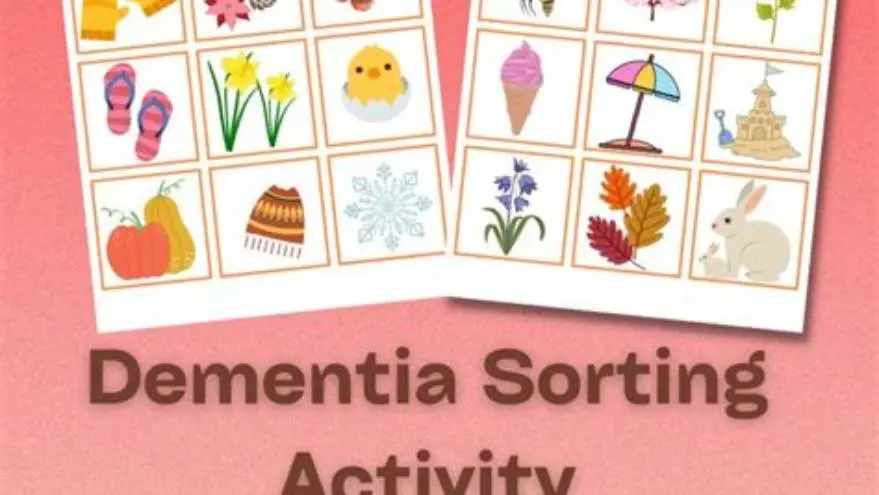
The sorting pages feature pictures grouped by category, color or function, printed two or four to a page depending on the level. Cut them into cards and let the person sort them into piles or match them to a reference sheet. The 48 conversation cards in the kit can double as a sorting activity: have the person group them by topic or separate questions from statements. Because everything prints at home, you can reuse activities across multiple people or print backups when pages get worn.
The kit costs $19 one-time and downloads instantly, so you have activities ready the same day. It doesn't replace occupational therapy or medical care, and it won't slow cognitive decline. What it does is give you a structured activity that respects the person's age and abilities, with clear guidance on how to adjust each task. It works best for families who want a variety of ready-made activities and don't have time to design their own sorting tasks from scratch.
If you prefer to make your own materials, print large photos of familiar objects and laminate them so they last through repeated handling. Use broad categories the person already knows: tools, kitchen items, clothing, animals. Stick to items the person used regularly in the decades before dementia; current technology or unfamiliar brands may not register.
How long sorting activities stay useful as dementia progresses
Sorting activities work well through mild and moderate stages, which together can span three to seven years depending on the individual. As dementia moves into the severe stage, sorting becomes less reliable because the person may lose the ability to categorize or may no longer care about the task. Some people at the severe stage still enjoy the physical act of moving objects from one container to another, even if the sorting makes no logical sense. Others lose interest entirely and prefer sensory activities like folding fabric or handling textured objects.
Watch for the point where the person stops engaging with the categories and just moves items around aimlessly. That's the signal to shift to sensory or tactile activities rather than sorting. Offer a basket of soft items to touch, a bin of large wooden beads to transfer with a spoon, or fabric to fold and unfold. The goal is still calm, focused activity, but without the cognitive demand of decision-making.
Sorting tasks may come back briefly even after they've stopped working, especially on good days when the person is well-rested and calm. Keep a few simple two-category sorting activities on hand and offer them occasionally. If the person picks them up and sorts for five minutes, let them. If they ignore the task or look confused, put it away and try again another week.
The key is to adapt faster than the disease progresses. Don't wait until frustration builds to simplify; adjust as soon as you notice hesitation across two or three sessions. A task that fit last month may need fewer categories or larger items this month, and a task that works today may need to be retired next month. Sorting is a tool, not a prescription, and the right activity is always the one the person can do calmly right now.
Still wondering?
Can sorting activities slow dementia progression?
No. Sorting activities provide engagement and reduce agitation, but they do not slow cognitive decline or reverse dementia. They offer a calm, structured way to spend time and give the person a sense of accomplishment, which can improve mood and cooperation. The goal is quality of life, not treatment.
What if the person sorts everything into one pile regardless of category?
The task is too hard or the categories aren't obvious enough. Reduce to two high-contrast groups and hand them one item at a time while pointing to the correct bin. If that still doesn't work, shift to a sensory activity like folding fabric or transferring large items between containers without sorting rules.
Should I correct mistakes during sorting?
Correct gently only if the person seems frustrated by their own error. Otherwise, let the mistakes stand. Constant correction increases agitation and makes the person less willing to try. If accuracy matters for the task to work, simplify it so mistakes become rare.
How many times a week should I offer sorting activities?
Three to five times a week works for most people, spaced across different times of day to find when the person is most alert. Daily sessions can feel repetitive, and less than twice a week makes it hard to tell whether the activity still fits. Adjust frequency if the person resists or loses interest.
What do I do if the person refuses to sort?
Try again at a different time of day when they're more alert, or switch to a different type of item that has more personal meaning. Some people refuse because the task feels childish; others refuse because they're tired or anxious. If refusal persists across three attempts, retire that activity and try something else.
Ready to try it? Provides sorting and matching activities at three levels with clear adaptation guidance for each dementia stage
Get the printable activity kit