Activities for Seniors Who Are Deaf That Need No Hearing
Activities for seniors who are deaf or hard of hearing work best when sight and touch carry the instructions. Print words large, keep the room quiet, and pick games and crafts that show what to do.
On this page (8 sections)
- Quick recap
- Start with the room, not the activity
- Word games and puzzles in large print
- Group activities for seniors who are deaf or hard of hearing
- Hands-on activities that need no spoken instructions
- Movement and music without relying on hearing
- When hearing changes, change the plan with it
- Still wondering?
Part of our guide on post-stroke activities for seniors
Key figures
- Print size
- 16 to 18 pt to start
- Best seat
- Facing the speaker, light on faces
- Group size
- Four to six people
- Instructions
- Written and shown, not just spoken
- Music
- Felt as beat, seen as movement
- First check
- Ask what works for this person
Quick recap
- Write down the key steps, and show them as well as saying them.
- Start the print at 16 to 18 pt, and go bigger when anyone squints.
- Small groups beat big ones when lip-reading and watching hands matter.
- Pick activities that show the next step instead of saying it.
- Ask the person what works, and change the plan when hearing changes.
Start with the room, not the activity
Bad rooms sink good activities. Sound bounces off hard walls, and a television in the corner pulls attention away from the person speaking. Pick the quietest room you have, switch off the television and radio, and shut the door on hallway noise. Light matters as much as quiet. Sit so the light falls on the speaker's face, not behind it, because a face in shadow gives a lip-reader nothing to work with. Put a lamp at the side of the room; it beats a bright window behind the speaker every time.
Seating decides who joins in and who sits out. Put chairs in a circle or a half circle so everyone can see each other, and leave no one with their back to the group. Someone who cannot hear the words reads faces, hands and posture instead, and that only works when faces are visible. Small groups work best. Four to six people around a table can watch each other; twelve in a row cannot. For a bigger group, split it into two tables with a helper at each one. The other half of this decision is large print word puzzles.
Keep a pad and a pen on the table, and use them without fuss. A written word clears up in seconds what lip-reading cannot, and a short note beats a shouted repeat every time. Speech-to-text apps on a phone do the same job for longer talks. The phone listens and prints the words on its screen for the person to read. They work best in a quiet room, so try one before the session starts.
- Switch off the television and radio.
- Shut the door on hallway noise.
- Seat the speaker with light on their face.
- Arrange chairs in a circle.
- Hand out the printed steps.
Word games and puzzles in large print
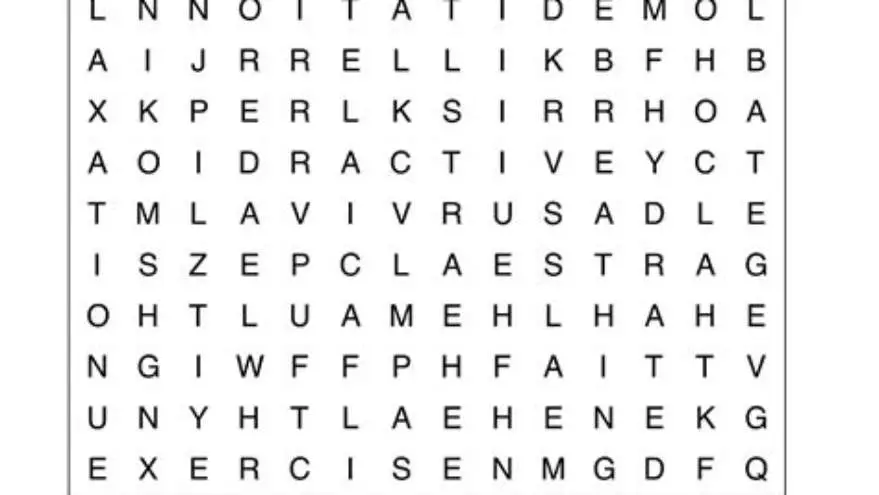
Word puzzles suit this reader better than almost any other activity, because they need eyes and a pencil and nothing else. In a large-print word search, the ears do no work at all. Letters sit big on the page, words run in straight lines, and the answer page settles any argument without a word spoken. Crosswords work the same way when the clues are printed large and the grid squares leave room for a pencilled letter. Sudoku needs no words at all, which makes it a strong pick when reading is tiring too. The other half of this decision is engaging activities for seniors in wheelchairs.
Make the page fit the person, not the other way round. Large print generally means at least 16 to 18 pt. Start there, and go bigger if anyone squints or holds the page at arm's length. Sans-serif letters read cleanest at large sizes, and a plain white page with black print beats a patterned background every time. Hold the word list to ten or fifteen words, so the search stays a pleasure and not a chore.
Our free Large Print Word Search Maker turns a word list of your own into a large-print word search PDF with an answer page. That saves the fiddly work of drawing a grid by hand. Word searches are all it makes, so a crossword or a maze still needs a printed book or a bought pad.
Group activities for seniors who are deaf or hard of hearing
Group games work when the rules are visible. Bingo is the classic example. Callers hold up each number on a large card as well as calling it, and players mark a printed card they can see clearly. High-contrast cards, dark print on a pale background, are easier to read at a distance. Card games and board games work the same way, because the cards and the board carry the information and the talk around them is extra. Pick games with big print and plain rules, and print the rules on a card everyone can read before the first round. The other half of this decision is adapting games for seniors with low vision.
Trivia fits too, with one change: print the questions. Reading a round aloud leaves out anyone who misses a word, while a printed question sheet lets everyone play at the same speed. Give each team a sheet, read the question aloud for those who hear it, and let the sheet do the rest. Run short rounds of ten questions or so, and score on the sheet so nobody has to shout a tally across the room. Picture quizzes work even better, because a photo question needs no hearing at all.
| Activity | What carries the instructions | Group size |
|---|---|---|
| Bingo | Number cards held up | Up to 12 |
| Card games | Cards and board | Two to six |
| Printed trivia | Question sheet | Two teams |
Hands-on activities that need no spoken instructions
Hands learn what ears miss. Painting, drawing, clay and sewing all show their own next step. Colour sits on the brush, shape under the fingers, thread through the needle. Lay the steps out in order, left to right, and put a finished sample at the end of the row. Printed cards with three or four steps and a picture for each step beat a spoken demonstration that half the table cannot hear. Use simple tools and big pieces, and let people work at their own speed.
Gardening and cooking belong on the same list, because both are felt and seen. Planting seeds, potting a plant or picking herbs needs no instructions spoken aloud, and the smell of fresh basil does the talking. Print a simple recipe large, with one step per line, and a cook follows along without asking anyone to repeat a step. Sorting, folding and matching games fill the same gap on a quiet afternoon: buttons by size, socks by pair, photographs by year. These jobs suit a person who wants something useful to do with their hands, and they end with something real on the table. We go through large print word search for stroke survivors step by step elsewhere on the site.
Movement and music without relying on hearing
Movement needs a leader to watch, not a voice to follow. Chair yoga works well when the instructor faces the group and shows each move slowly, because everyone can copy what they see. Tai chi suits the same setup: slow moves, a clear view of the leader, and no counting aloud. Walking groups need even less: a flat path, a steady pace and a friend beside you. One hand on a shoulder or a wave is all the signal a walking group needs to stop, turn or rest.
Music still belongs, with the sound turned into something felt. Many people can feel a drum's vibration through a table or a floor. Ask the person whether they feel it before building a session around the beat. Dancing to a strong beat works the same way: the rhythm shows in the feet of the person beside you. Headphones help the person who hears a little, because they bring the sound close and cut the room noise out. Set the volume low enough that the person beside them hears nothing, and check that the headphones sit comfortably over a hearing aid. Captioned music videos give the words back as text on the screen.
When hearing changes, change the plan with it
Hearing rarely stays still. Many people in this group hear a little, not nothing. A working hearing aid and a quiet room can matter more than the activity itself. Wax build-up, a cold or a flat hearing-aid battery can cut hearing for a week. New hearing aids can change what a person catches in a day. Ask the person what is working this week, and believe the answer over last month's plan. Check the simple things first: a hearing aid switched on, a battery that is not flat, an ear mould that sits snugly. Someone who keeps asking you to repeat yourself is telling you the plan needs changing, not that they are not trying. For the detail, see our notes on senior activities after knee replacement.
Captioned television and captioned video calls keep a person in the conversation when the sound will not carry. Switch captions on once and leave them on, so nobody has to ask for them each time. Personal amplifiers are small boxes with a microphone that sit on the table. They lift one voice above the room for the person who needs it. If hearing drops sharply or one ear goes quiet all at once, that is a question for their doctor, not for an activity plan. Book a prompt appointment, and keep a quiet activity with large print ready while they wait.
For bigger sessions, ask about an interpreter or live captions. A local deaf club or a library often knows who provides them. A club is also the best place to find people who enjoy the same activities. An invitation works better than a leaflet: ask the person to one session, sit with them through it, and let the activity do the talking. Isolation grows when invitations stop, so keep them coming even when the answer is no.
Still wondering?
What is the best first activity for a senior who has just lost hearing?
Start with a large-print word search or a simple jigsaw. Both need no instructions spoken aloud, and both let the person succeed on the first try. Sit beside them for the first page, show the first word with your finger, and let them take it from there.
How do I run bingo for players who cannot hear the numbers?
Hold up each number on a large card as you call it, and use a yellow card with dark print. Players mark a printed card they can see, so the sound is a bonus, not the only signal. Keep the pace slow, and repeat the held-up card, not the shouted number.
Should I learn sign language to help my parent?
It helps if your parent already signs, and a few basic signs for everyday words go a long way. Older adults who lose hearing late in life often do not sign, so written notes and clear speech matter more. Let them pick which they prefer, and follow their lead.
Do hearing aids make group activities easier?
Hearing aids help when they fit well and the batteries are fresh. A hearing aid that whistles or slips out helps nobody. Check the fit before the session starts, and keep the room quiet so the aid picks up voices, not background noise. If the aid keeps failing, ask their doctor or hearing clinic for advice.
What if the person also has low vision?
Lean on touch and large print together. Go a size bigger than usual on the puzzles, and test them from a chair before printing the pack. Use craft materials with a strong texture, and bring a bright lamp close to the work. Clear the table, keep the pieces large, and guide by touch when words and sight both fall short.
Ready to try it? Word searches need eyes, not ears, and the maker turns your own words into a large-print puzzle with an answer page.
Make a free word search