Large Print Word Search for Stroke Survivors That Fits Recovery
A large print word search works for a stroke survivor when it fits what changed. Use few familiar words, running across and down only. Print them big, with wide spacing. Solve together, and stop while it is still enjoyable.
On this page (8 sections)
- Quick recap
- Large print word search for stroke survivors: what has to change
- What a stroke can change about reading a puzzle
- How to set up the grid so it can be finished
- Picking words that mean something to this person
- Running a session that ends well
- What to do when a puzzle keeps going wrong
- Still wondering?
Part of our guide on post-stroke activities for seniors
Key figures
- Words to start
- A short list to start
- Word directions
- Across and down only
- Big, bold, high contrast
- One page
- One puzzle, one word list
- Session
- Short, side by side
- When to stop
- While it is still enjoyable
Quick recap
- Use a short list of familiar words, running across and down only.
- Print the words big, with wide spacing and one puzzle per page.
- Sit on the person's strong side and read each word aloud first.
- Keep the sitting short and stop while it is still enjoyable.
- Change one thing at a time when a puzzle keeps going wrong.
Large print word search for stroke survivors: what has to change
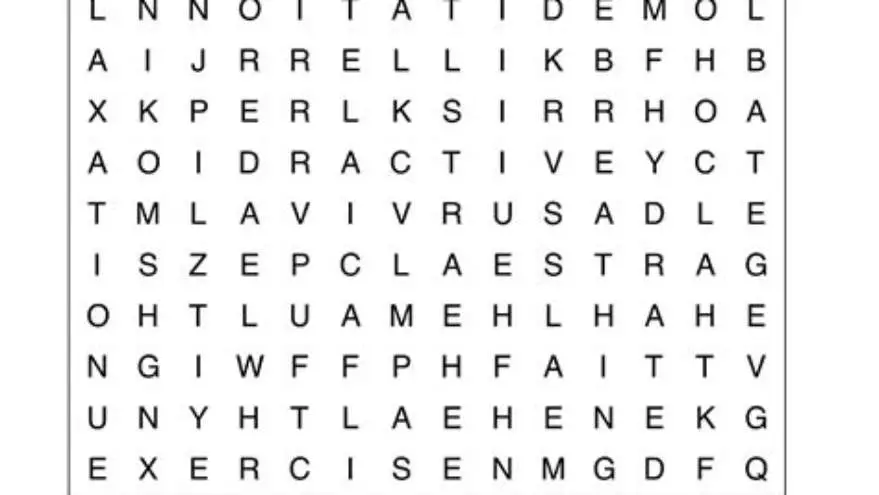
Stroke can change how a person reads a page, holds a pen and finds a word. The puzzle that worked before may now feel crowded, tiring or out of reach. That does not mean puzzles are finished. It means the puzzle has to fit the person as they are now.
Reading is often the first trouble. Letters may blur together. Words on one side of the page can get missed without the reader noticing. Then the hand: a pen may feel clumsy, or one hand may not help at all. Language can fail too: the word is known, yet it will not come when it is wanted. Each of these has a practical fix.
Shrink the puzzle, not the person. A small grid with few words and wide spacing is easier to scan than a full page of small print. Thick pens and soft pencils need less grip than thin ballpoints. Clip the page to a board and it stays still when only one hand is free.
Solve it together, at least at first. One person reads the word aloud, the other looks for it. Shared time replaces a lonely test, and the spoken word gives the solver a cue. Aim for a finished puzzle and a pleasant sitting, not a score. There is more on activities for seniors who are deaf or hard of hearing in a separate guide.
What a stroke can change about reading a puzzle
Uneven reading is common after a stroke. Some people read a line fine and then lose their place on the next one. Others miss words on one side of the page. Tiredness makes all of it worse, so a puzzle that works in the morning may fail after lunch. Tiredness is often lighter earlier in the day, so try the puzzle at different times and keep the one that works best.
Aphasia means language is harder after damage to the parts of the brain that handle words. It often follows a stroke. A person with aphasia may know exactly what they want to say and still not find the word. Finding a word on a page is easier than pulling it out of thin air, so a word search can suit them well. Familiar words still matter most.
Gripping a thin pen can tire a weak hand fast. Writing with the hand that was not favoured before takes practice. A thick barrel pen, a soft pencil or a marker needs less grip. Tape the page down or clip it to a board and the sliding stops. We cover large print word puzzles in its own article.
Watch one puzzle before changing anything. Note where it stalls, then change that one thing next time. If reading, speaking or strength changes suddenly, ask their doctor rather than pushing on with puzzles. Puzzles do not treat stroke effects; they are a pleasant way to spend time.
How to set up the grid so it can be finished
Empty space is the point of a good puzzle here. Wide gaps between letters stop them blurring into each other. Start with a short list of familiar words, around half a dozen. Adjust the size to the person's scanning and tiredness. Add more only when the puzzle finishes too fast.
Keep every word running across or down. Diagonals and backwards words turn a gentle search into a hard one. They add nothing the solver needs. They should read left to right and top to bottom, the way reading normally goes. Scanning one way lets the solver finish the puzzle. For the detail, see our notes on word search puzzles for seniors with arthritis.
One puzzle belongs on one page, with its word list on the same page. Putting the list on the back means turning the sheet to check a word, and that breaks the search. Put the answer page on its own sheet, kept with the helper, so a stuck solver sees one answer without seeing them all.
Print matters more than paper. Black letters on plain white paper give the strongest contrast. Choose a plain font with no fancy curls. Test the page at arm's length before printing a batch. Squinting means print it bigger or trim the list. Bigger print beats a crowded page every time.
| Feature | Standard puzzle | Stroke-adapted puzzle |
|---|---|---|
| Words in the list | A larger number | A short list to start |
| Word directions | All eight ways | Across and down only |
| Letter spacing | Tight grid | Wide, with clear gaps |
| Page layout | Puzzle and list crowded | One puzzle per page |
| Solving | Alone, against the clock | Together, no time limit |
Picking words that mean something to this person
Familiar words are easier to find than new ones. Words used all through a life are recognised at a glance. New words must be sounded out letter by letter, which slows the search. Build the list from the person's own life: family names, a hometown, a favourite meal, a hobby, a job held for years. If that sounds like your situation, read up on seated activities for seniors in wheelchairs next.
Short words work better than long ones. Five letters are spotted faster than twelve, and easier to hold in mind while scanning. Mix in one or two longer words so the puzzle still feels like a puzzle. Skip words that differ by one letter, since they slow the search for no gain.
Concrete words beat abstract ones. Garden, tea, river and grandson are easy to picture. Words for ideas or feelings are harder to hold onto and harder to spot. Any word that needs explaining before the puzzle starts does not belong in the list. Swap it for a word the solver already knows.
Offer two themes and let the solver pick one. Ask what they would like in the next puzzle. Choosing is part of the pleasure, and a puzzle built from their own words is theirs in a way a shop page never is. Use the chosen theme again next time. It helps to understand safe home activities for mobility before going further.
Running a session that ends well
Late morning often suits people better than late afternoon, when tiredness sets in. Pick a quiet room with good light. Good light helps more than any puzzle trick. Sit on the person's strong side, where they can see the page and hear you without turning.
Read the first word aloud, side by side. Point to it on the list, say it slowly, and let the solver look for it. No word turns up? Offer a small cue: the first letter, or the row it sits in. Cues are not cheating. They keep the puzzle moving and the solver in it.
Brief sittings that end well beat long ones that end in frustration. Watch for the signs that the session has run its course: the pen stops moving, the eyes drift, the shoulders drop. Stop there, even if words are left. An unfinished puzzle can wait for tomorrow.
End on a found word. The last word is proving hard? Find it as a pair and circle it with one pen. That feeling of finishing stays with the person longer than the puzzle does. Keep the finished page with its date, so progress shows over the weeks.
- Choose a quiet time with good light and sit on the person's strong side.
- Speak the first word aloud and point to it on the list.
- Give the first letter as a cue if the solver stalls.
- Close the puzzle after a short sitting, while it is still enjoyable.
- Finish the last word as a pair and keep the page with its date.
What to do when a puzzle keeps going wrong
When a puzzle keeps failing, the puzzle is wrong, not the person. Change one thing and try again, rather than pushing harder at the same setup. Most problems have a simple cause, and it shows itself once you watch a session closely. One change at a time shows what helped.
Words on one side of the page keep getting missed. Turn the page slightly, or fold the empty half under so only the working half shows. Hold a plain card under the row being searched to guide the eyes across. Misses that always fall on the same side are worth mentioning to their doctor.
Slow finding and quick tiredness mean the puzzle is too big. Trim the list and shrink the grid. Finishing is a success, however short the puzzle is. Leaving one unfinished is not a failure either. Shorter puzzles more often beat longer ones.
Writing itself can be the hard part. Try a thicker pen, a soft pencil or a marker, and clip the page to a board so it stays put. Circle with a finger first, then mark with the pen. Pointing while the helper circles still leaves the search in the solver's hands.
A small, familiar, forward-only puzzle solved together is the version worth printing.
Still wondering?
Can a stroke survivor do a word search on their own?
Many can, once the puzzle fits them. Start with a small grid, few familiar words and no time limit. Stay nearby for the first few puzzles. Step back when the solver finishes them comfortably. Some people always prefer company at the puzzle, and that is fine.
What if the person has aphasia and struggles to read the word list?
Say each word aloud before the search starts. Repeat it when the solver looks lost. Pair the word with a picture or an object when that helps. Use a garden photo to stand for the word garden. Keep the list short, and use words the person has known for years.
Should words run backwards or diagonally for a harder puzzle?
Not for a stroke survivor. Backwards and diagonal words make the search much harder. They add frustration without adding anything useful. If the puzzle is too easy, add more words or use slightly longer ones. Leave every word running across or down.
How do I make a word search with the person's own words?
Write a short list of familiar words, around half a dozen to start. Turn it into a puzzle with our free Large Print Word Search Maker. It prints the grid and an answer page. Check the printed page at arm's length before making copies. One list can fill a week of puzzles.
What if the person gets upset when they cannot find a word?
Stop the puzzle and change the subject. Upset usually means the puzzle is too hard or the day is too tiring. Next time, use fewer words. Give the first letter as a cue sooner, or work on it as a pair from the start.
Ready to try it? It turns a list of the person's own familiar words into a large-print puzzle with an answer page, free.
Make your word search free