Low vision crafts: skip anything smaller than a thumbnail
Crafts for seniors with low vision work when every piece is at least thumbnail size and contrast stays high between materials and the work surface. What the person wants to make matters as much as what you think they can manage.
On this page (10 sections)
- Quick recap
- The thumbnail test: how to check a craft kit before you buy it
- Why glare beats smallness as the reason a craft gets abandoned
- Contrast swaps for crafts for seniors with low vision
- What people with low vision want to make
- Craft families that pass the test
- The tactile fallback when sight is gone entirely
- How to adapt a kit you already bought
- Setting up one seat, and one craft table for a group
- Still wondering?
Part of our guide on low vision games for seniors
Key figures
- Size cutoff
- Smaller than a thumbnail
- Lamp position
- Beside, not behind or above
- Surface finish
- Matte, never glossy
- Bead swap
- Seed beads to pony beads
- Dropped pieces
- A rimmed tray keeps them findable
Quick recap
- Ask what the person wants to make before you choose the craft.
- A dark mat under light pieces and a light mat under dark ones.
- Pre-cut and bag each stage, so only one bag is open at a time.
- Shorten the session or swap the activity when a craft is not working.
- A rimmed tray keeps dropped pieces findable.
The thumbnail test: how to check a craft kit before you buy it

Most craft kits are designed by people with good eyesight. The box photo shows the finished project, not the pieces. That photo says nothing about whether the person at your table can see the pieces. Quickly check the smallest piece by holding it against a thumbnail before buying. Smaller than your thumbnail, and the craft will frustrate more than it relaxes.
Treat the thumbnail as a rough field check, not a measurement. Thumbnails differ, and the check only needs to catch pieces that are clearly too small. Seed beads, fine embroidery thread and delicate paper quilling strips all fall below the line. Pony beads, chunky yarn, felt shapes and wide ribbon all pass. You need no craft knowledge, only the smallest thing in the box.
Judge the box by its worst piece, not its best outcome. Stained-glass suncatcher kits look lovely finished and are hopeless half-done: leading strips and tiny glass pieces defeat the hands before the picture forms. Zoom into the product photos until you can see the components. Put the kit back when its smallest piece fails the test.
| Passes the test | Fails the test |
|---|---|
| Pony beads, chunky yarn, felt shapes | Seed beads, fine thread, sequins |
| Air-dry clay, big foam stickers, wide ribbon | Small buttons, quilling strips, fine wire |
| Large-print colouring sheets, thick-line patterns | Dotted-line patterns, small-print instructions |
Why glare beats smallness as the reason a craft gets abandoned
Families blame small pieces when a craft is abandoned. Glare is often the real culprit. Glossy tables, plastic mats, shiny cellophane or glossy pattern sheets throw a white reflection across the work area. With cataracts or macular degeneration, that reflection can erase detail completely. It is worse than smallness: even a large piece disappears when light bounces straight into the eyes. There is more on sequence a crossword for short attention span in a separate guide.
Glare control is usually the fastest fix. Choose matte over gloss at every layer. Use a matte tablecloth or felt covering instead of a shiny plastic sheet. Choose matte paper instead of glossy, and wooden or matte plastic tools instead of chrome. Set the task lamp to the side of the person, on the side of the hand they use less. Light then rakes across the work instead of bouncing back into their face. Overhead light alone rarely works. It lands in the wrong place and reflects off everything flat.
Check the light yourself before the session, from the sitter's chair. Sit where they will sit and look at the work surface. Any bright streak means the lamp needs moving or the surface needs a matte covering.
Contrast swaps for crafts for seniors with low vision
Contrast is what lets an eye find an edge. Light pieces vanish on a light table, and dark yarn vanishes on a dark tablecloth. Of all the swaps, a contrast background is the cheapest and most effective. Put dark felt or a dark towel under light beads, buttons and paper. Put a pale surface or white cloth under dark materials. It helps to understand functional vision assessment printable before going further.
Patterns get the same treatment. Trace faint printed lines with a thick black marker, or photocopy a pattern and enlarge it until the lines are wide enough to follow. Colour-coded areas that look too similar need a marker in a clearly different tone. Letter labels on each area work too. Beauty is not the point at the setup stage. What matters is that the person can see where things go without asking.
Think about the whole surface, not just the mat. White trays on white tables disappear at the edges, and that is where the dropped-scissors hunt starts. Tape dark tape around a light tray's rim, or the reverse for a dark tray. Every place a hand needs to find something is a contrast decision, and each one costs pennies.
What people with low vision want to make
Those checks tell you what someone can manage. They say nothing about what the person wants to make. Ask first. Ask what they miss making, and start there. Start with the person's own history, not with the kit on the shelf. Someone who quilted for years will put up with a slower, more adapted setup if the result is still a quilt block. Someone who never enjoyed fine handwork will not start now just because the pieces are bigger. For the detail, see our notes on blind elderly activity ideas.
Low vision narrows the list of methods; it does not erase taste. Someone who loved gardening may find air-dry clay pinch pots planted with succulents hold their attention longer than beading ever will. Someone who painted may find large-print colouring or finger-painted collage feels like a continuation, not a replacement. Once the eyes or hands have had enough of crafting, try a different activity instead. Our Gentle Minds Activity Kit gives adults living with memory loss a respectful large-print alternative that keeps the session going. Free printable puzzles on the site offer another quiet option. Match the activity to the person's history, not to the first kit labelled for seniors.
Craft families that pass the test
Six craft families commonly work well for many people with low vision. Whether one works depends on the person's vision, hand dexterity and interest. Test the materials with the thumbnail rule and the glare and contrast checks before committing.
Chunky yarn crafts: finger knitting, arm knitting and crochet with thick wool and a large hook. Felt applique uses pre-cut shapes stitched or glued onto a bold, contrasting background. Air-dry clay needs no small parts at all: pinch, roll and shape, then paint the result later with a wide brush. Big-shape collage glues torn paper, fabric scraps and large foam stickers onto card. Large-print colouring works with thick-line sheets and fat triangular pencils. Weaving on a wide-gauge loom works too. The gaps between threads are big enough to see, and the shuttle is a fat stick, not a needle. The other half of this decision is senior activities that work flat on a lap tray.
Each of these shares three properties. No piece sits below thumbnail size, the material contrasts with a plain background, and the material forgives imprecision. Prefer projects that finish in a single session or a few short ones. Longer projects risk abandonment unless broken into clearly labelled stages. One finished piece in a single sitting is worth more than an ambitious one that never gets done. Projects that drag on for weeks get abandoned in a care home or a busy household, however good the idea was.
The tactile fallback when sight is gone entirely
Vision too poor for any of the above calls for crafts done by touch. Sand trays work for drawing patterns with a finger; scented or plain dough works for shaping. Textured collage uses cord, sandpaper, fur fabric and corrugated card. Clay works too, and it is the most sight-independent craft there is. Finished pieces still count as finished pieces. Busy hands are the actual point.
Tactile projects also suit people living with memory loss, because the feedback is immediate and there are no instructions to lose track of. Keep the materials in separate trays, one texture per tray, so the hands can find each one without looking. People in this spot often ask about parkinson's activities for adults as well.
How to adapt a kit you already bought
Kits already in the cupboard need not be thrown out. Adapt one before the first sitting. Enlarge the pattern or instruction sheet until the print is easy to read. Retrace thin lines with a black marker. Pre-cut every piece the instructions expect the maker to cut. Put each stage of the project in a labelled bag so only one bag is open at a time.
Then make the physical swaps. Seed beads come out, pony beads go in. Fine needles come out; plastic lacing needles or yarn-tipped daubers go in. Small buttons become large shank buttons. Pieces that must sit in an exact position get a small self-adhesive rubber bumper on the pattern to mark the spot by touch. Each swap takes minutes. Keep small pieces and strong glues away from anyone who might put them in their mouth.
Do the first two steps yourself and leave the project mid-way at a clear, obvious point. Restarting is the hardest moment for someone with low vision, and a visible, half-done example takes it away. At the end of the session, put the half-done piece back in its labelled bag, so the next sitting starts from the same place.
- Enlarge patterns and instructions until the lines are easy to follow, then darken them
- Pre-cut pieces and bag each stage separately
- Swap seed beads for pony beads, fine needles for plastic lacing needles
- Add rubber bumpers to mark exact positions by touch
- Start the project yourself and stop at a clean mid-point
Setting up one seat, and one craft table for a group
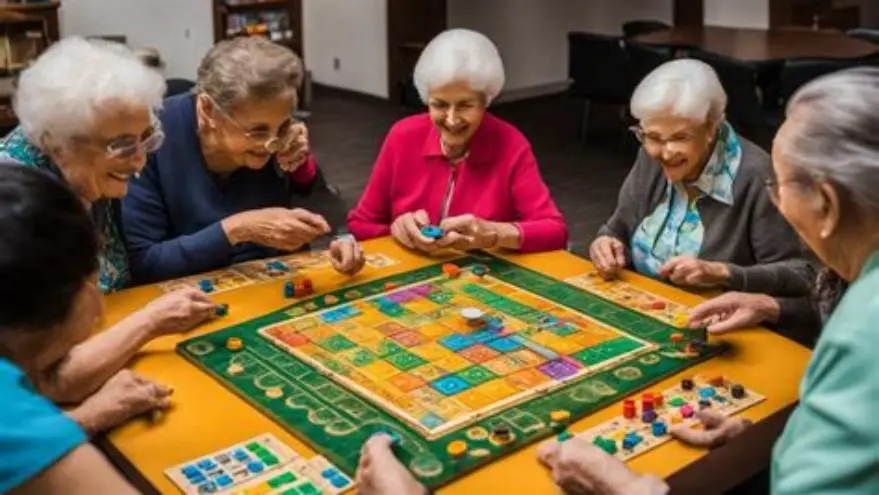
A good seat setup has four parts. First, a task lamp to the side of the sitter, never behind them or directly overhead. Second, a plain cloth or a piece of felt on the work surface. Third, a rimmed tray or shallow box lid, so dropped beads and scissors stay on the table. Fourth, only the day's materials: everything else goes back in the cupboard, because clutter on the table is visual noise that buries the project.
In groups and care homes, give each person a pre-sorted kit, not one kit per table. Each tray carries one person's materials for a single step, grouped so a missing piece is obvious at once. Set the lamp, mat and tray out before anyone sits down.
Plan for more helpers than you think you need. Helpers pre-sort, enlarge, re-thread and rescue before frustration sets in. Change the plan when a craft is not working, instead of pushing on: swap the activity, shorten the session, or move to a tactile project. Sessions that end calmly are sessions the person will come back to. Health questions, including changes in vision, go to their doctor.
Still wondering?
What if someone's vision varies day to day?
Prepare for the worse day, not the better one. Pre-cut and enlarge everything once, then skip those aids on a good-vision day. Nothing about the setup needs undoing.
Is the size rule too strict for people with only mild low vision?
It is a screening rule, not a law. Mild vision loss allows pieces slightly under thumbnail size, with good side lighting and strong contrast. The rule earns its keep when you cannot see the person's vision yourself, such as when buying a gift.
What lighting works best for craft sessions?
A cool-white (daylight) task lamp placed to the side often reduces glare. Test the lamp placement from the sitter's chair, and adjust the angle to the person's comfort. Avoid light from behind, which puts the work in shadow.
How do I keep dropped pieces from disappearing?
Work inside a rimmed tray or a shallow box lid. Add a contrasting mat inside it. Pieces that drop land on the tray, stay visible against the mat, and are back in play in seconds.