Low vision games: before you buy bigger print, kill the glare
For low vision games for seniors, check the light before the print size. Glare and poor contrast defeat most games before print size does. Test the games already in the cupboard at the player's own reading distance, before buying anything bigger.
On this page (9 sections)
- Quick recap
- Why glare beats print size for low vision games
- How to test a game already in the cupboard
- How to judge card and piece size without trusting the box
- Which games adapt well and which to skip
- Cheap fixes and games to make at home
- Magnifiers, lamps and tablets for players who need more
- Buying large-print games and knowing when the room is the problem
- Still wondering?
Part of our guide on activities for seniors after a stroke
Key figures
- Reading distance
- whatever they choose naturally
- Lamp position
- beside the player, never behind
- Best surface
- plain matte, no patterns
- Test time
- under two minutes
- Card index check
- ruler on a card you own
- First purchase
- a single deck to try
Quick recap
- Curtain the window and turn the table away from the glass.
- Hold each game where the player reads comfortably and note exactly which part fails.
- Bingo, dominoes, matching and sequence games adapt well; tiny-numeral dice games rarely do.
- A card holder, felt and high-contrast tape cost little and often fix the fault.
- Measure the print on a card you own with a ruler instead of trusting a listing title.
Why glare beats print size for low vision games
Families often buy a large-print version of a game the player already owns, then find it barely easier. Glare and low contrast usually defeat a game before print size does. Under an overhead bulb, a shiny card face throws a white stripe across the type. Patterned tablecloths hide black outlines against a busy background. Eyes with cataracts, macular degeneration or glaucoma feel that glare far more than yours do.
Start with the table, not the shop. Set a lamp beside the player's shoulder, on the side of the better eye. It is the eye the player reads with more easily, so test each eye in turn if you are unsure. Light then falls across the cards instead of into their face. Never place it behind them, since their own shadow then covers the game. Keep it out of the line between their eyes and the window, where two bright sources compete.
Then deal with the window. Bright grey sky behind the cards makes every black numeral look faded. Draw the curtain, or turn the table so the player faces a wall instead of the glass. Finish with the surface: a plain matte table or a solid dark cloth, with no gloss and no stripes.
How to test a game already in the cupboard
Run this two-minute check before anyone orders a large-print replacement. Sit the person comfortably and hand them the cards or pieces. Ask them to hold the game where they naturally read, and do not push it closer or further. The honest result comes from their own distance, not yours. Before you commit to anything, it is worth looking at how to adapt board games for seniors with low vision.
On playing cards, look at the index corner. Ask them to name the rank and suit of five random cards, fanned by themselves. Reading all five without hesitating or tilting a card toward the light means the cards are fine and the room was the problem. That is a pass: five out of five, read straight, with no tilt and no squint. Otherwise, check whether the index itself is small or the face is glossy.
Do the same with board game pieces and dice. Can they tell a red piece from a green one under this light? Ageing vision often blurs reds and greens together. Can they see the dots on the dice without lifting them? Note exactly which element fails, since that tells you what to replace.
Use the same check on printed trivia sheets or bingo cards, held as players will hold them during the game. The other half of this decision is senior-friendly craft projects.
- Ask them to hold the card or piece where they read comfortably.
- Have them name five random card ranks and suits, self-fanned.
- Repeat with board pieces and dice, checking colour as well as size.
- Write down which element fails: index, gloss, or colour contrast.
How to judge card and piece size without trusting the box
There is no official standard for large-print game components, so a listing title proves nothing. Judge size with a ruler and your own eyes instead. Measure the index corner on a card the player already reads well, then on any deck you consider buying. The comparison tells you more than any product name.
Hold the two decks side by side and ask them to read five cards from each. The deck earns its place when the player reads it without hesitating, tilting or squinting. Buy one deck first and let the player confirm the size at home before ordering a set.
Dominoes follow the same logic. Set a standard tile beside an oversized one and ask the player to name the pips on each. If the standard pips blur together, the bigger tile wins. For jigsaws, piece size and image contrast matter more than piece count. For the detail, see our notes on blind elderly activity ideas.
Bigger is not endlessly better. Cards with very large indices can be harder to fan, and they hide less of the hand from other players. Let the player try the deck in a real game before committing to a full set.
Which games adapt well and which to skip
Not every game deserves the effort of adaptation. Some tolerate big changes happily, while others fall apart at once. Knowing which is which saves money and frustration.
Bingo is the great survivor. Large-print bingo cards are easy to find, the caller does the working, and players only spot a number. Dominoes, matching pairs and picture sequence games also adapt well, since they rely on shapes and colours. Simple board games with big destination squares, and jigsaws with bold images, stay social. People in this spot often ask about functional vision assessment checklist printable as well.
Skip, or replace rather than rescue, games built on tiny numerals. Standard scorepads for dice games use cramped figures. Small-print money and cards, dense word game tiles, and long cards read mid-turn all fail on layout as much as print size. Even enlarged, a cramped card is exhausting. If a favourite falls in this group, look for a large-print edition or a simplified variant instead.
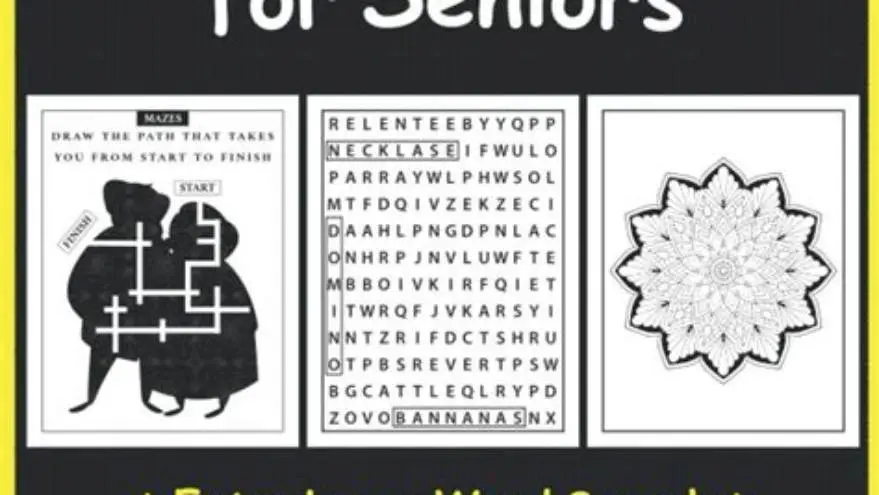
Printable word searches and trivia sheets deserve a special mention. They can be printed at any size for exactly the players at the table. Our free word search maker turns any family's names and places into a big-print PDF with an answer page.
| Game type | Adapts well? | Why |
|---|---|---|
| Bingo | Yes, easily | One number per call, large cards exist |
| Dominoes and matching | Yes | Shape and colour carry the game |
| Sequence and picture games | Yes | Big pieces, minimal text |
| Jigsaws, large-piece | Yes | Bold images, big pieces |
| Dice score games | Usually no | Tiny numerals and dense pads |
| Card-driven board games | Rarely | Cramped small-print cards |
- Bingo and matching games cost little to enlarge
- Shape-based games keep players social
- Printables can match exact needs
- Small-print card games rarely rescueable
- Oversized pieces can feel institutional
Cheap fixes and games to make at home
That test usually points to one or two fixable faults, and the fixes cost pocket money. Try these on the games the player already loves, before ordering anything new. There is more on senior activities for bedridden in a separate guide.
Plastic card holders, triangular or four-tier, hold a hand upright at a constant angle. That removes the hardest part of card play. High-contrast tape, or a thick black marker, can redraw faded outlines and enlarge numbers on tiles. Self-adhesive magnet strips on the back of small pieces stop them wandering off the board and make them easier to nudge into place. Black felt over a pale table is the cheapest contrast upgrade in the house.
Make a game instead when rain keeps everyone indoors. Cut card circles in two strong colours for matching pairs. Use felt letters for word-building on the mat, or sort jar lids in contrasting colours. Print a word search in genuinely large type from your own word list.
- Plastic holders: keep a hand upright and steady; cheap ones are widely sold, so compare them in person rather than by listing price
- Marker or high-contrast tape: redraw faded board lines and enlarge numerals
- Self-adhesive magnet strips: stop small pieces sliding and add grip
- Felt over a light table: instant contrast, near zero cost
- Homemade matching games: strong colours, big pieces, no text at all
Magnifiers, lamps and tablets for players who need more
When room lighting is not enough, an adjustable task lamp makes a difference. Look for a goose-neck or swing-arm model that puts light where the player needs it. Choose a bulb marked daylight, which gives truer colour than a warm-white bulb. Try the lamp with the actual cards before you commit. That level lets the player read without squinting or glare bouncing off the cards.
Handheld magnifiers work for checking a single card or a score sheet. For longer sessions, a stand magnifier leaves both hands free. Bar magnifiers sit flat on the page and help with reading lines without losing your place. Try magnifiers in person rather than ordering blind.
Tablets offer adjustable text size, high-contrast modes, and backlit screens that work in any lighting. Many solitaire, puzzle and trivia apps enlarge cards or tiles to fill the screen. Touch targets are bigger and easier to hit than small physical pieces. Look for high-contrast colour schemes, large touch buttons, and a way to turn off animations that make tracking harder. Test the zoom function first: it should enlarge the game elements, not just the menu.
Buying large-print games and knowing when the room is the problem
Buying is reasonable when the cupboard test shows the game itself is too small. Check the listing before ordering. Product photos often show the box, not the component. Look for a photograph of an actual card face or tile, plus stated dimensions. No card face in the photo and no stated size means a gamble, whatever the title promises. Check the finish too: matte cards beat glossy ones. Beware sets that enlarge the box but not the contents.
Specialist low vision suppliers and occupational therapy catalogues are the reliable sources. General marketplaces vary wildly, so treat the listing photo as the product. With puzzles, confirm the piece count and the image style.
Spend money once, on the right thing. When a game passed the cupboard test under the lamp, it needs no replacement. When a game failed under good conditions, replace only the component that failed. Some players enjoy the playing more than the winning. For them, a trivia session in genuinely large print can be the better evening. Our Big Print Trivia book was made for exactly that, though it will not suit competitive card players.
Fix light and contrast first; only then buy larger components for the specific part that failed.
Still wondering?
What size playing cards should I buy for someone with low vision?
Decks sold as large-index have visibly larger corner numbers, but sizes vary by maker. Measure the index on a card the player reads well, then compare it with the deck you are considering. Check one deck under the lamp they will use, then decide whether to buy more.
Can I adapt games instead of buying new ones?
Often, yes. Card holders, black felt under the game, high-contrast tape on board lines and magnets on small pieces rescue many games for little money. Fix the faulty part and test again after each change.
Are tablet games a good option for seniors with low vision?
Yes, if the app has accessibility settings. Look for high-contrast modes, adjustable text size, and large touch targets. Tablets work well for solo play.
Where can I buy low vision games and get advice?
Low vision suppliers and occupational therapy catalogues list tested games and equipment. Their staff can advise on specific conditions. Ask your GP for a referral to a low vision clinic, or contact the RNIB for local low vision services and product lists. Local clinics may also loan items to try before you buy.
What if the player's vision is too poor for any printed game?
Try audio games such as trivia apps with voice prompts, or large-button electronic games designed for low vision. Some charities loan equipment to trial. Audio books and radio are an alternative when printed games stop working, and they need no vision at all.
When should we involve an occupational therapist?
Book a GP visit for a low vision assessment when lighting and contrast fixes do not help. The same step applies if the player struggles with daily tasks beyond games. An occupational therapist can recommend aids and check whether the home setup is working.