Daily simple activities for dementia patients needing little setup
The best daily activities for dementia patients are repetitive, sensory tasks that match current ability: folding towels, sorting objects by color or size, wiping tables, looking at family photos, and listening to familiar music. Each takes under five minutes to set up and uses household items already on hand.
On this page (8 sections)
- Quick recap
- Why daily simple activities benefit dementia patients
- How to match activities to dementia stage
- List of easy dementia-appropriate activities
- What setup and supervision each activity needs
- When an activity stops working and what to try instead
- Free and printable activity options
- Still wondering?
Part of our guide on activities for dementia patients simple
Key figures
- Setup time
- under 5 minutes for most activities
- Materials needed
- household items already on hand
- Activity length
- 10 to 30 minutes, shorter in late stage
- Success marker
- calm engagement, not task completion
- Daily frequency
- 2 to 4 short sessions
- Frustration threshold
- stop immediately when it appears
Quick recap
- Match activities to what the person can still do comfortably, not what they used to do
- Repetitive tasks like folding, sorting and wiping bring calm without demanding recall
- Most successful activities use items already at home and take under five minutes to prepare
- Stop an activity the moment frustration appears; success matters more than completion
- Sensory experiences (music, textures, scents) work across all dementia stages
Why daily simple activities benefit dementia patients

Daily activities give structure to a day that otherwise blurs into confusion. They create moments of calm engagement when a person with dementia can focus on something concrete rather than struggling with memory or language. The benefit isn't cognitive improvement: it's comfort, dignity and a few minutes when the person feels capable.
Repetitive tasks work because they don't demand recall or learning. Folding a towel uses motor memory that often outlasts other skills. Sorting buttons by color taps into pattern recognition that remains intact longer than the ability to follow conversation. These activities let someone succeed without having to remember instructions or worry about getting it wrong.
The emotional payoff shows in reduced agitation during the activity and for an hour or two afterward. Caregivers report fewer incidents of restlessness, shadowing and repeated questions on days when a person has had regular, appropriate activities. The person feels useful rather than sidelined, which matters more than whether the towels actually needed folding.
Success depends on matching the activity to current ability, not past skills. A retired accountant who can no longer balance a checkbook may find deep satisfaction in sorting coins into piles or stacking paper into neat squares. The activity must be simple enough to complete without help, but not so simple it feels insulting. That line shifts as dementia progresses, so what worked last month may frustrate this month. We cover timed routine chart for dementia in its own article.
How to match activities to dementia stage
Early-stage dementia allows for activities that involve some decision-making and light problem-solving. The person can follow simple written instructions, work with familiar tools and complete a task in 10 to 20 steps. Appropriate activities include simple recipes with a printed list, matching card games, large-piece jigsaw puzzles with 12 to 24 pieces, and light gardening tasks like watering plants or deadheading flowers.
Watch for the shift when multi-step tasks become frustrating. The person may start a puzzle but abandon it after placing two pieces, or begin a recipe and forget the next step even with the list in front of them. That's the signal to drop down to activities with fewer decisions and more repetition.
Middle-stage dementia calls for single-step, repetitive activities with a clear endpoint or no endpoint at all. Folding towels works because each towel is the same action repeated. Sorting a mixed pile of silverware into separate trays works because each piece goes into an obvious spot. Wiping a table works because the motion is continuous and the person can see progress without having to remember what comes next. We cover easy dementia activities for seniors in its own article.
Late-stage dementia shifts the focus entirely to sensory experience. The person may not initiate movement or respond to instructions, but will often react to music, touch or scent. Appropriate activities include hand massage with lotion, listening to songs from young adulthood, holding a soft stuffed animal or textured fabric, and looking at high-contrast photo books with faces the person knows. The activity is whatever brings a moment of calm or a flicker of recognition.
| Stage | Attention span | Best activity type | What to avoid |
|---|---|---|---|
| Early | 15-30 minutes | Simple multi-step tasks with a goal | Open-ended projects, complex rules |
| Middle | 10-20 minutes | Repetitive single-step tasks | Choices, memory-dependent steps |
| Late | 5-10 minutes | Sensory experiences, passive engagement | Anything requiring a response |
List of easy dementia-appropriate activities
Use familiar, low-risk tasks that match long‑held motor habits. Folding towels, matching socks, sorting utensils and stacking napkins rely on muscle memory. Set a basket of clean, unfolded towels and most people will begin folding without instruction.
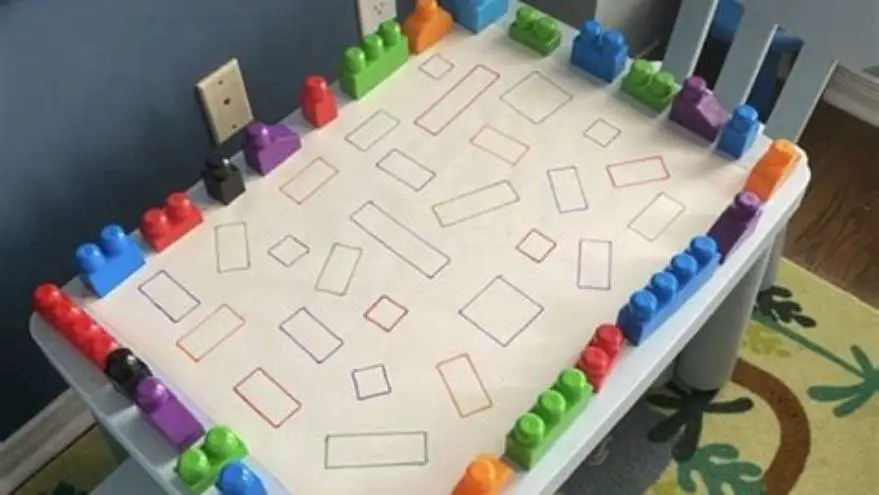
Simpler sorting holds across stages. Early on, sort screws and nails into separate jars. Later, sort large buttons and small ones, or coins into two piles: change and bills. Keep categories broad as ability declines. There is more on choosing activities by dementia severity in a separate guide.
Pick sensory items with minimal setup. Play music from the person's twenties and thirties. Let them knead soft dough, brush a doll's hair, or hold a warmed towel. These actions give calm without needing correct answers.
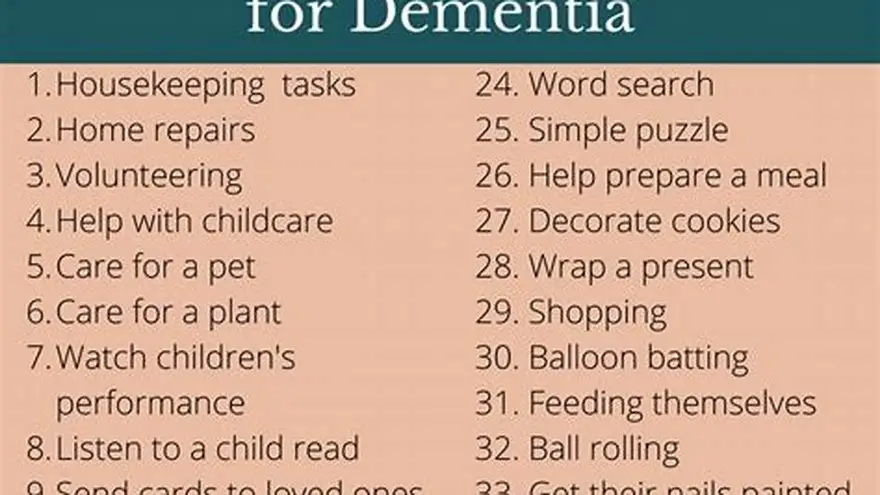
- Folding and sorting: towels, socks, napkins, coins into two piles
- Wiping and arranging: straightening magazines, placing cutlery on napkins
- Sensory tasks: kneading dough, warm towels, arranging silk flowers
- Music and photos: songs from the person's twenties, large family photos
- Simple hand work: sanding a small wood block, stringing large beads
What setup and supervision each activity needs
Setup time matters when you're caring for someone around the clock. The activities that get used daily are the ones that take under five minutes to prepare and require no special materials. A basket of towels is already in the house. A drawer of mismatched silverware is already there. A stack of cloth napkins or a pile of greeting cards can sit on the table, ready to sort whenever the person seems restless.
Supervision depends on what could go wrong. Folding towels needs no supervision: the worst outcome is a badly folded towel. Sorting coins may need a caregiver nearby if the person might put objects in their mouth, which becomes more common in middle and late stages. Activities involving water, scissors or anything that plugs in require direct supervision, which makes them less practical for daily use when you're also managing meals, medications and a dozen other tasks. Before you commit to anything, it is worth looking at activities for dementia patient sorting.
Some activities are self-limiting and some are not. Sorting a small pile of buttons has a natural endpoint when the pile is gone. Wiping a table can go on indefinitely, which works well when you need twenty minutes to prepare lunch. Folding towels can be either: hand over three towels for a short task, or a full basket when you want the person occupied longer. Match the quantity to the person's current attention span, which may be 30 minutes one day and 10 the next.
The best activities are the ones you can set up, walk away from for a few minutes and return to find the person still calm and engaged. That rules out anything with small parts that could be swallowed, sharp edges, or steps that require your presence. It's why sorting, folding and wiping dominate the list: they're safe, repetitive and don't create a mess that needs cleaning up afterward.
When an activity stops working and what to try instead
A once-calming task can suddenly cause confusion or withdrawal. If the person starts then pushes the activity away, the task crossed from doable to frustrating. That shift signals disease progression, not stubbornness. The other half of this decision is helping caregivers with personal info.
Simplify before replacing. Move from four sorting piles to two. Swap a 24-piece puzzle for a 12-piece version or matching picture pairs. Accept any folding motion as success instead of precise folds.
Change the setting. Try the same task on the couch, with the TV off and curtains open. Reduce clutter, cut background noise and improve light. If frustration continues, stop that activity and return to an earlier, easier one.
When structured tasks no longer work, switch to passive sensory care. Play familiar music, hold hands, sit in sunlight or place a lavender sachet nearby. Comfort is the goal.
- Notice quick disengagement or confusion holding a familiar object.
- Simplify the task: fewer pieces, broader categories, less precision.
- Try a quieter room with better light and fewer people.
- If frustration persists, drop the activity and choose an earlier-stage task.
- When no structured tasks work, use passive sensory experiences only.
Free and printable activity options
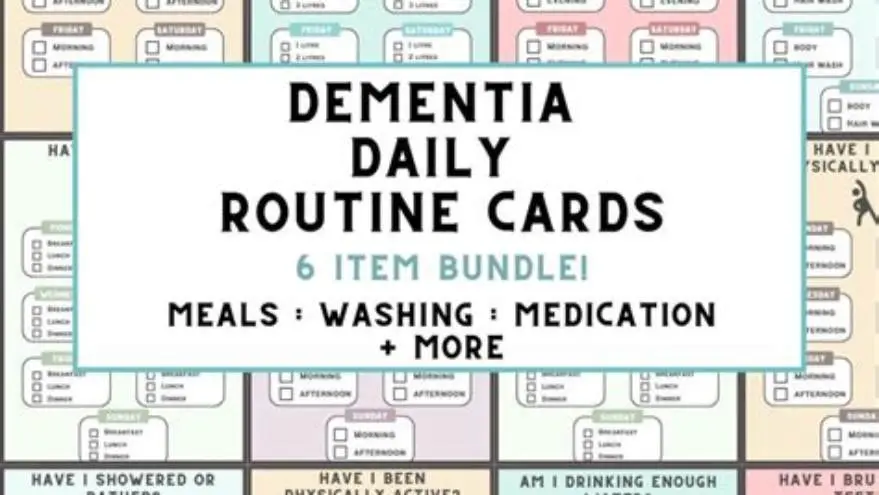
You don't need to buy supplies. Household objects often work best: a deck of cards to sort by color, a pile of mail to pretend-sort, or a basket of clean clothes to fold. These cost nothing and can be repeated.
Use printables for variety. Large-print word searches with 6 to 8 words in a small grid suit early stages. Thick-lined coloring pages suit middle stages. High-contrast photo cards of a coffee cup, a dog or a flower work across stages.
Make personal printables. Type family names, favorite foods or places into a word-search maker and download a PDF. A torn or marked paper matching game is easy to replace. Paper printouts cost far less than specialty kits.
Still wondering?
How long should a dementia activity last?
Most activities hold attention for 10 to 30 minutes in early and middle stages, dropping to 5 to 10 minutes in late-stage dementia. Let the person stop when they lose interest rather than pushing them to finish. A shorter activity done calmly is more valuable than a longer one that ends in frustration.
What if the person refuses every activity I suggest?
Refusal often means the activity is too hard, the environment is too stimulating, or the person doesn't feel well that day. Try again later in a quieter room, or switch to a passive activity like listening to music. Some days nothing will work, and that's not a failure: just let the person rest.
Can I use the same activity every day?
Yes. Repetition is comforting for people with dementia, and they usually won't remember doing the activity yesterday. Folding the same basket of towels or sorting the same pile of buttons can become a daily routine that provides structure and calm.
Are there activities that work for a group in a care home?
Sorting tasks, simple sing-alongs, large-ball toss, folding towels as a group and looking at large photo books work well when residents have similar ability levels. Avoid activities that require turn-taking or complex rules, which create confusion and conflict.
What's the difference between an activity and busy work?
An activity should bring calm or a sense of accomplishment, even if the person forgets it five minutes later. Busy work feels pointless and condescending. If you wouldn't do the task yourself in front of the person, it's probably busy work.
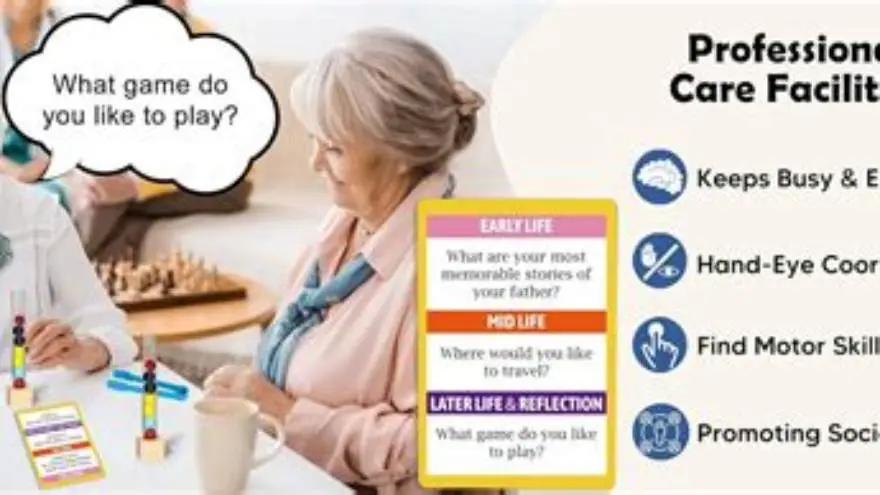
Ready to try it? It provides ready-to-print activities at three levels of difficulty, matched to dementia progression, with conversation cards that work when structured tasks no longer do.
Get printable activities for every stage