Food trivia for seniors: if a question needs a hint, cut it
A food trivia round for seniors works when most players can answer from memory. Screen every question before the round, print it big enough to read from the back of the room, and run it in small teams.
On this page (9 sections)
- Quick recap
- What goes wrong when a question needs a clue?
- How do you spot a difficult question before the round starts?
- What print size and answer placement keep a round moving?
- Which food trivia questions work for seniors?
- How do you run a mixed-ability group without singling anyone out?
- How do you build a food round step by step?
- Where do good food questions come from?
- Still wondering?
Part of our guide on puzzles tailored for seniors
Key figures
- Round length
- One theme, short enough for one session
- Print size
- Large type, plain face, wide spacing
- Teams
- Small teams, one sheet per table
- Choices per question
- Three options: A, B and C
- Hint count
- None during the round
Quick recap
- Put the easiest questions near the start so the room warms up fast
- Keep the round short enough to finish inside one session
- Use matte paper so bright lights do not glare on the page
- Ask about brands, dishes and everyday foods, not narrow dates or chemistry
- Run mixed-ability groups in teams so nobody is put on the spot
What goes wrong when a question needs a clue?
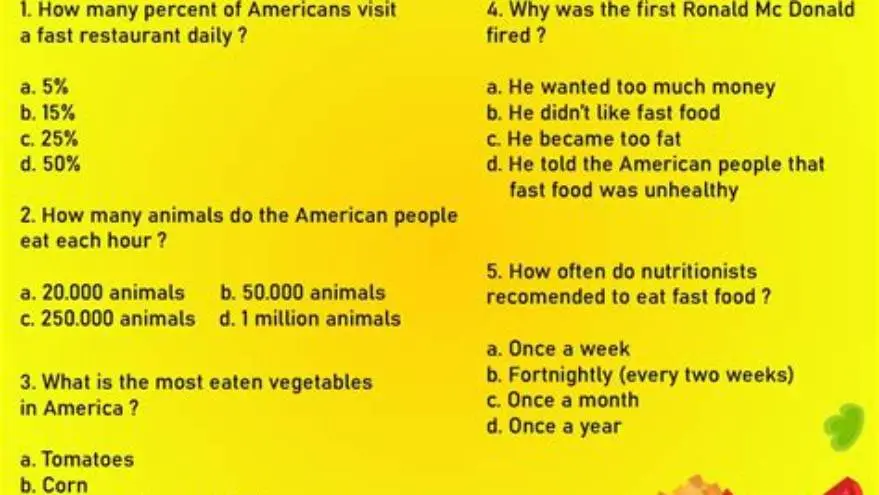
A strong food trivia question gets answered fast by several people at once. That shared moment starts laughter and talk across the table, and the room warms up. Once the host starts feeding out clues, players stop answering and start guessing what the host wants to hear.
Clues also slow the pace. A plain question takes one short exchange. A question that needs help can stall the round while people second-guess themselves and wait for the next hint. The pause is easy to spot, and it spreads.
Take this wording: “Which yellow fruit, popular in pies, is often served with meringue?” The extra detail hides a simple answer. Ask instead, “Which citrus fruit goes into lemon meringue pie?” The room answers at once.
Pace comes from the host. Read each question slowly, wait for answers, and move on while energy is up. A round that keeps moving keeps players talking. People in this spot often ask about movie trivia for seniors as well.
Hosts sometimes worry that cutting questions leaves too few. A short round that flows beats a long one that stalls. Players remember the laughter, not the count. Keep the strong questions and let the weak ones go.
How do you spot a difficult question before the round starts?
Look at each question on its own and mark the ones that need extra explanation. If the answer turns on a rare brand, a technical word or a small detail, rewrite the question or drop it. The group never sees your draft, so cutting costs nothing.
Dates, chemistry facts and foreign words cause the most trouble. Ingredient questions fail in a quieter way: players know the dish but not what goes into it. Ask about the dish itself and the room lights up. There is more on helps organize a lively group quiz in a separate guide.
Narrow words sink questions. “What is the French term for a small baked pastry?” asks for one exact term. A question about a familiar pastry or dessert gives players a memory to reach for. The second kind starts talk. The first kind starts silence.
Shared foods make the best material. Try dishes, supermarket brands and meals tied to the group’s own past. Check any reference you are unsure of before the session, and leave out the ones you cannot check.
Start a small notebook of questions that worked. Note which ones drew talk and which ones drew silence. Over a few sessions the notebook turns into a bank you trust. New hosts can start from it instead of guessing. There is more on free printable rebus puzzles for adults in a separate guide.
- Dates and years: use them only when the group knows the event well
- Foreign or technical terms: choose them only when most players recognize them
- Ingredients without the dish: ask about the familiar dish instead
- Famous brands and classic dishes: check whether your group knows them
What print size and answer placement keep a round moving?
Print shapes the pace as much as wording does. Print one test sheet at 18 point and read it from the back of the room under the session lights. If you lean forward or squint, print larger and test again. The test takes two minutes and saves a slow round.
Vision differs from person to person, so one size never suits a whole room. Ask the readers at the farthest table whether they can read the sheet without help. Their answer matters more than any size on the page.
Keep answers on a host page of their own, away from the question sheets. Number both pages the same way so you can show answers after everyone has responded. Nobody sees a spoiler by accident. The other half of this decision is answers for daily themed crossword.
Put one question on each line, leave generous space between lines, and use a plain serif or sans-serif face. Skip decorative borders. They eat space and cut contrast. A word processor set to the tested size works as well as a ready-made sheet.
Paper and contrast matter as much as size. Use dark type on plain white or cream paper, never pale grey on white. A plain face such as Arial reads well at large sizes. Matte paper cuts glare under bright room lights.
Set the layout once and reuse it. Start with one-inch margins and 1.5 line spacing, with one question per line. Save that file as your template, then change only the questions for the next round. For the detail, see our notes on easy word games elderly home.
| Setting | For a group room | For one or two at home |
|---|---|---|
| Paper | Matte paper, plain face | Matte paper, plain face |
| Answer placement | Separate host page | Host page or covered lower section |
| Answer choices | A, B and C multiple choice | Open or multiple choice |
| Sheet length | Short enough for one session | Shorter still for one or two |
Which food trivia questions work for seniors?
The safest questions use foods the room has tasted. Ask one clear thing, then offer choices when two answers could seem close. Keep the words familiar to the people at your table.
Try questions the room already knows. Ask about a soft drink with a red label and a white wave. Ask what dish combines spaghetti with meat sauce. Ask which fruit goes into apple pie. Each one names something the room knows.
Multiple choice helps a mixed group. Three plausible options give shy players a way in. Try this shape: “Was a typical TV dinner served with mashed potatoes, rice or stuffing?” Nobody stares at a blank page. The first two samples show the change: a plain question gains three choices, and the wrong choices stay plausible.
Skip questions about launch years or kitchen chemistry. Players may know the food and still miss the narrow fact. Familiarity counts more than difficulty.
Our own Big Print Trivia for Seniors gives ready-made themed rounds in large print. Hosts who would rather not write each question can start there. The rounds come as printed, so you skip any question your group would not know. Writing your own round from the steps below costs nothing and fits your group exactly.
| Question | Answer | Level |
|---|---|---|
| Which fruit goes into apple pie: apple, pear or plum? | Apple | Very easy |
| What do you spread on toast: butter, soup or salad? | Butter | Very easy |
| What soft drink has a red label with a white wave? | Coca-Cola | Medium |
| What dish combines spaghetti with meat sauce? | Spaghetti Bolognese | Medium |
| Which spice gives gingerbread its warmth? | Ginger | Medium |
| What is the main ingredient in guacamole? | Avocado | Medium |
| In what year did the first frozen TV dinner reach shops? | 1953 | Challenging |
| Which country first grew coffee? | Ethiopia | Challenging |
How do you run a mixed-ability group without singling anyone out?
Mixed ability is normal in a senior group. One player may answer everything, while another remembers jingles, brands or family meals. Small teams let people add what they know without performing alone.
Sit players in small teams with one answer sheet per table. Let each table talk through the question and score the table, not the person. Quiet players can answer when they know something and pass without explaining why.
For people living with memory loss, lean on the senses as well as facts. Ask what a kitchen smelled like when bread baked, or which jam went on toast at school. Take memories and associations as good answers. Nobody needs one correct response.
Family questions, food photographs and familiar packaging all make fine material. The point is talk and taking part, not a test score. A round that ends in laughter did its job.
End the round while energy is still up. A last easy question sends players away smiling. Save the hardest question for the middle, never the end. The room should leave wanting another round, not relief that it finished.
How do you build a food round step by step?
Pick one theme and stay with it. Classic desserts, TV dinners, breakfast foods and well-known brands all work. One theme keeps the questions close together and the talk flowing.
Draft more questions than you need, then cut hard. Fifteen drafts give you room to drop the weak ones and keep the strong ten. Put the easiest questions near the start so the room warms up fast.
Ten questions often fit inside a wider activity session, but watch the room and adjust the length. Energy matters more than a fixed timer. If attention fades, stop early and end on a question the room enjoyed. Plan on a couple of minutes per question with talk included, so ten questions fill about half an hour.
Run one test copy before the session and read it where the players will sit. Fix any line that crowds the page. Then print the set and run the round in teams.
- Pick one theme: classic desserts, TV dinners, breakfast foods or brands.
- Draft 15 questions using the shapes from the sample round.
- Screen each question for unfamiliar wording, narrow facts and unclear answers.
- Cut the list to about 10 questions, with easier items near the start.
- Add A, B and C choices when two answers could seem similar.
- Format the sheet at the size you tested, then print one copy and read it at arm's length.
- Prepare the answer key and number it to match the question sheets.
- Run the round in teams and reveal answers after everyone has responded.
Where do good food questions come from?
Your kitchen and your group’s memories are useful sources. Brand names in cupboards, dishes from childhood and familiar adverts can all turn into questions.
Ask players which foods they remember from school dinners or family celebrations. Build questions from those answers, then check each fact before the next session.
Use a blank document for drafting and formatting. A generic large-print trivia booklet can save time if its questions suit your group. Read borrowed questions before using them.
Still wondering?
How many questions should a food trivia round have?
About 10 questions suits many groups, but adjust the length to attention and energy. Five works for a warm-up. Longer rounds can drag for some players.
Are multiple-choice questions better for seniors?
They often suit mixed-ability groups because three plausible options reduce blank-page worry. Open questions work well for smaller, confident groups.
What font size should trivia sheets be printed at?
Print one test sheet and hold it at arm's length in the room light. Go larger if the letters blur or you squint. A close table may suit a smaller size, but vision needs differ.
What if nobody can answer a question?
Skip it without adding a clue, then review the wording later. Replace questions the group cannot answer from shared knowledge.
Can I use food trivia for someone with dementia?
Yes, shift toward familiar smells, brands, meals and school dinners. Accept memories and associations instead of insisting on one correct answer.
How long does it take to build a round from scratch?
The first round takes longer because you are checking wording, facts and print. A saved template and tested question bank can shorten later sessions.
Ready to try it? It gives ready-made themed rounds in large print with a host answer page, so a host can run a round without writing and formatting each question.
See inside