Spring Gardening Activities for Seniors: 7 Gentle Ways to Begin
Gardening activities for seniors in spring work best when the garden comes up to the gardener. Start seeds indoors, plant containers at waist height, and keep sessions short. One date sets the timing: the average last frost where you live.
On this page (8 sections)
Part of our guide on grandchildren activities for grandparents
Key figures
- Raised bed height
- 24 to 36 inches
- Tomato seed start
- 6 to 8 weeks before last frost
- Harden off seedlings
- 7 to 10 days before final frost
- Session length
- 20 to 30 minutes at a time
- Basil sun needs
- 6 to 8 hours of sun a day
- Basil pot depth
- At least 8 inches deep
Quick recap
- Cold-tolerant flowers go out first; tender plants wait for warm nights.
- Soil at waist height, standing or seated, is what a raised bed gives you.
- Short sessions beat one long push that leaves you sore.
- Containers on a table and a watering wand take most of the lifting out of the job.
Start with the last frost date, not the calendar
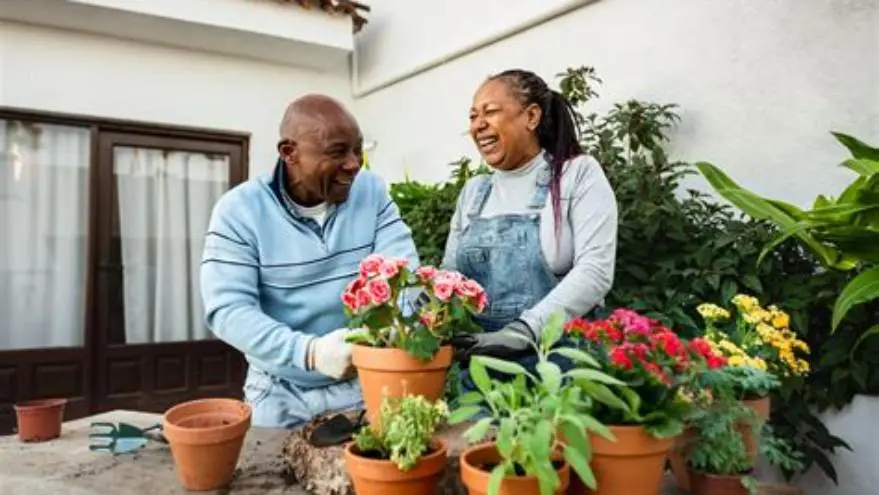
Spring starts on a different date in every garden. What matters is the average last frost where you live. Your local extension office or national weather service publishes that date for your area. Tender plants die in a late frost, and seeds sown too early sit in cold soil. Your seed packet gives the timing for each plant, counted back from that date. Look it up once, write it on the packet, and the whole spring falls into place.
Tomatoes are the classic example. A common guideline is 6 to 8 weeks before the last frost for many tomatoes. The packet and your local extension service give the timing for your variety and climate. Many lettuces are started 3 to 5 weeks before transplanting. Cool-season crops like peas, spinach and carrots are often sown several weeks before the last frost, so check the local planting calendar for your area.
Seedlings raised indoors need a week outdoors before they move into the bed for good. Gardeners call this hardening off, and it takes 7 to 10 days before the final frost date. Put the pots outside in a sheltered spot for a few hours, then bring them in at night. Lengthen the outdoor stay a little each day. Move a plant straight from a warm windowsill into open ground and it wilts in the first cold night.
- Fill small pots with damp potting mix, leaving a finger-width gap at the top.
- Sow two seeds per pot near the centre, then cover them as deep as the packet says.
- Set the pots where they get light and check the soil daily with a fingertip.
- Thin to the stronger seedling once each pot has two true leaves.
- Label each pot with the variety and the sowing date.
Spring gardening activities for seniors: seven that work
Think of spring as a set of small jobs, not one big project. Each of these seven takes an hour or less to set up, and each one gives something back within weeks. Pick two or three to start with. Little jobs each day are easier to keep than one whole weekend of work. If that sounds like your situation, read up on quiet activities for seniors in hospice next.
That list mixes outdoor work with table work, so there is always something to do on a wet day too. Every activity suits a gardener who wants to stay active without kneeling, lifting heavy bags, or gripping tools for long stretches. If a job starts to hurt, stop and split it across two days. Those plants will wait.
Before the list, one more thing. Buy plants, not promises. In a small pot, a nursery seedling is a finished plant that only needs planting out. Seeds are cheaper and offer more choice, but they need weeks of indoor care first. A packet of lettuce seed costs less than one bought plant, and it sows a whole row. Many gardeners mix the two, starting a few favourites from seed and buying the rest as seedlings.
- Start seeds indoors: tomatoes, peppers and herbs on a bright windowsill.
- Plant a herb pot: basil, parsley and thyme in one wide container by the door.
- Sow a salad patch: lettuce and spinach in a shallow bed or window box.
- Set out pansies: cold-tolerant colour for beds and pots while nights stay cool.
- Build one raised bed: a single waist-high frame changes the whole garden.
- Plant marigolds: bright flowers that need little more than sun and drained soil.
- Press early flowers: a few blooms pressed between paper sheets for cards later in the year.
Raise the garden to waist height
Of all the changes you can make, a raised bed helps most. It removes the hardest part of gardening: getting down to ground level and back up again. Many people find a bed 24 to 36 inches high easy to work at. The soil in a raised bed warms sooner in spring, though how fast depends on the build and the local weather. We cover evening activities for tired seniors in assisted living in its own article.
Height is personal, so measure before you build. From a seated position or a wheelchair, a bed about 24 inches high usually works well. Gardeners who stand often prefer 30 to 36 inches, where the soil meets the hands without bending the back. Sit or stand beside a table of that height and reach across it. If your shoulders stay relaxed, the height is right.
Keep the bed narrow enough to reach the middle from one side. Leave a firm, level path beside it, wide enough for a walker or a chair. Cedar and composite boards resist rot and last for years, which matters when you only want to build the bed once. Fill it with a light potting mix rather than heavy garden soil, so a trowel slides in without force. A bagged raised-bed mix works well, and a garden centre can point you to one made for vegetables.
| Bed height | Best for | What to check |
|---|---|---|
| About 24 inches | Seated gardening or a wheelchair | Knee room under the frame edge |
| 30 to 36 inches | Standing without bending | A firm edge to lean on lightly |
| Tabletop pots | Balconies and small patios | A stable table that will not tip |
Containers and tools that take the strain off
Containers bring the garden to the gardener. Pots, window boxes and planters set on tables or potting benches need no bending at all. They suit a patio or balcony as well as a full garden. Lightweight pots on wheeled caddies move with a push instead of a lift, which matters when a watered pot is heavy. Basil grows well in a pot at least 8 inches deep, in a spot that gets 6 to 8 hours of sun a day. People in this spot often ask about card games for seniors to play with grandchildren as well.
Tools matter as much as beds. Long handles let you reach the ground or a tall plant without stretching. Foam grips cushion the hands, and pruners with a spring mechanism open by themselves after each cut, so the hand does half the work. With a watering wand on the end of a hose, you can reach into pots without lifting a can. Keep the tools in one basket by the door, so nothing is ever hunted for.
Time is a tool too. Short sessions of 20 to 30 minutes get more done than one long push. Sit down for a drink between them, before sore knees end the day. Set a garden stool with a padded seat by the bed, so there is always a place to rest. If a health condition affects your balance or strength, ask your doctor first. An occupational therapist can also suggest tools and heights that fit you. Garden in the cooler hours, keep a phone nearby, and wear shoes with a good grip on damp paths.
Rainy-day garden work you can do at the table
Rain does not have to stop the gardening. Sorting seeds into labelled envelopes, writing plant labels in large print, and planning the bed on paper are all real garden work, done sitting down. Keep a garden notebook in large print with the dates, the varieties and what worked, so next spring starts from notes instead of guesswork. For the detail, see our notes on senior-friendly tablet puzzle setup.
For a rainy afternoon, a garden word search is a quiet indoor job. Our free Large Print Word Search Maker turns a list of garden words into a large-print puzzle. It comes with an answer page, and an activity director can print it for a whole table. Free printable word searches are also ready to print on the site, so there is always one on hand. Either way, the words stay garden words, and the print stays large.
Table work also covers the fiddly jobs that are hard outdoors. Tie labels to pots, check seed packets for sowing dates, and sort the tools that need cleaning or oiling. For most hand tools, a damp cloth and a dry one are enough. Put the sharp tools away first, then the rest, and the next fine day starts with everything ready.
Mistakes that cut a spring garden short
Planting tender plants out before the last frost has passed is the most common spring mistake. One cold night can undo weeks of indoor care, so wait for warm nights and watch the forecast as well. If a late frost is forecast after planting out, cover the plants with an old sheet overnight and lift it off in the morning.
Sowing seeds too deep is the second mistake. Small seeds need only a thin covering of soil, and a seed buried deep may never reach the surface. Each packet states the depth for its kind, and it is worth following exactly. Water with a fine rose or a mister, so the soil stays damp without washing the seeds aside.
Doing too much in one day is the third mistake. Steady work pays off in a garden, and a sore back on Monday means no gardening at all on Tuesday. Split big jobs, rest between sessions, and ask for help with the heavy bags. Ask a neighbour or family member to lift the bags and carry the full watering can. Built slowly, a spring garden is still a spring garden, and it lasts all summer.
Still wondering?
When should seniors start gardening in spring?
Start indoors first, then move outside after the average last frost date for your area. Tomatoes go in first, lettuce a few weeks later. Pansies and other cold-tolerant flowers can go out earlier, while tender plants wait for warm nights.
What is the best raised bed height for older gardeners?
A bed 24 to 36 inches high suits most older gardeners. About 24 inches works well from a seated position or a wheelchair, and 30 to 36 inches suits gardeners who stand. Try the height beside a table first, and check you can reach the middle without stretching.
Which spring plants are easiest for seniors to grow?
Lettuce, spinach, basil, parsley and marigolds are among the easiest, because they grow fast and ask for little. Pansies give early colour and cope with cool nights. Cherry tomatoes do well in a large pot, but they need a sunny spot and a stake to lean on.
How long should a senior garden at one time?
Sessions of 20 to 30 minutes work well, with a sit-down and a drink between them. That is long enough to finish a real job and short enough to avoid sore knees and tired hands. Garden in the cooler hours of the day, and stop if anything hurts.