Card Games for Seniors to Play with Grandchildren
The best card games for seniors to play with grandchildren are short, simple, and easy to learn: Go Fish, Crazy Eights, and War. Use a large-print deck and card holders, pair a young child with an adult, and end while everyone is still having fun.
On this page (8 sections)
- Quick recap
- What makes a card game work for three generations?
- Card games for seniors to play with grandchildren: the short list
- How to set up a card game the youngest can actually play
- Go Fish, Crazy Eights, and War: how each game goes
- How to run a family game night that everyone enjoys
- Mistakes that spoil a game with grandchildren
- Still wondering?
Part of our guide on activities for grandparents with grandchildren
Key figures
- Go Fish
- Youngest players
- Crazy Eights
- A little older
- Uno
- Early school age
- Go Fish players
- Two to six
- Deck
- One standard deck
- Card holders
- Help small hands
Quick recap
- Choose short games with simple rules and a little luck.
- Make the cards easy to see: big numbers, good light, clear table.
- Let the youngest player see every hand until they know the game.
- Stop while the table is still laughing.
What makes a card game work for three generations?
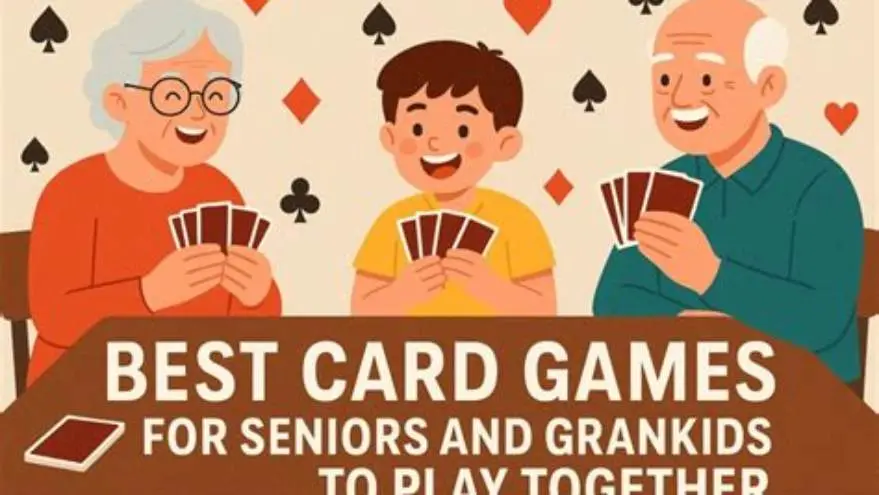
A game works for three generations when the youngest player can win it. Luck should matter more than skill, so a five-year-old can beat a grandparent on a good day. Rules should fit in two sentences, and nobody should wait long for a turn. Cards that are easy to see and hold matter as much as the rules. When the game is simple, the table talks more and the game takes care of itself.
Rounds that end quickly can be played again, and games that drag get put away. Children lose interest fast, and older players tire too, so a quick pace is kind to both ends of the table. Three games in an evening beat one long game that nobody finishes. Good game nights have a pause for a drink, a chat, and a second game.
Teams make mixed ages work. A child paired with an adult gets help with the rules and a hand to hold the cards. Adults get a partner who laughs at the right moments. Nobody sits out, and nobody carries the game alone. A table with two teams of two plays better than a table with four players on their own. Put the youngest child with the most patient adult, and let them play as one.
Card games for seniors to play with grandchildren: the short list
Five games cover most family tables, and all of them need only a standard deck or a small box. Go Fish and War suit the youngest players, since both run on number matching alone. Crazy Eights adds a little choice without adding reading. Kings Corner plays like shared solitaire, calm and unhurried. Four cards lie in a cross, and players lay cards one rank lower, alternating red and black. Uno needs a special deck, but its colours and numbers are easy for a child to follow. Pick by the youngest player at the table, not the oldest. There is more on how to help a senior play puzzles on a tablet in a separate guide.
Ages on the box are the safest guide. Go Fish suits younger children, Crazy Eights suits children a little older, and Uno suits children from early school age. War has no age on the box, since it needs only higher and lower. Kings Corner has no age either, and it suits a quiet table. Check the box for the game you buy, since makers state different ages for the same game.
Single standard 52-card decks cover the list except Uno, in their common forms. Some variants use more than one deck or different rules, so check the rules you play by. Uno comes as its own deck of coloured number cards, which most toy shops stock. Large-print decks with big numbers suit every game on the list. Large-print decks and card holders make play easier. Consider buying spares if you play often.
| Game | Players | Best for |
|---|---|---|
| Go Fish | 2 to 6 | Youngest players |
| Crazy Eights | 2 to 4 | A little older |
| War | 2 | Any age |
| Kings Corner | 2 to 4 | Quiet tables |
| Uno | 2 to 10 | Early school age |
How to set up a card game the youngest can actually play
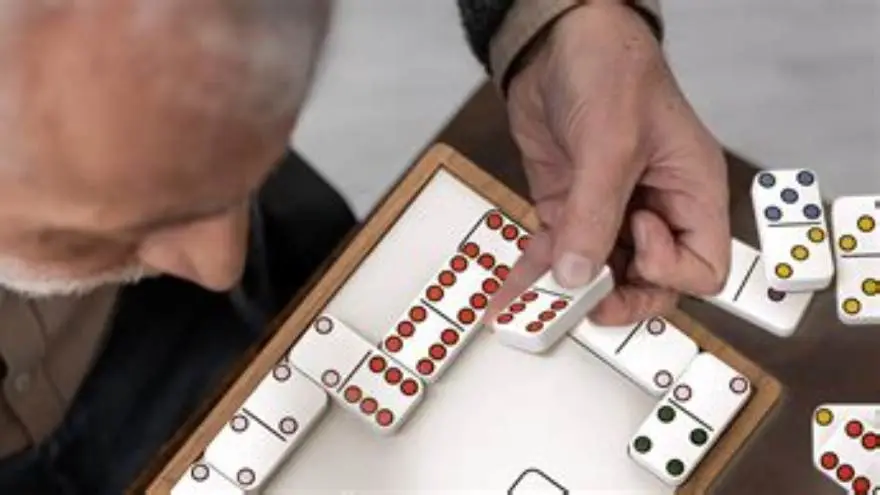
Setup decides whether the youngest player stays at the table. Deal the cards face up for the first games, so the child can see what the adult sees. Share one hand between two players, so the child sees every card. Card holders fan the cards for small hands, and a large-print deck makes the numbers easy to read. Good light from the side beats a lamp from above, which throws shadows on the cards. For the detail, see our notes on how to play dominoes with seniors with dementia.
Explain the rules once, in two sentences, then start playing. Children learn a game by playing it, not by hearing it described. Show one round first, with everyone watching, and let the child copy what the adults do. Correct gently, or not at all: a wrong card is a chance to laugh, not a mistake to fix. First games should end with the child asking for another one.
Seats matter too. Sit close together, so the table feels like one group. Watching the grandparent's cards teaches faster than guessing. Keep the table clear of cups and phones, so the cards are the only thing to look at. Clear tables keep the game moving.
Go Fish, Crazy Eights, and War: how each game goes
Go Fish is the easiest game to teach. Each player holds a hand of cards and asks another player for a rank: do you have any sevens? Players who hold a seven hand it over, and the asker goes again. Players with no matching card draw from the pile, and the turn passes on. Most sets of four wins, or the game ends when the pile runs out. Young children love asking the question, and the question is the game. People in this spot often ask about evening activities for seniors in assisted living as well.
Crazy Eights adds a little choice. Players match the top card of the pile by suit or number. Eights are wild: play one at any time and name the next suit. First to empty a hand wins. Uno players will pick this game up fast, since the two play much the same way. Keep the pace quick, and skip the score. Fast games keep a child at the table.
War is pure luck, which is why young children love it. Split the deck in two, flip a card each, and the higher card takes both. Ties mean a war: each player lays down one card face down, then flips another, and the higher card takes the lot. Games end when one player holds the whole deck, or when the players agree to stop. War depends on luck rather than skill, so even very young children can win rounds.
How to run a family game night that everyone enjoys
Plan the night around short games, not one long one. Start with the easiest game, so the youngest player wins early and wants to stay. Take a break for a drink between games, and let the children choose the next game. Nights with a pause in the middle feel like a party, not a lesson. End with a game the youngest can win, and stop while the table is still laughing. There is more on seniors gardening activities in spring in a separate guide.
Let the children deal, keep score if they want it, and choose the music. Dealing gives a restless child a job, and a job keeps a child at the table. Older children who like numbers can keep the score, and the youngest can skip it. Choosing the game makes a child play it with more care. Nights belong to the children as much as the grandparents, and the games should show it. After the cards, our own Big Print Trivia for Seniors adds a question round the whole table can join. It is a question book, not a card game, so it needs a reader for the questions.
Free alternatives need no purchase at all. Ask the table for questions about the family. Who makes the best pancakes? Which song did the grandparent dance to? What did the dog do last week? Write the answers on cards, shuffle them, and let the players guess who said what. Homemade questions beat bought ones, since the whole table knows the answers are real. Games cost nothing, and the laughter is free.
Mistakes that spoil a game with grandchildren
Playing to win hard spoils the game for everyone. Grandparents who win every round teach the child that the game is not for them. Let the child win sometimes, and lose with a smile when the child wins fairly. Visits matter more than scores. One win brings a child back for another game. Winning every time teaches nothing, and losing every time teaches the child to quit. People in this spot often ask about seniors in hospice care activities as well.
Correcting a child at every turn stops the game dead. Learning happens by playing, and a corrected child stops playing and starts waiting for instructions. Suggest a card with a light word, or let the wrong card stand and see what happens. Tables should feel safe, not tested. Judged children will not ask to play again.
Long games lose children first. Games that run past their welcome end with a child under the table, not at it. Watch for fidgeting and wandering eyes, and change the game before the child walks away. Short games, short breaks, and a change of game keep the evening moving. Best game nights end with the child asking when the next one is.
Still wondering?
What card games can a five-year-old play with a grandparent?
For a five-year-old, Go Fish and War suit best, since both need only number matching. Deal the cards face up for the first games, and let the child copy what the adults do. Skip games with reading or keeping score until the child asks for them.
How do I make small cards easier for older hands to hold?
Use a large-print deck with big numbers and a card holder that fans the hand. Holders take the grip work away, so the player can focus on the game. Plain backs and clear suits help too.
Can we play with only three people?
Yes. Go Fish, Crazy Eights, and War all play well with three. Deal generously so the game lasts longer. With three, a child and a grandparent can team up against the third player.
What if the grandchild loses interest halfway through?
Switch to a shorter game, or let the child deal the next round. Fresh starts help restless children stay at the table. If the child still wanders off, let the game end there. Short games that end well beat long ones that end in tears.