How to choose large print activity books that are easy to read
Choose a large print activity book by type size, puzzles and paper, not its cover. Look for 16 to 18 point type, puzzles that scale up cleanly, and matte pages in bold black print.
On this page (8 sections)
- Quick recap
- Start with the person who will use the book
- What counts as large print, and how to check it
- Which puzzles work well in large print
- Paper, print and layout: what to look for
- Where to find books, and how to try before you buy
- A simple way to choose large print activity books for adults
- Still wondering?
Part of our guide on activities for seniors with low vision
Key figures
- Large print starting point
- 16 to 18 point, tested with readers
- Best first puzzle
- Word search or maze
- Paper
- Matte, black on white
- Answers
- On separate pages
- Try before you buy
- Borrow first, buy second
Quick recap
- Begin with the reader: how they read, where they sit, and what light they use.
- Treat 16 to 18 point as a starting point, and test the size with your readers.
- Puzzles that scale up cleanly: word searches, mazes and matching; crosswords need short clues.
- Buy the book that passes the reader's own test, not the prettiest cover.
Start with the person who will use the book
Large print means the person holding the book can read it. Start with the reader, not the shelf: how they read, and what light they have. One person reads in daylight at a kitchen table; another reads in a dim lounge chair. That same book serves one reader and fails another.
Hands matter as much as eyes. Flat books stay open on a table; one that snaps shut needs a hand to hold it. Spiral bindings lie flat. Find out how the person holds a book, and whether they write in it. Books that fight their readers sit on the shelf.
Company matters too. Some solve puzzles alone in their room; others play together at a table, calling out words as they find them. Group books need bigger print and clearer pages, because two people read from one page. Books for one person can be smaller. Note where the book will be used, and with whom. Watch for tired eyes and short sessions: stop while the puzzle is still fun, and come back tomorrow.
Bring one test page to the person before you buy. Print a sample puzzle, or open the book in the shop, and hold it at arm's length in their usual light. Reading without leaning in means the size works. Squinting means it does not. That test takes a minute, and it beats guessing. We go through large print layouts for adults step by step elsewhere on the site.
What counts as large print, and how to check it
A commonly recommended starting point is about 16 to 18 point. That is a starting point, not a rule: some need bigger. Try the size with your readers and adjust it to suit them. Calling itself large print means nothing if it reads small for the person holding it.
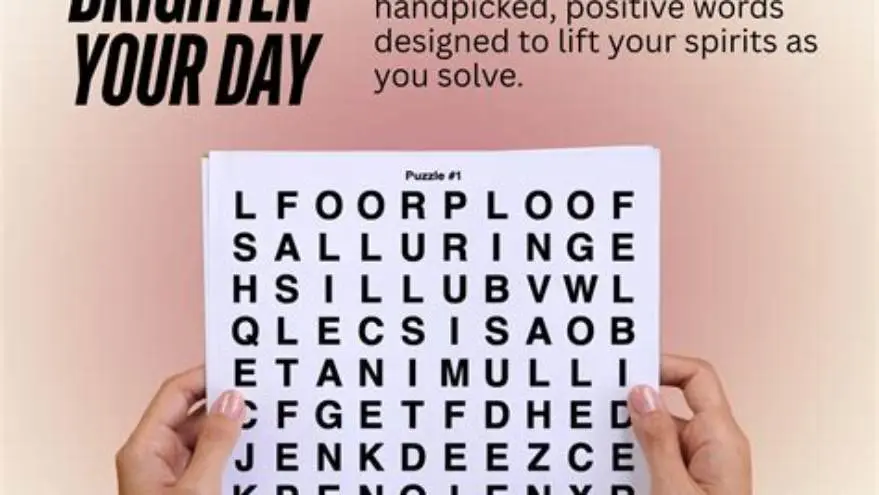
Typeface matters as much as size. Use a plain sans-serif face in bold, with generous letter spacing. Letters with clear shapes and open counters read better than fancy ones. Print the word list in the same size as the grid, bold black on white, so it reads as easily as the puzzle. Fancy type is decoration; plain type is the point.
Spacing is the quiet part of readability. Close lines blur into each other, and crammed words hide each other. Look for wide line spacing and roomy margins, with one puzzle on each page. Space around the puzzle feels calm; crowding feels like work before the puzzle starts. We cover print puzzles at home in its own article.
Check the print itself, not just the size. Bold black ink on matte white or cream paper reads best, and glossy pages throw back glare under a lamp. Hold the page under the reader's lamp and look for shine. Pages that glare fail the test, whatever their print size. Paper and ink are half the test. Shop descriptions rarely list point size, so compare the print with a book the reader already uses.
- 16 to 18 point as a starting point, tested with readers
- Plain sans-serif type in bold, with generous spacing
- Matte paper, black ink, and one puzzle per page
Which puzzles work well in large print
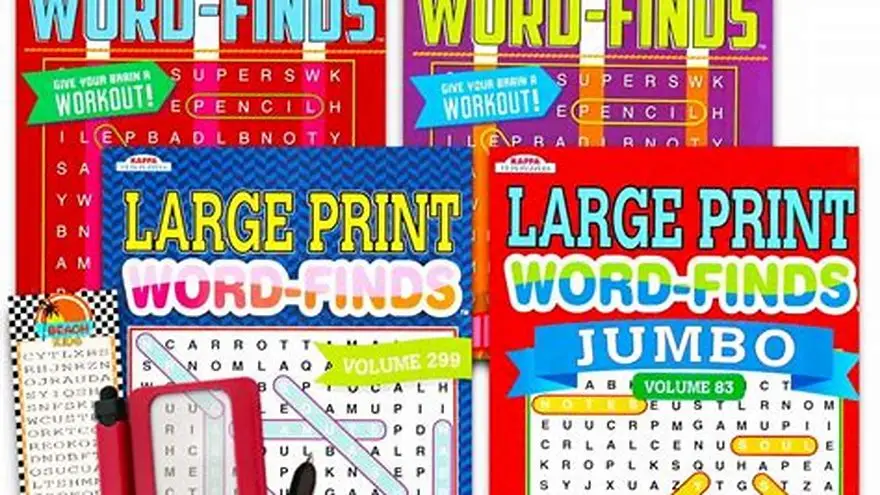
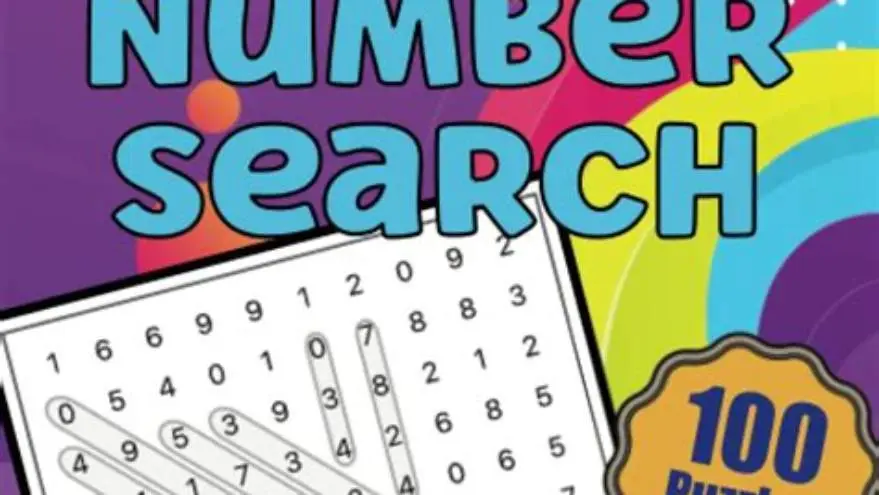
Word searches scale up best, because a grid of letters grows cleanly: bigger cells, bigger letters, same puzzle. A 15 by 15 grid commonly holds a moderate word list; how many words fit depends on word lengths and placement. Test placements, or use a generator to see how many fit. Groups share one grid, so everyone can follow along. They are the safest first choice in a large print book.
Sudoku suits large print when the squares are big enough to write in. Nine by nine grids need a full page, and the numbers must be bold enough to read at arm's length. Simpler puzzles with fewer starting numbers suit beginners. Sudoku asks for a pencil and patience, so check the reader enjoys numbers first. If that sounds like your situation, read up on books for low vision and memory next.
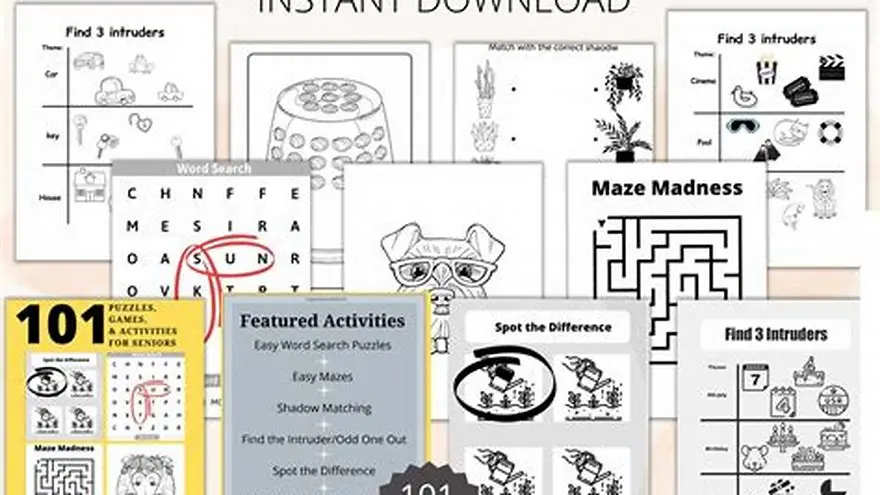
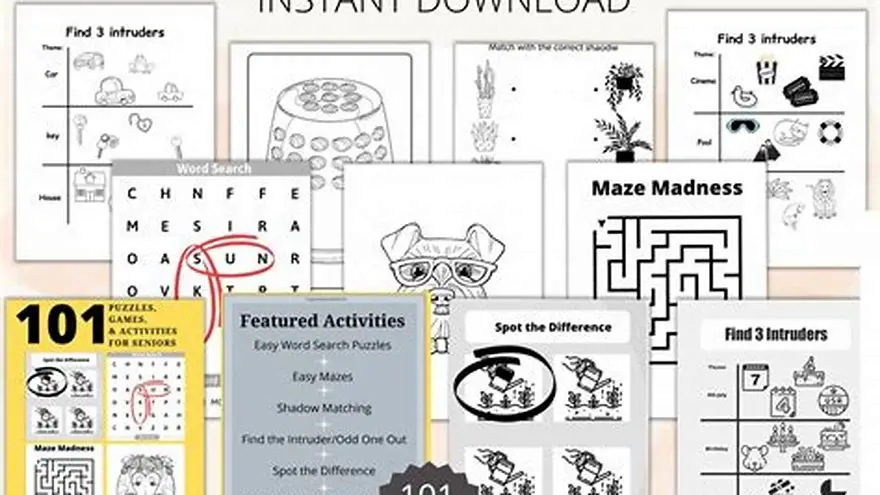
Mazes, matching games and word scrambles suit large print well, because they need big shapes and clear paths rather than small print. Mazes need wide paths and a clear start and finish; matching needs big pictures. Variety keeps a book in use longer than one puzzle type alone.
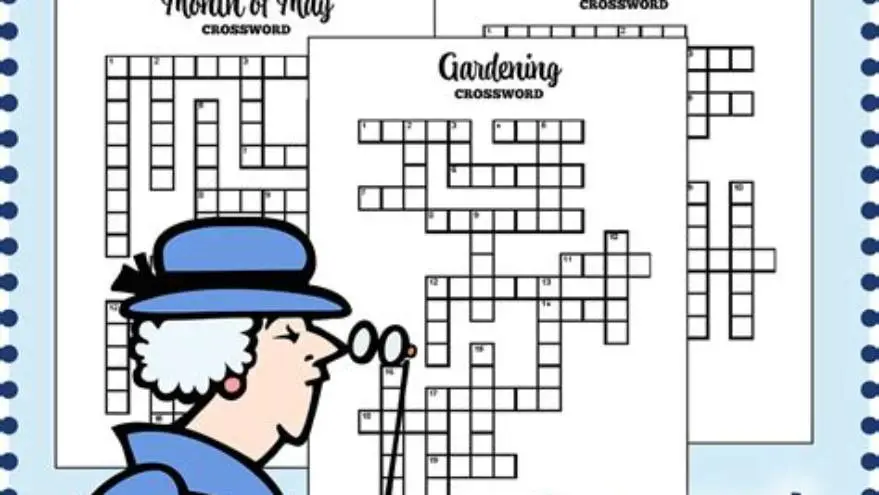
Crosswords are the hardest puzzle to print large, because long clues and big squares fight for the same page. Short clues and themed grids work; long clues get cut or shrunk. Crossword lovers should look for books built for large print from the start, not small crosswords blown up. A book that fits its clues beats one that squeezes them.
| Puzzle type | Why it suits large print | What to watch |
|---|---|---|
| Word search | Letters grow cleanly with the grid | Grids that crowd the page |
| Sudoku | Big squares take a full page | Numbers too small to write in |
| Maze | Wide paths are easy to enlarge | Faint lines that fade in print |
| Matching | Big pictures and room to draw | Pictures that look alike |
| Crossword | Short themed clues fit well | Long clues that get cut |
Paper, print and layout: what to look for
Paper decides whether a book survives use. Matte paper cuts glare and takes pencil well; glossy paper shines under lamps and smudges with ink. Thick paper stops ink showing through from the other side. Request a sample page, or open the book and hold a page up to the light. Paper you can see through will confuse. We go through large print books for seniors step by step elsewhere on the site.
Layout is the map of the page. One puzzle per page, with the word list beside the grid or on the same page, keeps the reader from turning back and forth. Answers belong at the back, so a player never sees one by accident. Page numbers help a reader who loses their place. Clean pages are kind pages.
Contrast is the simplest test of all. Bold black print on white or cream reads best, and pale grey print on white is hard for anyone. Hold the book in the reader's usual light and check the print stays dark. Washed-out print in the shop looks worse at home. Contrast beats size when the light is poor. A phone camera helps too: photograph the page and look at the picture, which shows weak contrast more clearly than the eye.
Binding decides whether the book stays open. Spiral bindings lie flat on a table, which suits players with stiff hands. Glued spines snap shut and need holding; staples suit thin books only. Open the book flat in the shop: a spine that closes itself there will close itself at home too. Books that stay open get used. People in this spot often ask about printable large print puzzles as well.
Where to find books, and how to try before you buy
Libraries are the best place to try before you buy. Most libraries stock large print puzzle books. Borrow two or three books, and watch which one the reader finishes. Buy the borrowed book that gets finished. Borrowing costs nothing, and the test is honest.
Bookshops let you open the book before you pay. Open it flat, hold a page at arm's length, and check the print, the paper and the binding. Refusal to let you open a book tells you something too. Online shops list print size in the description, but listed sizes are not tested sizes.
Free printable puzzles are a good trial before a whole book. Use the Large Print Word Search Maker on this site for single puzzles from your own words, with large letters and an answer page. Print one and test it with the reader. One free page that works tells you more than a bought book that does not. For the detail, see our notes on cream paper for large print puzzles.
BigPrint Puzzle Studio is our own web tool for building large-print puzzle books, with several puzzle types and ready themes. Check the product page for the current list. It turns a word list into a print-ready PDF for a whole book. It needs a computer and some patience, and it will not write your word lists for you.
A simple way to choose large print activity books for adults
Start with a short list, not a long search. Write down the reader's needs: size, puzzles, and where they play. Take the list to the library or the bookshop, and test two or three books against it. Lists keep you from buying the prettiest cover. Buy the book that matches the list.
Judge each book in the same order: print first, then puzzles, then paper. Hold a page up in the reader's light and read it as they would. Check the puzzles suit the reader, and check the paper does not glare. Put back any book that fails the first test. No bargain is worth a book nobody can read. Order matters, because print is the gate.
Think about the week after the purchase. Choose a book with more puzzles if you expect regular use; fewer puzzles may be enough for occasional play. Learn which puzzles the reader liked, and buy the next book to match. Second books are easier to choose, because the reader has told you what works.
Keep the test simple and keep it every time. One page, arm's length, the reader's own light. Books chosen this way get used, and books bought on hope sit on shelves. In a week, the reader will tell you whether you chose well. Listen, and choose the next one the same way.
- Write down the reader's needs: size, puzzles, and where they play
- Borrow two or three books at the library or bookshop
- Hold a page up in the reader's light and read it as they would
- Weigh puzzles, paper and binding before you pay
- Learn which puzzles the reader liked after a week
Still wondering?
What size print should I look for in a large print activity book?
Aim for about 16 to 18 point as a starting point. Check the size with the person who will use the book, and go bigger if they lean in or squint. Right means reading without effort.
Are word searches the best puzzle for large print?
They are the safest first choice, because letter grids grow cleanly to any size. Mazes, matching games and word scrambles suit large print well too. Crosswords need short clues to fit, so look for books built for large print from the start.
Can I print large print puzzles at home?
Yes. Make single puzzles from your own words with the Large Print Word Search Maker on this site: large letters, and an answer page. Print one puzzle per page on plain white paper, and check it at arm's length before you print a whole set.
What if the book I bought is too small to read?
Use better light first, and see whether a magnifier helps for short sessions. When it still strains, keep it for a reader with stronger eyes, and choose the next book by the same test. For weaker sight, try a tablet with larger text, or audio puzzles that need no print at all. Treat it as a lesson, not a failure: it taught you the size to look for.