Printable activities matched to early, middle, and advanced Alzheimer's stages
Learn how to choose printable activities for Alzheimer's patients by stage with clear print, suitable complexity, and engagement that avoids frustration.
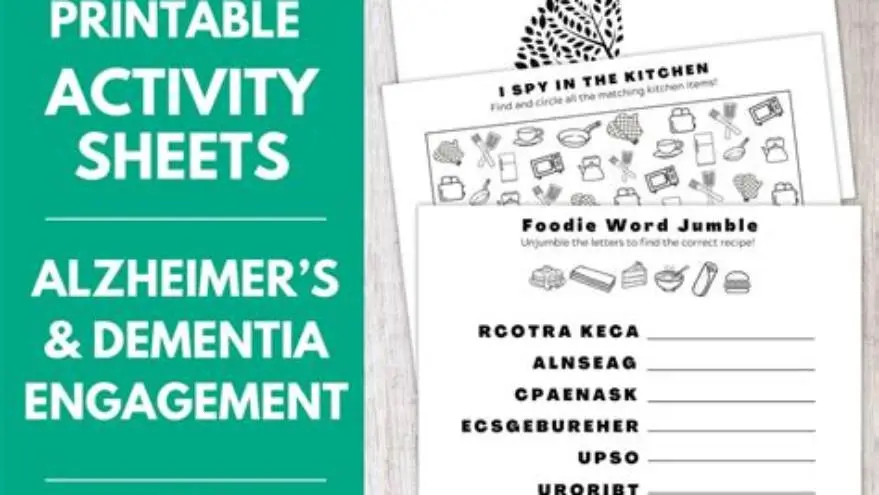
Printable activities for Alzheimer's patients should match their stage: simple large-print puzzles for early, simpler, repetitive tasks for middle, and sensory or coloring sheets for advanced. Choose formats that support vision limits and avoid frustration.
On this page (8 sections)
- The short version
- Activity types suitable for early, middle, and advanced Alzheimer's patients
- Printable formats that support cognitive and sensory limitations
- How to choose printable activities that engage without causing frustration
- Printable activities for Alzheimer's patients with the Gentle Minds Activity Kit
- Alternatives for creating or sourcing printable activities
- How to plan a weekly schedule of printable activities for Alzheimer's patients
- Questions people still ask
Part of the guide: Printable word games for dementia patients: what makes them easy and engaging
Match printable activities precisely to Alzheimer's stages to engage without frustration and support memory loss needs.
| Print size | 18-24 pt font |
|---|---|
| Activity levels | 3 distinct stages |
| Pages in kit | 130+ pages |
| Conversation cards | 48 cards |
| Formats available | US Letter & A4 |
The short version
- Match activity complexity to Alzheimer's stage to maintain engagement
- Use large, clear print to aid visual comprehension
- Avoid activities that cause frustration or seem childish
- Printable kits with levels help plan suitable activities
- Conversation prompts alongside activities foster connection
Activity types suitable for early, middle, and advanced Alzheimer's patients
Early-stage Alzheimer's patients usually benefit from activities that challenge memory and thinking but do not overwhelm. Large-print word searches with 15-20 words, simple crosswords with clear clues, and beginner-level sudoku puzzles support their level. These activities should use 18-24 point font for easier reading, depending on individual vision.
Middle-stage Alzheimer's patients require simpler, repetitive activities that reinforce recognition without complex problem-solving. Matching games using familiar images, basic coloring pages with large shapes, and simple mazes with wide paths help maintain engagement and avoid frustration. Activities with multiple-choice answers reduce the chance of failure.
Advanced-stage patients respond better to sensory and art activities rather than puzzles. Large-print coloring sheets, tactile crafts like sorting textured objects, or listening to music alongside simple word cards work best. Avoid demanding cognitive tasks. These activities focus on comfort and connection rather than success or completion.
| Stage | Activity Examples | Print Size | Engagement Focus |
|---|---|---|---|
| Early | Word searches, crosswords, sudoku | 18-24 pt | Cognitive challenge with success |
| Middle | Matching games, simple mazes, coloring | 20-26 pt | Repetitive, recognition, low frustration |
| Advanced | Coloring sheets, tactile crafts, music | 24-30 pt | Sensory comfort and connection |
Printable formats that support cognitive and sensory limitations
Printables for Alzheimer's patients must consider their sensory and cognitive challenges. Large print fonts above 18 points reduce eye strain and improve recognition. Use high-contrast colors like black on white or dark blue on cream to aid clarity. Avoid cluttered layouts; plenty of white space helps focus. The other half of this decision is cognitive word games for dementia.
Formats with varied activity levels allow tailoring to individual ability. For instance, a kit offering gentle, easy, and steady difficulty levels lets caregivers select appropriate challenges without guessing. Providing answer keys separately helps caregivers assist without stressing patients.
Printable formats should also account for motor skills. Activities with large spaces for writing or coloring reduce frustration for those with tremors or limited dexterity. Perforated pages help if only single sheets are needed, preventing handling large booklets.
- Font size: at least
18 pt, larger if vision is worse - Color scheme: high contrast black on white or cream
- Layout: uncluttered, with clear margins and spacing
- Difficulty levels: multiple levels to match abilities
- Physical format: single pages or binders with easy handling
How to choose printable activities that engage without causing frustration
Avoid activities that are too hard or too easy. Frustration arises if puzzles have no solution or are too complex given cognitive decline. Conversely, activities that feel childish may cause disengagement. Balance challenge with clear success cues. Before you commit to anything, it is worth looking at calm-promoting printable activity sheets.
Select activities designed with 'no wrong answers', where completion or participation is the goal, not perfect accuracy. This approach fosters confidence and repeated enjoyment.
Use conversation cards or prompts alongside activities to encourage sharing memories or feelings. These tools create social connection and reduce isolation, which improves mood and motivation to participate.
Consider the patient’s mood and energy levels when choosing printable activities. A task suitable in the morning may be frustrating in the afternoon due to fatigue or irritability. For example, a simple matching game might be well received during a calm period but avoided during agitation. Adapting the timing helps maintain engagement and reduces stress. For the detail, see our notes on printable dementia activities for seniors.
Look for printables that can be adjusted on the fly, such as puzzles with removable pieces or coloring sheets where the patient decides how much to color. This flexibility supports autonomy and reduces pressure to complete the activity perfectly, which often causes frustration.
Check the patient’s response during activities to notice signs of confusion or boredom. If these appear, switch to a different type or simpler version immediately. For instance, if a crossword puzzle is too hard, offer a word search with fewer and more familiar words. This responsive approach keeps the patient motivated and prevents discouragement.
- Match activity difficulty to current cognitive function
- Choose printables that allow multiple attempts without failure
- Include social engagement tools like conversation prompts
- Monitor user reactions, adjusting activity type or difficulty as needed
Printable activities for Alzheimer's patients with the Gentle Minds Activity Kit
The Gentle Minds Activity Kit offers over 130 large-print pages designed specifically for adults living with memory loss. It features three levels of difficulty: Gentle, Easy, and Steady, matching early, middle, and advanced Alzheimer's stages respectively. This helps caregivers quickly pick suitable activities without trial and error. For the detail, see our notes on boosting engagement with simple games.
Included conversation cards stimulate discussion and memory sharing, supporting social engagement beyond mere puzzle completion. The kit provides daily planning pages and a caregiver guide, simplifying activity scheduling and facilitation.
Available as an instant download in both US Letter and A4 sizes, the kit saves time compared to manually assembling printables. However, it focuses on enjoyable engagement only and is not a medical or therapeutic tool.
- Designed for memory loss stages
- Multiple difficulty levels included
- Conversation cards for connection
- Printable as needed, reusable
- Not a treatment or therapy
- Requires caregiver involvement
- Single purchase, no subscription
Alternatives for creating or sourcing printable activities
If you prefer a do-it-yourself approach, creating custom large-print puzzles using free word processing or spreadsheet software is possible. Choose fonts 18 points or larger, high contrast colors, and simple layouts. This requires time to design, test, and print materials. Before you commit to anything, it is worth looking at activity sheets that last with dry erase.
Another option is using puzzle creation software like BigPrint Puzzle Studio. It helps generate large-print puzzles quickly for publishing or personal use, but it does not provide the staged activity planning or conversation cards found in kits focused on Alzheimer's.
Free printable word searches, sudoku, and crosswords are widely available on the internet. However, these often lack the tailored difficulty levels and caregiver guidance needed to avoid frustration in Alzheimer's patients.
When sourcing printable activities, consider local community centers or libraries. They may provide free or low-cost resources tailored to seniors with cognitive impairments. These often include activity booklets designed by occupational therapists, which align with Alzheimer’s stages but may require pickup or delivery arrangements.
Some non-profit organizations offer downloadable printables created specifically for dementia patients. These resources often include caregiver instructions and tips to enhance usability. Checking the credibility of the source ensures materials are appropriate and safe.
If using online printables, print one activity first to check font size, layout, and clarity. A test print helps avoid wasting paper on materials too small or cluttered. Adjust printer settings for best contrast and consider laminating pages for reuse with dry-erase markers, which extends activity lifespan and reduces ongoing printing needs.
- DIY: fully customizable and free
- Puzzle software: fast, various puzzle types
- Free printables: no cost
- DIY: time-consuming, needs skill
- Puzzle software: no social tools or guides
- Free printables: usually no tailored difficulty
How to plan a weekly schedule of printable activities for Alzheimer's patients
Start by assessing the patient’s current functional stage: early, middle, or advanced. Use that to select activity difficulty and type. For example, early-stage days might include word searches and conversation cards; middle-stage days focus on matching games and coloring; advanced-stage days prioritize sensory and art projects.
Limit sessions to 20-30 minutes twice daily to avoid fatigue and frustration. Rotate different types of activities (puzzles, coloring, discussion) to maintain interest and provide varied stimulation.
Use a simple planner or calendar to note which activities were done, how the patient responded, and any adjustments needed. This documentation helps caregivers refine the schedule and find out what works best.
Incorporate feedback from both the patient and caregiver when planning the weekly schedule. Some activities may be favorites, while others cause stress or disinterest. Recording these preferences helps customize future plans and improves the overall experience.
Allow for flexibility in the schedule to accommodate fluctuations in the patient’s condition. For example, if the patient is unusually tired or confused one day, substitute a lighter sensory activity instead of a more demanding puzzle. This prevents negative associations with activities.
Review the schedule weekly to balance cognitive stimulation with relaxation. Too many challenging tasks in succession can cause fatigue, while too many passive activities may lead to disengagement. A mix of active and calming printables, spaced appropriately, supports sustained participation and wellbeing.
- Assess patient's cognitive stage.
- Select appropriate activity level and type.
- Schedule 20-30 minute sessions twice daily.
- Rotate activities to keep engagement high.
- Record responses and adapt accordingly.
Stage-specific printable kits like Gentle Minds ease planning and improve engagement over generic puzzle books.
Questions people still ask
Can printable activities improve memory in Alzheimer's patients?
Printable activities support engagement and can slow decline by stimulating the brain, but they do not improve or reverse memory loss.
What print size is best for Alzheimer's patients with vision loss?
Fonts of 18-24 points or larger help most patients read comfortably, with high-contrast colors enhancing clarity.
How to prevent frustration when doing puzzles with Alzheimer's patients?
Choose puzzles with clear, achievable goals, multiple difficulty levels, and allow help or use no-wrong-answer formats.
Are conversation cards important alongside printable activities?
Yes, they enhance social interaction, reduce isolation, and increase emotional connection during activities.
Is it better to print activities or use digital versions for Alzheimer's patients?
Printed activities are generally better due to ease of handling, no tech barriers, and avoiding screen glare or complexity.
Ready to try it? It provides stage-appropriate, large-print activities with conversation cards and caregiver guidance tailored to Alzheimer's memory loss.
Get Gentle Minds Kit