Printable card games for dementia: which simple types work best
Matching pairs, simplified Go Fish and color-sorting card games work best for dementia patients when printed with large symbols at least 1 inch tall, high black-on-white contrast, and no more than one rule to remember. Games that demand sequencing or strategy usually frustrate rather than engage.
On this page (8 sections)
- Quick recap
- What makes a card game suitable for dementia patients
- Examples of easy card games with printable templates
- How large to print cards for low vision and tremor
- How to prepare and use printable card games with dementia patients
- When to shrink the deck or simplify the task further
- Ready-made activity kits that include dementia-friendly card games
- Still wondering?
Part of our guide on simple activities for dementia patients
Key figures
- Minimum card size
- 3 by 4 inches for handling ease
- Symbol height
- 1 inch or larger for low vision
- Deck size for short attention
- 8 to 12 cards per game
- Best contrast ratio
- Black ink on white card stock
- Lamination thickness
- 3 mil or 5 mil for durability
- Rules per game
- One clear instruction
Quick recap
- Match-the-pair games with large pictures or symbols let players succeed without remembering complex rules
- Print cards at least 3 by 4 inches with symbols 1 inch or larger for low-vision players
- Limit each game to 8-12 cards when attention span is short or confusion sets in quickly
- Color-sorting and simple pattern-matching avoid the memory load that makes traditional card games frustrating
- Laminate printed cards or slip them into photo-corner sleeves so they last through repeated handling
What makes a card game suitable for dementia patients
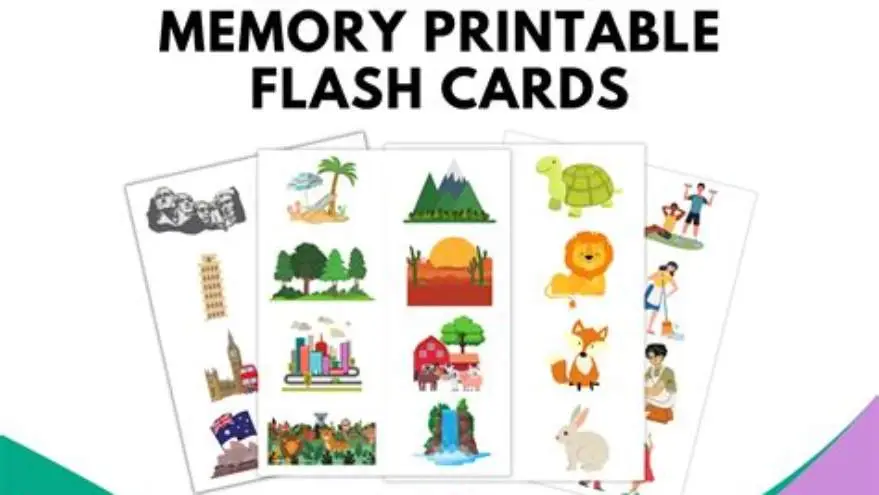
A card game works for dementia patients when one glance tells the player what to do and success does not depend on recalling earlier turns. Traditional games like Rummy or Hearts demand strategy, sequencing and memory of what other players discarded. Those skills erode early in dementia, turning a familiar pastime into a parade of mistakes. The games that bring calm and connection rely on immediate visual matching: finding two cards with the same picture, sorting by color, or pairing a word with its image.
Print size and contrast decide whether a game frustrates or delights. Symbols and text smaller than 1 inch tall disappear for players with macular degeneration or cataracts, common alongside memory loss. Black ink on white card stock gives the sharpest contrast. Pale pastel borders and gray text, common in commercial decks, wash out under typical indoor lighting. High contrast means less squinting and fewer moments of confusion about what the card shows.
The number of cards in play matters as much as their size. A full 52-card deck overwhelms; even a simplified game with 24 cards can scatter attention when short-term memory fades. Start with 8 to 12 cards for matching games, laid face-up so the player sees all options at once rather than holding a concealed hand. Reduce the deck further if the person tires quickly or becomes agitated when too many choices appear.
One rule per game keeps instructions clear. Match the pictures. Sort by color. Find the pairs. When a game introduces exceptions, wildcards or multi-step turns, it stops being a success and becomes a test. The goal is engagement and the small pride of completing a round, not cognitive challenge. It helps to understand simple games for dementia seniors before going further.
Examples of easy card games with printable templates
Matching pairs is the simplest game to print and play. Create cards with identical pairs of pictures: a coffee cup, a flower, a cat, a house. Print two of each image, then lay all cards face-up on the table. The player finds and removes matching pairs. No turn-taking, no hidden cards, no penalty for a wrong guess. You can theme the images around the person's life: photos of family members, pictures of places they lived, or objects from their career. Personal images often spark conversation even when the matching task itself becomes difficult.
Simplified Go Fish strips the traditional game to one question: do you have a red card? Print cards in four solid colors, three or four cards per color, with the color name printed large in the center. Players ask for a color, and the other person hands over a match or says no. The game succeeds because color recognition lasts longer than number or suit memory, and the single question never changes. Skip the 'go fish' draw pile if it adds confusion; just play until all matches are made from cards in hand.
Picture-to-word matching pairs a photograph with its printed name. One card shows a dog, another says DOG in 2-inch letters. The player matches image to word. This works well for people in early to moderate dementia who retain reading ability but struggle with abstract tasks. Print 6 to 10 pairs on a theme: farm animals, kitchen items, garden tools. The concrete pairing gives structure without demanding recall of previous turns. Before you commit to anything, it is worth looking at options that reduce frustration.
Color-sorting cards ask the player to group cards by background color rather than match identical images. Print cards with different pictures but the same backing color: three cards with blue backgrounds showing a bird, a truck and a shoe. The task is sorting, not memory. Some players find the variety of images more interesting than repetitive matching, and the single sorting rule stays simple even when attention drifts.
- Matching pairs: two identical images per pair, 6 to 10 pairs, laid face-up, themed to the person's life or interests
- Simplified Go Fish: solid-color cards with color name printed large, ask for a color, hand over matches, no draw pile needed
- Picture-to-word: one card with a photo, paired card with its name in 2-inch letters, concrete and structured
- Color-sorting: different pictures on same background color, task is grouping rather than exact matching
How large to print cards for low vision and tremor
Cards printed smaller than 3 by 4 inches become hard to pick up for players with arthritis or tremor. Standard playing-card size is 2.5 by 3.5 inches, manageable for steady hands but frustrating when fingers shake or grip weakens. Print each card on a quarter sheet of letter-size card stock, giving a finished size near 4 by 5 inches after trimming. Larger cards mean fewer per page but easier handling and less fumbling.
The symbol or picture on each card should measure at least 1 inch tall, ideally closer to 2 inches for players with significant vision loss. Text size matters more than card size: a large card with tiny print still fails. Use bold sans-serif fonts like Arial Black or Verdana Bold at 72-point or larger for words. For images, choose high-contrast clip art or photographs with a single subject centered on a plain background. Busy patterns, gradients and multiple small objects in one image wash together under poor lighting or failing vision. For the detail, see our notes on matching games for dementia.
Test visibility by printing one sample card and viewing it from 3 feet away under the lighting where you will play. If the symbol is hard to identify at that distance, make it bigger or increase contrast. Many care-home activity rooms rely on overhead fluorescent fixtures that flatten contrast; what looks crisp on a desktop screen can gray out under that lighting.
Border weight and card backing also affect usability. A thin line around each card helps define edges for players with figure-ground perception problems, common in dementia. Print a solid-color or patterned back on the reverse side only if the game requires face-down cards; otherwise leave the back blank to reduce printing cost and ink bleed-through on thin card stock.
| Element | Minimum size | Better size | Why it matters |
|---|---|---|---|
| Card dimension | 3 by 4 inches | 4 by 5 inches | Easier to grip with tremor or arthritis |
| Symbol or image height | 1 inch | 2 inches | Visible across table with low vision |
| Text size for words | 72-point bold | 96-point or larger | Readable without leaning close |
| Border line weight | 2-point | 3 to 4-point | Defines card edge for perception issues |
How to prepare and use printable card games with dementia patients
Print cards on 110-pound card stock or heavier so they do not bend or tear during shuffling and handling. Standard 20-pound printer paper curls and rips within a few rounds. Card stock feeds through most home inkjet and laser printers, though you may need to adjust the paper-type setting to 'heavy' or 'card stock' in the print dialog to prevent jams. Office-supply stores sell white card stock by the ream; look for 110-pound cover stock, also labeled 199 gsm. It helps to understand simple cognitive checks for activity choice before going further.
Cut cards with a paper trimmer rather than scissors for straight, even edges. Uneven cuts make cards tippy when laid on the table and hard to pick up. Trim slowly and measure twice: cards that should be identical pairs must actually match in size, or the player notices the difference and loses confidence in the game. Round the corners with a corner punch if the person tends to pick at sharp edges or if cards will be handled roughly.
Laminate cards immediately after cutting to triple their lifespan. Thermal laminating pouches in 3-mil or 5-mil thickness work for home use; 5-mil lasts longer under daily handling and wipes clean when drinks spill. Run the laminated sheet through the trimmer a second time to remove the sealed edge, leaving a small margin of laminate around each card. Skip cold self-adhesive laminate; it bubbles and peels within weeks.
Introduce the game by modeling one complete round rather than explaining rules verbally. Lay cards face-up, pick a pair, say 'These match,' and set them aside. Then invite the player to find another pair. If they hesitate, point to two matching cards and ask, 'Do these go together?' Success on the first try builds confidence; getting stuck on turn one ends the game before it starts. Keep your voice calm and let the pace stay slow. Rushing or correcting mistakes turns play into pressure. People in this spot often ask about how to play a memory matching game as well.
Store each game in a labeled zip-top bag or envelope with the rules written in large print on an index card tucked inside. When multiple games share a storage box, caregivers or activity staff can grab the right one quickly without sorting through loose cards. Note the deck size and any missing cards on the label so you know when it is time to reprint.
- Print cards on 110-pound card stock with printer set to heavy or card-stock mode.
- Cut cards with a paper trimmer for straight edges, measuring twice before each cut.
- Round corners with a corner punch if the person picks at edges or handles cards roughly.
- Laminate in 3-mil or 5-mil pouches, then trim the sealed edge to leave a small margin.
- Model one complete round by playing it yourself before inviting the person to try.
- Store each game in a labeled bag with deck size, theme and simple instructions on a card inside.
When to shrink the deck or simplify the task further
A player who loses interest after two or three matches, looks away or becomes restless is telling you the deck is too large or the task is too hard. Drop from 12 cards to 6 or 8 and watch whether engagement improves. Some people in moderate to advanced dementia sustain attention for only one or two successful matches before the effort becomes tiring. A game that ends after three pairs still counts as a win if the person felt successful.
Switch from matching identical images to sorting by a single feature when exact matching becomes frustrating. Instead of finding two identical cats, ask the player to group all the animal cards or all the blue cards. The task stays concrete but the tolerance for near-misses rises. You can affirm any reasonable grouping: if the person sorts by shape instead of color, that choice is correct. The goal is engagement, not testing.
Stop the game before frustration shows. Many caregivers push for one more round when the person is visibly tired, hoping to finish the deck. That final push often ends in agitation or refusal to play next time. End on a success, even if half the deck remains. Put the cards away, thank the person for playing, and bring the game out again tomorrow or next week when energy is higher.
Some players reach a stage where even simple matching is too abstract. They may shuffle cards without purpose, hold one card and stare, or hand cards back to you without attempting the task. That is the signal to move away from games and toward sensory activities: sorting buttons by size, folding towels, arranging flowers. Knowing when to set a game aside matters as much as knowing how to simplify it.
Ready-made activity kits that include dementia-friendly card games
If printing and laminating individual card decks feels like more work than you have time for, the Gentle Minds Activity Kit bundles printable card games and other activities at three difficulty levels. We made it for families and activity coordinators who need materials that respect the person's age and abilities without feeling childish. It includes matching cards, conversation prompts and simple sorting tasks, all formatted in large print with high contrast. You print only the pages you need, so one purchase covers multiple people at different stages.
The kit is not therapy and it will not slow disease progression. It gives you a drawer full of ready-to-use activities when you have run out of ideas or need something that worked yesterday to work again today. The caregiver guide walks through how to introduce each activity and when to simplify or stop, which matters when you are new to dementia care or working with someone whose abilities change week to week.
Download it once, print as many copies as you need, and file the pages in a binder by difficulty level. That structure helps you grab the right activity quickly when the person is restless or when a volunteer needs something to do during a visit. It is designed for repeated use across many individuals, which makes sense for activity directors managing a care-home program or families caring for more than one relative.
Skip it if you enjoy designing custom games around the person's specific interests or if you already have a system that works. The value is in the speed and variety, not in something you could not eventually make yourself given enough time and a color printer.
Still wondering?
Can I use regular playing cards if I just remove some of them?
You can, but standard playing cards are small, low-contrast and covered in symbols that confuse rather than clarify for dementia patients. The suit markers are tiny, the numbers blend into the pattern, and the court cards show multiple figures. Printing custom cards with one large image per card removes those barriers. If you have a deck on hand, try it for color-sorting only: reds in one pile, blacks in another.
How many times can I reuse a laminated card deck before it wears out?
A deck laminated in 5-mil pouches and handled gently typically lasts several months of daily use before corners peel or images fade from cleaning. Wipe spills immediately with a damp cloth rather than soaking cards, and store them flat rather than rubber-banded, which bends laminated edges. When a deck starts to look shabby, reprint and relaminate. The cost is low enough that replacing a worn deck every few months is reasonable.
What if the person refuses to play or walks away mid-game?
Refusal or walking away signals the game is too hard, the person is not in the mood, or something else is wrong: hunger, pain, need for the bathroom. Do not coax or insist. Put the cards away without comment and try a different activity or simply sit together. Bring the game back another day when the person is rested and calm. Dementia patients lose the ability to mask discomfort, so refusal is honest communication, not defiance.
Should I let the player win every time, or correct mistakes?
Let mistakes go unless correcting them helps the person succeed on the next turn. If someone matches two cards that do not actually pair, you can say, 'Let's look again,' and point to the correct match without emphasizing the error. The goal is success and engagement, not accuracy. If the person is happy with an incorrect match and correcting it would cause frustration, the mistake does not matter. Play is the point, not perfect performance.
Can I print these games in color, or is black and white better?
Color printing works well for matching games when the images rely on color to be recognizable: a red apple, a yellow banana. For text-based or symbol games, black ink on white card stock gives the highest contrast and costs less to print. Full-color images on a white background work better than pale or pastel cards, which reduce contrast and make symbols harder to see. Skip full-bleed color backgrounds; they waste ink and often make the card harder to read.
Ready to try it? It bundles printable card games and activities at three levels in large print, saving you the design and formatting work.
See the activity kit