Which picture matching games fit mild, moderate
Mild dementia fits detailed photo matching with 12 to 20 pairs and themed sets tied to hobbies. Moderate needs high-contrast images, 6 to 10 pairs, and familiar categories like animals or food. Severe works best with 3 to 5 tactile cards showing faces or single objects, played one match at a time.
On this page (8 sections)
- Quick recap
- How dementia severity shapes game complexity and card count
- Criteria for adapting picture matching games to individual abilities
- Examples of picture matching games tailored to different dementia levels
- Tips for engaging dementia patients with picture matching games
- When to move to a simpler game or stop picture matching altogether
- Making your own picture matching cards from family photos and familiar objects
- Still wondering?
Part of our guide on activities for all dementia stages
Key figures
- Mild stage pairs
- 12 to 20 cards
- Moderate stage pairs
- 6 to 10 cards
- Severe stage pairs
- 3 to 5 cards
- Card size recommendation
- 3×3 inches minimum
- Contrast ratio target
- High, avoid pastels
- Session length
- 10 to 20 minutes
Quick recap
- Mild dementia: use 12-20 pairs with detailed images tied to personal interests and hobbies
- Moderate dementia: stick to 6-10 high-contrast pairs showing familiar categories like pets or meals
- Severe dementia: limit to 3-5 tactile cards with faces or single objects, one match at a time
- Watch for frustration signals and drop difficulty before the person asks to stop
- Personal history matters more than cognitive score when choosing themes
How dementia severity shapes game complexity and card count

Dementia stage determines how many cards a person can track at once and how complex the images can be before confusion sets in. Mild dementia usually allows 12 to 20 pairs with detailed photographs, multiple objects per card, and abstract themes like vintage cars or garden flowers. The person can still plan a few moves ahead and enjoys the challenge of sorting through options.
Moderate dementia narrows working memory to around 6 to 10 pairs, and images need clear subjects with minimal background detail. A card showing three apples against a patterned tablecloth becomes harder to distinguish from a card with pears on a similar background. High-contrast photos of single subjects work better: one orange cat, one red apple, one yellow school bus.
Severe dementia reduces the game to 3 to 5 cards total, often played as a one-on-one match rather than a field spread on the table. The person may recognize a face or a single familiar object but lose track of what they are looking for if more than two or three cards are visible. Success comes from matching one card to its partner, then celebrating that win before introducing the next pair.
These ranges shift based on the time of day and the person's energy. A woman who handles 10 pairs at midmorning may manage only 4 by late afternoon. Start with fewer cards than you think the person needs, then add more if they finish quickly and ask for another round. Frustration shows up as pushing cards away, changing the subject, or standing up to leave. It helps to understand simple brain games for cognitive levels before going further.
Criteria for adapting picture matching games to individual abilities
Card size and contrast matter as much as cognitive load. Print or buy cards that measure at least 3 by 3 inches, with bold colors and sharp edges between the subject and the background. Pastels and gradients blur together for someone with both dementia and age-related vision changes. A bright red tomato on a white background reads faster than a salmon-pink rose on a cream tablecloth.
Personal history decides which themes connect and which fall flat. A retired teacher may light up over classroom objects like chalkboards and globes, while a former mechanic might enjoy wrenches and carburetors. Generic sets of flowers or butterflies work when you know nothing about the person, but they lack the spark that comes from matching a picture to a memory. Ask family members what the person loved doing, where they worked, and what hobbies filled their weekends.
Tactile elements help in moderate to severe stages when visual processing falters. Cards printed on textured cardstock, laminated for a smooth finish, or backed with fabric give the person something to feel while they look. Some people flip cards over and over, running a thumb along the edge, before they decide where to place them. That repetition is part of the process, not a mistake to correct. There is more on choosing games for calm and success in a separate guide.
Session length should stay between 10 and 20 minutes for most people, shorter if attention fades sooner. Finishing on a successful match leaves the person with a good feeling about the activity and makes them more willing to try again the next day. Pushing through to the end of the deck when interest has already dropped turns the game into a chore.
Examples of picture matching games tailored to different dementia levels
For mild dementia, a set of 16 pairs showing vintage advertisements, classic movie posters, or regional landmarks keeps the challenge interesting without adding pressure. These detailed images let the person use language skills and long-term memory, which often stay strong in early stages. A man who grew up in the 1950s might enjoy matching old Coca-Cola ads or photos of tailfin cars, and he'll probably tell you stories about each one as he plays.
Moderate dementia responds well to 8 pairs of common household objects photographed against plain backgrounds: a red apple, a blue mug, a yellow banana, a white plate. You can make these yourself by photographing items from the kitchen, printing them at 4 by 4 inches, and laminating the sheets. The familiarity of everyday objects reduces anxiety, and the person can often name the item even if they lose track of where its partner is on the table. People in this spot often ask about easy games for seniors with dementia as well.
For severe dementia, print 4 large cards showing close-up faces of family members or a single beloved pet. Play by holding up one card and asking the person to point to the matching card from two options on the table. This is less about memory and more about visual recognition and the comfort of seeing a familiar face. Some people will smile or say a name; others will simply touch the card and nod. Both count as success.
Activity kits designed for memory loss often include picture matching at multiple levels in one package. We make the Gentle Minds Activity Kit, which has matching games at three difficulty levels alongside conversation cards and other printable activities. It gives you a range of options without needing to buy separate decks for each stage. The caregiver guide explains how to tell which level fits today, because the right level can shift from week to week or even morning to afternoon.
- Mild: 12-20 pairs, detailed themes tied to hobbies or decades the person remembers well
- Moderate: 6-10 pairs, single familiar objects with high contrast and minimal background
- Severe: 3-5 pairs, faces or large simple images, played one match at a time with prompts
Tips for engaging dementia patients with picture matching games
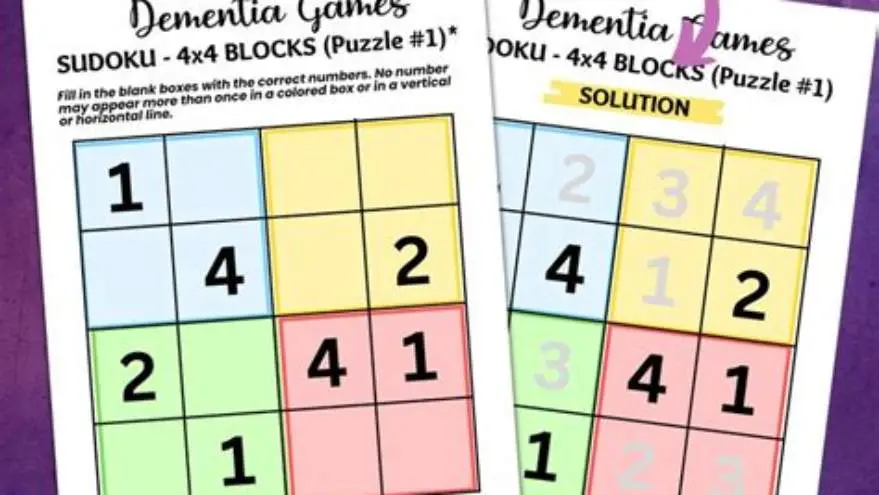
Sit beside the person rather than across the table. This puts you both on the same team looking at the same view of the cards, and it makes the activity feel collaborative instead of like a test. You can point to a card and say, "I think this one might match," which invites the person to agree or suggest a different option without putting them on the spot. For the detail, see our notes on sudoku puzzles for dementia.
Describe what you see in the pictures as you play. "Look, that's a golden retriever. My neighbor had one just like it." This turns the game into a conversation starter rather than a silent task, and it gives the person permission to talk about their own memories instead of focusing on whether they are getting the matches right. Some of the best moments happen when someone stops caring about the game and starts telling a story prompted by a picture.
Adjust the rules as you go. If the person wants to flip all the cards face-up and sort them by color instead of finding pairs, let that happen. If they pick up a card and put it back down without trying to match it, you can match it yourself and say, "I found this one." The goal is a calm 15 minutes together, not a correctly played memory game. Rigid rules create stress, and stress shuts down whatever cognitive ability is still available.
Watch for signs the person is getting tired or frustrated: slower movements, long pauses before choosing a card, looking away from the table, or a change in facial expression. When you see these, finish the current match and put the cards away with a positive comment. "We found six pairs today. That's great." This leaves the person with a sense of accomplishment instead of the memory of struggling and failing. If that sounds like your situation, read up on activities on table for dementia next.
When to move to a simpler game or stop picture matching altogether
Drop to a simpler version or fewer cards when the person stops engaging with the activity or when frustration appears more than once per session. A man who used to enjoy 12 pairs and now pushes the cards around without looking at them needs a smaller set or a different activity entirely. Dementia is progressive, and an activity that worked last month may be too hard this month. That shift is not a failure; it is the disease doing what it does.
Some people lose interest in picture matching but still enjoy sorting or organizing cards by color, size, or category. This is fine. Hand them a stack of cards and let them arrange the cards however they like. The cognitive load is lighter, the activity is still purposeful, and the person gets the satisfaction of putting things in order. You can sit with them and comment on their choices without turning it into a game with rules.
If picture matching stops working entirely, switch to conversation cards, simple puzzles with large pieces, or folding towels and sorting objects by type. Activities that use long-term procedural memory, like folding or sorting, often work longer into the disease than games requiring short-term recall. There is no rule that says picture matching must be part of every day or every week. Use it when it works, and set it aside when it does not.
Physical restlessness or repeated attempts to leave the table mean the activity is not meeting the person's need in that moment. They may need to walk, eat, use the bathroom, or simply be alone for a while. Offer the cards again later or try a different activity. Dementia changes what works from hour to hour, and flexibility matters more than finishing the game.
Making your own picture matching cards from family photos and familiar objects
Print two copies of each photo at 4 by 4 inches or larger on cardstock or photo paper, then laminate them or slip them into plastic sleeves. Start with 6 to 8 images that mean something to the person: their childhood home, a wedding photo, a pet they loved, a car they drove, or a place they visited often. These personal images trigger stronger recognition and emotional connection than generic stock photos of flowers or landscapes.
Photograph objects around the house that the person uses or sees every day: a favorite coffee mug, a pair of glasses, a hairbrush, a remote control. Shoot each item against a plain white or solid-colored background, and keep the lighting bright and even. These homemade cards cost almost nothing to make and can be replaced or updated as the person's interests and abilities change. Print extras so you can rotate themes and keep the activity feeling fresh.
For people in moderate to severe stages, print large single-subject cards showing faces of close family members, one face per card, with the person's name printed below the image in bold 18-point type. This becomes a recognition activity rather than a memory game. Hold up one card and ask, "Who is this?" If the person cannot name them, you say the name and share a short story about that person. The cards become a tool for connection rather than a test.
Free tools let you print large-format cards at home without design skills. We make a free large-print word search maker that works for text-based games, though it does not handle images. For picture cards, most people use a word processor set to landscape orientation, insert two identical images per page, and print on heavyweight paper. Cut the sheets in half, laminate them, and you have a working deck.
Still wondering?
How do I know if the picture matching game is too hard?
Watch for signs of frustration: pushing cards away, changing the subject, asking to stop, or a noticeable drop in attention. If the person looks away from the cards twice in a row or gives up after trying only one or two matches, the game is too hard. Drop to fewer pairs or simpler images and see if engagement improves.
Can I use children's matching games for someone with dementia?
No. Adults with dementia still see themselves as adults, and materials designed for young children can feel insulting. Use age-appropriate images like household objects, family photos, classic cars, or nature scenes. The images can be simple without being childish.
What should I do if the person wants to change the rules or sort cards instead of matching?
Let them. The goal is calm engagement, not following game rules. If the person wants to organize cards by color, size, or type instead of finding pairs, that is fine. Comment on their choices and enjoy the time together.
How long should a picture matching session last?
Most sessions work best at 10 to 20 minutes. Stop sooner if the person loses interest or shows signs of frustration. Finishing on a successful match leaves a positive feeling and makes the person more willing to try again the next day.
What if the person used to love these games but now refuses to play?
The disease has likely progressed to a point where the game is too hard or no longer interesting. Try a simpler version with fewer cards, or switch to a different activity like sorting objects, folding towels, or looking at photo albums. Activities that worked last month may not work this month, and that is normal.
Should I correct the person if they call a picture by the wrong name?
No. Agree and move on. Correcting them turns the activity into a test and breaks trust. If they call a picture of a dog a cat, say, "Yes, that's a nice one," and continue playing. The relationship matters more than getting the answer right.
Ready to try it? It provides picture matching games at three difficulty levels in one printable kit, so you can match the activity to the person's current ability without buying separate decks.
See the activity kit