Picture Sudoku for Dementia: how simplified puzzles support brain engagement
Simplified picture sudoku puzzles help adults with dementia stay engaged, calm, and successful, supporting brain health with gentle challenge.
Picture sudoku helps seniors with dementia by using images instead of numbers, making puzzles simpler and more engaging. This reduces frustration and supports brain activity gently and successfully.
On this page (8 sections)
- The short version
- How picture sudoku differs from regular sudoku
- Does sudoku help brain health in dementia
- Examples of easy picture sudoku puzzles for seniors with dementia
- Tips for using sudoku in dementia-friendly activities
- Picture sudoku for dementia: how simplified puzzles support brain engagement
- How to create your own picture sudoku for dementia
- Questions people still ask
Part of our guide on activities for dementia patients simple
Picture sudoku offers dementia-friendly puzzles that reduce frustration by using images, supporting calm brain engagement and success.
| Puzzle type | Image-based |
|---|---|
| Difficulty levels | 3 levels |
| Target users | Adults with memory loss |
| Print size | Large print |
| Puzzle pages | 130+ |
The short version
- Picture sudoku uses images, easing cognitive load for dementia.
- Simplified puzzles reduce frustration and boost confidence.
- Regular sudoku can benefit brain health if adapted.
- Gentle Minds Activity Kit offers ready-made dementia-friendly puzzles.
- Engagement with familiar images promotes calm and connection.
How picture sudoku differs from regular sudoku
Picture sudoku replaces numbers with familiar images or icons. This change reduces the mental barrier for people with dementia who find numbers abstract or confusing.
Instead of focusing on numerical patterns, players arrange images so each appears once per row, column, and box. This simplification supports visual recognition over abstract reasoning.
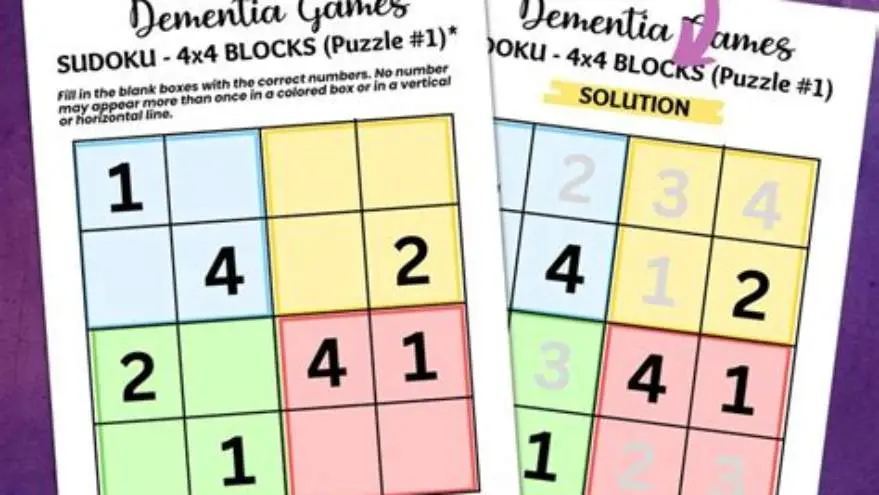
The puzzles usually have fewer squares or simpler grids, often 4x4 or 6x6 instead of the classic 9x9. This lowers the difficulty and helps maintain engagement.
Pictures can be tailored to the individual's interests or memories, which encourages connection and enjoyment. The other half of this decision is games tailored to dementia needs.
Does sudoku help brain health in dementia
Sudoku encourages logical thinking and pattern recognition, which can stimulate brain areas affected by dementia. However, the evidence is mainly observational, not conclusive.
For someone with dementia, the key is to avoid frustration. Simplified or picture sudoku can maintain interest and provide gentle cognitive exercise without stress.
Engaging in puzzles regularly can also promote routine, reduce boredom, and encourage social interaction if done in groups or with caregivers. The other half of this decision is easy puzzles for dementia patients.
Examples of easy picture sudoku puzzles for seniors with dementia
A 4x4 sudoku with four distinct images, such as animals or household objects, is a good starting point. Repetition is avoided in each row and column.
Another example uses themed pictures linked to seasons or holidays, which can spark memories and conversations.
Puzzles with visual clues or partial fills help guide players and boost confidence. There is more on brain games for dementia patients printable in a separate guide.
- Choose a 4x4 or 6x6 grid with simple images.
- Print large, clear versions using big fonts and images.
- Start with puzzles labeled 'easy' or 'gentle' difficulty.
- Assist with guidance cards or conversation prompts.
Tips for using sudoku in dementia-friendly activities
Keep puzzles short and visually clear to prevent overwhelm. Avoid overly complex grids or tiny print.
Use materials that allow repetition, so players can build confidence through practice.
Pair puzzles with social elements like discussion cards or shared completion experiences to enhance engagement. The other half of this decision is large-print puzzles for reminiscence.
Adapt the difficulty based on daily cognitive status; use simpler puzzles when concentration is low.
- Print large: Use fonts at least 18pt and clear images.
- Limit session time: 15-30 minutes to avoid fatigue.
- Offer help: Provide answer keys or gentle hints.
- Celebrate success: Focus on effort, not just completion.
Picture sudoku for dementia: how simplified puzzles support brain engagement
Simplified, picture-based sudoku puzzles reduce the cognitive load on adults with dementia. By using images instead of numbers, these puzzles tap into preserved visual and semantic abilities.
The Gentle Minds Activity Kit includes puzzles designed exactly for this purpose. It offers three difficulty levels, large print, and activities that avoid frustration while encouraging success. There is more on routine chart for dementia patients in a separate guide.
Using this kit saves time compared to designing puzzles yourself. It also includes conversation cards that add social value and deepen engagement beyond the puzzle.
While not a cure, these puzzles offer meaningful brain stimulation that respects the abilities and preferences of adults living with memory loss.
How to create your own picture sudoku for dementia
You can make picture sudoku puzzles by selecting a small grid, usually 4x4 or 6x6. Choose 4 or 6 simple images that the person recognizes well.
Draw the grid on paper or use a simple spreadsheet to layout the puzzle. Place images partially to create the puzzle, ensuring no repeats in rows, columns, or boxes.
Print in large format with bold images and minimal distractions. Offer multiple copies so players can try repeatedly or work together.
If you prefer digital tools, the BigPrint Puzzle Studio lets you create large-print puzzles, but it requires some effort to adapt sudoku for dementia.
Free word search makers or printable sudoku books may not offer dementia-friendly options, so manual creation or specialized kits like Gentle Minds are often better choices.
- Select simple, familiar images or icons.
- Choose a 4x4 or 6x6 grid layout.
- Place images ensuring each appears once per row, column, and box.
- Print puzzle in large format with clear images.
- Test puzzle yourself to confirm solvability and clarity.
Questions people still ask
Can sudoku improve memory in dementia patients?
Sudoku may help maintain cognitive functions by encouraging logical thinking, but it does not improve or reverse memory loss. It works best as gentle brain engagement.
Is picture sudoku suitable for all stages of dementia?
Picture sudoku suits early to moderate stages where recognition is preserved. It may be too challenging for advanced dementia without heavy adaptation.
How often should someone with dementia do sudoku puzzles?
Short, regular sessions of 15-30 minutes a few times a week are beneficial. Observe fatigue and adjust frequency accordingly.
Can I print sudoku puzzles for free online for dementia care?
Free sudoku puzzles exist but usually are not tailored for dementia. Look for large-print or picture-based versions to suit cognitive needs.
What should I do if the person gets frustrated with sudoku?
Switch to easier puzzles, offer assistance, or take breaks. Choosing picture sudoku helps minimize frustration from the start.
Ready to try it? It provides ready-made, simplified picture sudoku puzzles designed for adults living with memory loss, saving you time and reducing frustration.
Explore Gentle Minds puzzles