Easy puzzles for dementia patients
Learn which puzzle features help dementia patients succeed and how to adapt sudoku for number confusion with large print.
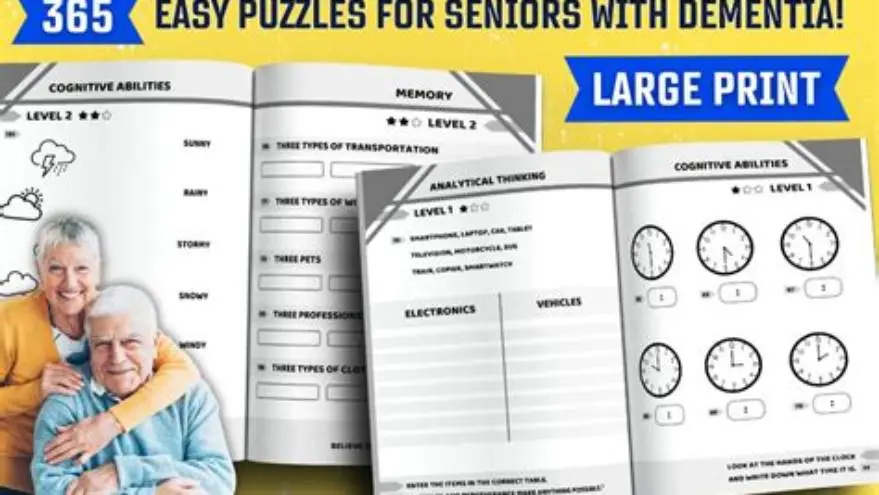
Easy puzzles for dementia patients have large, clear print (usually 16-24 pt), simple, familiar themes, and minimal rules to reduce frustration. For sudoku, adapting grids by using larger cells and limiting numbers to 1-6 helps with number confusion.
On this page (8 sections)
- Key takeaways
- What makes puzzles easy for dementia patients
- Easy large print sudoku when numbers get mixed up
- Choosing dementia-friendly puzzle types beyond sudoku
- How to create or find suitable large-print puzzles for dementia
- How to use easy puzzles to support calm and confidence
- Common questions about easy puzzles for dementia patients
- Questions people still ask
Part of our guide on playlist for sundowning hours
| Large print size | 16-24 pt |
|---|---|
| Sudoku number range | 1-6 for ease |
| Puzzle types | word searches, sudoku, crosswords |
| Typical puzzle grid | 4x4 or 6x6 for dementia |
| Recommended print format | high contrast, clear font |
Key takeaways
- Large print of 16-24 pt supports visual clarity for dementia patients.
- Simple, familiar themes and limited puzzle complexity reduce frustration.
- Sudoku puzzles with fewer numbers (1-6) and bigger cells ease number mixing.
- Activities that bring calm and success are better than those that cause frustration.
- BigPrint Puzzle Studio offers an easy way to create dementia-friendly large-print puzzles.
What makes puzzles easy for dementia patients
Puzzles for dementia patients must prioritize clarity and simplicity to avoid frustration and fatigue. Using a large-print size of at least 16 points is crucial, as vision often declines with age and dementia. Fonts should be sans serif with high contrast, such as black text on white or cream backgrounds, to maximize readability.
Puzzle themes should be familiar and comforting, avoiding complex or abstract concepts. Word searches with common, everyday vocabulary and crosswords with straightforward clues perform better than obscure or multi-layered puzzles. Keeping the puzzle's instructions minimal and direct also helps maintain engagement.
Reducing puzzle complexity by limiting the number of elements or steps prevents overwhelm. For example, smaller grids of 4x4 or 6x6 cells for sudoku, and word searches with fewer hidden words, are easier to complete successfully. The goal is to encourage a sense of achievement, not put cognitive strain on the player.
- Print size: 16-24 pt for readability.
- Font: Simple sans serif with high contrast.
- Themes: Familiar, comforting vocabulary.
- Puzzle complexity: Small grids and fewer steps.
- Instructions: Clear and minimal.
Easy large print sudoku when numbers get mixed up
Sudoku puzzles can be particularly challenging for dementia patients due to number confusion, especially when they mix up similar digits like 6 and 9. The best approach is to simplify the puzzle by limiting the numbers used to 1 through 6 instead of the traditional 1 through 9. This reduces confusion and cognitive load significantly. People in this spot often ask about printable activities for dementia patients as well.
The sudoku grid should be adapted to larger sizes, such as a 4x4 or 6x6 layout, with each cell printed in at least 20-point font. This allows players to clearly see and distinguish the numbers. Additionally, giving players physical aids like number tiles or large printed pieces can help reduce errors and keep track of placements.
An alternative free method is to manually create sudoku puzzles with fewer numbers and bigger cells using spreadsheet software or printable templates. For a more streamlined solution, BigPrint Puzzle Studio offers tools to generate large-print sudoku puzzles with these adaptations built-in, though it doesn't address number confusion beyond layout and size.
| Feature | Standard Sudoku | Dementia-Friendly Sudoku |
|---|---|---|
| Grid size | 9x9 | 4x4 or 6x6 |
| Number range | 1-9 | 1-6 |
| Print size | small (varies) | 16-24 pt |
| Visual aids | none | optional tiles or markers |
- Reduces number confusion
- Easier to see and fill
- Encourages success and calm
- Fewer numbers mean less traditional challenge
- May not interest skilled puzzle solvers
Choosing dementia-friendly puzzle types beyond sudoku
Not all puzzles suit dementia patients equally. Word searches, crosswords, and mazes are generally better received when simplified. Word searches should focus on 8-12 words max, using large print and clear grids. Crosswords should have simple clues and a small number of entries, typically 5-15, avoiding cryptic language. For the detail, see our notes on choose puzzles for dementia.
Mazes with wide pathways and clear start/end points provide sensory engagement without overwhelming cognitive demands. Matching or sorting games that use images or simple categories can also be calming and rewarding. The key is to select puzzles that balance challenge with achievable success to prevent frustration.
It’s important to observe the specific abilities and interests of the person with dementia, as cognitive decline varies widely. Some may benefit from more structured puzzles, while others prefer freeform creativity like coloring or simple pattern completion.
- Word searches: 8-12 familiar words, clear grid.
- Crosswords: Simple clues, 5-15 entries.
- Mazes: Wide paths, clear start/end.
- Matching games: Use images or simple categories.
How to create or find suitable large-print puzzles for dementia
Manually creating dementia-friendly puzzles can be done using word processors or spreadsheet software by enlarging fonts to 16-24 points and simplifying word lists or sudoku grids. Many free printable puzzle websites offer large-print options, but they rarely cater specifically to dementia needs, so customization may be necessary. If that sounds like your situation, read up on do dementia patients make up stories next.
BigPrint Puzzle Studio streamlines this effort by enabling users to quickly build themed puzzle books that feature large print, adjustable difficulty, and dementia-friendly layouts. It supports word searches, sudoku, crosswords, and more with ready-made word lists and the option to add your own, making it a practical choice for busy caregivers or activity directors.
If you prefer a free alternative, you can use spreadsheet templates to enlarge sudoku grids and limit number ranges manually, or adapt word search generators to include only simple, familiar words. However, this requires more time and some technical skills.
- BigPrint Puzzle Studio saves setup time
- Offers multiple puzzle types in one place
- Includes print-ready answers and covers
- Requires computer access and basic tech skills
- Not a medical tool or memory loss treatment
How to use easy puzzles to support calm and confidence
Offering puzzles that are easy to succeed in builds confidence and reduces anxiety in people with dementia. Start with very simple activities and increase complexity only if the person remains engaged and pleased. Avoid timed puzzles or those with penalties, as pressure can cause frustration and withdrawal. The other half of this decision is reminiscence activities for seniors 1950s.
Encourage social interaction by doing puzzles together or in small groups. This adds motivation and can spark conversation about familiar topics, further supporting memory and mood. Praise efforts and successes explicitly, even if the puzzle is only partially complete.
Monitor for signs of fatigue or agitation and switch to more passive activities like listening to music or looking at photos if needed. The goal is positive stimulation, not perfect performance.
- Begin with simple puzzles and adjust difficulty.
- Avoid timed or pressured puzzle formats.
- Use puzzles as social activities when possible.
- Praise effort and success to boost confidence.
Common questions about easy puzzles for dementia patients
Choosing puzzles for dementia patients raises practical issues beyond just size and complexity. You may wonder how often to offer puzzles, whether digital puzzles work as well as print, or how to handle repeated attempts or errors. For the detail, see our notes on early stage dementia word games.
Generally, offering puzzles daily or several times per week works well for routine and engagement. Digital puzzles can work if the person is comfortable with screens, but many prefer physical printouts because they feel more tangible and less confusing.
Repetition is natural and can even be comforting, so don’t discourage repeated puzzles. If errors occur frequently, consider simplifying content or switching to less cognitively demanding activities.
- Frequency: Daily or several times a week is good.
- Digital vs print: Print preferred for clarity and tangibility.
- Repetition: Normal and often comforting.
- Errors: Simplify puzzles or switch activities if too frequent.
Questions people still ask
What print size is best for dementia-friendly puzzles?
A font size between 16 and 24 points is optimal, depending on the individual's vision. Higher contrast fonts improve readability and reduce eye strain.
How can I reduce number confusion in sudoku puzzles for dementia patients?
Limit the numbers used to 1 through 6 and increase the size of each cell and number. Avoid the full 9x9 grid and provide physical aids like number tiles to help distinguish digits.
Are digital puzzles suitable for people with dementia?
Digital puzzles can work if the person is familiar with technology, but many find physical puzzles easier to handle due to tactile feedback and simpler navigation.
How complex should dementia-friendly puzzles be?
Puzzles should have minimal complexity, such as small grids or few words, to promote success and avoid frustration. Adjust complexity based on the player's abilities.
Can I make my own dementia-friendly puzzle books?
Yes, you can create large-print puzzles manually with word processors or use dedicated tools like BigPrint Puzzle Studio to speed up the process while customizing for dementia-friendly features.
Ready to try it? It simplifies creating large-print, dementia-friendly puzzles quickly with tailored layouts and ready-made word lists.
Create dementia-friendly puzzles