Which puzzles suit dementia best large print type and losing-place fixes
Choose puzzles that bring calm and success for someone with dementia using large print, simple layouts, and ways to avoid losing place.

Choose puzzles with at least 16-point large print, straightforward types like word searches and simple crosswords, and features like highlighted rows or tactile guides to prevent losing place and reduce frustration.
On this page (8 sections)
- Key takeaways
- How to choose puzzles for someone with dementia
- Are word searches good for dementia
- Large print word search for someone who loses place
- How puzzle type affects success and frustration with dementia
- How large print and layout help dementia puzzle engagement
- Using tools to create or adapt large print puzzles for dementia
- Questions people still ask
Part of our guide on activities for dementia at home
| Optimal print size | 16-24 pt |
|---|---|
| Best puzzle types | word searches, simple crosswords |
| Losing place fix | highlighted rows or tactile markers |
| Word search word count | 10-15 words |
| Sudoku difficulty | simplified or avoided |
Key takeaways
- Use print size 16-24 pt for readability.
- Select puzzles with simple rules and familiar words.
- Adapt word searches with row highlighting to keep place.
- Avoid puzzles requiring complex memory or speed.
- Consider large-print puzzle makers for custom printables.
How to choose puzzles for someone with dementia
Start by picking puzzles that focus on calm engagement rather than challenge. For dementia, puzzles should avoid complex problem-solving and instead encourage recognition and success.
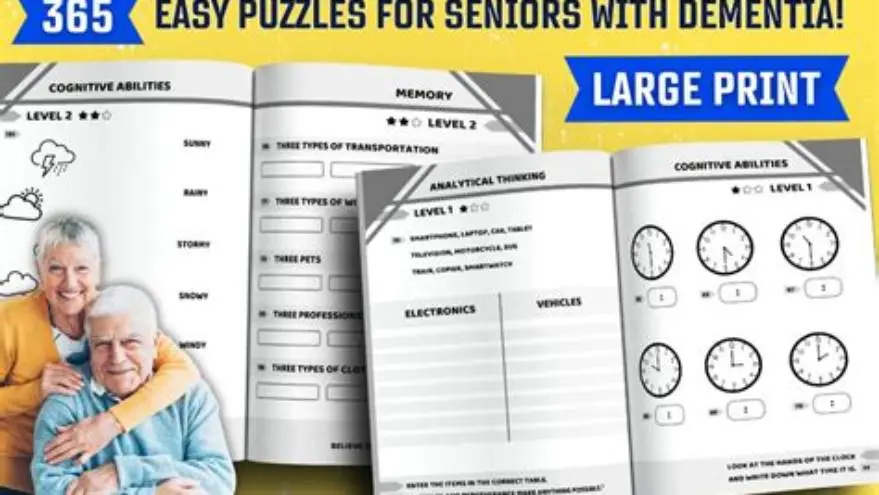
Print size is critical. Use puzzles printed in at least 16-point font; 20 to 24-point is better for those with low vision. Larger print reduces eye strain and helps keep focus on the page.
Choose puzzle types that rely on familiar words or patterns, such as word searches with common themes and simple crosswords using easy clues. Avoid puzzles with strict time limits or that rely heavily on short-term memory.
Simple layouts with clear spacing prevent confusion. Use puzzles where each element is visually distinct to help the person track their progress easily. The other half of this decision is cognitive word games for dementia.
Another key consideration is the stage of dementia the person is in. Early-stage dementia patients may handle puzzles with moderate complexity and more pieces, such as jigsaw puzzles with 50 to 100 pieces, while later stages benefit from very simple puzzles under 30 large pieces to avoid overwhelm.
Cognitive fatigue varies widely, so shorter puzzles or breaking puzzle time into 10-15 minute sessions can maintain enjoyment without causing frustration. Observing the individual’s response during puzzle activities helps tailor choices and timing, ensuring the experience remains positive.
Are word searches good for dementia
Word searches can be excellent for someone with dementia because they provide visible goals—finding known words—which encourages recognition and reduces frustration. Before you commit to anything, it is worth looking at dementia printable puzzles.
Keep word lists short, typically between 10 and 15 words, focusing on familiar themes like family, seasons, or hobbies. A smaller word list prevents overwhelm.
For better success, ensure the puzzle uses large print (16-24 pt) and avoids cramped letters. A simple grid layout helps maintain calm.
Complex word searches with diagonal or backward words often confuse and discourage. Straight horizontal or vertical word placement works best. There is more on puzzles for dementia patients in a separate guide.
Word searches also support language skills by reinforcing vocabulary recognition, which can be comforting for dementia patients. For example, a word search themed around gardening with 12 familiar plant names printed in 20-point font provides a meaningful connection to past interests.
It is important to check the puzzle after completion by guiding the person to review found words, which boosts confidence and memory reinforcement. If the person seems tired or frustrated, the puzzle can be simplified by reducing the word list or grid size next time.
Large print word search for someone who loses place
Losing place is a major source of frustration when doing word searches. To help, use puzzles that highlight the current row or column being searched. The other half of this decision is large-print puzzles for reminiscence.
You can create a simple paper overlay with a transparent colored strip to slide over the puzzle. This guides the eyes and prevents skipping lines.
Alternatively, tactile markers like sticky tabs or a ruler can help keep track of which words are found and where the search is currently focused.
Some digital tools or printable puzzle makers allow customization of row shading or font size to ease losing place. It helps to understand how dementia patients tell stories before going further.
This practical adaptation significantly increases success and enjoyment, especially for advanced dementia stages.
Another effective method to prevent losing place is using a digital tablet with apps that highlight the current line or word as the person searches. Adjustable brightness and zoom features further assist those with visual impairments.
If creating physical overlays, choosing a semi-transparent color such as light yellow or blue works best, as it highlights the line without obscuring letters. The overlay can be cut to fit the puzzle’s width and slid down line by line.
A simple check for success is to observe if the person’s eyes follow the overlay smoothly without jumping lines; if not, adjusting thickness or color can improve guidance.
How puzzle type affects success and frustration with dementia
Puzzles relying heavily on memory or speed, such as traditional Sudoku or cryptic crosswords, tend to increase frustration and disengagement.
Simple crosswords with clues based on personal knowledge or very basic words support recognition and prompt success feelings.
Matching puzzles or connect-the-dot types can also work well if designed with large clear print and minimal elements per page.
Avoid puzzles that require holding multiple steps in mind or quick responses, as these are cognitively demanding and often discouraging.
| Puzzle Type | Cognitive Demand | Print Size Suitability | Ease of Use |
|---|---|---|---|
| Word Search | Low | 16-24 pt | High |
| Simple Crossword | Low-medium | 16-24 pt | Medium |
| Sudoku (easy) | Medium | Large print optional | Low-medium |
| Cryptic Crossword | High | N/A | Low |
| Matching Games | Low | Large print best | High |
How large print and layout help dementia puzzle engagement
Large, clear print reduces eye fatigue and confusion. A print size of 16 to 24 points is optimal for older adults with low vision or cognitive challenges.
High contrast between text and background is essential. Black on white or cream backgrounds work best.
Avoid overly busy layouts. White space between words and puzzle elements helps focus.
Page numbering and answer keys support independent checking and reduce anxiety about making mistakes.
Clear instructions printed in large font reduce reliance on memory and promote confidence.
Using tools to create or adapt large print puzzles for dementia
Creating or finding suitable puzzles manually can be time-consuming. Tools like BigPrint Puzzle Studio let you build large-print puzzle books with customizable print size and word lists quickly.
This software supports creating dementia-friendly word searches, crosswords, and sudoku with 16-24 point fonts and clear layout options.
It includes ready-made themes and answer keys, saving hours of formatting and guesswork.
Alternatively, free methods include enlarging prints from online puzzles using copy machine scaling or PDF zoom, then manually adding guides like colored overlays.
BigPrint Puzzle Studio suits caregivers and activity directors needing consistent, easy-to-read puzzles and helps make printable books to sell, although it isn’t a medical tool.
Questions people still ask
Can word searches improve memory in dementia?
Word searches support recognition and focus but do not improve memory clinically. They help maintain engagement and reduce anxiety by providing achievable goals.
What font size is best for puzzles for dementia?
Fonts between 16 and 24 points work best. Larger sizes aid those with low vision or cognitive difficulties by making letters easier to identify.
How do I prevent someone with dementia from losing their place in puzzles?
Use colored overlays, rulers, or tactile markers to guide their eyes line by line. Puzzle designs with highlighted rows or columns also help.
Are crosswords suitable for dementia patients?
Simple crosswords with easy clues and familiar words can work well. Avoid complex or cryptic crosswords that require high memory or reasoning skills.
Is it better to buy or make large print puzzles?
Both work. Buying saves time; making puzzles with tools like BigPrint Puzzle Studio offers customization to fit individual needs and print size preferences.