Which dementia activity books suit mild, moderate, or advanced stages
Match activity books to cognitive stage: mild stage benefits from standard puzzles with large print and familiar themes; moderate stage needs simpler formats with fewer choices and visual cues; advanced stage relies on sensory activities, single-step tasks and conversation prompts rather than written puzzles.
On this page (8 sections)
- Quick recap
- How dementia stages change what activities feel possible
- What mild-stage dementia needs from an activity book
- Choosing activities for moderate-stage cognitive changes
- What works when dementia reaches the advanced stage
- How to tell when it is time to switch to simpler formats
- Criteria for picking or adapting any dementia activity book
- Still wondering?
Part of our guide on simple activities for dementia patients
Key figures
- Mild stage activities
- 10-15 word searches, crosswords, sudoku
- Moderate stage activities
- 5-8 word grids, matching, picture sorts
- Advanced stage activities
- Conversation cards, tactile boards
- Print size needed
- 18-24 point minimum, bold letters
- Signs to simplify
- Frustration, refusal, repeated errors
- Activity session length
- 10-20 minutes, shorter for advanced
Quick recap
- Mild stage: use full-size crosswords, word searches and sudoku in large print with familiar themes
- Moderate stage: switch to half-page puzzles, matching games and picture-based tasks with clear answers
- Advanced stage: replace written puzzles with tactile activities, conversation cards and single-step sorting tasks
- Watch for frustration signs like pushing the page away or refusing to start, then move to simpler formats
- Adapt any puzzle by covering half the grid, reading clues aloud or accepting any reasonable answer
How dementia stages change what activities feel possible
Which dementia activity book for adults fits a person depends on stage. Mild stage keeps daily skills but brings word-finding and slower recall. A familiar puzzle that took 15 minutes may now take 30 or be repeated. Watch for that.
Moderate stage impairs multi-step tasks and starting without prompts. Tasks need one clear path. Advanced stage reduces language and fine motor control. Written activities often frustrate and stop working.
Match both mental and physical needs. Use 18- to 24-point print for low vision. Choose thick markers or built-up grip tools for arthritis. If a page takes over two minutes to start, simplify or switch the format.
What mild-stage dementia needs from an activity book
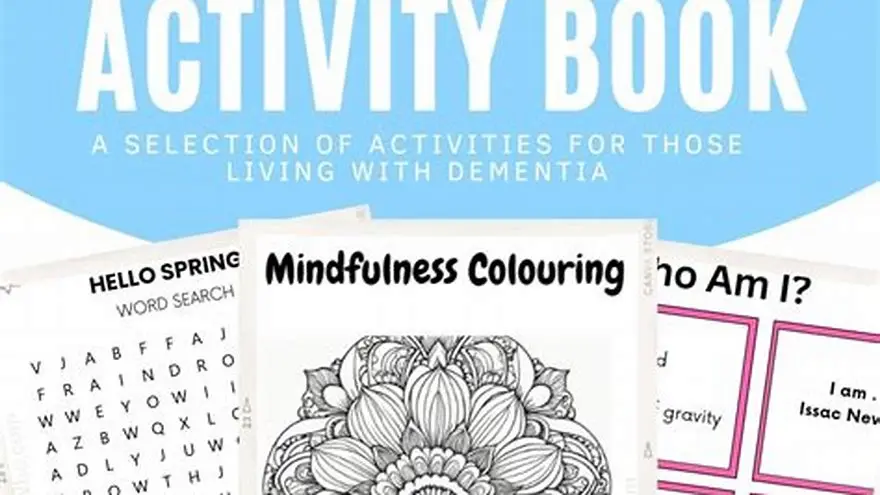
A dementia activity book for adults should start simple. Pick puzzles the person recognizes and can finish. Word searches with 10 to 15 words, basic crosswords and moderate sudoku work when print is large and contrast is high. Use 24-point or at least 18-point type and black ink on cream or white paper. If that sounds like your situation, read up on supporting calm engagement next.
Put one puzzle per page and move answers to the back. That lets the person check results without flipping the sheet. Avoid competitive language, timers or childish art. Adult themes tied to long-term memory, such as 1950s songs or garden flowers, keep attention and preserve a sense of competence.
Rotate a small set of five or six puzzles. Reprinting the same activity weeks apart is fine. Repetition reduces the need to buy new books constantly and keeps costs down. Laminate favorites and reuse them with dry-erase markers.
Choosing activities for moderate-stage cognitive changes
Moderate-stage dementia shortens attention and makes choices harder. Replace a full page word search with a 5-to-8-word grid and a small word bank. Aim for finishing, not perfection. Before you commit to anything, it is worth looking at dementia activity book for adults.
Swap crosswords for matching, picture sorts or simple fill-ins. Use picture cues next to words, color coding, numbered steps and arrows to guide the eye. Offer two or three choices, not open-ended options.
Conversation prompts work well when written tasks fail. Use prompts that invite storytelling rather than recall. If you adapt puzzles, cover half the grid, read clues aloud or accept approximate answers to keep success intact.
| Task type | Mild stage | Moderate stage |
|---|---|---|
| Word search | 10-15 words, full page | 5-8 words, half page, word bank shown |
| Crossword | Standard grid, written clues | Large grid, picture clues or fill-in-blanks |
| Matching | 12+ pairs | 4-6 pairs with images |
| Instructions | Written at top of page | Demonstrated or read aloud each time |
What works when dementia reaches the advanced stage
Advanced dementia cuts language, fine motor skill and multi-step processing. Written puzzles usually stop working. The focus moves to sensory and single-step tasks that give immediate feedback. We cover dementia patient activity books in its own article.
Choose textured boards, fabric books, large buttons for sorting and folding towels. Use neutral, adult-appropriate materials such as wooden spoons or fabric swatches. The goal is comfort and dignity, not correctness.
Conversation cards can prompt you to tell a story while the person listens. Music, hand massage and photo albums often get more response than printed tasks. If the person does not start within 30 seconds, change the activity.
How to tell when it is time to switch to simpler formats
Look for clear signals. Refusing to start, repeated errors on familiar puzzles, verbal distress, crumpling the page or stopping within minutes all mean the format is too hard. Any one of these calls for an easier option. We cover activity book for dementia patients large print in its own article.
Drop the task one level and watch. If engagement rises and frustration falls, you chose correctly. If not, try a different activity type the person has liked before, such as music, photo albums or simple matching games.
Keep two or three difficulty levels ready. Acute factors like infection, poor sleep, medication changes or dehydration can lower performance suddenly. Flexibility avoids buying new books that are still too hard or suddenly too easy.
- Refusal to start: the task is unclear or too hard; simplify or demonstrate first
- Repeated same errors: working memory is not holding the pattern; add visual cues or reduce choices
- Frustration within 5 minutes: mismatch between task demand and ability; drop to easier level
- Loss of interest: preferences have changed; try a different activity type entirely
Criteria for picking or adapting any dementia activity book
Start with print and contrast. Use 18-point minimum type and 24-point when possible. Choose black ink on white or cream paper. Hold the page at arm's length; if you cannot read the title, the print is too small. We go through non-childish activities for dementia step by step elsewhere on the site.
Prefer one clear task per page. A single puzzle with the title and short instructions at the top reduces decision fatigue. Put answers in a back section so you can cover them until the task is done.
Pick themes tied to long-term memory and identity, like 1940s movies, classic cars or family recipes. Look for formats you can adapt: cover sections to shorten tasks, read clues aloud, or accept approximate answers. Flexibility extends a book's useful life across stages.
- Print size:
18-24point, bold letters, black on white or cream - Page layout: one task per page, title at top, no competing elements
- Theme: tied to long-term memory and personal interests
- Instructions: short, clear, with an example if possible
- Flexibility: can be adapted by covering sections, reading aloud or simplifying clues
Still wondering?
Can I use the same activity book across all dementia stages?
Not effectively. A book that works at the mild stage will frustrate someone at the moderate or advanced stage because the tasks are too complex. You can adapt some puzzles by simplifying them, but eventually you need materials designed for the current cognitive level. Printable kits that include multiple difficulty levels solve this by letting you switch formats without buying new books.
How do I know if an activity book is too childish?
Look at the illustrations, language and theme. Cartoon animals, primary colors and topics like playground games signal a children's book repackaged for adults with dementia. An age-appropriate book uses photographs, neutral design and themes tied to adult life such as gardening, travel or classic films. If it looks like something you would give a six-year-old, skip it.
What if the person refuses all printed activities?
Not everyone with dementia enjoys puzzles or games, and forcing the issue creates stress. Try tactile activities, music, photo albums or simple household tasks like folding towels or sorting items. The goal is engagement and comfort, not completion of a specific type of task. If printed activities no longer interest the person, respect that and find what does.
How often should I print new puzzles?
As often as needed, but repetition is less of a problem than you think. Someone with moderate to advanced dementia may not remember doing a puzzle last week, so reprinting favorites saves money and effort. Watch for signs of boredom, such as disinterest or refusal to start. That signals the need for something new.
Are there free dementia activity books I can print?
Some sites offer free printable puzzles, though most are not designed specifically for dementia. You can adapt standard large-print word searches or crosswords by simplifying clues, covering sections or accepting approximate answers. Free trials or single-page samples let you test whether the format works before committing to a purchase.
Ready to try it? It includes three difficulty levels in one kit, so you switch formats as cognitive ability changes without buying new books
Get all three levels in one kit