Large-print puzzle books: why 8.5 x 11 inches is the best trim size
8.5 x 11 inches gives your puzzles the space they need for 24-point type and comfortable margins without driving up printing costs.
8.5 x 11 inches is the best trim size for large-print puzzle books. It gives you enough space for 24-point type, generous margins, and full-size grids without increasing your printing costs or making the book awkward to hold.
On this page (8 sections)
- The short version
- What trim size means and why it matters for puzzle books
- Why 8.5 x 11 inches suits large-print puzzles
- Standard trim sizes used for puzzle books
- How trim size affects readability and layout
- Comparing 8.5 x 11 to common alternatives like 6x9 and 7x10
- Setting up your puzzle book files for 8.5 x 11 printing
- Questions people still ask
Part of our guide on large print word search book kdp niche
Most puzzle book creators pick 6x9 out of habit, then realize too late the grids don't fit and the type is too small.
| Recommended size | 8.5 x 11 inches |
|---|---|
| Minimum type size | 18 points, ideally 24 |
| Grid capacity | 15x15 or 16x16 cells |
| Safe margin width | 0.75 to 1 inch all sides |
| KDP printing cost | Same as 6x9 or 7x10 |
The short version
- 8.5 x 11 inches accommodates 24-point type and 15x15 grids comfortably
- 6x9 forces you below 18-point type or cuts your grid to 12x12
- Letter size costs the same to print as smaller sizes on KDP
- Readers over 65 need at least 16-point type, preferably 18 to 24
- Margins under 0.75 inches make binding uncomfortable to hold open
What trim size means and why it matters for puzzle books
Trim size is the width and height of your finished book after printing and cutting. It's measured in inches in the US, with width first. An 8.5 x 11 inch book is standard US Letter, portrait orientation. A 6 x 9 inch book is narrower and taller.
Trim size locks in your layout before you design a single puzzle. Pick too small and you'll shrink your type to fit, or cut your grids down to 10x10. Pick too large and readers complain the book is heavy or awkward on a lap table. The size you choose decides how much white space surrounds each puzzle, how large your type can be, and whether a 15x15 grid fits without cramping.
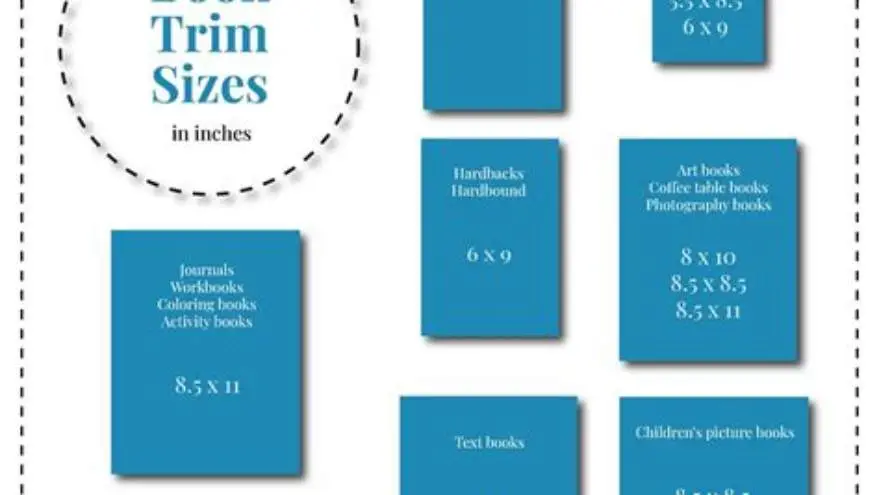
Amazon KDP and most print-on-demand services offer a fixed list of trim sizes. You can't order a custom 7.5 x 10.25 inch book. The common options for puzzle books are 6 x 9, 7 x 10, 7.5 x 9.25, and 8.5 x 11 inches. Each one costs the same to print if the page count is identical, so there's no financial penalty for going larger.
Large-print puzzle books live or die on readability. Your reader is usually over 65, often dealing with macular degeneration, cataracts, or presbyopia. They need 18 to 24-point type for clues and labels, and grid cells large enough to write a letter without squinting. If your trim size forces you below 18 points, you've made a book they can't use. It helps to understand maze creation for kdp before going further.
Why 8.5 x 11 inches suits large-print puzzles
8.5 x 11 inches gives you a live area of roughly 7.5 x 10 inches after you subtract margins. That's enough room for a 15x15 word search grid at 24-point type, with each cell measuring 0.48 inches square. Your reader can print a capital letter in that space without their pen tip wandering into the next cell. The clue list sits below or beside the grid, also at 24 points, with line spacing wide enough that one clue doesn't run into the next.
Sudoku grids fit the same way. A standard 9x9 sudoku with 26-point numbers and thick dividing lines between the 3x3 boxes takes up about 6.5 inches square. You have room left over for instructions at the top and the solution number at the bottom. Crossword grids work well at 15x15 or 13x13, with clue lists running in two columns at 18 points.
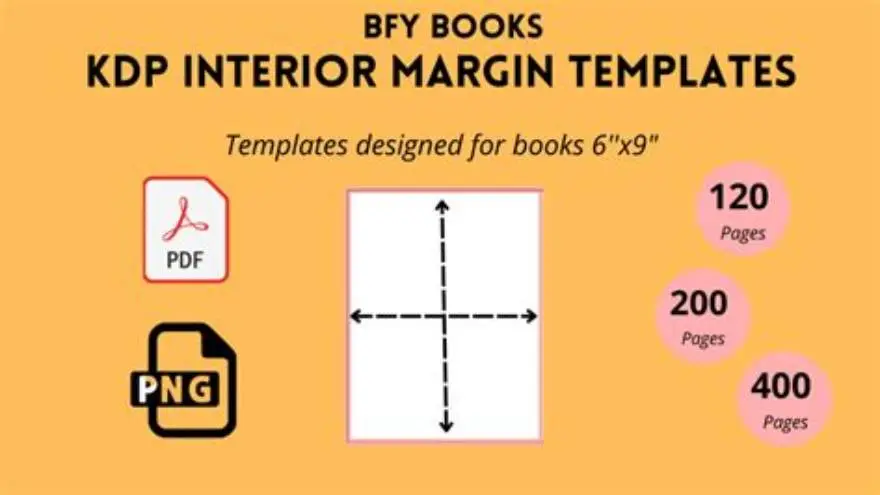
The page is large enough that you don't have to choose between comfortable type and a full-size grid. A 6 x 9 inch book forces that trade-off every time. You can drop the grid to 12x12 and keep 20-point type, or keep the 15x15 grid and shrink to 16 points. Neither option is as readable as the 8.5 x 11 layout. We go through puzzle book interior margins for kdp step by step elsewhere on the site.
Margins matter as much as grid size. You need 0.75 to 1 inch on the binding edge so the book lies flat when someone holds it open. The outer margins should match, or be slightly narrower at 0.6 inches. Top and bottom margins sit around 0.5 to 0.75 inches. Those margins add up fast on a small trim size, but on Letter size they still leave you with a generous working area.
Standard trim sizes used for puzzle books
The four trim sizes you'll see most often for puzzle books are 6 x 9, 7 x 10, 7.5 x 9.25, and 8.5 x 11 inches. Each one has a different use case, and none of them costs more to print than the others if your page count stays the same. Amazon KDP charges by page count and paper type, not by trim size, so a 100-page book at 8.5 x 11 costs the same as a 100-page book at 6 x 9.
6 x 9 inches is the default for novels and nonfiction, so creators pick it without thinking. It's too narrow for large-print puzzles. A 15x15 word search at 18-point type barely fits, and your clues end up in a cramped list with narrow line spacing. Sudoku grids look better here than word searches, but the numbers still run small. This size works for standard-print puzzle books aimed at readers under 50, but not for large-print editions. We go through large print puzzle books kdp step by step elsewhere on the site.
7 x 10 inches and 7.5 x 9.25 inches are compromises. They give you a bit more room than 6 x 9, enough for 18 to 20-point type and a 14x14 or 15x15 grid if you keep margins tight. The 7.5 x 9.25 size is slightly wider, which helps with word search clue lists. Both sizes feel more bookish than Letter, less like a workbook. If your readers prefer something that looks like a trade paperback, these are your middle ground.
8.5 x 11 inches is the workbook size. It's what activity directors use in care homes, what large-print crossword books use, and what your reader expects when they see 'large print' in the title. The page is wide enough for two-column clue lists, tall enough for a full grid and instructions, and familiar enough that nobody complains it's awkward. It's also the size most home printers use, so if your reader wants to print extra copies of a puzzle, they won't have to resize anything.
| Trim size | Max comfortable type | Max grid size | Best for |
|---|---|---|---|
| 6 x 9 inches | 16-18 points | 12x12 to 13x13 | Standard-print puzzles |
| 7 x 10 inches | 18-20 points | 14x14 to 15x15 | Moderate large print |
| 7.5 x 9.25 inches | 18-20 points | 14x14 to 15x15 | Trade paperback feel |
| 8.5 x 11 inches | 24 points | 15x15 to 16x16 | True large print |
How trim size affects readability and layout
Readability for older adults depends on three things: type size, line spacing, and contrast. Trim size controls the first two. A small page forces you to shrink type or cut content. A large page lets you keep type at 24 points and line spacing at 1.5, which is what vision researchers recommend for readers over 65. The other half of this decision is large print activity book for seniors kdp.
Type size is measured in points. One point is 1/72 of an inch. 18-point type produces letters about 0.25 inches tall, cap height. That's the minimum for large print, but it's still small for someone with moderate vision loss. 24-point type gives you letters about 0.33 inches tall, which most readers find comfortable. On an 8.5 x 11 inch page you can run clue lists at 24 points with 1.5 line spacing and still fit 20 to 25 clues. On a 6 x 9 page you'd fit maybe 12 clues at that size, so you end up dropping to 16 or 18 points to make room.
Line spacing prevents one line from bleeding into the next. Single spacing is fine for 12-point type in a novel, but at 24 points the descenders from one line nearly touch the ascenders from the line below. You need 1.3 to 1.5 line spacing to keep the lines distinct. That spacing eats vertical space, so a small trim size runs out of room fast.
Grid cell size matters as much as type. A 15x15 word search has 225 cells. If your page is 6 x 9 and your margins are 0.75 inches all around, your live area is about 4.5 x 7.5 inches. A square grid maxes out at 4.5 inches, which gives you cells of 0.3 inches. That's tight for writing. On an 8.5 x 11 page with the same margins, your live area is 7 x 9.5 inches, so a square grid can be 7 inches and each cell is 0.47 inches. Much easier to write in. We cover large-print puzzle formatting tips in its own article.
Margins aren't wasted space. The binding edge needs at least 0.75 inches or the puzzle disappears into the gutter when the book is open. The outer edge needs 0.5 to 0.75 inches so your reader's thumb doesn't cover the clues. Top and bottom margins keep the puzzle centered and give space for page numbers and titles. On a small trim size those margins take up a larger percentage of the page, leaving less room for content.
Comparing 8.5 x 11 to common alternatives like 6x9 and 7x10
6 x 9 inches is too small for large-print puzzles unless you drop your standards. You can fit a 12x12 word search at 20-point type, but a 15x15 grid forces you down to 16 points. Clue lists end up single-spaced or split across two pages. The book feels like a regular puzzle book with slightly bigger type, not a large-print edition. If your target reader is over 70 or has any vision impairment, they'll struggle with it.
7 x 10 inches is better but still compromised. You can fit a 14x14 grid at 20-point type, or a 15x15 grid at 18 points. Clue lists work at 18 to 20 points with 1.3 line spacing. It's readable for someone with mild presbyopia, but not for someone with macular degeneration. The book looks more polished than an 8.5 x 11 workbook, which matters if you're selling on Etsy and want a boutique feel. But you're trading aesthetics for function.
8.5 x 11 inches is the only size that lets you hit 24-point type and 15x15 grids without compromise. The book looks like a workbook, which some sellers think is a negative. It's not. Your reader associates that size with large-print materials. They know it will be readable before they open it. The page lies flat on a table or lap desk, and there's room to rest a hand while writing. The proportions are familiar because it's the same as printer paper.
The trade-off is bulk. An 8.5 x 11 book is larger and heavier than a 6 x 9 book with the same page count. If you're printing a 200-page book, the Letter size version is noticeably thicker. Some readers prefer a smaller book they can hold in one hand or tuck into a bag. But for large-print puzzles, the reader is usually working at a table anyway, so portability isn't the deciding factor. Readability is.
- 24-point type and 15x15 grids fit comfortably
- Familiar size matches what readers expect for large print
- Same printing cost as smaller trim sizes
- Page lies flat when open on a table
- Larger and heavier than 6x9 or 7x10
- Less portable for readers who want to carry it
- Looks like a workbook rather than a trade paperback
Setting up your puzzle book files for 8.5 x 11 printing
Start by setting your page size to 8.5 x 11 inches in whatever tool you're using to design puzzles. If you're working in Word, go to Layout > Size > Letter. In Canva, create a custom document at 8.5 x 11 inches. In Adobe InDesign, set up a new document with those dimensions. Do this before you create any puzzles, because resizing later distorts your grids and type.
Set your margins next. Use 0.75 inches on the left (binding edge) and right, and 0.5 inches on top and bottom. If your book is over 150 pages, increase the binding margin to 0.875 or 1 inch to account for the thicker spine. Amazon KDP requires a minimum of 0.25 inches on all edges, but that's too tight for comfort. Your reader needs space to hold the book open without covering the puzzle.
Pick a sans-serif font for clues and numbers. Arial, Verdana, or Helvetica work well because the letters are distinct at large sizes. Avoid decorative fonts or anything with thin strokes. Set your body text to 22 to 24 points and your line spacing to 1.5. Grid numbers or letters should be 24 to 28 points, bold. Test your layout by printing a page at 100% scale and checking whether you can read it from two feet away.
Export your finished book as a PDF with no compression. KDP and other print-on-demand services need high-resolution files, usually 300 DPI or higher. If you're working in Canva or another web tool, download the PDF in print quality, not standard. Check that your page size stayed at 8.5 x 11 in the export settings. If the PDF comes out as A4 (8.27 x 11.69 inches), you'll need to resize it before uploading.
We built BigPrint Puzzle Studio to handle all of this automatically. It sets up 8.5 x 11 pages, applies the correct margins, and exports print-ready PDFs formatted for Amazon KDP. You pick your puzzle type and theme, and it generates the grids and clue lists at 24-point type with proper spacing. It also creates a wrap-around cover sized to match your page count and trim size. It's a one-time payment of $17, no subscription. If you're building more than two or three puzzle books, it saves you hours of layout work.
- Set document size to 8.5 x 11 inches before creating any puzzles
- Apply 0.75-inch left and right margins, 0.5-inch top and bottom
- Use sans-serif fonts at 22 to 24 points for all text
- Set line spacing to 1.5 for clue lists and instructions
- Export as high-resolution PDF at 300 DPI or higher
- Verify page size in the PDF before uploading to KDP
Questions people still ask
Can I use 8.5 x 11 inches for a Sudoku book, or is it too large?
8.5 x 11 works well for large-print Sudoku. A 9x9 grid at 26-point numbers fits comfortably with room for instructions and a solution number. The extra space prevents the grid from looking cramped. If you're targeting readers over 65, the larger size is an advantage, not a drawback.
Does 8.5 x 11 cost more to ship than 6x9 on Amazon?
Amazon's shipping fees are based on the book's weight and dimensions, so an 8.5 x 11 book does cost slightly more to ship than a 6 x 9 book with the same page count. The difference is usually under $0.50 per book for domestic orders. Printing cost is the same, so your margin shrinks a bit, but the readability gain is worth it for large-print books.
What if my reader wants a smaller book they can carry around?
If portability matters more than type size, go with 7 x 10 inches and keep your puzzles at 18 to 20-point type. That's a reasonable compromise for readers with mild vision loss. But if the book is labeled large print, most buyers expect 8.5 x 11 and will feel misled by anything smaller.
Can I mix trim sizes in the same series of puzzle books?
You can, but it confuses buyers. If your first book is 8.5 x 11 and your second is 6 x 9, someone who loved the first book will be disappointed by the second. Pick one trim size for the series and stick with it. If you want to offer both, create two separate series with different titles so buyers know what they're getting.
Is 8.5 x 11 the same as A4 for printing outside the US?
No. A4 is 8.27 x 11.69 inches, slightly narrower and taller than US Letter. If you're selling internationally, check whether your printer uses US Letter or A4. Amazon KDP offers both, so you can create one version for the US and another for Europe. Don't try to use the same PDF for both; the margins and layout will be off.
Ready to try it? It sets up 8.5 x 11 pages with correct margins and exports print-ready PDFs at 24-point type automatically
Build your puzzle book in minutes