KDP puzzle book interior margins: exact widths for 6x9 and 8.5x11 trim sizes
Exact interior margin widths for KDP puzzle books, focusing on large-print layouts in 6x9 and 8.5x11 trim sizes with gutter and bleed considerations.
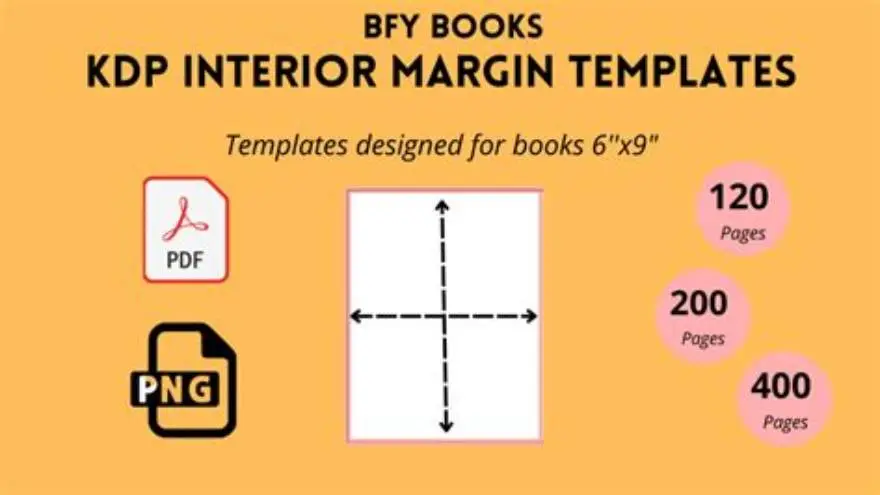
For KDP puzzle book interiors, set outer margins at least 0.5in and inner gutter margins at 0.75-1in for 6x9, larger for 8.5x11, to balance print safety and large-print puzzle readability.
On this page (8 sections)
- Key takeaways
- KDP paperback interior margin requirements for puzzle books
- How to adjust margins for gutter space in large-print puzzle books
- Margin differences between 6x9 and 8.5x11 KDP trim sizes for puzzle books
- Why margin size matters for large-print puzzle readability and print safety
- KDP puzzle book interior margins for KDP: exact widths for 6x9 and 8.5x11 trim sizes
- How BigPrint Puzzle Studio simplifies setting KDP puzzle book interior margins
- Questions people still ask
Part of our guide on how to create large print puzzles kdp
Exact interior margins optimized for large-print puzzle books on KDP ensure puzzles stay clear and never risk print clipping.
| KDP minimum margin | 0.25in |
|---|---|
| 6x9 inner gutter | 0.75-1in |
| 8.5x11 inner gutter | 1-1.25in |
| Outer margin standard | 0.5in |
| Large print size | 16-24 pt |
Key takeaways
- KDP requires minimum 0.25
inmargins but puzzle books need wider for readability and gutter. - 6x9 large-print books use 0.75-1
ininner margins; 8.5x11 use 1-1.25in. - Large-print margins prevent clipping and ensure puzzles are easy to read near the spine.
- Gutter margin adjustment depends on page count: higher page count demands wider gutter.
- Use tools like BigPrint Puzzle Studio to automate margin settings for KDP puzzle books.
KDP paperback interior margin requirements for puzzle books
Amazon KDP requires a minimum margin of 0.25in around the edges of paperback interiors to avoid print clipping, but this minimum is far too small for puzzle books, especially large-print ones.
For safety and readability, you must increase margins beyond KDP minimums. Puzzle books have detailed grids, numbers, or letters that risk being cut off near the binding or page edge without generous margins.
Large-print puzzle books need even more margin space to prevent crowding and keep font sizes comfortable, usually 0.5in or greater on outer edges and at least 0.75in on the inner gutter depending on page thickness and trim size.
Margin requirements also vary depending on whether your puzzle book includes colored backgrounds or images that approach the page edges. In these cases, bleed margins become critical to prevent unwanted white lines after trimming. While KDP recommends 0.125in bleed for color elements extending to the edge, puzzle books with only black-and-white grids may not need bleed if all puzzle content stays within safe margins. We go through how to self bind a large book cheaply step by step elsewhere on the site.
Another factor influencing margin choice is the binding type. KDP uses perfect binding for paperbacks, which can cause slight page curvature near the spine, especially in thicker volumes. This curvature means that inner gutter margins should be on the higher end of recommended ranges to avoid losing puzzle elements into the binding curve. Testing a printed proof can help verify if your chosen margins adequately compensate for this effect.
How to adjust margins for gutter space in large-print puzzle books
The gutter margin is the inner margin next to the book spine and must be wider than outer margins to accommodate binding. For puzzle books, this gutter space must prevent puzzles’ content from disappearing into the binding crease.
Page count influences gutter size: books under 100 pages can use around 0.75in gutter, but those over 150 pages need 1in or more to keep puzzles fully visible. People in this spot often ask about creating activity books for seniors as well.
Set outer margins uniformly at 0.5in or slightly more for safety. Increasing inner margins sacrifices usable puzzle space on the page but ensures puzzles are fully legible and unclipped.
In addition to page count, paper thickness impacts the gutter margin needed. Thicker paper, often used for higher-quality puzzle books, increases spine width and thus requires larger inner margins to maintain puzzle visibility near the binding.
For example, a 6x9 large-print puzzle book with 120 pages printed on 60 lb paper might require a 0.85in inner gutter, while the same book printed on thinner 50 lb paper could suffice with 0.75in. Adjusting the gutter margin accordingly ensures the puzzles do not get lost or distorted near the spine. For the detail, see our notes on 8.5x11 black and white puzzle interior.
A practical check involves folding a printed sample page along the spine area to simulate binding. If any puzzle squares or numbers disappear into the fold or become difficult to read, increasing the inner gutter margin is necessary before final submission to KDP.
| Page count | Inner gutter margin |
|---|---|
| Under 100 pages | 0.75in |
| 100-150 pages | 0.9in |
| Over 150 pages | 1in or more |
Margin differences between 6x9 and 8.5x11 KDP trim sizes for puzzle books
The 6x9 trim size, popular for puzzle books, requires slightly smaller margins than 8.5x11 simply because of the smaller page size. Inner gutter margins for 6x9 generally range from 0.75 to 1in.
The 8.5x11 trim size benefits from wider margins: outer margins of 0.5 - 0.75in and inner gutters from 1 to 1.25in are typical. The extra space improves puzzle readability in large print. It helps to understand kdp puzzle book font size for seniors before going further.
Adjust margins according to puzzle font size: larger point sizes (20-24 pt) need wider margins to avoid crowding than 16 pt fonts. The larger 8.5x11 pages usually pair with 20+ pt fonts.
| Margin type | 6x9 trim size | 8.5x11 trim size |
|---|---|---|
| Inner gutter margin | 0.75-1in | 1-1.25in |
| Outer margin | 0.5in | 0.5-0.75in |
| Font size recommended | 16-20 pt | 20-24 pt |
Why margin size matters for large-print puzzle readability and print safety
Margins prevent essential puzzle elements from being cut off during printing and trimming. Puzzle grids and numbers must sit comfortably within margins for older adults with low vision to easily solve puzzles.
Large margins reduce eye strain by giving puzzles breathing room. Tight margins can make puzzles look crowded and cause frustration, reducing the appeal for seniors. Before you commit to anything, it is worth looking at best software for puzzle books.
Print safety margins protect against KDP’s trimming variations, which can shift page content by up to 0.125in. Larger margins absorb this variation without losing any puzzle data.
KDP puzzle book interior margins for KDP: exact widths for 6x9 and 8.5x11 trim sizes
For 6x9 puzzle books, set your interior margins as 0.75 to 1in on the inner gutter and 0.5in on the outer edges to balance readability and print safety.
For 8.5x11 puzzle books, use at least 1in inner gutter and 0.5 to 0.75in outer margins. These accommodate larger fonts and more spacious layouts typical for large-print puzzles.
Bleed considerations: if your puzzle or background elements extend to the page edge, add 0.125in bleed outside the trim line and keep critical puzzle content inside margins for safety.
When setting exact margin widths, consider that the KDP trimming process can shift margins slightly, so it’s prudent to add a small safety buffer. For example, setting inner gutters at 1.1in instead of exactly 1in on 8.5x11 trim sizes can compensate for trimming variation without sacrificing too much puzzle space.
An example calculation for an 8.5x11 puzzle page might be: outer margin 0.6in, inner margin 1.1in, plus 0.125in bleed if used. This setup leaves approximately 7.65in of usable horizontal space for puzzles, balancing legibility and print safety.
To verify margin effectiveness, generate a PDF proof and use digital measurement tools to confirm that all puzzle grids and text remain within the designated safe zones before uploading to KDP. This check prevents costly errors and ensures a professional-quality puzzle book.
- Choose your trim size (6x9 or 8.5x11).
- Set outer margins to 0.5
inminimum (0.75infor 8.5x11 is better). - Set inner gutter margins: 0.75-1
in(6x9); 1-1.25in(8.5x11), adjusting for page count. - Add bleed of 0.125
inif background or puzzle graphics go to the edge. - Place all puzzle grids and text inside margins to avoid clipping.
How BigPrint Puzzle Studio simplifies setting KDP puzzle book interior margins
BigPrint Puzzle Studio automates margin and gutter settings tailored to KDP’s requirements for large-print puzzle books. It sets interior margins correctly for 6x9 and 8.5x11 trim sizes while ensuring puzzles remain fully visible and readable.
This tool removes guesswork from layout design, saving time and avoiding costly print errors due to clipping or unreadable puzzles. It includes options for common large-print font sizes and adjusts margins depending on page count.
You can create full puzzle books ready to upload to KDP with proper margins baked in, plus answer keys and page numbers. However, the software only builds puzzle books and does not handle complex graphic design or medical puzzles.
- Automates margin and gutter settings per KDP standards
- Built specifically for large-print puzzle books
- Includes large-print font options (16-24 pt)
- Generates ready-to-publish PDFs with safe margins
- Does not support medical or therapeutic puzzles
- Limited to puzzle book creation, no full graphic design
- One-time payment required (no free version)
BigPrint Puzzle Studio is a practical tool that directly solves the margin and layout complexity for KDP puzzle books focused on large-print, balancing ease and accuracy.
Questions people still ask
Can I use KDP’s minimum margins for large-print puzzle books?
No, KDP’s 0.25in minimum margins are not sufficient for large-print puzzle books. Puzzles need larger margins (at least 0.5in outer and 0.75-1in inner gutter) to ensure readability and prevent content clipping.
How does page count affect gutter margin size?
Higher page counts increase the spine thickness, requiring wider inner gutters. Books over 150 pages may need 1in or more inner margin to prevent puzzles from disappearing into the binding.
Is bleed necessary for puzzle book interiors?
Bleed of 0.125in is only needed if backgrounds or graphics extend to the page edge. Puzzle grids and text should always stay inside margins to avoid being cut off.
Are margins the same for all puzzle book sizes?
No, 6x9 trim sizes use smaller inner gutters (0.75-1in) than 8.5x11 (1-1.25in). Larger trim sizes support larger font and puzzle spacing.
Can I set margins manually without special software?
Yes, margins can be manually set in any layout program using KDP guidelines and this article’s recommendations. However, tools like BigPrint Puzzle Studio simplify this by automating correct margin settings.
Ready to try it? It automates margin and gutter settings that comply with KDP rules for large-print puzzle books, removing guesswork and saving time.
Create KDP-ready puzzles