Conversation starters using familiar activities from a dementia kit
Use activities and objects already in hand to anchor conversation. A puzzle piece, conversation card or photo prompts a specific memory or opinion, giving the person something concrete to respond to rather than an open question that demands recall.
On this page (8 sections)
- Quick recap
- Why activities make better conversation anchors than open questions
- Examples of conversation prompts linked to common dementia-friendly activities
- How to use objects or puzzles to spark dialogue
- How to adapt prompts based on mood and cognitive level
- Using a printed kit to keep prompts varied and easy to find
- What to say when a prompt doesn't work
- Still wondering?
Part of our guide on activities for dementia patients simple
Key figures
- Prompt length
- 6 to 12 words, one idea only
- Wait time
- 5 to 10 seconds before repeating
- Activity switch
- After 2 unsuccessful prompts
- Best timing
- Mid-morning or after a meal
- Conversation card use
- Read aloud, then leave visible
Quick recap
- Start with what's in front of you: the card, puzzle or object the person is holding
- Match the prompt to current mood and energy, not what worked yesterday
- Ask about feelings and preferences instead of facts they may not recall
- Keep prompts short, one idea at a time, and wait for the response
- Change the activity if the person looks frustrated or disengaged after two tries
Why activities make better conversation anchors than open questions
Open questions such as "What did you do today?" demand recall that may not be available. The person searches for an answer, finds nothing, and the moment turns tense. An activity or object sitting on the table gives them something to react to right now, without needing to retrieve a memory first.
A large-print word search with the word "garden" circled becomes the prompt. You say, "I see you found garden. Did you ever grow tomatoes?" The word is visible, the question is concrete, and the person can answer from long-term memory or simply say they like tomatoes. Both responses keep the conversation moving.
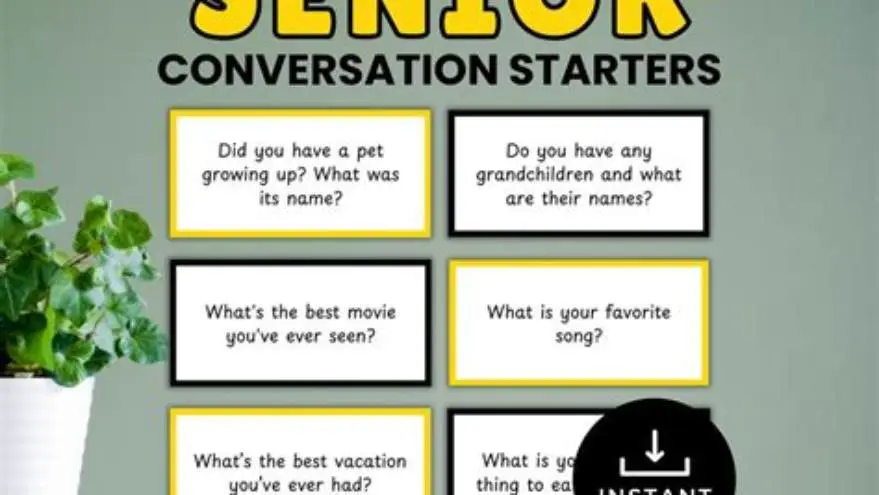
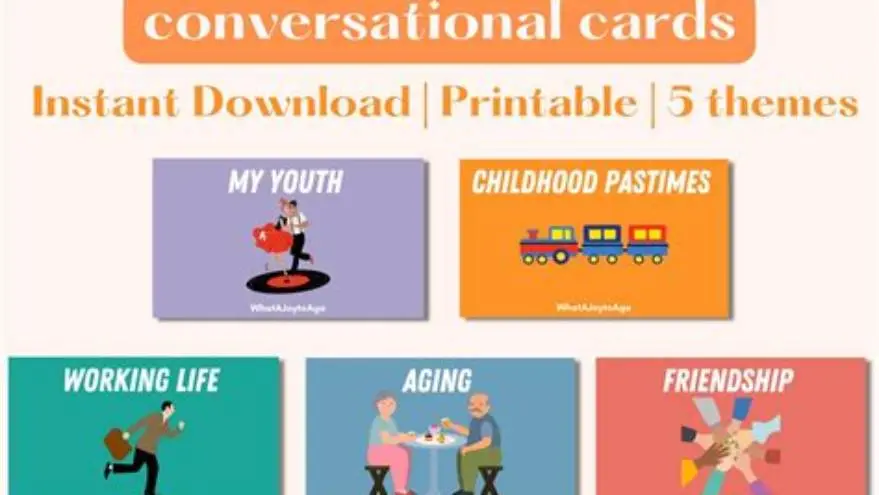
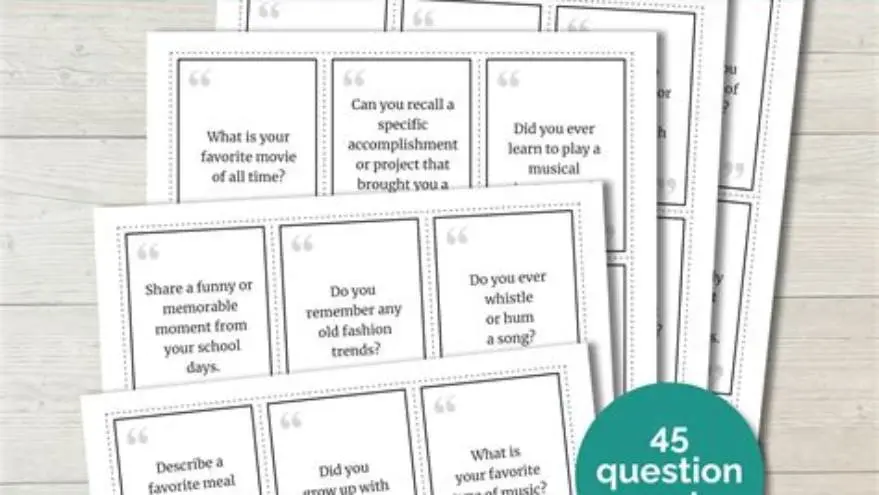
Conversation cards with a photo or a short prompt work the same way. The image of a beach or a question about favorite seasons gives the person a visual anchor. They can describe what they see, share a feeling, or change the subject to something the image reminds them of. The card does half the work.
Activities also signal that this is time spent together, not an interrogation. Sorting cards, matching pictures, or folding a puzzle keeps hands busy and takes the pressure off eye contact. Many people find it easier to talk when they're doing something else at the same time, and dementia doesn't change that.
Examples of conversation prompts linked to common dementia-friendly activities
Start with the exact request: conversation starters for people with dementia. Pair a prompt with an activity the person can see or touch. The object gives them a concrete place to begin.
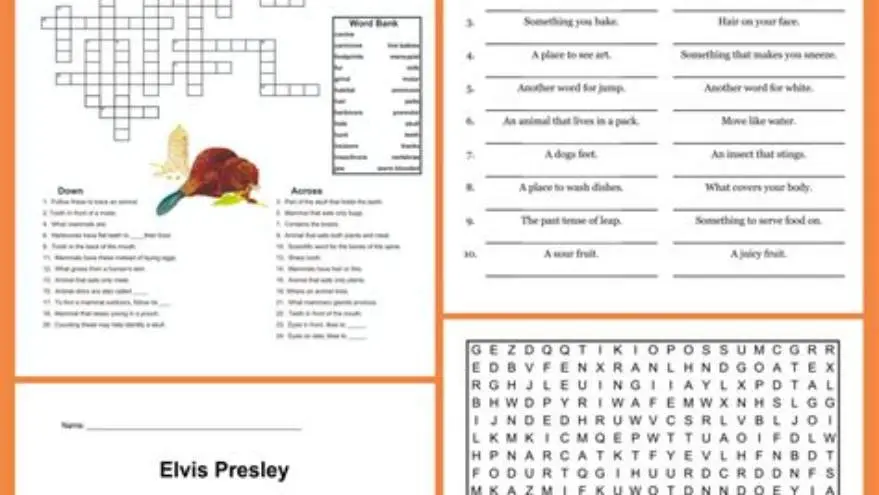
For a word search with a food theme, ask: "Which of these foods was your favorite at picnics?" or "Did you ever bake bread?" The words sit on the page, so the person can point or read one aloud even if they don't speak more.
For a large-piece puzzle, try: "What do you think this will be?" or "Do you like the colors here?" For conversation cards that show scenes, read the card and then offer a choice. Say, "I like fall. Were you more of a summer or winter person?" There is more on conversation cards for dementia reminiscence in a separate guide.
Use sorting tasks to give choice and control. Ask, "Which pile do you want to start with?" or "Do you prefer these blues or these greens?" For sensory objects ask about the immediate sense: "Does this smell like lavender to you?"
- Word search: "Which word here reminds you of home?"
- Puzzle: "What do you think this picture will be when it's done?"
- Conversation card: Read it, wait, then offer two choices
- Sorting task: "Which color do you want to work on first?"
- Photo or sensory object: "What do you notice about this one?"
How to use objects or puzzles to spark dialogue
Treat the object as the third participant. You both look at it and react. That removes pressure to produce memory on command.
Place the activity where both of you can see it. Lay a conversation card flat, spread the puzzle, or show sorting pieces. Let the person point or pick before you ask a question. We go through reminiscence conversation cards for dementia step by step elsewhere on the site.
Ask about a visible detail. Say, "I see tomatoes in this picture. Did you grow any?" or "This looks like a summer day. Do you like being outside when it's warm?" The object supplies the topic and your question opens the door.
If they answer with a single word, expand gently without correcting. They say "Yes." You say, "Me too. I love tomatoes in summer." Follow their lead if they misidentify something. If they call a lake a river, talk about rivers.
Use vintage or themed puzzles when you want reminiscence without prompting. A large-print crossword clue about an old song, a word search with decades-old brand names, or picture matching with vintage items often invites a comment without a direct question. We cover pdfs for printable dementia activities in its own article.
How to adapt prompts based on mood and cognitive level
Mood and cognitive load change through the day. Watch for signs of frustration such as pushing the activity away, sighing, or looking elsewhere. Shift before the moment sours.
On an alert day, use prompts that invite a short story. Ask, "Tell me about a time you went to the beach" or "What did you like to cook for Sunday dinner?" If they stall, offer two simple choices.
On a low-energy day, switch to yes/no or preference prompts. Ask, "Do you like this color?" or "Does this card remind you of anything?" Pointing or a nod counts as full participation. If that feels like too much, try commenting aloud instead: "This puzzle has nice colors." There is more on 1950s reminiscence activities seniors in a separate guide.
Match task complexity to ability. Someone early in memory loss can handle open-ended cards. Someone further along does better with a single image and a simple prompt like "What do you see here?" or with tactile objects they can touch.
| Mood or energy level | Activity type | Prompt style | Example |
|---|---|---|---|
| Alert, engaged | Conversation card, word search | Open-ended, invites story | "Tell me about your favorite holiday." |
| Calm, moderate energy | Puzzle, sorting task | Specific, tied to the object | "Which piece do you want to try next?" |
| Tired, low energy | Photo card, sensory object | Yes/no or preference | "Do you like how this feels?" |
| Restless, anxious | Simple sorting, textured items | Commenting aloud, no question | "This fabric is so soft." |
Using a printed kit to keep prompts varied and easy to find
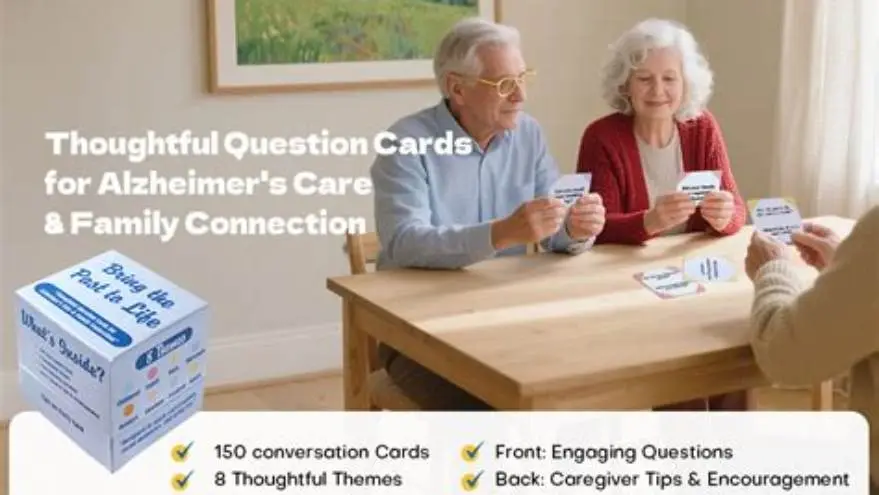
A printed kit removes the scramble to invent something each day. Keep a folder with conversation cards, simple puzzles, and planning pages at different difficulty levels. You match the activity to the moment faster.
Choose print that respects adult identity. Use large print, real-word word searches, and photography that feels familiar. Avoid childish images. The person gets engaged without feeling talked down to.
Print multiples of a favored page. If a card sparks a good exchange, you can reuse it that week. A daily planning page gives routine without rigidity for people who like structure.
A caregiver guide in the kit should show how to introduce activities and how to change prompts when one doesn't land. The kit supports connection and calm engagement. It does not replace companionship, and it is not a therapy device.
What to say when a prompt doesn't work
Not every prompt will land, and that's normal. The person may not be in the mood, the topic might not interest them that day, or the cognitive load might be too high in that moment. When a prompt gets no response, your next move matters more than the prompt itself.
Wait five to ten seconds before repeating or rephrasing. Processing time stretches with dementia, and what feels like silence to you may be the person working toward an answer. If they still don't respond, try a simpler version of the same prompt or offer a choice. "Did you like the beach or the mountains?" is easier than "Where did you like to go on holiday?"
If the second attempt also gets nothing, change the subject entirely or switch activities. Say something neutral such as "Let's try a different card" or "How about we look at this puzzle instead?" and move on without fuss. Lingering on a failed prompt signals that something went wrong, and the person will feel that even if they don't remember the specifics.
Sometimes the best response to silence is to answer your own prompt aloud. "I always liked spring best. The flowers coming back felt like a fresh start." This keeps the moment from feeling empty and gives the person something to react to if they want to. They might agree, disagree, or offer their own memory once they've heard yours.
If the person seems upset or agitated after a prompt, acknowledge it plainly. "That one didn't feel right, did it? Let's do something else." Then offer a calming activity or a break. The relationship matters more than any single conversation, and pushing through frustration damages both.
Still wondering?
How many conversation prompts should I try in one sitting?
Start with one or two and watch for engagement. If the person responds and seems interested, you can continue with related prompts for 10 to 20 minutes. If they look away or stop responding, that's the signal to wrap up. Quality matters more than quantity, and a single good exchange is better than five that feel forced.
What if the person gives the same answer to every prompt?
That's common, especially if one memory or phrase feels safe and familiar. Acknowledge the answer each time, then gently try a prompt about a different topic or switch to an activity that doesn't require verbal responses, such as sorting or a simple puzzle. Repetition isn't a failure; it's where the person is that day.
Can I use conversation prompts with someone who has stopped speaking much?
Yes, but shift to prompts that invite nonverbal responses. Show a card and ask, "Do you like this one?" and accept a nod, a smile, or a gesture. Commenting aloud without expecting an answer also works: "This picture is peaceful" gives connection without pressure. Touch and eye contact carry the conversation when words don't.
Should I correct the person if they misremember something during a conversation?
No. If they say they visited a place they never went to or name the wrong decade, let it stand. The feeling of the memory matters more than the facts, and correcting them brings frustration and shame. Follow their version of the story and ask about details within it instead.
How do I know which difficulty level to start with in an activity kit?
Start with the middle level and adjust from there. If the person completes it easily and stays engaged, try the next level up. If they look confused or frustrated within a minute or two, move to the simpler level. The right level is the one where they succeed with a little effort but don't struggle.
Ready to try it? It provides ready-made conversation cards, puzzles at three levels, and a guide for adapting prompts to mood and ability, all printable and reusable.
Get the activity kit