Speech Therapy Activities for Dementia That Keep Talk Flowing
Dementia activities from speech therapy work best when they are short, spoken aloud and built around words the person already knows. Short sessions, often around 15 to 20 minutes, tend to work better than long ones. Picture cards, naming games and simple conversation keep talking going without turning the kitchen table into a test.
On this page (8 sections)
Part of our guide on activity book for adults with dementia
Key figures
- Session length
- short, once a day
- Wait for answers
- up to 20 seconds
- One question
- at a time
- Best prompt
- a real object
- When to call
- sudden change: doctor
Quick recap
- Hold sessions short and stop while the person is still enjoying it.
- One idea per sentence, one question at a time, and a full pause for the answer.
- Real objects and picture cards beat worksheets when a word will not come.
- Sudden change in speech is a reason to call the doctor, not to drill harder.
What speech therapy activities for dementia look like in practice
Speech therapists, called speech-language pathologists, do not hand a person with dementia a workbook and walk away. Talking, naming, listening and reading aloud make up the work, shaped around what the person can still do. They pick tasks the person can finish, then leave the family with the same practice to repeat at home. Success looks like dinner talk and answers when spoken to.
Most families come to this work after a moment that stings. Reaching for a word, not finding it, then going quiet for the rest of the meal: that is the moment. Games and cards give it a gentler shape. Talking turns into a game with no wrong answer, where a near miss still counts and a hint is part of the fun.
Families often ask whether these activities belong to a professional alone. Licensed therapists should assess the person first and set the plan, since swallowing trouble and hearing loss can hide behind the same silence. Ask their doctor for a referral if none has been made. Once the plan exists, daily practice happens at home, in short bursts, with cards and games a family can print. Therapists set the direction. Families keep the talking going between visits.
Why words go missing first
Dementia changes the parts of the brain that handle language, memory and attention. Word-finding trouble usually shows up first. Someone knows the kettle, can see it and wants the word for it, yet the word arrives late or not at all. Near words may come out instead. Getting to the words has become slow and unreliable. People in this spot often ask about matching activities to dementia stages as well.
Group talk gets harder too. Holding several voices at once means carrying a heavy load, and that load grows heavier as the day wears on. Some people speak less, not because they have nothing to say, but because starting costs more effort than it used to. Helpers who know this make room for the words that still come.
Hearing and eyesight add to the trouble, and both are easy to miss. Someone who cannot hear the question clearly looks confused, and the confusion gets blamed on memory. A hearing aid with a dead battery does quiet damage all day. Check both before deciding an activity has failed. Words only reach a person who can hear the prompt and see the card.
Level matters as much as the activity itself. Too hard ends in silence, and too easy feels beneath an adult. Print activities at two or three difficulty levels so helpers can match the day. Helpers can start low on a hard day and step up when the person is sharp. Family photos make a free version of the same idea. We cover activities to calm dementia patients in its own article.
Word-finding games that work at the kitchen table
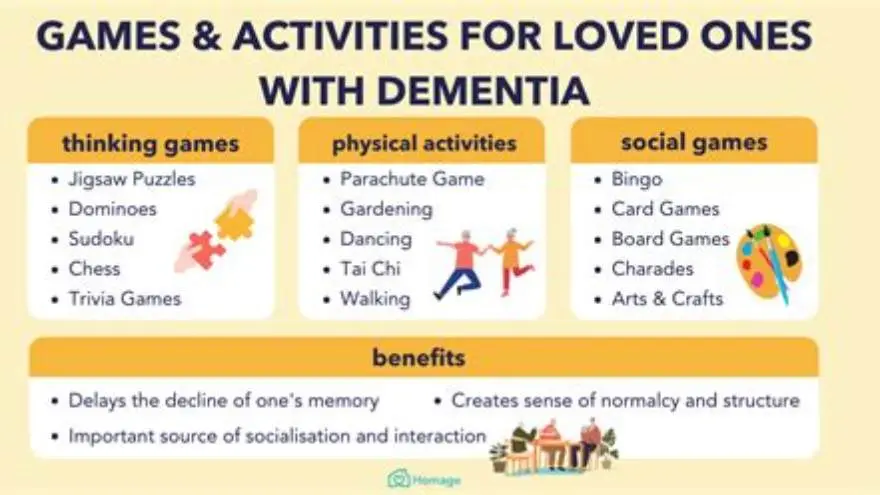
Naming games are the simplest speech activity, and they need no special kit. Lay five familiar objects on the table: a spoon, a key, a cup, a pair of glasses, a photo. Have the person name each one, then cover them and ask which ones they remember. Take turns, and let the helper miss one on purpose. Reaching for the word is the point of the game.
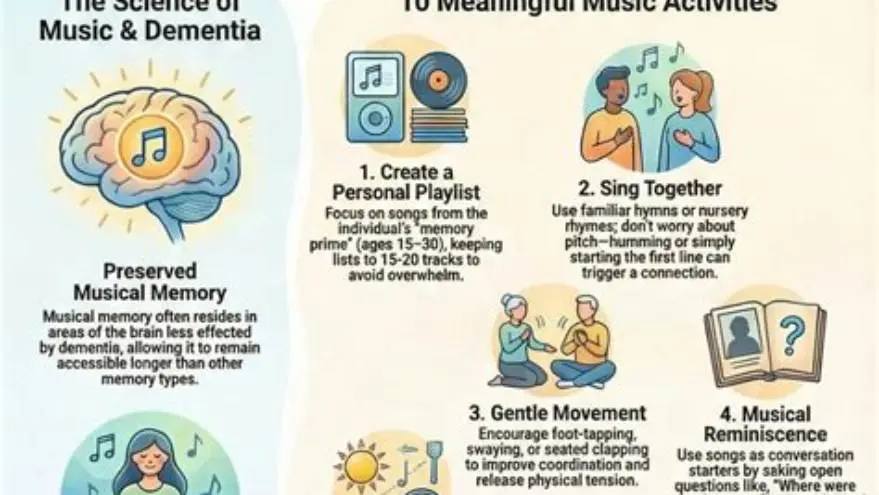
Category games stretch the same muscle a different way. Pick a group, such as fruit, animals or things in a kitchen, and take turns naming one each until somebody runs dry. Count together at the end, without keeping score across days. Try the same game with songs: hum the first line of a tune everyone knows and let the person finish it. Music often reaches words that plain questions cannot.
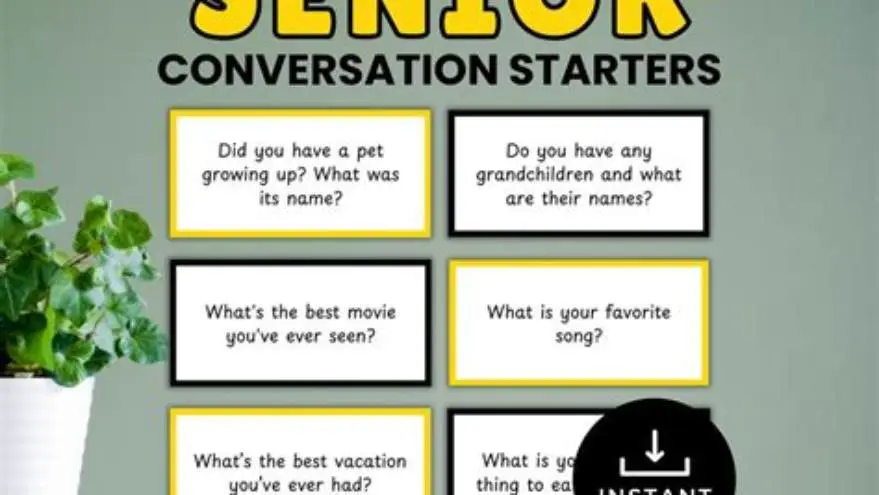
Show and tell turns an object into a conversation. Hand the person something with a past: a photo, a tool, a recipe card in their own handwriting. Prompt with three small questions: what it is, where it came from, who used it. Two minutes of talk about one object beats ten minutes of flash cards. The object prompts, so the helper can listen instead of quiz. Hidden words often walk out on their own while the person tells the story. It helps to understand activities music for dementia before going further.
- Naming tray: five familiar objects, named aloud, then covered and recalled.
- Category round: one group at a time, taking turns, no score kept.
- Finish the line: hum a familiar tune and let the person sing the next words.
- Photo talk: one old photo, three questions, two minutes of conversation.
Picture cards, boards and books that do the talking
When a word will not come, a picture can carry it. Picture cards show one clear photo or drawing per card, with the word printed large underneath. Hold up the card and say the word together. Cards work because they take memory out of the job. Answers sit in front of them instead of hiding in their head. Print cards at 18 pt or larger, one word per card. Small sets work better: ten cards the person uses often beat fifty they never touch.
Put the day's words in one place with a communication board. Build it on a single sheet: morning, food, drink, help, tired, done, plus the names of the people who visit most. Point while you speak, and let the person point back. Boards suit people whose speech has thinned to a few words, since pointing still answers. Hang the board where the person sits. Boards nobody can reach are decoration, and decoration does not start conversations.
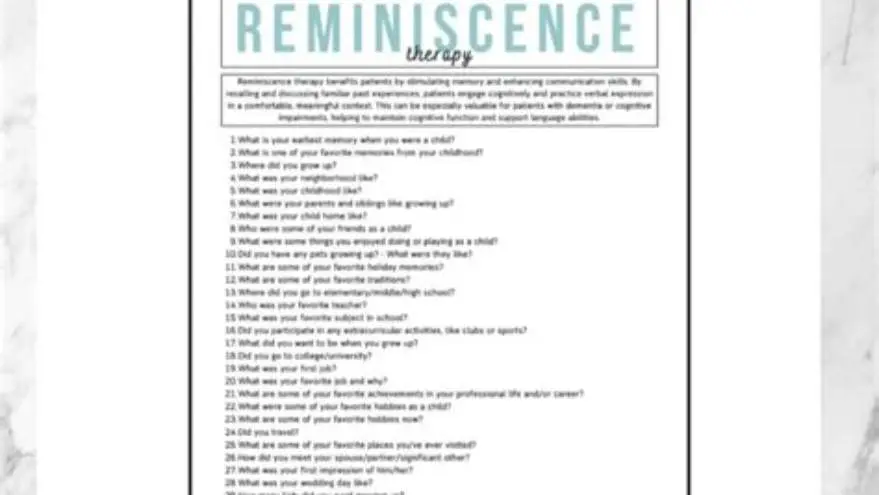
Memory books hold the facts a person wants to keep saying. Each page covers one person or place, with a photo, a name in large print and one or two lines about them. Read it together at the same time each day, and let the person turn the pages. It gives them words for the people they love most, ready to hand. Old pages still comfort, even when the facts in them have moved on. It helps to understand conversation starters for people with dementia before going further.
| Stage | What you may notice | What helps |
|---|---|---|
| Early | Occasional trouble finding words | Talk directly, give time, ask what help they want |
| Middle | Repeating questions, losing the thread | One question at a time, short steps, written notes |
| Later | Few words, more gesture and expression | Point, show the object, answer the feeling |
How to run a short session without a fight
Short beats long. Once a day, a brief session gives the person practice without wearing them out. Pick the same time each day, after a meal or a rest, when the person is most awake. Sit beside them, not across a desk, and put the phone in another room. If the person turns away or grows quiet, stop. End well and the session gets repeated.
Open with something easy and familiar: a greeting, a song, a familiar card. Then comes the harder work: naming, categories, a short story told together. Say little yourself. Give one idea per sentence, one question at a time, and a pause long enough to feel awkward. Wait much longer than feels natural, often ten seconds or more, before repeating or rephrasing. Waiting is the activity working.
Close with an easy win, even if the cards are only half done. Choose a favourite song, a card they always get right, a joke they still tell. Put the cards away together, say what you will do tomorrow and mean it. Tomorrow matters more than today, because the habit is what keeps the talking going. Three sessions a week, kept up for a month, beat one perfect week followed by nothing. There is more on crafts for seniors with dementia in a separate guide.
- Sit beside the person with cards ready and the phone away.
- Open with one easy win: a greeting, a song, a card they know.
- Work for ten minutes: naming, categories or a short story.
- Pause much longer than feels natural after each question before repeating it.
- Close with one last easy win, then put the cards away together.
When to call the speech therapist again
Fading speech over a few weeks, new trouble swallowing, coughing at meals or a voice that turns hoarse all deserve a call. So does a person who stops trying to talk at all. None of these is a reason to push harder with games. Those are reasons to ask a professional what has changed. Call the therapist who set the plan, or ask their doctor for a new referral. Say what changed and when it started.
Therapists can also help when the family is stuck. Maybe the person refuses every activity, or the helper dreads the daily session, or two family members disagree about how much to push. Bring those troubles to the next appointment. Levels can change, activities can swap, and the family can learn a calmer way to prompt. The Alzheimer's Association helpline can point you to a trained counselor. Use it. That line stays open for families who need a person to talk to.
Carry on even when progress is hard to see. These activities do not bring back the words that are gone. They do not slow the disease either. Conversation stays possible, and the person stays in it a little longer. Modest and honest, that is the goal. Daily talk together, even for twenty minutes, gives the person something no worksheet can: a reason to keep trying to speak. Same time tomorrow, same chairs. Habit does the rest.
Still wondering?
Can speech therapy activities help someone with late-stage dementia?
Yes, in a smaller way. Even with few words left, a person can still point at a picture, hum a tune or squeeze a hand in answer. Use objects they can hold, and watch their face for the answer. Goals shift from words to connection, and that still counts.
How often should we do these activities?
Daily practice works for most families, in short sessions. Three sessions a week still help if daily practice is too much. Same time, same chairs, same easy opening. Skip a day when the person is tired or unwell, and start again tomorrow without guilt.
What if the person gets upset during a game?
Stop the game, not the visit. Pause quietly for a minute, offer a drink or a walk, and try something easier later. Upset usually means the task was too hard, the room was too noisy or the person is tired. Change one of those three things, and keep the next session shorter.
Do we need special training to do this at home?
One visit sets the plan: the therapist shows the family how each activity works, and the family repeats it at home. Ask their doctor for a referral if no therapist has been involved yet. Nothing more is needed than cards, a table and patience.
Ready to try it? Its conversation cards and three levels give a family ready-made speech activities that match the person's day.
See the activity kit