Word searches and memory: which brain skills improve and how to use prompts
Word searches can support attention and short-term recall; learn how to use prompts to boost engagement for older adults and what the research says about realistic benefits.
Word searches can support attention, visual scanning, and retrieval speed, especially when used regularly and combined with prompts that activate personal memories or context. Benefits tend to be modest and task-specific rather than a cure for memory loss; evidence and expert guidance emphasize regular mental activity but note that transfer to long-term memory and everyday function is limited (see National Academies of Sciences, Engineering, and Medicine, 2017; NIH/NIA).
On this page (8 sections)
- Key takeaways
- Do word searches help with memory
- Which brain skills improve with word searches
- How to use memory care word searches with reminiscence prompts
- Options for large-print word searches for older adults
- How to create custom large-print word searches easily
- Practical tips for using word searches to support memory
- Questions people still ask
Part of our guide on download a printable word search
Word searches support attention and retrieval speed; pairing them with personal prompts increases engagement, though benefits are modest and task-specific rather than a cure for memory loss.
| Typical puzzle word count | Varies widely depending on design; some puzzles list as few as 6–10 words while others include 30+ (depends on grid size, overlap, and whether themes use short or long words). |
|---|---|
| Print size | 16–24 pt font is commonly recommended for older adults to reduce strain, but needs vary by individual and device/printer settings. |
| Sessions per week | Many activity guides suggest regular practice (for example, several times per week); this is a commonly recommended schedule rather than an evidence-based prescription (see Alzheimer’s Association, NIH/NIA guidance). |
| Session length | Short, focused sessions (10–30 minutes) are typical to avoid fatigue; adjust to the individual’s stamina and engagement level. |
| Prompt types | Images, topics, personal questions tied to the puzzle theme (use familiar, positive cues) |
Key takeaways
- Word searches primarily train focused visual attention, pattern recognition, and short-term/working memory (holding targets while searching).
- Memory-care word searches plus reminiscence prompts engage personal memories and social interaction, increasing motivation and meaningful practice.
- Large-print puzzles reduce eye strain and support sustained attention for older adults with low vision.
- Combining word searches with conversation or memory cues can enrich retrieval practice but does not replace clinical treatment for significant memory impairment.
- Customize puzzles to interests to improve motivation and the likelihood of consistent practice.
Do word searches help with memory
Word searches exercise focused visual attention, pattern recognition, and aspects of working memory — for example, keeping a list of target words in mind while scanning a grid. These processes support the speed and accuracy of searching and identifying information, which can translate to improved performance on similar tasks (processing speed and search efficiency). Expert reviews and national committees emphasize that cognitive activities often yield task-specific gains rather than broad improvements across all kinds of memory or daily functioning (National Academies of Sciences, Engineering, and Medicine, 2017: https://www.nap.edu/catalog/24782).
Puzzle characteristics vary widely. Word counts and grid sizes are not standardized across publishers: some word searches list fewer than 10 target words in a small grid, while others use 20–40 words and larger grids. Complexity depends on word length, whether words overlap, allowed directions (horizontal, vertical, diagonal, backwards), and filler letter patterns. Because of this variability, it’s more accurate to say that word-count and grid-size choices should match the solver’s ability and goals rather than rely on a single “typical” number.
When people talk about cognitive gains from word searches, the most consistent outcomes are modest improvements in attention, processing speed, and retrieval speed for tasks similar to the training activity. Large reviews conclude that structured cognitive training can improve performance on trained tasks and sometimes on closely related abilities (e.g., processing speed) but evidence for generalized long-term memory improvement or prevention of dementia is limited (National Academies, 2017; NIH/NIA overview on brain health: https://www.nia.nih.gov/health/what-you-can-do-stay-sharply).
Recommendations about how often to practice are commonly given by clinicians and activity specialists as guidance to support routine mental engagement (for example, several short sessions per week). These are practice-based recommendations aimed at maintaining a habit of mental activity; authoritative sources emphasize that a specific frequency (e.g., 3–5 times weekly) is not a proven clinical dose backed by randomized controlled trials for word searches specifically. The Alzheimer’s Association and NIH encourage regular cognitive and social activity as part of a healthy lifestyle, but they stop short of prescribing an evidence-based schedule for every person (Alzheimer’s Association, Brain Health Resources: https://www.alz.org/help-support/brain_health). We cover large grid sudoku and word search in its own article.
Word searches do not directly restore lost memories. Instead, by exercising attention and retrieval speed in a low-risk way, they can help maintain the cognitive processes that support everyday tasks like reading or locating items. The best outcomes occur when puzzles are neither too easy nor too difficult — an appropriate challenge level keeps users engaged without creating frustration, which is important for sustained practice.
Older adults, people with mild cognitive impairment, and younger adults may experience different patterns of benefit. For many, gains manifest as faster or more accurate performance on similar search tasks; for others, the social and motivational aspects (engagement with a caregiver, conversation prompted by the puzzle) may be the most meaningful benefits. Measuring progress in a specific setting is practical: time to completion and error rate on comparable puzzles are useful within-person metrics to track changes over weeks or months.
Which brain skills improve with word searches
Word searches primarily exercise visual attention and selective scanning: the ability to focus on a visual field, detect patterns, and ignore distractors. These skills are relevant to everyday activities that require focused visual search (finding items on a shelf, reading small print, scanning a form). Reviews of cognitive interventions note that tasks emphasizing attention and processing speed are among the areas where training shows the clearest, most consistent task-specific gains (National Academies, 2017). If that sounds like your situation, read up on older adults themed puzzles next.
Working memory is also engaged to the extent that solvers must hold target words in mind while scanning the grid. This dynamic — keeping multiple items active while performing a search — is what we mean by “working memory” in this context, and improvements tend to be modest and often specific to the practiced task rather than generalizable to all memory functions (see NIH/NIA: https://www.nia.nih.gov/health/cognitive-health-and-older-adults).
Word searches emphasize retrieval speed and recognition more than the encoding and consolidation processes needed for new long-term memory formation. In other words, they are good practice for being able to find and identify information quickly (retrieval of familiar words or patterns), but they are not a substitute for learning strategies that aim to create durable new memories.
Executive functions — planning where to look next, switching search strategies, persevering when a word is hard to find — are also recruited. These higher-level processes can benefit from repeated practice on tasks that require strategic searching and adaptation. If that sounds like your situation, read up on easy word search for seniors with large print next.
Gains are generally small to moderate and depend on baseline ability, task difficulty, and practice frequency/intensity. Because published research often studies structured cognitive-training programs rather than casual puzzle play, reported effects vary. When measurable improvements are observed in research, they are frequently limited to processing speed, attention, and trained task performance rather than broad improvements in episodic long-term memory (National Academies, 2017).
Rather than presenting an unverifiable uniform percentage improvement, a practical way to assess change is to measure time and accuracy on comparable puzzles: track baseline time-to-complete and error rate, then retest periodically under similar conditions to see whether speed or accuracy improves. This within-person approach avoids reliance on broad population percentages that depend strongly on study design, participant characteristics, and training length.
| Skill | Role in Word Searches | Benefit |
|---|---|---|
| Visual attention | Scan grid for word patterns | Improves focused scanning and detail spotting (task-specific) |
| Working memory | Hold target words in mind | Supports short-term recall while searching |
| Processing speed | Quickly recognize words | Speeds up recognition and response on similar tasks |
| Executive function | Plan search strategy | Improves strategic approach and cognitive flexibility |
How to use memory care word searches with reminiscence prompts
Memory-care word searches pair puzzles with prompts — photographs, simple questions, or objects tied to the puzzle theme — to encourage personal storytelling and social interaction. The prompts aim to activate autobiographical memories and create a richer, more meaningful experience than puzzle-solving alone. If that sounds like your situation, read up on extra large print word search for low vision next.
For example, a garden-themed puzzle accompanied by photos of a participant’s garden, seed packets, or simple prompts like “Tell me about your favorite flower” invites reminiscence. This combination engages both retrieval of personal memories and the attentional work of the puzzle, which can increase engagement and emotional connection.
Caregivers and activity staff should use prompts that are familiar, positive, and tailored to the person’s life. When prompts are well matched, they can encourage conversation that taps episodic memory in ways that go beyond the cognitive demands of the puzzle itself.
Evidence on the benefits of reminiscence and life-story work suggests social and emotional benefits (increased engagement, mood improvement) and anecdotal memory triggers, though rigorous trials quantifying effects on long-term memory are limited. Still, in practical caregiving settings, reminiscence prompts are widely used because they improve participation and quality of life for many individuals with cognitive impairment (see guidelines and reviews on psychosocial interventions, e.g., Alzheimer’s Society resources and systematic reviews of reminiscence therapy). The other half of this decision is word search easier reading tips.
If prompts are too complex or not personally relevant, they may confuse or frustrate the person. Observe responses and simplify prompts when needed, and use prompts as conversation starters rather than tests of memory.
Options for large-print word searches for older adults
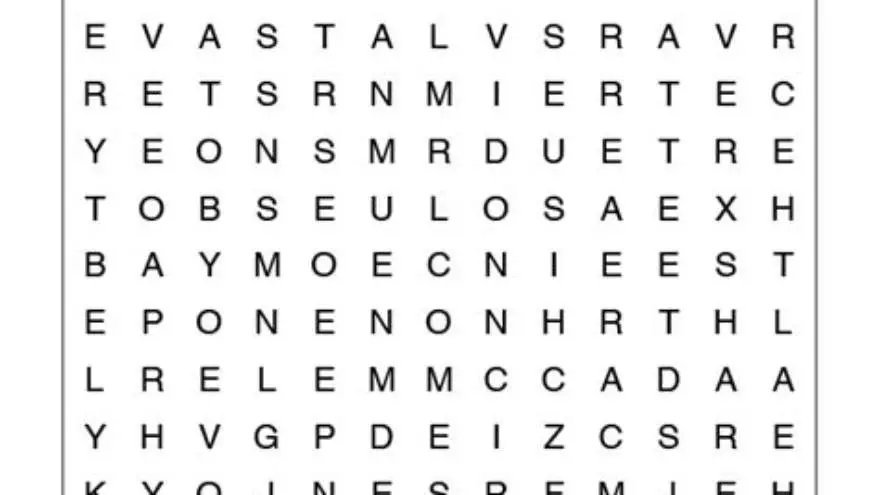
Large-print puzzles reduce eye strain and improve visual clarity, which helps people stay engaged longer. Fonts in the range of 16–24 points are generally comfortable for many older readers, but individual needs vary based on vision, contrast sensitivity, and device or print quality.
Selecting word lists relevant to the solver’s interests or past increases motivation. Themed puzzles (holidays, hobbies, professions) also provide natural prompts for conversation and reminiscence. Relevance is a strong predictor of continued participation, which is important because sustained, enjoyable practice is more likely to be maintained.
You can find printable large-print word searches from reputable senior-activity providers or create your own. When using online resources, verify that puzzles are formatted for clear, high-contrast printing and test a sample page before printing many copies.
Creating your own puzzles lets you control word length, count, and layout so puzzles match ability. Free online generators are available; paid software can automate formatting and produce consistent large-print templates if you plan to make many puzzles regularly.
How to create custom large-print word searches easily
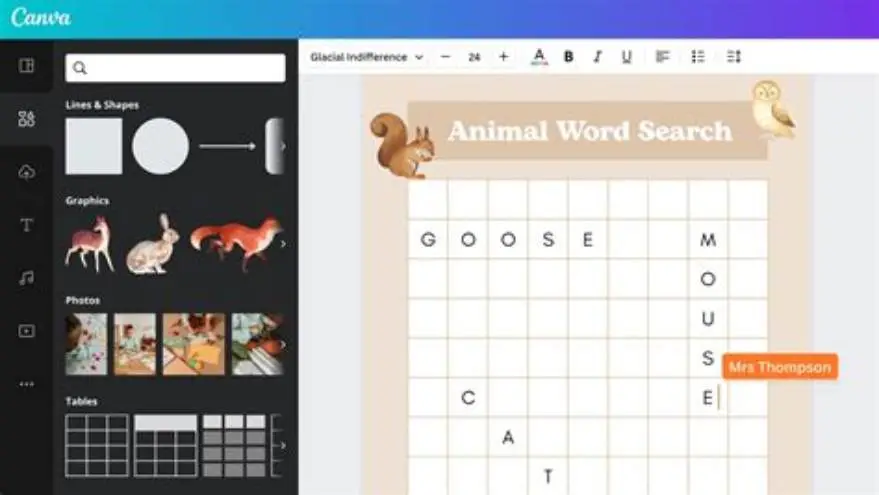
Manual creation using free online puzzle generators is a cost-free option. Enter themed words, choose a print layout, and set font size at 16–24 pt for legibility. Double-check that the generated grid is clear when printed at the intended size.
Software tools and puzzle-creation services can save time if you make many puzzles. They often include templates, adjustable font sizes, and answer keys. Evaluate any commercial tool for usability and output quality before purchasing; cost is a trade-off against time saved.
When tailoring puzzles for memory-care settings, prioritize short, familiar words and a moderate word count so the task is achievable but still engaging. Test puzzles on one person first and adjust word count and grid complexity based on how comfortably they complete the activity.
- Speeds up puzzle creation (software)
- Includes large-print templates
- Automates answer keys
- Purchase cost for some software
- Puzzles are not a medical treatment
Practical tips for using word searches to support memory
Regular, enjoyable practice supports habit formation. Many activity guides recommend several short sessions per week as a practical routine (for example, 2–5 short sessions), but this is a general recommendation intended to encourage consistent engagement rather than a clinically validated dose specific to word-search puzzles (Alzheimer’s Association; NIH/NIA).
Combine puzzles with conversation prompts, photos, or object cues to deepen personal relevance and social interaction, which often increases motivation to continue the activity.
Use large-print puzzles and ensure good lighting and high contrast to reduce visual fatigue and frustration, especially for participants with low vision or attention issues.
Adjust difficulty to maintain an optimal challenge level: if the puzzles are too easy, the participant may lose interest; if too hard, they may become frustrated. Gradually increase difficulty as speed and accuracy improve.
Encourage a positive, supportive atmosphere and celebrate small successes to keep motivation high. The social and emotional benefits of shared activities are important and widely reported in caregiving practice.
- Session frequency - several short sessions per week is a common practical recommendation (not a proven clinical dose). See Alzheimer’s Association and NIH guidance for general brain-health advice.
- Print size - 16–24 pt supports visibility for many older adults.
- Difficulty level - moderate challenge maintains engagement.
- Use prompts - add personal photos or simple questions tied to puzzle themes.
- Emotional support - positive reinforcement encourages continuation.
Questions people still ask
Can word searches improve long-term memory?
Word searches primarily support short-term recall, working memory, processing speed, and attention. Evidence indicates benefits are generally task-specific; transfer to broader long-term memory formation or daily function is limited. For an overview of the evidence on cognitive training and transfer, see the National Academies report (2017) and NIH/NIA guidance on cognitive health (https://www.nia.nih.gov/health/what-you-can-do-stay-sharply).
What are reminiscence prompts in memory care puzzles?
Reminiscence prompts are images, questions, or topics tied to a person’s life included with puzzles to trigger personal memories and encourage conversation. They are used to increase engagement and social interaction; while they often improve mood and participation, rigorous evidence for long-term memory improvements is limited and mainly supports psychosocial benefits.
Are large-print puzzles better for seniors with memory issues?
Large-print puzzles reduce eye strain and improve readability, which can help maintain attention and reduce frustration. Choose sizes and contrasts that the individual finds easiest to read; 16–24 pt is a commonly recommended starting point.
How often should seniors do word searches for memory benefits?
Regular, short practice several times per week is a common recommendation to support habit formation and continued engagement. This advice comes from activity specialists and general brain-health guidance rather than a controlled trial specifying an exact therapeutic frequency for word searches. For general recommendations on mental activity, see NIH/NIA and Alzheimer’s Association resources.
Can I make my own word searches for family members?
Yes. Free online generators allow custom word lists and large-print output; paid software can streamline batch creation and formatting. Tailor word lists to the person’s interests to boost motivation and engagement.
Ready to try it? It simplifies creating large-print word searches with themed word lists and readable fonts, helping caregivers produce puzzles that match participants’ interests and abilities.
Create large-print puzzles easily