Gentle Minds Activity Kit: what it includes and who it helps
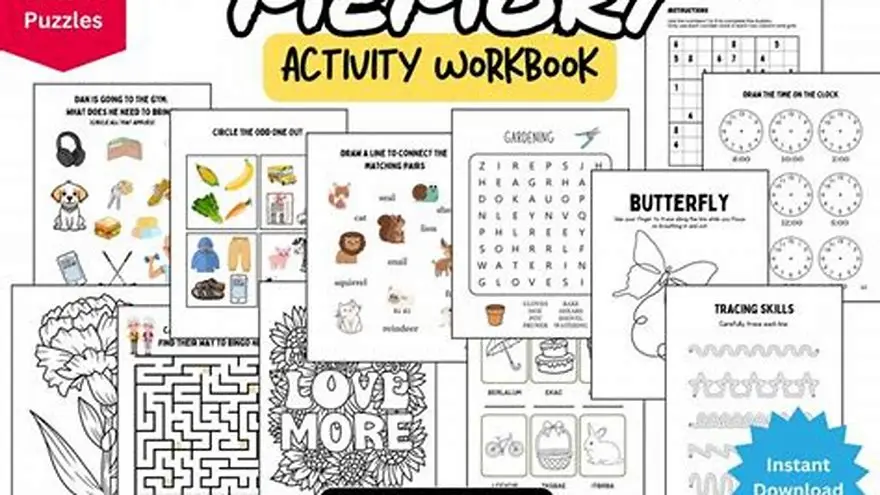
The Gentle Minds Activity Kit is a 130-page printable resource with activities at three difficulty levels, 48 conversation cards, daily planning pages, and a caregiver guide, designed for adults living with memory loss or other cognitive changes.
On this page (8 sections)
Part of our guide on large print word search printable for seniors
Key figures
- Total pages
- Over 130 printable pages
- Difficulty levels
- Three: Gentle, Easy, Steady
- Conversation prompts
- 48 cards
- File formats
- US Letter and A4
- Purchase type
- One-time, instant download
Quick recap
- Three difficulty levels let you match activities to current ability without trial and error
- Conversation cards prompt discussions without requiring correct answers
- Daily planning pages help structure the week and reduce caregiver decision fatigue
- All materials print as many times as needed for multiple users or sessions
- A caregiver guide walks you through how to introduce and adapt each activity
What activities are in the Gentle Minds Activity Kit
The kit contains over 130 pages of printable activities split across three difficulty levels. Each level targets a different stage of cognitive ability, so you can select materials that feel satisfying rather than frustrating. The Gentle level uses simple matching, sorting, and visual tasks with minimal text. Easy adds short-answer prompts, pattern recognition, and light recall exercises. Steady includes more complex puzzles, multi-step tasks, and activities that ask for planning or sequencing.
You also get 48 conversation cards designed to spark discussion without demanding correct answers. Topics range from childhood memories and favorite foods to seasons and holidays. Each card includes a prompt and follow-up questions, so even if the person struggles to recall specifics, the conversation can continue. These work well during mealtimes, before bed, or any moment when you want to connect without the pressure of a structured activity.
Daily planning pages help you organize the week. You write in activities, appointments, and meal ideas, then post the sheet where the person can see it. Repetition calms anxiety, and a visible schedule answers the same question before it's asked a tenth time. A caregiver guide explains how to introduce each activity type, adapt difficulty on the fly, and recognize when someone is frustrated versus engaged.
The materials print in both US Letter and A4 sizes. You print only what you need, when you need it, and reuse pages with different people or across weeks. Nothing is single-use, and nothing requires laminating unless you want to. The other half of this decision is extra large print word search for low vision.
Who the kit is designed for
The kit targets adults living with memory loss, including Alzheimer's, vascular dementia, and age-related cognitive decline. It assumes the user is an adult who spent decades working, raising families, and managing households. The activities avoid cartoon imagery, primary colors, and anything that feels like elementary school homework. Fonts are large, contrast is high, and instructions are short.
Family caregivers use the kit at home when they've run out of ideas or need a structured activity that doesn't require a trip to the store. Adult children print pages for parents who live alone or in assisted living. Activity directors in care homes use the conversation cards during small-group sessions and print daily planners for residents who benefit from routine. The kit also works for people with mild cognitive impairment who want to stay engaged but find standard crosswords or sudoku too demanding.
It's not suitable for children, even if they have developmental delays, because the content assumes adult life experience. It's also not therapy. The kit won't slow cognitive decline or reverse memory loss. It offers engagement, not treatment, and the activities work best when someone sits with the person to facilitate, encourage, and adapt on the spot. Before you commit to anything, it is worth looking at do word searches help with memory.
How the activities support engagement and memory
The activities provide structured interaction without the frustration of failure. Each page has something to do (circle, match, color, sort) and doing it feels productive even if recall is poor. Engagement here means sustained attention for 10 to 30 minutes, depending on the person and the task. That's long enough for a caregiver to prepare a meal, make a phone call, or take a mental break.
Conversation cards support reminiscence, which taps long-term memory rather than recent recall. Asking about a first job or a favorite holiday often pulls up stories that are vivid and intact, even when the person can't remember breakfast. Sharing those stories reinforces identity and gives caregivers a window into the person's past. The cards are open-ended, so there's no wrong answer and no test to pass.
Daily planning pages reduce repetitive questioning. When someone asks what's happening today, you point to the sheet. They read it, relax, and ask again 15 minutes later. You point again. The page absorbs the repetition so you don't have to summon patience for the twentieth time. Over days, some people internalize the routine and check the sheet independently. For the detail, see our notes on word searches themed for older adults.
The kit doesn't improve memory. It offers moments of focus, connection, and calm. Those moments matter when cognitive decline makes every day harder for everyone involved.
How to use the kit week to week
Start by printing two or three pages from each difficulty level. Sit down with the person and try one together. Watch how they respond. If they finish quickly and ask for another, the level is too easy. If they stare at the page without starting, it's too hard. If they work through it with occasional prompts, you've found the right fit. Keep a folder of printed pages so you're not scrambling when you need an activity.
Use the conversation cards during transitions: after a meal, before a nap, or when the person is restless. Pick a card, read the prompt aloud, and let the conversation unfold. If they struggle to answer, share your own memory tied to the topic. That often jogs something loose or simply shifts the mood. Keep the cards in a small box or envelope so they're easy to grab. The other half of this decision is combining sudoku with word searches.
Fill out a daily planning page at the start of each week. Include meals, activities, appointments, and small tasks like watering plants or folding towels. Post it somewhere visible: on the fridge, a bulletin board, or the dining table. Point to it whenever the person asks what's happening. Update it as the week changes, and start a fresh one each Sunday or Monday.
The caregiver guide suggests adaptations for each activity type. If matching is too easy, ask the person to explain why two items go together. If a puzzle is too hard, do it side by side and let them place the last few pieces. The goal is engagement, not completion. Some days nothing will work. That's normal.
- Print a few pages from each difficulty level and test them together.
- Choose the level where the person works with occasional prompts, not constant help.
- Keep a folder of printed pages and a box of conversation cards within reach.
- Fill out a weekly planning page and post it where the person will see it multiple times a day.
- Adapt difficulty on the fly: simplify the task or do it together when frustration starts.
What the kit does not include
The kit is printable only. You need a printer, paper, and ink or toner. If you don't have a printer at home, you can print pages at a library, print shop, or office supply store, but that adds a step and a cost each time you need more materials. The kit doesn't come with physical copies, and there's no version that ships to your door. People in this spot often ask about word search puzzles for people with macular degeneration as well.
It doesn't include sensory activities like scented cards, textured objects, or music playlists. If the person benefits from tactile or auditory engagement, you'll need to source those separately. The kit also doesn't cover physical exercise, games that require multiple players, or activities that need props like dice, timers, or craft supplies.
There's no personalization built in. The conversation cards use general prompts, so you may need to adapt questions to fit the person's background. A farmer won't connect with prompts about city life, and someone who never traveled won't have much to say about vacations. The caregiver guide acknowledges this but doesn't offer customized versions.
The kit won't solve behavioral issues like aggression, wandering, or sundowning. Those problems require strategies beyond printable activities, and sometimes they need medical evaluation. The kit gives you something to do when the person is calm enough to sit and focus, not a tool for crisis moments.
Alternatives and how they compare
Standard puzzle books for seniors from bookstores or online sellers cost $8 to $15 each and include crosswords, sudoku, or word searches. Print is often larger than mass-market editions, but the difficulty is fixed. You can't adjust it when the person struggles, and once a page is marked, it's done. If the person's ability changes week to week, you may buy several books and use only a fraction of each.
Free printable activities exist on dozens of websites. You search for "dementia activities" or "large-print puzzles," download PDFs one at a time, and assemble your own collection. Quality varies wildly. Some pages are too small, some too cluttered, and many lack caregiver guidance. You spend time searching, evaluating, and printing instead of engaging with the person. That time adds up.
Memory games and apps on tablets or phones work for some people, but screens confuse others. Touchscreens require fine motor control and an understanding of swipe gestures. Many older adults with memory loss find tablets frustrating or refuse to engage. Paper activities sit on the table, visible and tangible, and require only a pen or pencil.
The Gentle Minds Activity Kit sits between free options and therapeutic programs. It's more organized and intentional than random printables, less expensive than subscription services, and printable as many times as you need. We made it, so this isn't a neutral recommendation - it solves the problem we see caregivers and activity directors face most often: finding age-appropriate, flexible activities that don't require a degree in occupational therapy to use.
| Option | Adjustable difficulty | Print cost per use | Setup time |
|---|---|---|---|
| Gentle Minds Kit | Three levels included | Ink only, reuse pages | Minutes, one download |
| Store-bought puzzle books | Fixed, one difficulty | One-time purchase, mark once | None, ready to use |
| Free printables online | Varies by source | Ink only, search each time | High, search and evaluate |
| Tablet apps or games | Often adaptive | Subscription or one-time fee | Low to moderate, device required |
Still wondering?
Can I use the kit with someone who has advanced dementia?
The Gentle level works for some people with advanced dementia, especially the matching and sorting tasks. If the person no longer engages with printed activities, the conversation cards may still work during one-on-one time. Watch for signs of frustration and stop if the activity feels like a test rather than something enjoyable.
Do I need to sit with the person while they do the activities?
Most people with memory loss need prompts, encouragement, or help interpreting instructions. Sitting nearby lets you adapt difficulty, redirect frustration, and keep the activity feeling social rather than isolating. A few people at earlier stages may work independently for short stretches, but check in regularly.
Can I print pages multiple times or share them with other caregivers?
Yes. The kit is a digital download, so you print as many copies as you need. If you're part of a family caregiving team, everyone can access the same files. Activity directors sometimes print pages for multiple residents, which is fine as long as the purchase was made for that care setting.
What if the person refuses to try the activities?
Some people resist structured activities because they feel tested or patronized. Try introducing one page casually: leave it on the table with a pen nearby, or start filling it out yourself and invite them to help. If they still refuse, the conversation cards or planning pages may be less threatening. Not every tool fits every person.
Is there a refund if the activities don't work for my situation?
Refund policies vary by seller. Check the terms before purchasing. Many digital products are non-refundable once downloaded, so read the description carefully and consider whether the difficulty levels and activity types match the person's current abilities.
Ready to try it? It gives you three difficulty levels, conversation prompts, and planning tools in one download so you stop hunting for activities every day.
Get the activity kit