Large Print Activity Books: Font Sizes and Layouts That Sell
The font sizes, margins, and formatting decisions that make large print activity books easy to read and ready to sell.
Use 16-18pt for word search grids, 20-24pt for sudoku numbers, and 14-16pt for crossword clues. Set margins at 0.75 inches minimum. Save as PDF/X-1a for Amazon KDP upload.
On this page (9 sections)
- The short version
- Why most large print puzzle books fail readability tests
- Recommended font sizes for large print puzzles
- Page layout tips for easy reading
- File format and upload tips for Amazon KDP and Etsy when you want to make a large print activity book to sell
- Using BigPrint Puzzle Studio to build print-ready files
- How to test print and verify readability
- Common formatting mistakes that hurt sales
- Questions people still ask
Part of our guide on designing for older adults
Most large print puzzle books fail because the designer tested them on a screen instead of holding printed pages under living room light.
| Word search font | 16-18pt bold sans-serif |
|---|---|
| Sudoku number size | 20-24pt in 1-inch cells |
| Minimum margins | 0.75 inches all sides |
| Crossword clue font | 14-16pt, 1.3x spacing |
| File format | PDF/X-1a:2001 |
| Test print size | Same as final book |
The short version
- Word search grids need 16-18pt letters with 1.5x line spacing
- Sudoku cells work best at 1 inch square with 20-24pt numbers
- Print a test copy yourself before uploading to KDP
- PDF/X-1a format prevents Amazon's conversion errors
- Margins under 0.75 inches get cut during binding
Why most large print puzzle books fail readability tests
A font that looks clear on your monitor shrinks by 30-40% when printed at book size. Designers who skip the test print stage upload files with 12pt grids that looked fine on screen but strain the eyes of a 70-year-old reader in average room light. The book gets returned within a week.
Large print means different things for different puzzle types. A word search grid needs uniform letter spacing and high contrast. Sudoku requires room to write numbers in pencil without crossing into the next cell. Crosswords need clues a reader can follow without losing their place halfway down the page.
Amazon's print-on-demand process adds its own problems. The binding eats 0.125 to 0.25 inches of the inside margin, so a puzzle placed too close to the gutter becomes hard to read on the left side. Cheap conversion software sometimes resamples your PDF and blurs fine lines. You catch these issues by ordering a proof copy, not by trusting the digital preview.
Readers over 65 are your core market for large print activity books. Many have macular degeneration, cataracts, or simply aging eyes that need 1.5 to 2 times the font size a younger adult would use comfortably. They will leave a one-star review if they open the book and have to squint. The line between large print and regular print is sharp, and it shows up in your sales rank within the first month. We cover large print activity book for seniors kdp in its own article.
Recommended font sizes for large print puzzles
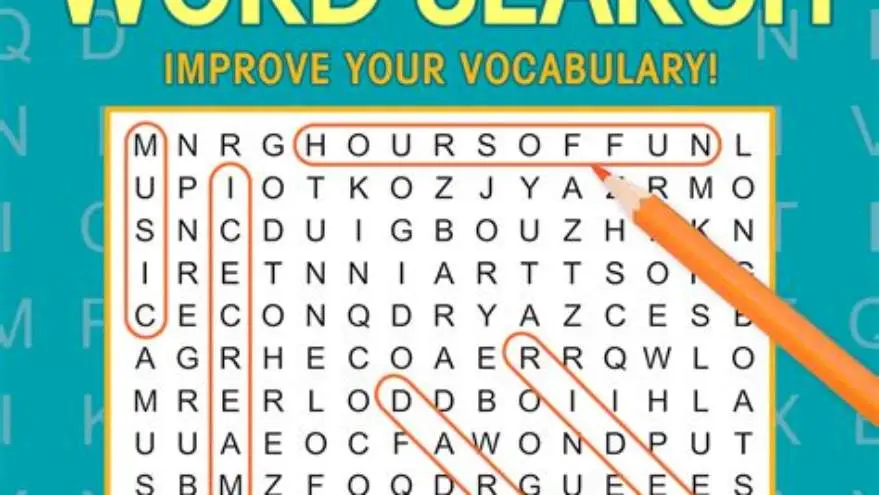
Word search grids need 16 to 18pt letters in a bold sans-serif like Arial Bold or Verdana Bold. Each letter sits in its own cell, so the grid lines must be thin (0.5pt maximum) or they compete with the letters. Line spacing should be set to 1.5x so the rows don't touch. A 15x15 grid at this size fills most of an 8.5x11 inch page with comfortable white space around it.
Sudoku numbers work best at 20 to 24pt in a clean sans-serif, with each cell measuring 1 inch square. The reader needs room to pencil in candidates and erase mistakes without smudging adjacent cells. Given numbers should be slightly bolder or darker than the pencil-written ones will be. A standard 9x9 grid takes up about 9 inches, so it fits well on an 8.5x11 page with 0.75-inch margins.
Crossword clues run 14 to 16pt with 1.3x line spacing, left-aligned, in a serif font like Georgia or a sans-serif like Calibri. Number each clue clearly and leave a half-line of space between entries so the reader doesn't skip a line by accident. The grid itself uses 1-inch squares for most large print crosswords, with black cells filled solid and white cells containing 18 to 20pt letters when the answers are printed. There is more on make large print puzzle books kdp in a separate guide.
Mazes need 2 to 3pt path widths so a reader can trace the route with a finger or a thick marker without jumping walls. The start and end points should be labelled in 16pt bold text. Avoid mazes with tiny dead-end branches: readers with tremor or reduced fine motor control find them frustrating rather than fun.
| Puzzle type | Font size | Line spacing | Cell or path size |
|---|---|---|---|
| Word search | 16-18pt bold | 1.5x | Grid squares |
| Sudoku | 20-24pt | Single | 1-inch cells |
| Crossword clues | 14-16pt | 1.3x | N/A |
| Crossword grid | 18-20pt | Single | 1-inch squares |
| Mazes | 16pt labels | N/A | 2-3pt paths |
Page layout tips for easy reading
Set all margins to 0.75 inches minimum, and push the inside (gutter) margin to 0.875 or 1 inch if the book is thick. Amazon's binding process trims the edges and clamps the spine, so anything closer than 0.75 inches risks getting cut or hidden in the fold. Bleed is not required for black-and-white interiors, but your margins are non-negotiable.
Place one puzzle per page. Cramming two word searches or two sudoku grids onto a single page saves you nothing: readers want room to work, and they want to flip the page when they finish. The answer key goes at the back of the book, not on the reverse of each puzzle, so solvers don't accidentally see the solution when the page is thin enough to show through. For the detail, see our notes on 8.5x11 black and white puzzle interior.
Use high contrast: black ink on white or cream paper. Amazon's standard white paper works well for large print. Cream paper reduces glare slightly but can make thin grid lines look faint, so test it if you choose that option. Never use gray ink, pastel backgrounds, or decorative borders that reduce contrast: your readers often have cataracts or other conditions that wash out subtle shading.
Number every page and every puzzle clearly. Page numbers go in the footer, centered or on the outside corner, in 12 to 14pt. Puzzle numbers or titles sit at the top of the page in 16 to 18pt bold. Readers use these to navigate between the puzzle and its answer at the back, so consistency matters more than style.
- Margins: 0.75 inches minimum, 1 inch on the gutter side for thick books
- Contrast: black ink on white or cream stock, no gray or pastel
- Pagination: number every page in 12-14pt, number every puzzle in 16-18pt bold
- Answer key: place all answers together at the back, not on reverse pages
File format and upload tips for Amazon KDP and Etsy when you want to make a large print activity book to sell
If you want to make a large print activity book to sell, export your interior as PDF/X-1a:2001. This embeds fonts, flattens transparency, and stops Amazon from resampling and blurring thin grid lines. Use InDesign, Affinity Publisher, or Word with a PDF/X export. If your app lacks PDF/X, convert the export with a trusted tool before upload. We go through how to make a sudoku book to sell on amazon step by step elsewhere on the site.
Pick the trim size before you set any pages. Use 8.5 x 11 inches (8.5x11) for most large print activity books. Some sellers choose 8 x 10 inches (8x10) to cut costs. That smaller size forces tighter type or wider margins and defeats the large-print promise. Stick with 8.5x11 unless you have a clear reason to shrink.
Match your PDF to the trim exactly. Amazon KDP rejects files that include crop marks or mismatched artboard sizes. Your interior PDF must be the same 8.5x11 dimensions you set in the document. Create the cover using Amazon's template for your final page count and paper choice. Download the template before you design the wrap.
On Etsy sell a printable PDF as a digital download. Design to full page size and keep margins clear. Note in the listing that pages print best on 8.5x11 or A4 paper. You can sell the same puzzles both as a POD paperback on KDP and as a digital download on Etsy. Use separate files for each platform to match their requirements. We cover how many puzzles in a kdp puzzle book in its own article.
Using BigPrint Puzzle Studio to build print-ready files
BigPrint Puzzle Studio outputs print-ready PDFs sized for Amazon KDP. Pick a puzzle type and the tool applies large-print fonts and spacing for you. It handles margins, gutters, and export settings so you avoid common setup errors.
The studio includes a wrap-around cover maker that reads your page count and paper choice to set the spine width. It exports a single-page cover PDF formatted to Amazon's template.
The tool is a one-time $17 payment. It runs on Windows, Mac, and Linux and installs on up to three computers. Skip the tool if you already use InDesign or if you prefer full control over every spacing decision.
How to test print and verify readability
Order a proof copy from Amazon KDP before launch. Expect to pay $3 to $5 for the proof, plus shipping. This purchase shows defects the previewer hides: gray grid lines, text lost in the gutter, and ink that soaks through thin paper.
Inspect the proof under typical home lighting. Sit in a chair under a table lamp. Solve one puzzle of each type in the book with a pencil. If you must hold a page closer than 14 to 16 inches, the type is too small. If letters fade into the lines, the contrast or line weight is wrong.
Recruit a tester over 60. Give them average light and watch where they hesitate. If they ask for another lamp or lean forward, change the font size or increase contrast. One honest tester finds layout faults friends miss.
Fix issues and order a second proof when needed. Expect another few dollars and a week of delay. A corrected book avoids returns and one-star reviews. High returns lower your search rank and cost you real sales.
- Order proof copy from Amazon KDP: $3 to $5 plus shipping
- Test each puzzle type under typical room lighting with pencil in hand
- Have someone over
60solve one puzzle and note where they struggle - Check grid lines, gutter margins, and ink bleed-through on printed pages
- Upload revised PDF if needed and order a second proof
Common formatting mistakes that hurt sales
Using decorative fonts for puzzles reduces legibility. Use Arial Bold, Verdana Bold, or Helvetica Bold for grids and numbers. Reserve display fonts for the cover only.
Placing content too near the spine hides letters after binding. The digital preview shows flat pages. The printed book curves. Keep puzzle content at least 0.75 inches from the gutter. Use 1 inch for books over 200 pages.
Failing to embed fonts lets Amazon substitute defaults and break your grid alignment. In your PDF export dialog, enable font embedding. In Acrobat Reader check File > Properties > Fonts. Confirm each font says "Embedded Subset."
Printing answers on the backs of puzzle pages causes spoilers. Thin paper and heavy ink make solutions show through. Put all answers in a rear section. Print them at 60-70% of the puzzle size to save pages without revealing solutions.
- Decorative fonts: stick to Arial Bold, Verdana Bold, or Helvetica Bold for puzzle content
- Spine proximity: keep content at least
0.75 inchesfrom the gutter; use1 inchfor thick books - Font embedding: confirm File > Properties > Fonts in Acrobat shows "Embedded Subset" for each font
- Answer placement: place solutions at the back and print them at 60–70% of puzzle size
Questions people still ask
Can I use 14pt font and still call my book large print?
Fourteen-point might pass for large print in body text, but it's too small for puzzle grids. Readers expect 16pt minimum for word searches and 20pt for sudoku. If your book gets reviews saying the print is hard to read, Amazon will rank it lower and your sales will drop. Go bigger.
Should I use cream or white paper for large print activity books?
White paper gives the highest contrast, which matters most for readers with low vision. Cream paper reduces glare slightly but can make thin grid lines look faint. Test both with a proof copy if you're unsure. Most large print books use standard white.
How many puzzles should a large print activity book contain?
A typical large print puzzle book has 50 to 100 puzzles, one per page, plus an answer section. More than 100 makes the book thick enough that the spine width affects your cover design and printing cost. Fewer than 50 looks thin next to competing books at the same price point.
Do I need bleed for black-and-white puzzle book interiors on Amazon KDP?
No. Bleed is required for color interiors or covers, but black-and-white text and line art don't need it. Your PDF should match the trim size exactly (8.5 x 11 inches if that's your chosen size) with no bleed area added. The cover is a separate file that does require bleed.
Can I sell the same puzzle book on Amazon KDP and Etsy?
Yes. Sell the print-on-demand paperback on KDP and the printable PDF on Etsy. You'll need to adjust the file slightly: KDP needs a full book PDF with cover and spine, while Etsy buyers get a multi-page puzzle PDF they print at home. Mention the page size in your Etsy listing so buyers know it's designed for US Letter or A4.
Ready to try it? It generates print-ready puzzle PDFs with large print fonts and margins already set to KDP specs.
Build your puzzle book