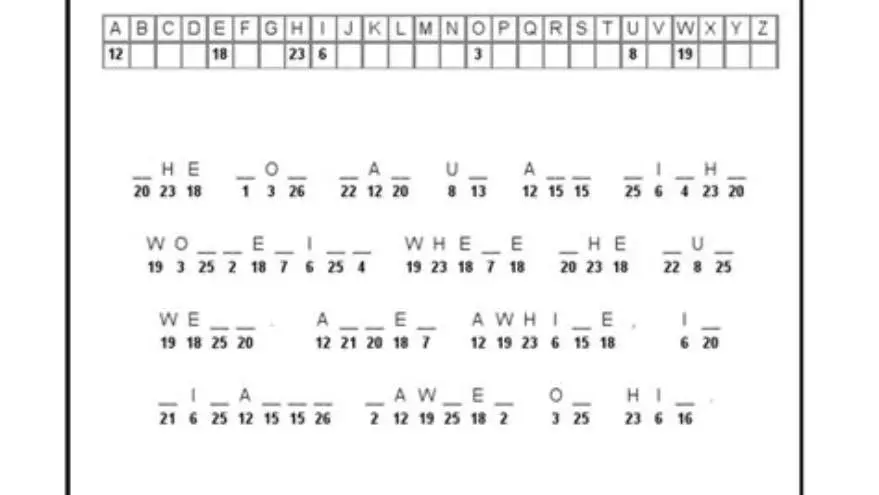
Letter bank puzzle layout: how to fit large letters on a 6x9 inch page
Clear steps to size letter bank puzzles with large letters that fit a 6x9 inch page for easy printing and readability.
To fit a letter bank puzzle with large, legible letters on a 6x9 inch page, use letter sizes between 18 and 24 points and arrange a 6x9 grid or smaller. Leave margins and set print quality to at least 300 dpi for sharp clarity.
On this page (8 sections)
- Key takeaways
- How to choose letter size for readability
- How to arrange letters to fit a 6x9 page
- Print settings for large print clarity
- Examples and templates for 6x9 letter bank puzzles
- Letter bank puzzle layout: how to fit large letters on a 6x9 page
- Tools to help create and sell large-print puzzles
- Questions people still ask
Part of our guide on crossword puzzles seniors large print
| Letter size | 18-24 pt |
|---|---|
| Grid size | up to 6x9 letters |
| Page size | 6 x 9 inches |
| Print resolution | 300 dpi |
| Margins | 0.5 inch minimum |
Key takeaways
- Choose letter sizes 18-24 pt for readability on 6x9 pages
- Arrange letter banks in grids up to 6 columns by 9 rows for balance
- Use 300 dpi print settings to ensure clear large type
- Leave margins of at least 0.5 inch for printing safety
- Consider puzzle complexity vs. letter size trade-offs
How to choose letter size for readability
Older adults typically require letter sizes between 18 and 24 points for comfortable reading on handheld or printed puzzles. This range balances legibility and space on a 6x9 inch page. The exact size depends on the font style and the visual acuity of your audience.
Sans-serif fonts like Arial or Verdana in bold weight improve ease of reading at these sizes. Avoid condensed or decorative fonts that reduce legibility. Testing your letters printed at 18 and 24 points will show how well they read at typical viewing distances of 12-18 inches.
Larger than 24 points usually reduces the number of letters you can fit, forcing simpler puzzles or multiple pages. Smaller than 18 points risks straining the eyes, particularly for those with mild vision loss common in seniors. Always consider your audience’s needs first.
Letter spacing also plays a role in readability at large sizes. Increasing the tracking or letter spacing slightly, by about 2-4%, can prevent letters from appearing crowded and improve recognition, especially for readers with visual processing difficulties. This adjustment is simple to apply in most word processors and design software and helps maintain clarity without reducing font size. People in this spot often ask about how to print nyt sunday crossword as well.
Contrast between text and background influences perceived letter size. For example, black letters on a white background appear sharper and more distinct than gray on off-white. Using high contrast colors supports reading at larger sizes and can allow slightly smaller font sizes if space is limited. Testing with your target audience confirms effectiveness.
How to arrange letters to fit a 6x9 page
A 6x9 inch page with 0.5 inch margins leaves a printable area of 5x8 inches. With 18-24 point (about 0.25-0.33 inch tall) letters, you can arrange a letter bank grid roughly 6 columns wide by 9 rows tall.
Each letter requires space for the glyph plus padding. At 24 points, plan for approximately 0.3-0.35 inch per letter cell width and height. This spacing prevents crowding and allows room between letters for finger guidance or annotations. It helps to understand acrostic puzzle creator with large print before going further.
If you want larger letters, reduce the number of columns or rows. For example, an 18-point letter grid could be 7x10, but that risks cramped spacing. A balanced 6x9 grid fits well and keeps the puzzle manageable.
Consider positioning the answer grid below or beside the letter bank, depending on puzzle design. Keep the layout clean with consistent alignment, and avoid squeezing too many letters onto one page.
In some cases, rotating the page orientation to landscape (9x6 inches) can provide more horizontal space, allowing wider letter banks or larger font sizes without reducing the number of letters. However, this may complicate binding or user handling, so consider your puzzle book design carefully. We cover large print puzzles for memory loss in its own article.
For irregular letter bank sizes or puzzles with uneven letter counts, flexible grids such as variable row lengths can fit better. For instance, a 6x9 grid can be adjusted to 5x10 or 7x8 while maintaining approximately the same total letters. Just ensure consistent letter cell sizes to avoid visual imbalance.
When spacing cells, remember that including extra padding between rows (vertical spacing) is often more helpful for finger guidance than between columns. This subtle difference supports users who prefer to trace letters with their finger, improving puzzle interaction on physical pages.
Letter Size (pt) | Letter Cell Size (in) | Max Columns | Max Rows |
|---|---|---|---|
| 18 | 0.25 | 7 | 10 |
| 20 | 0.28 | 6 | 9 |
| 24 | 0.33 | 6 | 9 |
Print settings for large print clarity
Printing at 300 dpi or higher is essential to keep large letters sharp and edges crisp on paper. Lower resolutions cause blurring and reduce clarity, defeating the purpose of large print. The other half of this decision is easy cryptogram puzzles.
Use a high-quality laser or inkjet printer, and select settings like 'Best' or 'High Quality' in print dialog boxes. Avoid draft or economy modes which degrade print quality.
Choose bright white, uncoated paper with a smooth finish to enhance contrast and reduce glare. This helps older eyes distinguish letters clearly.
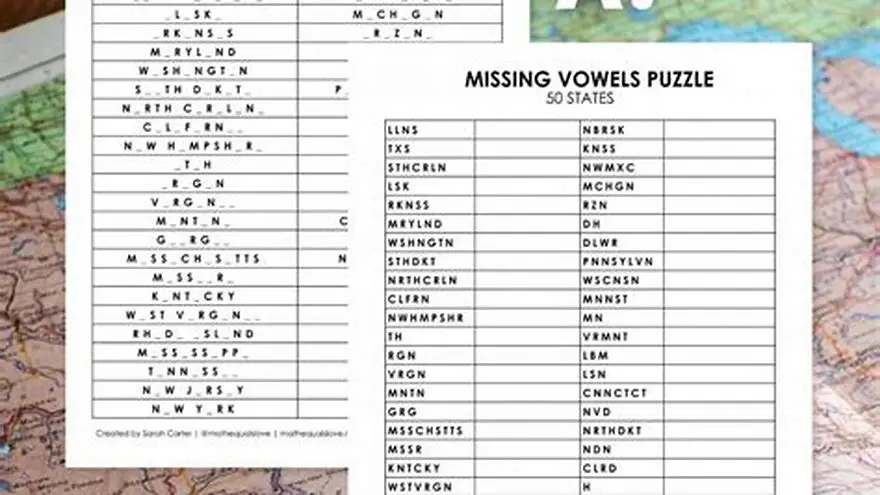
If you print through a graphics program or word processor, export your puzzle to PDF format to preserve layout and font rendering exactly as designed. We go through how to play missing vowels puzzle step by step elsewhere on the site.
Examples and templates for 6x9 letter bank puzzles
Starting with a 6x9 letter bank puzzle template sized for 24-point letters helps avoid guesswork. Use spreadsheet software or a simple word processor table, setting each cell to about 0.33 inch square.
Letter banks arranged in a 6x9 grid look balanced and easy on the eye on a 6x9 inch page while leaving space for an answer grid of a similar or smaller size below or on the facing page.
Templates available online often are designed for larger pages or smaller letters that don’t suit older adults. Adjusting those templates manually by increasing cell size or reducing columns and rows to fit the 6x9 page is key.
You can create your own by setting page size to 6x9 inches in your software and inserting a table with 6 columns and 9 rows. Set font size to 20-24 pt, align letters centered horizontally and vertically, and add spacing between rows if your software allows.
For example, a 6x9 letter bank puzzle with 24-point letters occupies roughly 2 by 3 inches of page space when factoring in spacing, leaving ample room for a 5x5 answer grid below at 20 points. This layout comfortably fits within the 5x8 inch printable area of a 6x9 page with half-inch margins.
To create your own template, start by setting the page size to 6x9 inches and margins to 0.5 inches. Then insert a table with 6 columns and 9 rows, setting each cell's height and width to about 0.33 inches. Center letters both vertically and horizontally within cells and increase row spacing slightly to about 0.35 inches if possible.
If you want to preview before printing, export your puzzle as a PDF to ensure font rendering and layout are preserved exactly. Printing a single test page on your target printer helps catch any sizing or alignment issues before batch printing entire puzzle books.
Letter bank puzzle layout: how to fit large letters on a 6x9 page
To fit large letters on a 6x9 inch page for a letter bank puzzle, plan letter size at 20-24 points with about 0.3 inch squares for each letter plus padding. Use a 6 columns by 9 rows grid for the letter bank.
Place the answer grid below or beside the letter bank, sized to fit within the remaining space. For example, a 5x5 answer grid at 20 points fits comfortably under the letter bank with half-inch margins all around.
Maintain clear spacing between letters and grids to avoid clutter. Use simple, bold sans-serif fonts and high-contrast colors for readability. Test print one page to confirm layout before creating puzzle batches.
If you want to create multiple puzzles, consider using large-print puzzle software that lets you build and preview layouts quickly, adapting font size and spacing for your 6x9 format.
Tools to help create and sell large-print puzzles
Using a dedicated large-print puzzle creator like BigPrint Puzzle Studio makes fitting letter bank puzzles with large letters on a 6x9 page easier. It automates sizing, layout, and print-ready page generation to match your requirements.
BigPrint Puzzle Studio lets you choose letter sizes (including 16, 20, or 24 points), predefined grid sizes, and themes tailored for seniors. You get instant previews and page numbers, which helps organize puzzle books.
You might alternatively use free tools like word processors or spreadsheets to build puzzles manually, but these require careful measurement and trial printing to get letter size and layout right.
BigPrint Puzzle Studio does not create medical or therapy content nor guarantee sales but simplifies the technical steps of large-print puzzle creation, saving time and reducing errors.
If budget is a concern or you want full creative control, manual methods remain valid but take more time. For fast, repeatable design that fits the 6x9 format with large type, this tool strongly helps.
- Automates letter size and layout for 6x9 pages
- Includes large print options ideal for seniors
- Generates print-ready puzzles and answer keys
- Saves time compared to manual design
- Not free; initial purchase required
- Limited to puzzle creation, no therapy or medical use
- May have a learning curve for some users
Questions people still ask
What is the best font for large-print letter bank puzzles?
Sans-serif fonts like Arial or Verdana in bold weight are best for readability. Avoid decorative or condensed fonts that reduce clarity, especially at larger sizes.
Can I use a smaller letter size to fit more letters on one page?
Smaller than 18 points risks being illegible for many older adults. It's better to print multiple pages or simplify puzzles than reduce letter size below 18 points.
How much margin should I leave to avoid print cutoffs?
At least 0.5 inch margins on all sides are recommended to ensure no letters get cut off during printing or binding.
Is 300 dpi necessary for large-print puzzles?
Yes, 300 dpi or higher keeps letters sharp and clear. Lower dpi causes blurring which harms readability.
Can I create letter bank puzzles on free software?
Yes, word processors and spreadsheets can create letter banks. You must manually set cell sizes and font sizes, and test print to confirm.
What size should the answer grid be on a 6x9 page?
Typically, keep it smaller than the letter bank grid, for example 5x5 or 6x6 with 18-20 point letters, to fit the page without clutter.
Ready to try it? It automates creating and fitting large-print letter bank puzzles on 6x9 inch pages, saving time and avoiding layout errors.
Create large-print puzzles