Montessori printables for dementia: how to pick and adjust by stage
Pick Montessori printables based on dementia stage: simple matching and sorting for early, guided word searches and jigsaws for middle, and sensory or familiar-object tasks for late stage. Adjust by simplifying or enriching to avoid frustration.
On this page (8 sections)
- Quick recap
- How to choose printables for early, middle, late dementia
- Ways to simplify or enrich Montessori printables
- Examples of printables suited to each dementia stage
- Montessori activities for dementia printable: why and how the Gentle Minds Activity Kit helps
- How to test and adjust Montessori printables yourself at home
- The cost of picking the wrong Montessori printables for dementia
- Still wondering?
Part of our guide on activities for dementia patients simple
Key figures
- Montessori stages
- early, middle, late
- Printable pages typical
- 30-130 pages
- Activity difficulty levels
- 3 levels common
- Print size
- large, clear print
- Usual activity duration
- 10-30 minutes
Quick recap
- Match printables to dementia stage for better engagement
- Simplify or enrich Montessori activities as symptoms change
- Choose calming activities that create success and connection
- Printable kits can save time and offer multi-level options
- Avoid childish materials to respect dignity and interest
How to choose printables for early, middle, late dementia

The key to choosing Montessori printables for dementia is aligning activities with cognitive abilities at each stage. Early-stage dementia adults typically handle simple sorting, matching, and large-print puzzles with few steps. These exercises tap into remaining skills without causing confusion.
Middle-stage dementia needs tasks with clearer structure and some cueing. Word searches, simple crosswords, and jigsaws with fewer pieces work well. Activities that encourage conversation, like memory cards with familiar images, also suit this stage best.
Late-stage dementia often limits the ability to complete multi-step tasks. Printables focusing on sensory engagement, familiar object matching, or coloring with large shapes provide calm success. Avoid anything requiring reading or complex problem solving here.
The dementia stage influences the number of steps in the activity, the type of cues included, and the clarity of print. Matching these keeps frustration low and engagement higher. The other half of this decision is achievable activities for caregivers.
Early-stage dementia printables should also consider personal interests and past hobbies to boost motivation. For example, a gardening enthusiast might engage more with printable plant identification cards. This personal touch often increases attention and satisfaction.
Middle-stage dementia printables benefit from introducing simple choices within the activity. Offering two color options for coloring pages or two puzzle images to choose from can empower the user. This choice supports autonomy and can improve mood.
Late-stage printables need extra sensory elements like textured paper or raised outlines to help compensate for declining vision and touch sensitivity. Adding a calm background soundtrack during the activity may also enhance focus and relaxation. We go through printable dementia activities for adults step by step elsewhere on the site.
Ways to simplify or enrich Montessori printables
Adjusting Montessori printables involves simplifying tasks when symptoms worsen or enriching them to maintain interest. Simplification can mean reducing the number of pieces, increasing font size, or providing visual prompts. Enrichment adds steps, uses more detailed images, or includes conversation prompts.
For early dementia, enrich printables by introducing themed puzzles or adding related discussion cards. For middle stage, simplify by breaking down tasks into smaller parts or highlighting key words in word searches. Late-stage printables benefit from simplifying to familiar objects and bright colors.
Printables that include caregiver guides help tailor complexity easily. They offer ideas to adapt the activity on the fly based on mood and ability, ensuring each session ends positively. It helps to understand best options for memory care before going further.
Try layering supports like color coding, simple instructions, or no-pressure reassurance. Enrichment and simplification are ongoing; watch how the person responds each time.
Simplification can also mean breaking complex tasks into micro-steps with clear labels. For example, a sorting task could be split into sorting by color first, then by shape, instead of doing both at once. This stepwise approach lessens cognitive load.
Enrichment sometimes involves combining printables with real objects, such as matching printed pictures to actual household items. This multisensory connection strengthens memory links and provides a richer experience. It helps to understand printable activities for adults with dementia before going further.
A caregiver can use timers or gentle reminders printed on the pages to help pace the activity. For instance, a printable clock face showing a 15-minute limit encourages predictable structure, which some dementia sufferers find comforting.
- Keeps activities engaging as abilities change
- Reduces risk of frustration and shutdown
- Supports conversation and connection
- Requires caregiver time to adapt
- Not all printables are easily adjusted
- Some may still feel too easy or hard
Examples of printables suited to each dementia stage
Early dementia printables include large-print matching cards, simple puzzles with 12-20 pieces, and themed word searches with highlighted words. These keep cognitive load light and promote success.
Middle dementia suits jigsaws of 20-50 pieces, word searches with simpler vocabulary, and crosswords with picture clues. Conversation cards featuring familiar topics can stimulate memory and verbal skills. It helps to understand clear print and suitable complexity before going further.
Late dementia printables focus on sensory engagement: coloring pages with bold shapes, sorting familiar picture cards, or simple mazes with wide lines. These reduce demands while encouraging hand-eye coordination.
Choosing activities that feel meaningful helps maintain dignity. Avoid childish themes and instead emphasize nostalgia, nature, or household items.
The activity's pace should match attention span, usually 10-30 minutes.
An early-stage example is a printable matching game with 16 pairs of large colorful cards featuring animals or fruits. This range challenges memory without overwhelming.
For the middle stage, a jigsaw puzzle with 30 pieces showing a nostalgic scene, like a classic car or familiar landmark, can spark conversation and recognition. Picture clues on the puzzle edges help guide assembly.
Late-stage printables might include a large-print coloring sheet of a garden scene with broad outlines, paired with a set of matching fabric swatches. This combination encourages both coloring and tactile exploration, engaging multiple senses.
Printables for early-stage dementia should also consider the time of day when planning activities. Morning hours often bring better focus and clarity, so scheduling printables then can increase success. For example, a 15-piece puzzle completed in the morning might take twice as long in the afternoon due to fatigue.
In middle-stage dementia, caregivers can add simple rewards or positive feedback after completing printables. Saying, 'You did a great job finishing this word search,' encourages motivation and fosters confidence. This feedback helps maintain engagement even as tasks grow harder.
Late-stage printables sometimes benefit from pairing visual tasks with a familiar scent or sound. For instance, coloring a garden scene while smelling lavender or hearing nature sounds can deepen sensory connection. This pairing calms agitation and makes the activity more meaningful.
| Stage | Activity examples | Difficulty | Purpose |
|---|---|---|---|
| Early | Matching cards, 12-20 piece puzzles, highlighted word searches | Easy | Engagement, success, recognition |
| Middle | 20-50 piece jigsaws, picture crosswords, conversation cards | Moderate | Memory stimulation, interaction |
| Late | Coloring pages, familiar object sorting, simple mazes | Simple | Sensory engagement, calmness |
Montessori activities for dementia printable: why and how the Gentle Minds Activity Kit helps
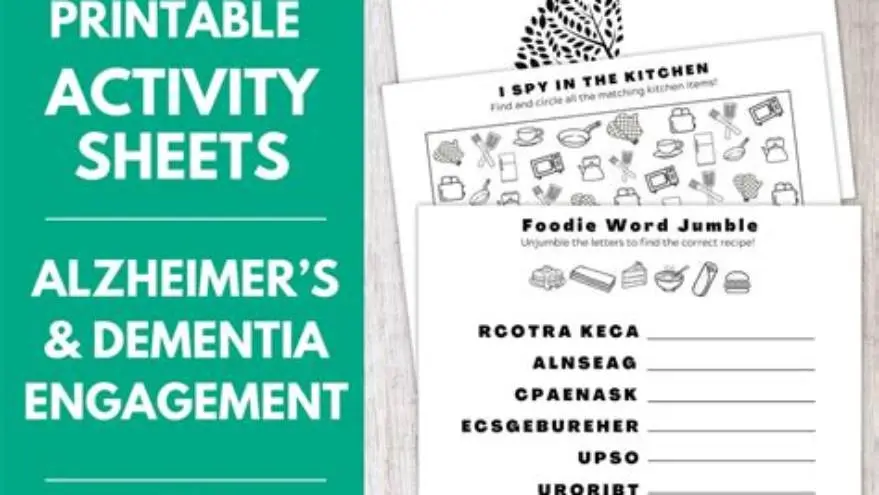
The Gentle Minds Activity Kit offers over 130 printable large-print pages with activities at three difficulty levels: Gentle, Easy, and Steady. This range helps families and caregivers select the right complexity for early, middle, or late dementia stages.
Its printable format allows multiple copies to be made for different users or repeated use, a time saver for caregivers who might otherwise spend hours compiling materials. The included caregiver guide suggests how to introduce and adapt activities. Conversation cards focus on memory and connection rather than testing skills.
While not a medical treatment or cognitive therapy, the kit fills a gap by avoiding childish or overly simple printables. Users commonly report it helps prevent frustration and promotes calm engagement. The answers provided help caregivers support success without guesswork.
The limitation is that it does not tailor content dynamically: it relies on caregiver judgement to choose levels and adapt. However, this flexibility suits varied abilities and moods better than fixed puzzles.
For a practical, ready-made option that respects dementia progression and encourages connection, the Gentle Minds Activity Kit is a strong fit.
- Activities at three stages to match dementia progression
- Includes caregiver guide and conversation cards
- Print as many copies as needed
- Designed to avoid frustration and promote calm
- Not a medical or therapeutic tool
- Caregiver must judge and adapt difficulty
- Some users may prefer physical rather than printables
How to test and adjust Montessori printables yourself at home
Try a sample activity with your loved one to observe their response. See if they can complete the basic task without distress or frustration. Notice if they show enjoyment or engagement during and after.
If the activity is too hard, reduce steps, simplify images, or increase print size. If it feels too easy, add related conversation points or combine activities for lengthier engagement.
Use a timer for short sessions of 10-20 minutes, as attention span often declines with dementia progression. Multiple short sessions can be more effective than one long attempt.
Keep notes on what works best so you can plan future printables accordingly. This helps avoid wasting time printing unsuitable materials.
Regular reassessment is key; abilities vary day to day, so flexibility keeps activities successful.
Watch for signs of frustration such as repeated mistakes, avoidance, or agitation during the activity. These indicate the task may be too difficult or confusing and need simplification.
If the person finishes an activity quickly and appears bored, try enriching it by adding related vocabulary cards or encouraging storytelling about the images. This extends engagement without changing the core task.
Ask open-ended questions after the activity to measure enjoyment and comprehension. Questions like 'What did you like about this?' or 'Can you tell me about this picture?' provide insight into cognitive and emotional responses.
Observe the person’s behavior closely during activities to catch early signs of overchallenge. Restlessness, fidgeting, or repeating questions may signal confusion. Adjust the printable immediately by simplifying steps or switching to a sensory task.
Keep a flexible attitude when testing printables. A task that works one day may not the next due to fluctuating symptoms. Rotate activities and notice which type consistently brings enjoyment or calm.
Use photos or short video clips to record how the person interacts with printables. Reviewing these can help caregivers spot subtle signs of frustration or success they might miss in the moment. This informs better adjustments for future sessions.
- Choose a printable matched to the estimated dementia stage
- Observe the person doing the activity for signs of success or frustration
- Simplify or enrich the task based on their response
- Limit activity length to 10-20 minutes
- Record results to guide future selections
The cost of picking the wrong Montessori printables for dementia
Using activities that are too complex leads to frustration, anxiety, and withdrawal. The person may resist future attempts, reducing engagement opportunities. Caregivers spend time and resources on materials that don’t work.
On the other hand, overly simple or childish printables insult dignity and bore the user, causing boredom or refusal. This wastes printing supplies and caregiver effort.
Choosing printables well matched to the dementia stage saves time and money. It also preserves wellbeing by creating calm and success. The gentle challenge sustains interest and conversation.
Quick tests at home avoid costly mistakes. Print small batches first rather than large volumes.
When activity kits include caregiver guidance, they reduce the risk of repeated trial and error.
Still wondering?
Can Montessori printables prevent dementia decline?
No printable activity can prevent or treat dementia. However, well-chosen Montessori printables may support engagement, communication, and quality of life.
How do I know which dementia stage to select printables for?
Assess current abilities such as attention span, problem solving, and memory. Early stage handles simple puzzles; middle stage benefits from cueing; late stage prefers sensory and familiar-object tasks.
Can I use the same printable for different dementia stages?
You can adapt many printables by simplifying or enriching them. Adjust the number of steps, font size, and cues to suit abilities.
Are printable Montessori activities better than traditional puzzles?
Printables designed specifically for dementia often offer clearer print, relevant themes, and caregiver guides. Traditional puzzles may lack these features or be too complex.
Where can I find free Montessori printables for dementia?
Some websites offer free large-print puzzles and word searches suitable for early dementia, but printables tailored by stage with guidance are rarer.
Ready to try it? It provides multi-level printable Montessori activities designed to match dementia stages and ease caregiver adaptation.
Explore Gentle Minds kit